



MST1
MST1 (STK4) is a serine/threonine kinase that functions as a core upstream regulator of the Hippo signaling pathway, where it controls cell proliferation, differentiation, apoptosis, and organ size homeostasis through kinase-dependent signaling networks[1]. Mechanistically, activated MST1 forms signaling complexes that phosphorylate and activate LATS kinases, leading to inhibition of the transcriptional coactivator YAP and suppression of growth-promoting transcriptional programs[1][2]. Beyond canonical Hippo signaling, MST1 also regulates cellular stress responses, redox homeostasis, immune cell activation, migration, adhesion, and apoptosis, highlighting its broad role in tissue homeostasis and disease biology[1][3]. In disease contexts, genetic disruption of MST1 signaling contributes to immune dysfunction, while loss of MST1/MST2-mediated Hippo pathway activity is associated with hyperproliferation and tumorigenesis through dysregulated YAP activity[1][4]. Experimental studies further demonstrate that MST1 deficiency causes primary immunodeficiency and impairs the maintenance of long-lived humoral immunity, establishing MST1-deficient models as valuable tools for investigating immune regulation and lymphocyte homeostasis[4]. Compared with the closely related isoform MST2 (STK3), MST1 shares highly conserved kinase-domain architecture and overlapping Hippo pathway functions, although tissue-specific regulatory mechanisms and biological outputs can differ depending on cellular context[2][5]. For experimental applications, MST1 activity is frequently investigated through modulation of the MST1/2-LATS-YAP signaling axis, which provides a widely used framework for studying tumor suppression, immune regulation, and Hippo pathway biology[1][2].
References:
- [1]. Qin F, et al. Mst1 and Mst2 kinases: regulations and diseases. Cell Biosci. 2013 Aug 28;3(1):31. [Content Brief]
- [2]. Bae SJ, et al. Activation mechanisms of the Hippo kinase signaling cascade. Biosci Rep. 2018 Aug 29;38(4):BSR20171469. [Content Brief]
- [3]. Cheng J, et al. The Role of Mst1 in Lymphocyte Homeostasis and Function. Front Immunol. 2018 Feb 5;9:149. [Content Brief]
- [4]. Bagherzadeh Yazdchi S, et al. Hippo Pathway Kinase Mst1 Is Required for Long-Lived Humoral Immunity. J Immunol. 2019 Jan 1;202(1):69-78. [Content Brief]
- [5]. Galan JA, et al. MST1/MST2 Protein Kinases: Regulation and Physiologic Roles. Biochemistry. 2016 Oct 4;55(39):5507-5519. [Content Brief]
All Product Categories
-
MST1 Related Products (3)
Related Products (3)

-
SBP-3264
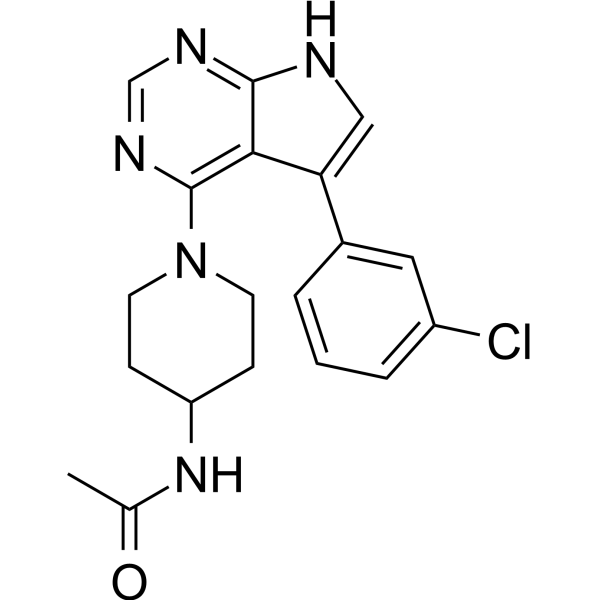 0 ImagesSBP-3264 is a YAP activator and STK/MST inhibitor with IC50 values of 36 nM against STK3/MST2 and 24 nM against STK4/MST1. SBP-3264 modulates the Hippo signaling pathway. SBP-3264 can be used for the research of acute myeloid leukemia.
-
IHMT-MST1-39
 0 ImagesIHMT-MST1-39 is an orally active inhibitor for MST kinase, with IC50 of 42, 109, 286, 159 nM for MST1, MST2, MST3, MST4. IHMT-MST1-39 activates the AMPK signaling pathway in liver cells, reduces apoptosis of pancreatic β-cells. IHMT-MST1-39 can be used for the studies of type 1 diabetes (T1D) and type 2 diabetes (T2D).
-
YL-602
 0 ImagesYL-602 is an orally active Hippo pathway activator. YL-602 activates the Hippo pathway via MST1/2, with downstream pathway activation. YL-602 inhibits YAP and CTGF expression in cells irrespective of cell density and serum presence. YL-602 induces tumor cell apoptosis and inhibits colony formation. YL-602 suppresses tumor growth in mice. YL-602 can be used for the research of cancer, such as breast cancer.



