



PARP
poly ADP ribose polymerase
PARP is a family of proteins involved in a number of cellular processes involving mainly DNA repair and programmed cell death. The PARP family comprises 17 members. They have all very different structures and functions in the cell. PARP1, PARP2, VPARP (PARP4), Tankyrase-1 and -2 (PARP-5a or TNKS, and PARP-5b or TNKS2) have a confirmed PARP activity. Others include PARP3, PARP6, TIPARP (or PARP7), PARP8, PARP9, PARP10, PARP11, PARP12, PARP14, PARP15, and PARP16. PARP is found in the cell’s nucleus. The main role is to detect and signal single-strand DNA breaks (SSB) to the enzymatic machinery involved in the SSB repair.
PARP Isoform Specific Products
-
PARP
(303)
View all products
-
PARP1
(200)
View all products
-
PARP2
(82)
View all products
-
PARP3
(22)
View all products
-
PARP4
(11)
View all products
-
TNKS1/PARP5A
(40)
View all products
-
TNKS2/PARP5B
(37)
View all products
-
PARP7
(24)
View all products
-
PARP10
(20)
View all products
-
PARP14
(17)
View all products
-
PARP15
(14)
View all products
-
PARP12
(4)
View all products
-
PARP16
(3)
View all products
All Product Categories
-
PARP Inhibitors
(455)
View all products
-
PARP Agonists
(4)
View all products
-
PARP Activators
(100)
View all products
-
PARP Modulators
(11)
View all products
-
PARP Inducers
(20)
View all products
-
PARP Degraders
(23)
View all products
-
PARP Substrate
(1)
View all products
-
PARP Ligands
(4)
View all products
-
PARP Related Products (676)
Related Products (676)

-
Antibodies (11)
-
PARP Isoform Comparison
-
PARP-1-IN-4
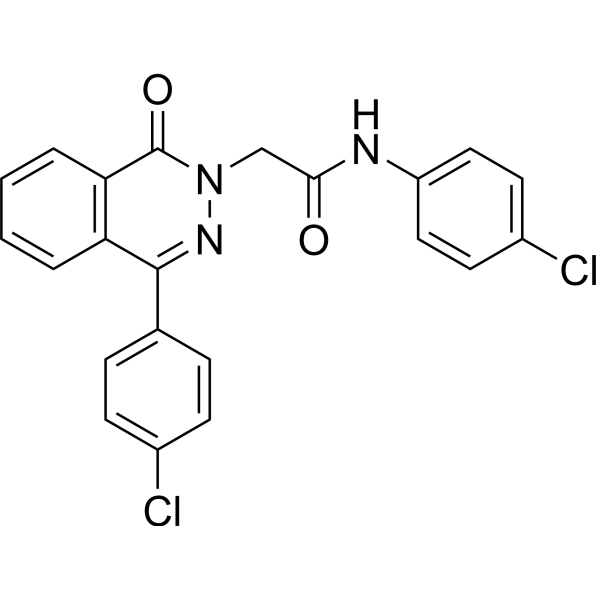 0 ImagesPARP-1-IN-4 is a PARP-1 inhibitor. PARP-1-IN-4 has inhibitory activity against PARP-1 with IC50 value of 302 μM. PARP-1-IN-4 can be used for the research of lung adenocarcinoma.
-
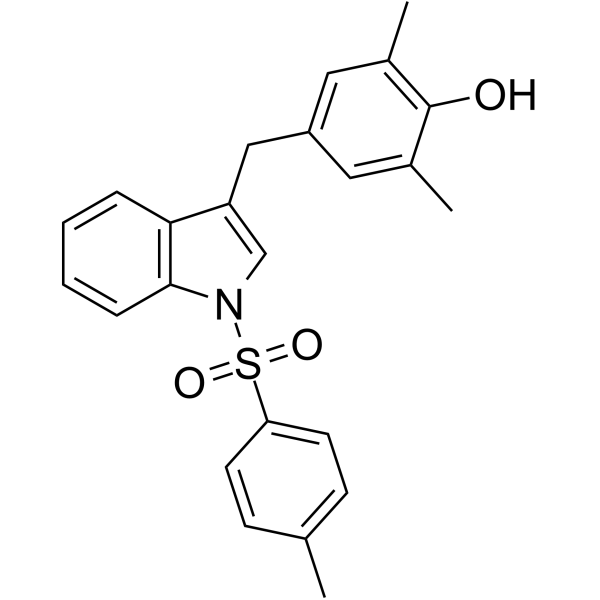
MKI-3
 0 ImagesCat. No.: HY-182391CAS No.: 3084702-28-0MKI-3 is a selective microtubule-associated serine/threonine kinase-like (MASTL) inhibitor with an IC50 of 5.72 nM and a Kd of 1.89 nM. MKI-3 disrupts the MASTL-ENSA-Aurora A signaling axis. MKI-3 induces chromosomal instability, mitotic catastrophe and apoptosis (apoptosis) in cancer cells. MKI-3 is applicable to research related to triple-negative breast cancer.
-
DDO3602
 0 ImagesCat. No.: HY-178496DDO3602 is a PARP1 HSPTAC (HSP90-mediated proteolysis-targeting chimera) degrader, with a DC50 of 490.3 nM against PARP1; its Kd values for PARP1 and HSP90 are 66.5 nM and 1.64 nM, respectively. DDO3602 induces the formation of an unnatural PARP1-HSP90 ternary complex, recruits E3 ubiquitin ligase, and promotes PARP1 degradation via the ubiquitin-proteasome pathway. DDO3602 induces G2/M cell cycle arrest, DNA damage, inhibits cell migration, and exhibits antiproliferative activity in breast cancer cells. DDO3602 can be used in breast cancer-related research.
-
Procyanidin B2-3'-O-gallate
 0 ImagesCat. No.: HY-N16483CAS No.: 109280-47-9Procyanidin B2-3'-O-gallate is a mono-gallate ester that can be found in grape seed extract. Procyanidin B2-3'-O-gallate induces cleavage of caspase-9, caspase-3, and PARP, reduces levels of Bcl-2, Bcl-Xl, and androgen receptor and induces apoptosis. Procyanidin B2-3'-O-gallate can be used for the research of prostate cancer.
-
Rucaparib (Standard)
 0 ImagesSynonyms: AG014699 (Standard); PF-01367338 (Standard)Rucaparib (Standard) is the analytical standard of Rucaparib. This product is intended for research and analytical applications. Rucaparib (AG014699) is an orally active, potent inhibitor of PARP proteins (PARP-1, PARP-2 and PARP-3) with a Ki of 1.4 nM for PARP1. Rucaparib is a modest hexose-6-phosphate dehydrogenase (H6PD) inhibitor. Rucaparib has the potential for castration-resistant prostate cancer (CRPC) research.
-
Cyproheptadine hydrochloride sesquihydrate (Standard)
 0 ImagesCyproheptadine hydrochloride sesquihydrate (Standard) is the analytical standard of Cyproheptadine hydrochloride sesquihydrate (HY-B1165). This product is intended for research and analytical applications. Cyproheptadine hydrochloride sesquihydrate acts as a p38 MAP kinase activator, CHK2 activator, histamine H1 receptor inhibitor and serotonin receptor inhibitor. Cyproheptadine hydrochloride sesquihydrate mediates cell cycle arrest via G1 phase arrest, G1/S transition arrest, G0/G1 phase arrest, reduced expression of cyclins D1/D2/D3, upregulated expression of HBP1, p16, p21, p27, and decreased phosphorylation of retinoblastoma protein. Cyproheptadine hydrochloride sesquihydrate induces Apoptosis by increasing PARP and cleaved PARP, as well as activating the mitochondrial caspase pathway. Cyproheptadine hydrochloride sesquihydrate inhibits tumor growth with extremely low toxicity to normal cells. Cyproheptadine hydrochloride sesquihydrate can be used in research related to hepatocellular carcinoma, multiple myeloma and acute myeloid leukemia.
-
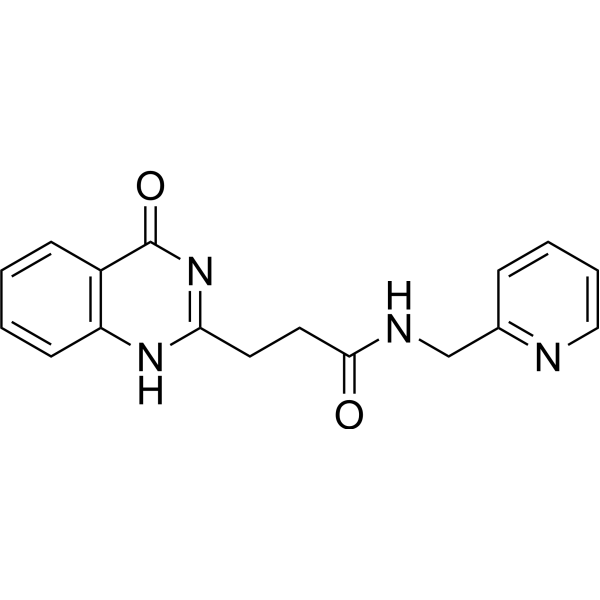
LS-75
 0 ImagesLS-75 is a PARP-1 inhibitor with blood-brain permeability and IC50 value of 18 μM. LS-75 has neuroprotective activity.
-
KU-0058684
 0 ImagesKU-0058684 is a potent PARP inhibitor, with an IC50 of 3.2 nM for PARP-1. KU-0058684 significantly reduces DNA double strand break (DSB) repair.
-
Rucaparib tartrate
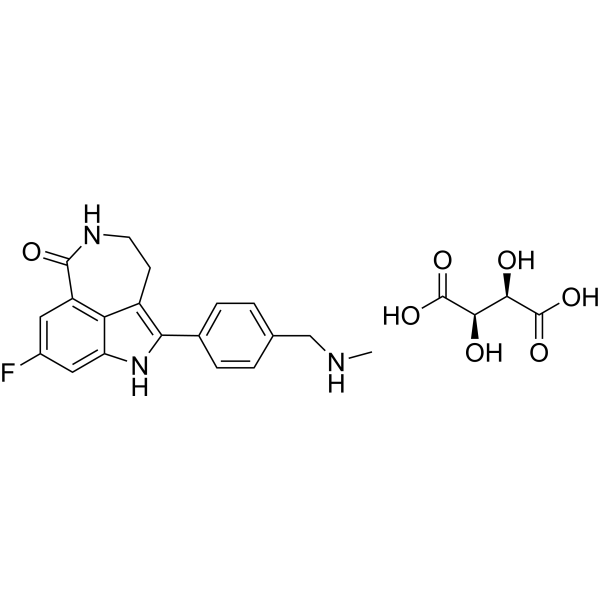 0 ImagesCat. No.: HY-10617CCAS No.: 773059-22-6Synonyms: AG-014699 tartrate; PF-01367338 tartrateRucaparib (AG014699) tartrate is an orally active, potent inhibitor of PARP proteins (PARP-1, PARP-2 and PARP-3) with a Ki of 1.4 nM for PARP1. Rucaparib tartrate is a modest hexose-6-phosphate dehydrogenase (H6PD) inhibitor. Rucaparib tartrate has the potential for castration-resistant prostate cancer (CRPC) research.
-
Rucaparib camsylate
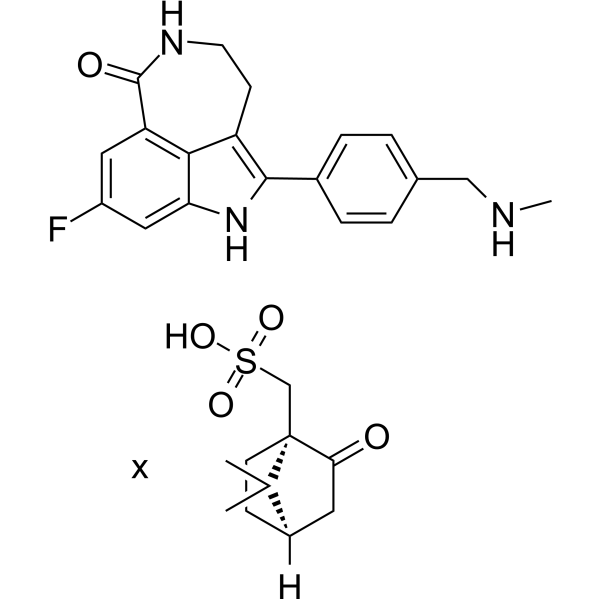 0 ImagesCat. No.: HY-102003ACAS No.: 1327258-57-0Synonyms: AG014699 camsylate; PF-01367338 camsylateRucaparib (AG014699) camsylate is an orally active, potent inhibitor of PARP proteins (PARP-1, PARP-2 and PARP-3) with a Ki of 1.4 nM for PARP1. Rucaparib camsylate is a modest hexose-6-phosphate dehydrogenase (H6PD) inhibitor. Rucaparib camsylate has the potential for castration-resistant prostate cancer (CRPC) research.
-
Sorafenib-d4
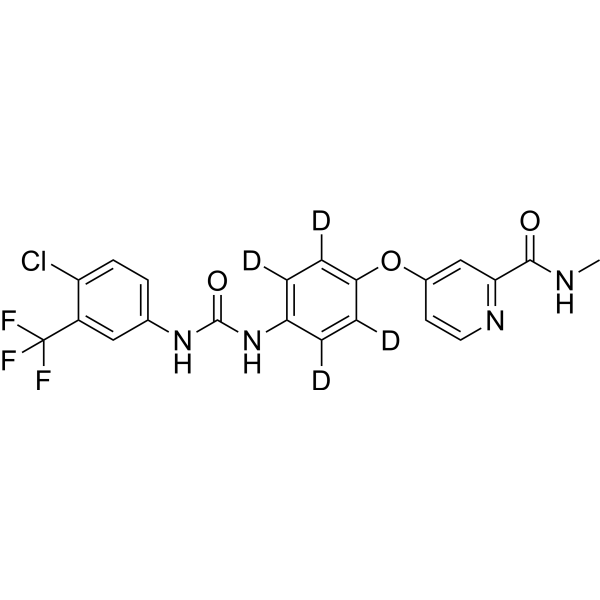 0 ImagesSynonyms: Bay 43-9006-d4Sorafenib-d4 (Bay 43-9006-d4) is the deuterated-labeled Sorafenib (HY-10201). Sorafenib (Bay 43-9006) is a potent oral active multikinase inhibitor. Sorafenib blocks autophosphorylation and activity of receptor tyrosine kinases (VEGFR-2, VEGFR-3) and RAF family kinases, thereby suppressing the RAF/MEK/ERK and PI3K/Akt pathways, inhibiting STAT3 phosphorylation, and selectively inhibiting the MAPK pathway in cancer cells. Sorafenib induces cell cycle arrest, autophagy, apoptosis, and PARP cleavage, reduces Bcl-2, Bcl-XL, cyclin D1 levels, and activates Bak and Bax. Sorafenib inhibits tumor growth and metastasis in mouse and rat models. Sorafenib can be used for cancer research, such as colon, breast, non-small-cell lung cancer (NSCLC), ovarian, pancreatic, melanoma, colorectal and hepatocellular carcinoma.
-
5,7,4'-Trimethoxyflavone (Standard)
 0 Images5,7,4'-Trimethoxyflavone (Standard) is the analytical standard of 5,7,4'-Trimethoxyflavone. This product is intended for research and analytical applications. 5,7,4’-Trimethoxyflavone can be isolated from the medicinal plant Kaempferia parviflora (KP). 5,7,4’-Trimethoxyflavone is a CFTR activator and EC50 is 64 μM. 5,7,4’-Trimethoxyflavone induces apoptosis, increases proteolytic activation of caspase-3, and degradation of ADP-ribose polymerase (PARP) protein. 5,7,4’-Trimethoxyflavone has antitumor activity. 5,7,4’-Trimethoxyflavone can be used to prevent skin aging and oxidative stress.
-
PARP1-IN-5
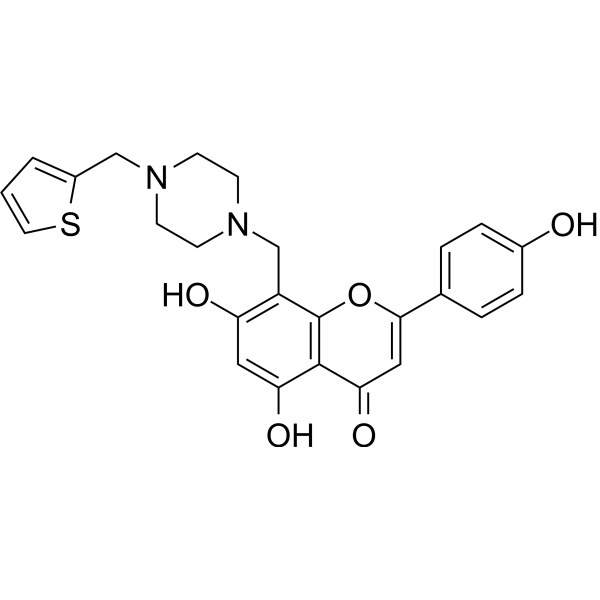 0 ImagesCat. No.: HY-132297CAS No.: 2735645-53-9PARP1-IN-5 is a low toxicity, orally active, potent and selective PARP-1 inhibitor (IC50 =14.7 nM). PARP1-IN-5 can be used for the research of cancer.
-
Atiprimod
 0 ImagesCat. No.: HY-13559CAS No.: 123018-47-3Synonyms: Azaspirane ; SKF 106615-12; SKF 106615A12Atiprimod (Azaspirane) is a STAT3 inhibitor with antitumor, anti-inflammatory, and anti-angiogenic activities. Atiprimod blocks the signaling pathways of IL-6 and VEGF by inhibiting the phosphorylation of signal transducer and activator of STAT3. Atiprimod blocks the JAK-STAT signaling pathway by inhibiting the phosphorylation of JAK2 and JAK3. Atiprimod also inhibits cell proliferation, induces cell cycle arrest, and induces autophagy and apoptosis. Atiprimod triggers persistent ER stress-mediated apoptosis in breast cancer cells by activating the PERK/eIF2α/ATF4/CHOP axis and inhibiting the nuclear translocation of STAT3/NF-κB. Atiprimod shows great anti-tumor activities in tumor xenograft mouse models. Atiprimod can be used for the study of pituitary adenoma, breast cancer, multiple myeloma and acute myeloid leukemia (AML).
-
Venadaparib hydrochloride
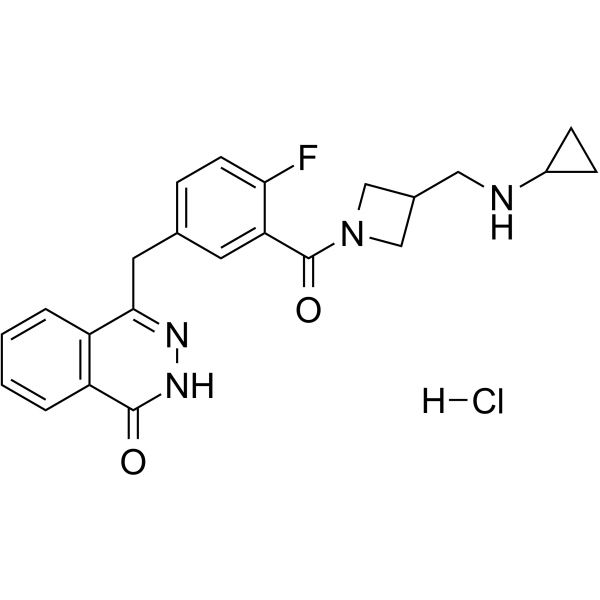 0 ImagesCat. No.: HY-137457ACAS No.: 1681020-60-9Synonyms: IDX-1197 hydrochlorideVenadaparib (IDX-1197) hydrochloride is a potent and selective PARP inhibitor with anticancer activities. Venadaparib hydrochloride can be used for solid tumors research.
-
BR102375
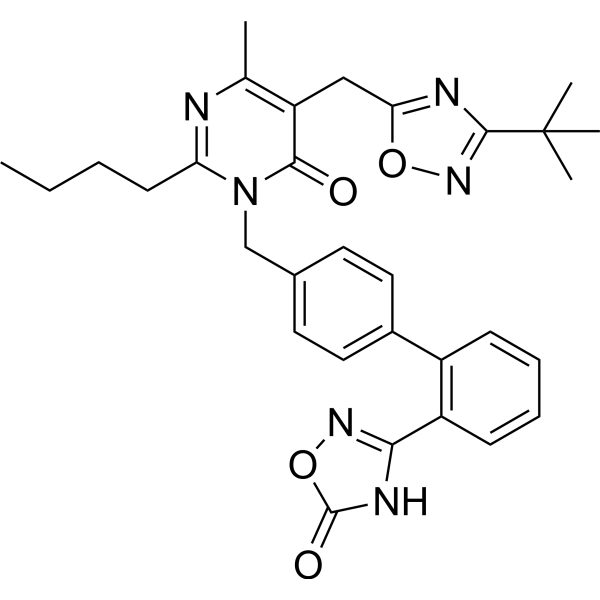 0 ImagesCat. No.: HY-128344CAS No.: 2366255-59-4BR102375 is a non-TZD peroxisome proliferator-activated receptor γ (PPAR γ) full agonist for the treatment of type 2 diabetes, reveals EC50 value of 0.28 μM and Amax ratio of 98%.
-
MS6076
 0 ImagesCat. No.: HY-178749MS6076 is a mitochondrial protease ClpP agonist. MS6076 specifically activates the ClpP protease in the mitochondrial matrix, significantly disrupting mitochondrial Electron Transport Chain (ETC) function by accelerating the degradation of unfolded proteins. MS6076 exhibits potent cytotoxicity against a variety of cancer cell lines. MS6076 induces cell apoptosis, increasing cleavage of caspase 3 and PARP. MS6076 can be used for the research of breast cancer.
-
Rucaparib acetate
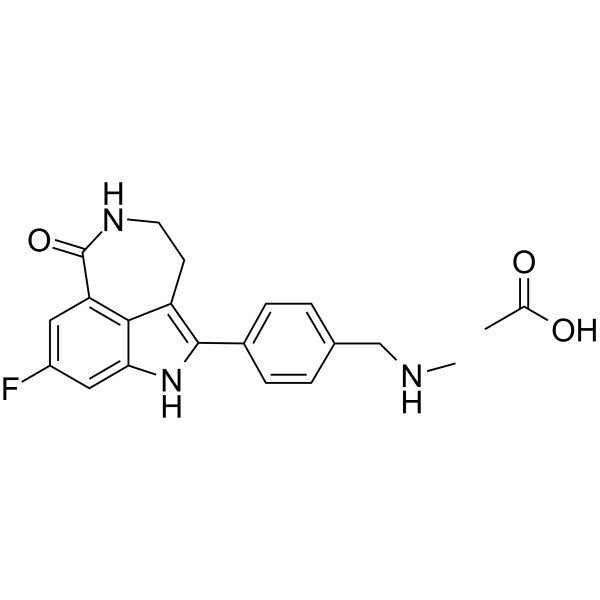 0 ImagesCat. No.: HY-10617DCAS No.: 773059-23-7Synonyms: AG014699 acetate; PF-01367338 acetateRucaparib (AG014699) acetate is an orally active, potent inhibitor of PARP proteins (PARP-1, PARP-2 and PARP-3) with a Ki of 1.4 nM for PARP1. Rucaparib acetate is a modest hexose-6-phosphate dehydrogenase (H6PD) inhibitor. Rucaparib acetate has the potential for castration-resistant prostate cancer (CRPC) research.




