



STAT1
Signal transducer and activator of transcription 1 (STAT1) is a critical transcription factor that mediates cellular responses to interferons and cytokines by undergoing tyrosine phosphorylation, dimerization, and nuclear translocation to regulate target gene expression[1][2]. Mechanistically, STAT1 modulates the JAK/STAT signaling pathway, influencing immune regulation, apoptosis, and inflammation, and it can inhibit the Ras-MAPK pathway and Rho GTPase expression, thereby controlling cell proliferation and adhesion[3]. STAT1 exists as functionally distinct α and β isoforms, which differ in transcriptional activity and protein stability; STAT1β specifically enhances tumor immune surveillance by promoting CD8+ T-cell infiltration and suppressing M2 macrophage polarization in ovarian cancer[4]. In disease models, aberrant STAT1 activation contributes to epithelial ovarian cancer progression, airway inflammation, and spinal cord injury, while targeted inhibition of STAT1 reduces apoptosis and inflammatory responses[5][6][7]. Compared with other STAT family members, STAT1 exhibits unique regulatory interactions, such as selective inhibition by PIAS1 and differential phosphorylation at Y701 and S727, which modulate both canonical and non-canonical pathways[1][3]. Small-molecule inhibitors and agonists, including fostamatinib, MK256, and 15dPGJ2, have been shown to modulate STAT1 activity in vitro and in vivo, offering tools for experimental intervention and potential therapeutic applications[8][9][2]. These findings position STAT1 as a key regulator of immune and stress responses, distinct from related isoforms, and a targetable node for experimental and clinical studies.
References:
- [1]. Tian X, et al. Physical interaction of STAT1 isoforms with TGF-β receptors leads to functional crosstalk between two signaling pathways in epithelial ovarian cancer. J Exp Clin Cancer Res. 2018 May 11;37(1):103. [Content Brief]
- [2]. Huang XP, et al. miR-135a inhibits airway inflammatory response in asthmatic mice via regulating JAK/STAT signaling pathway. Braz J Med Biol Res. 2021 Jan 15;54(3):e10023. [Content Brief]
- [3]. Lan N, et al. STAT1β modulates the tumor immune microenvironment to improve prognosis in ovarian cancer: a comprehensive study of transcriptional and protein expression differences. J Ovarian Res. 2025 Aug 23;18(1):192. [Content Brief]
- [4]. Liu B, et al. Inhibition of Stat1-mediated gene activation by PIAS1. Proc Natl Acad Sci U S A. 1998 Sep 1;95(18):10626-31. [Content Brief]
- [5]. Guo R, et al. Fostamatinib, a Spleen Tyrosine Kinase Inhibitor, Exerts Anti-Inflammatory Activity via Inhibiting STAT1/3 Signaling Pathways. J Inflamm Res. 2024 Nov 25;17:9757-9771. [Content Brief]
- [6]. Lee JC, et al. MK256 is a novel CDK8 inhibitor with potent antitumor activity in AML through downregulation of the STAT pathway. Oncotarget. 2022 Nov 2;13:1217-1236. [Content Brief]
- [7]. Wu YX, et al. STAT1 inhibitor alleviates spinal cord injury by decreasing apoptosis. Genet Mol Res. 2016 Mar 28;15(1). [Content Brief]
- [8]. Wang S, et al. Stat1 is an inhibitor of Ras-MAPK signaling and Rho small GTPase expression with implications in the transcriptional signature of Ras transformed cells. Cell Cycle. 2009 Jul 1;8(13):2070-9. [Content Brief]
- [9]. Chen CW, et al. Inhibition of IFN-gamma-mediated inducible nitric oxide synthase induction by the peroxisome proliferator-activated receptor gamma agonist, 15-deoxy-delta 12,14-prostaglandin J2, involves inhibition of the upstream Janus kinase/STAT1 signaling pathway. J Immunol. 2003 Jul 15;171(2):979-88. [Content Brief]
-
STAT1 Related Products (49)
Related Products (49)

-
Antibodies (6)
-
KMR-206
 0 ImagesKMR-206 is a PARP7 inhibitor with an IC50 of 13.7 nM. KMR-206 relieves AHR-mediated transcriptional repression and enhances CYP1A1 expression in the presence of TCDD. KMR-206 induces the STING-dependent IFN-β signaling pathway and increases the levels of STAT1, pSTAT1 and nuclear PARP7 in cancer cells. KMR-206 reduces the viability of lung adenocarcinoma cells, enhances radiation-induced immunogenic signals, and induces the production of immunogenic signals in glioblastoma cancer stem cells. KMR-206 destabilizes FRA1 to increase IRF1 levels and promotes the IRF3-CBP/p300 interaction. KMR-206 can be used in studies related to lung adenocarcinoma and glioblastoma.
-
QL-1200186
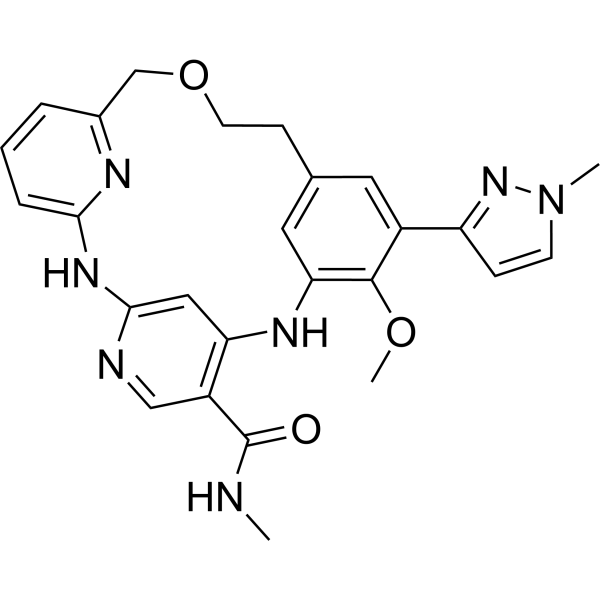 0 ImagesQL-1200186 is a selective, orally active, allosteric inhibitor targeting the tyrosine kinase TYK2 pseudokinase domain JH2 (IC50=0.06 nM, TYK2 JH2), with 164-fold selectivity over TYK1 JH2 (IC50=9.85 nM,TYK1 JH2). QL-1200186 first stabilizes the TYK2 JH2 conformation, inhibits the activity of the JH1 catalytic domain, and blocks the IFNα, IL-12/IL-23-mediated JAK-STAT signaling pathway. QL-1200186 can inhibit the production of Th1/Th17 cell-related cytokines (such as IFNγ, IL-23), reduce immune cell activation, and has no significant effect on JAK1/2/3 kinase activity. QL-1200186 can significantly improve skin inflammation in the Imiquimod (HY-B0180)-induced psoriasis mouse model and reduce the Psoriasis Area and Severity Index (PASI) score. QL-1200186 can be used in the study of autoimmune diseases such as psoriasis and systemic lupus erythematosus (SLE).
-
LRRK2 inhibitor 1
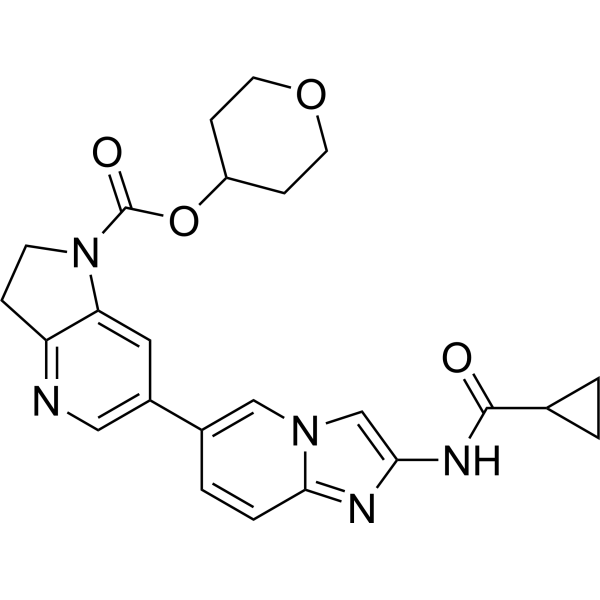
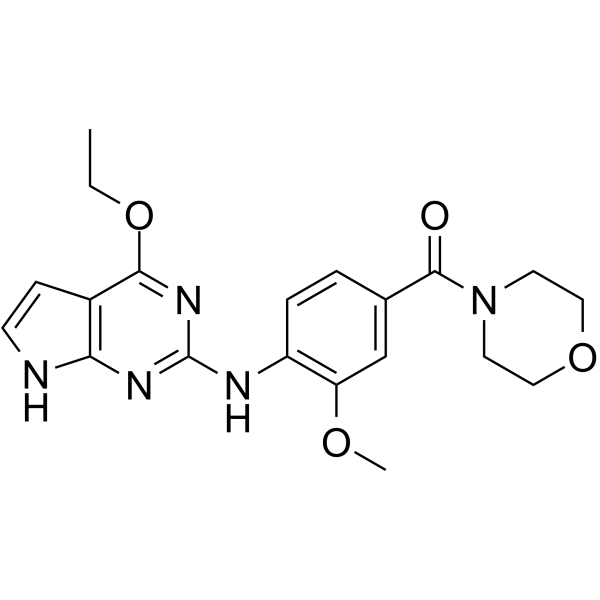 0 ImagesLRRK2 inhibitor 1 is a LRRK2 inhibitor. LRRK2 inhibitor 1 blocks STAT1 phosphorylation and the expression of interferon-stimulated genes, and inhibits intracellular innate immune responses. LRRK2 inhibitor 1 enhances oncolytic virus infection, replication and viral protein expression in tumor cells, promotes tumor cell apoptosis, and cooperates with oncolytic viruses to reduce tumor cell viability. LRRK2 inhibitor 1 enhances the oncolytic activity of multiple oncolytic viruses, and inhibits the growth of glioma xenografts when used in combination with oncolytic viruses. LRRK2 inhibitor 1 can be used in research related to various cancers such as lung cancer, colorectal cancer and liver cancer.
-
RBN012811
 0 ImagesRBN012811 is a highly selective PROTAC-based PARP14 degrader. RBN012811 forms a ternary complex with cereblon by binding to the NAD+ site of PARP14, and mediates the specific degradation of PARP14 via the ubiquitin-proteasome pathway (IC50=10 nM). RBN012811 effectively depletes endogenous PARP14 in various cell lines and primary human macrophages, thereby downregulating IL-10 production and IFN-β mRNA levels, increasing phosphorylated STAT1 levels to enhance inflammatory signaling, and inhibiting interferon-induced ADPr condensate formation. RBN012811 also modulates viral replication, exhibiting increased HSV1 replication while reducing VSV replication. RBN012811 has important application value in research related to cancer and viral infections.
-
Itacitinib adipate
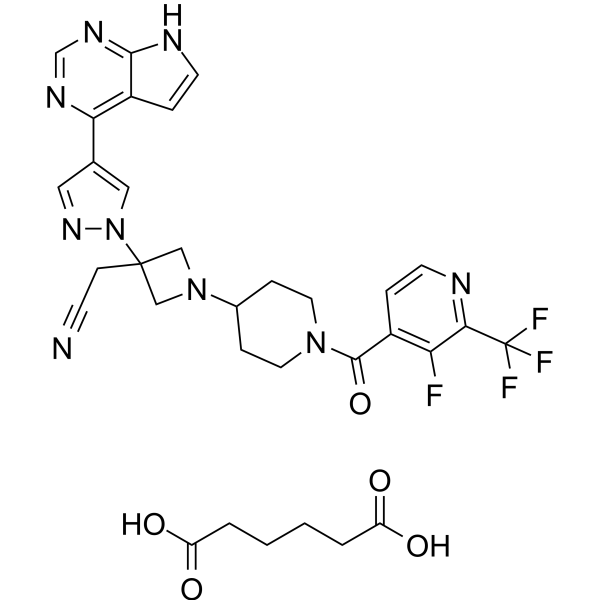 0 ImagesSynonyms: INCB039110 adipateItacitinib adipate (INCB039110 adipate) is an orally active JAK1-selective inhibitor. Itacitinib adipate inhibits IFN-γ-mediated phosphorylation of STAT1 and downstream pro-inflammatory signaling pathways. Itacitinib adipate reduces the frequency and number of splenic neutrophils in mouse models, downregulates the levels of pro-inflammatory cytokines and chemokines, and inhibits pro-inflammatory gene expression pathways. Itacitinib adipate improves survival rate and clinical scores in mouse models of hemophagocytic lymphohistiocytosis (HLH), and also suppresses metastasis in NSCLC models with high Rab1A expression. Itacitinib adipate can be used for research on hemophagocytic lymphohistiocytosis and non-small cell lung cancer.
-
IFN-α Receptor Recognition Peptide 1
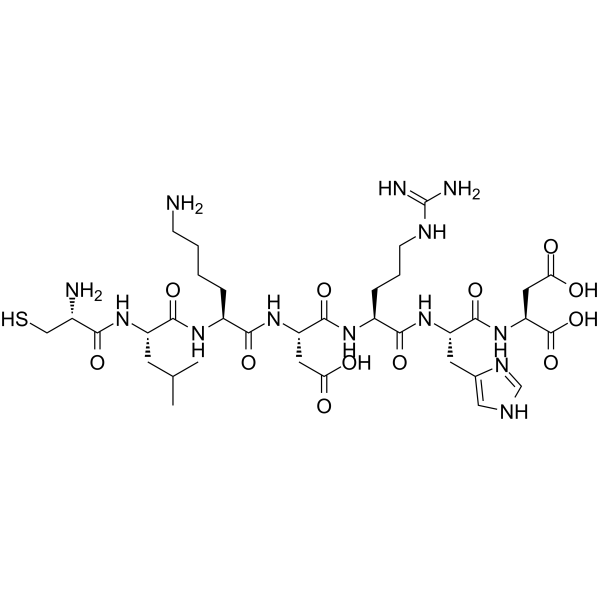 0 ImagesCat. No.: HY-P1758CAS No.: 153840-64-3Synonyms: IRRP1IFN-α Receptor Recognition Peptide 1 (IRRP1) is an amino acid synthetic peptide and also a regulator of IFN-α Receptor. IFN-α Receptor Recognition Peptide 1 binds to IFNAR2, enhances the binding capacity of IFN-α receptor, and slightly increases the IFN-α-induced growth inhibitory activity. IFN-α Receptor Recognition Peptide 1 inhibits IFN-α-induced STAT1 phosphorylation and STAT-DNA binding by blocking the activation of IFNAR by IFN-α. IFN-α Receptor Recognition Peptide 1 increases the occupancy of IFN-α on cell surface receptors, enhances the phosphorylation activation of ISGF3, and elevates IFN-α-induced antiviral activity. IFN-α Receptor Recognition Peptide 1 can be used in studies related to encephalomyocarditis virus infection.
-
Biflorin
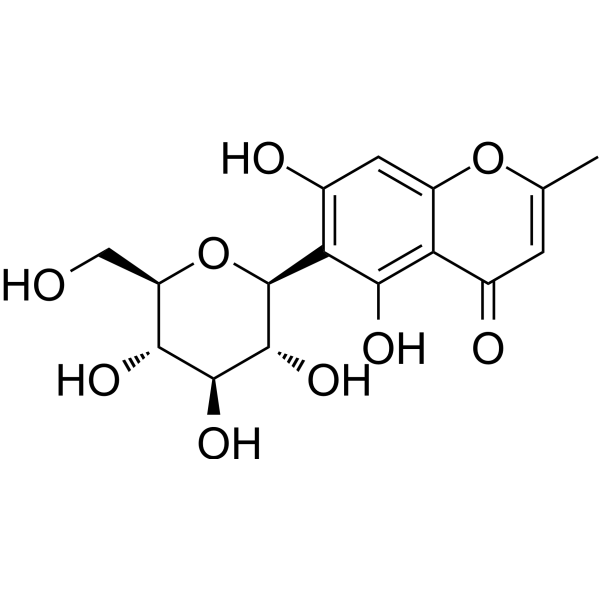 0 ImagesBiflorin has antimicrobial, antitumor, antiinflammatory and antimutagenic activities. Biflorin is found in the roots of Capraria biflora L.
-
(Rac)-Lonafarnib
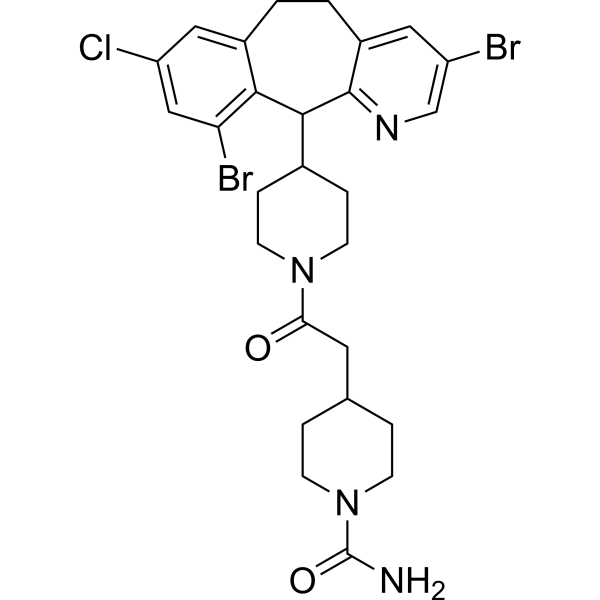 0 ImagesCat. No.: HY-15136BCAS No.: 193275-86-4Synonyms: Sch66336 racemate(Rac)-Lonafarnib (Sch66336 racemate) is an isomer of Lonafarnib (HY-15136). Lonafarnib (Sch66336) is an orally active, blood-brain barrier penetrant farnesyltransferase (FPTase) inhibitor. Lonafarnib increases the phosphorylation levels of Akt, CaMKII and CREB, upregulates BDNF expression in the hippocampus, elevates the content of α7nAChR on cell membranes, and blocks the isoprenylation of H-Ras. Lonafarnib repairs synapses and reverses spatial memory deficits in Aβ1-42 model mice. Lonafarnib inhibits RSV fusion and replication, and alleviates virus-induced lung injury. Lonafarnib activates the lysosomal and autophagic pathways, and reduces the phosphorylation and aggregation of tau. Lonafarnib acts synergistically with Sorafenib (HY-10201) to promote apoptosis, and inhibits the proliferation and invasion of melanoma cells. Lonafarnib inhibits the farnesylation of progerin, repairs nuclear membrane defects, and activates the cGAS-STING-STAT1 signaling pathway. Lonafarnib can be used in research related to diseases including Alzheimer's disease, viral infections, melanoma, and progeria.
-
CDK8-IN-2
 0 ImagesCat. No.: HY-114178CAS No.: 1879980-97-8
-
Pabgraminone C
 0 ImagesCat. No.: HY-184119CAS No.: 3061276-55-6Synonyms: IM502Pabgraminone C (IM502) is a Fungal metabolite and PI3Kγ inhibitor with an IC50 of 61.7 nM against PI3Kγ. Pabgraminone C shifts the STAT signaling pathway in cells from an immunosuppressive STAT3/STAT6-dominant profile to an immunostimulatory STAT1/STAT2-dominant profile, driving cells toward a pro-inflammatory phenotype. Pabgraminone C reprograms cells from an immunosuppressive state to an immunostimulatory state, reversing their suppressive effect on anti-tumor immunity. Pabgraminone C inhibits established tumor growth and metastasis across multiple cancer types. Pabgraminone C overcomes resistance to PD-1 checkpoint blockade strategies. Pabgraminone C can be used in research related to liver cancer, melanoma, and colorectal cancer.

-
Fa-Au
 0 ImagesCat. No.: HY-183554Fa-Au is a TrxR inhibitor. Fa-Au downregulates GPX4, induces oxidative stress, mitochondria-associated ferroptosis (ferroptosis) and immunogenic cell death. Fa-Au induces ROS production in hepatoma cells. Fa-Au remodels the tumor immune microenvironment via M1 macrophage polarization, dendritic cell maturation, CD8+ T cell activation and reduction of regulatory T cells. Fa-Au induces an anti-tumor immune feedback loop through the IFNγ/STAT1/SLC7A11 axis. Fa-Au inhibits tumor growth. Fa-Au is applicable to hepatocellular carcinoma-related research.
-
BAY-356
 0 ImagesCat. No.: HY-P992321BAY-356, a potent TWEAK receptor agonist, is an aglycosylated anti-TWEAK receptor antibody. BAY-356 triggers TWEAKR hyperactivation, activates NFκB and STAT1 pathways, and undergoes TWEAKR-dependent internalization. BAY-356 can be used for the research of colorectal cancer, bladder cancer, non-small cell lung cancer and pancreatic cancer[1][2].
-
ITA-5
 0 ImagesCat. No.: HY-178915CAS No.: 2374162-36-2
-
Apoptosis inducer 55
 0 ImagesCat. No.: HY-180226Apoptosis inducer 55 (Compound 10) is an Apoptosis inducer. Apoptosis inducer 55 induces rapid apoptosis via the intrinsic pathway. Apoptosis inducer 55 potently inhibits several signaling cascades including AKT, ERK1/2, STAT1, STAT3, and S6K. Apoptosis inducer 55 has anti-cancer activity against melanoma.
-
Orazipone
 0 ImagesCat. No.: HY-106981CAS No.: 137109-78-5Synonyms: OR 1384Orazipone (OR 1384) is a small molecule immunomodulator with strong anti-inflammatory properties. Orazipone exerts its immunomodulatory effect by forming reversible thiol complexes, which bind to intracellular signaling proteins and the thiol groups of glutathione. Orazipone exhibits potent anti-eosinophilic activity by inducing apoptosis. Orazipone inhibits activation of inflammatory transcription factors NF-kB and STAT 1 and decreases inducible iNOS expression and NO production in response to inflammatory stimuli. Orazipone reduces NADPH oxidase activity and thereby decreases ROS production. Orazipone has a protective effect in intestinal radiation injury.
-
PTPN2/1-IN-4
 0 ImagesCat. No.: HY-178716CAS No.: 3093350-55-8PTPN2/1-IN-4 (Compound WS35) is an orally active, dual-functional inhibitor of PTPN1 and PTPN2 with IC50s of 12.8 and 5.8 nM for PTPN1 and PTPN2, respectively. PTPN2/1-IN-4 modulates the IFNγ-JAK-STAT signaling pathway and significantly augments CD8+ T-cell tumor infiltration. PTPN2/1-IN-4 has potent anticancer activity, robustly inhibiting tumor growth both as a monotherapy and in combination with an anti-PD-1 antibody in B16-OVA syngeneic mouse models.
-
TPST2-IN-1
 0 ImagesCat. No.: HY-179288TPST2-IN-1 is a potent and selective TPST2 inhibitor with an IC50 of 946 nM and a Ka of 19.4 μM. TPST2-IN-1 increases the phosphorylation of Stat1 and upregulates the IFNγ-responsive gene CXCL10 by inhibiting TPST2 activity.TPST2-IN-1 exhibits anti-tumor activity and enhances T cell-mediated antitumor immunity characterized by increased infiltration of effector CD8+ T cells. TPST2-IN-1 can be used for the research of cancer, such as colon cancer.
-
PD-305
 0 ImagesCat. No.: HY-183937APD-305 is a selective PTPN2 PROTAC degrader, with DC50 values of 0.25 nM and 5.11 nM against PTPN2 and PTPN1, respectively. PD-305 enhances IFN-γ-induced STAT1 phosphorylation, inhibits the proliferation of IFN-γ-stimulated colorectal cancer cells, promotes CD8+ T cell activation, enhances the tumor-killing activity of T cells, and suppresses tumor growth in mouse models. PD-305 can be used for the research of colorectal cancer.




