



TGF-beta/Smad
Transforming growth factor beta
Transforming growth factor-beta (TGF-β) is a member of a superfamily of pleiotropic proteins that regulate multiple cellular processes such as growth, development and differentiation. The intracellular effectors of TGF-beta signalling, the Smad proteins, are activated by receptors and translocate into the nucleus, where they regulate transcription. Although this pathway is inherently simple, combinatorial interactions in the heteromeric receptor and Smad complexes, receptor-interacting and Smad-interacting proteins, and cooperation with sequence-specific transcription factors allow substantial versatility and diversification of TGF-beta family responses. Other signalling pathways further regulate Smad activation and function.
In addition, TGF-beta receptors activate Smad-independent pathways that not only regulate Smad signalling, but also allow Smad-independent TGF-beta responses. Aberrant TGF-β signaling is associated with a variety of diseases, such as fibrosis, cardiovascular disease and cancer. Hence, the TGF-β signaling pathway is recognized as a potential drug target.
TGF-beta/Smad Isoform Specific Products
All Product Categories
-
TGF-beta/Smad Inhibitors
(203)
View all products
-
TGF-beta/Smad Agonists
(7)
View all products
-
TGF-beta/Smad Antagonist
(1)
View all products
-
TGF-beta/Smad Activators
(36)
View all products
-
TGF-beta/Smad Modulators
(6)
View all products
-
TGF-beta/Smad Inducers
(6)
View all products
-
TGF-beta/Smad Control
(1)
View all products
-
TGF-β1 Proteins
(39)
View all products
-
TGF-β2 Proteins
(9)
View all products
-
TGF-β3 Proteins
(6)
View all products
-
Smad Family Proteins
(8)
View all products
-
SMAD2 Proteins
(2)
View all products
-
SMAD3 Proteins
(3)
View all products
-
SMAD4 Proteins
(1)
View all products
-
SMAD5 Proteins
(2)
View all products
-
TGF-β Proteins
(53)
View all products
-
TGF-beta/Smad Related Products (285)
Related Products (285)

-
Recombinant Proteins (62)
-
Antibodies (18)
-
TGF-beta/Smad Isoform Comparison
-
CX-Se13
 0 ImagesCat. No.: HY-187219CX-Se13 is an orally active pulmonary fibrosis inhibitor with anti-inflammatory and antioxidant activities. CX-Se13 regulates the Keap1/Nrf2/HO-1/NQO1, YAP/TAZ-TEAD, NF-κB p65 and TGF-β/Smads signaling pathways. CX-Se13 activates the cellular antioxidant defense system, restores redox balance, alleviates inflammatory responses, reduces collagen deposition, decreases pro-inflammatory cytokine levels and inhibits pathological progression. CX-Se13 can be used in studies related to pulmonary fibrosis.
-
HSF1/AMPK activator 1
 0 ImagesCat. No.: HY-181808CAS No.: 2170935-59-6HSF1/AMPK activator 1 is a compound that modulates the HSF1/AMPK axis and the TGF-β1/Smad signaling pathway. HSF1/AMPK activator 1 exhibits anti-hepatic fibrosis activity and metabolic stability. HSF1/AMPK activator 1 inhibits fibrosis formation and cell proliferation in activated hepatic stellate cells. HSF1/AMPK activator 1 alleviates liver injury and hepatic fibrosis symptoms in fibrotic mice. HSF1/AMPK activator 1 is applicable to research related to hepatic fibrosis.
-
Visugromab (Powder)
 0 ImagesCat. No.: HY-P99100ACAS No.: 2556646-63-8Synonyms: CLT-002 (Powder)Visugromab (CTL-002) (Powder) is a GDF-15 neutralizing IgG4 mAb. Visugromab (Powder) has synergistic anticancer activity with the anti-PD1 antibody Nivolumab (HY-P9903) and can effectively act on PD-1/PD-L1 relapsed/refractory metastatic solid tumors. Recommend Isotype Controls: Human IgG4 (S228P) kappa, Isotype Control (HY-P99003).
-
Mongersen sodium scrambled negative control
 0 ImagesCat. No.: HY-145721CMongersen sodium scrambled negative control is the sequence scrambled negative control of Mongersen sodium.
-
Anti-SOSTDC1 Antibody
 0 ImagesCat. No.: HY-P992304Anti-SOSTDC1 Antibody is a monoclonal antibody that targets SOSTDC1. Anti-SOSTDC1 Antibody can be used in ELISA, FACS, and functional assays.
-
AZD8701 sodium scrambled negative control
 0 ImagesCat. No.: HY-159692CAZD8701 sodium scrambled negative control is the sequence scrambled negative control of AZD8701 sodium.
-
Perfluoroundecanoic acid-13C7
 0 ImagesCat. No.: HY-W142432SPerfluoroundecanoic acid-13C7 is the 13C-labeled Perfluoroundecanoic acid (HY-W142432). Perfluoroundecanoic acid is a perfluoroalkyl substance (PFAS). Perfluoroundecanoic acid is an orally active oxidative stress inducer. Perfluoroundecanoic acid promotes macrophage M2 polarization, activates Wnt/β-catenin signaling and enhances β-catenin nuclear accumulation. Perfluoroundecanoic acid -induced M2 phenotype macrophage accelerates tumor progression in vitro and in vivo. Perfluoroundecanoic acid induces DNA damage, reproductive and pathophysiological dysfunctions via oxidative stress in male Swiss mice. Perfluoroundecanoic acid inhibits Leydig cell development in pubertal male rats via inducing oxidative stress and autophagy. Perfluoroundecanoic acid accelerates insulitis development in a mouse model of type 1 diabetes. Perfluoroundecanoic acid can be used for the study of ovarian cancer, type 1 diabetes and inflammation.
-
MEDI-579
 0 ImagesCat. No.: HY-P992410MEDI-579 is a fully human monoclonal antibody against PAI-1, with a KD value of 6 pM for human PAI-1 and 105 pM for rat PAI-1. MEDI-579 restores renal plasmin activity and inhibits PAI-1-mediated intracellular signal transduction. MEDI-579 reduces albuminuria, glomerulosclerosis severity, TGF-β1 expression level, and phosphorylated Smad2 level induced in diabetic mice. MEDI-579 decreases the levels of active PAI-1 in plasma and kidneys, and increases plasma plasmin level in a mouse model of lupus nephritis. MEDI-579 can be used in research related to diabetic nephropathy and lupus nephritis. The recommended isotype control is human IgG1 kappa (HY-P99001).
-
Halofuginone hydrochloride (Standard)
 0 ImagesCat. No.: HY-N1584BRCAS No.: 1217623-74-9Synonyms: RU-19110 hydrochloride (Standard)Halofuginone hydrochloride (Standard) (RU-19110 hydrochloride (Standard)) is the analytical standard of Halofuginone hydrochloride (HY-N1584B). This product is intended for research and analytical applications. Halofuginone hydrochloride (RU-19110 hydrochloride), a Febrifugine derivative, is a competitive prolyl-tRNA synthetase inhibitor with a Ki of 18.3 nM. Halofuginone hydrochloride is a specific inhibitor of type-I collagen synthesis and attenuates osteoarthritis (OA) by inhibition of TGF-β activity. Halofuginone hydrochloride is also a potent pulmonary vasodilator by activating Kv channels and blocking voltage-gated, receptor-operated and store-operated Ca2+ channels. Halofuginone hydrochloride has anti-malaria, anti-inflammatory, anti-cancer, anti-fibrosis effects.
-
TGF-β1/Smad-IN-1
 0 ImagesCat. No.: HY-176737CAS No.: 3097194-50-5TGF-β1/Smad-IN-1 (compound C9) is a potent TGF-β1/Smad inhibitor. TGF-β1/Smad-IN-1 inhibits the expression of fibrosis markers (α-SMA and COL1A1) induced by TGF-β1. TGF-β1/Smad-IN-1 shows antifibrotic effects. TGF-β1/Smad-IN-1 has the potential for the research of hepatic fibrosis.
-
PD173074 (GMP)
 0 ImagesCat. No.: HY-10321GCAS No.: 219580-11-7PD173074 GMP is PD173074 (HY-10321) produced by using GMP guidelines. GMP small molecules works appropriately as an auxiliary reagent for cell therapy manufacture. PD173074 is an orally active FGFR inhibitor that targets the transphosphorylation of FGFR1 and FGFR2 and blocks the FGF signaling pathway. By reducing the phosphorylation level of SMAD2 and altering the expression of Nodal/Activin target genes, PD173074 eliminates endothelial differentiation potential, thereby inhibiting the formation of capillary-like structures. PD173074 blocks the proliferation and colony formation of tumor cells and increases intratumoral cell apoptosis. PD173074 successfully reverses FGF-2-induced chemoresistance to enhance the effect of cisplatin (HY-17394) in small cell lung cancer models. PD173074 can be applied to research related to critical limb ischemia and small cell lung cancer.
-
Santamarine
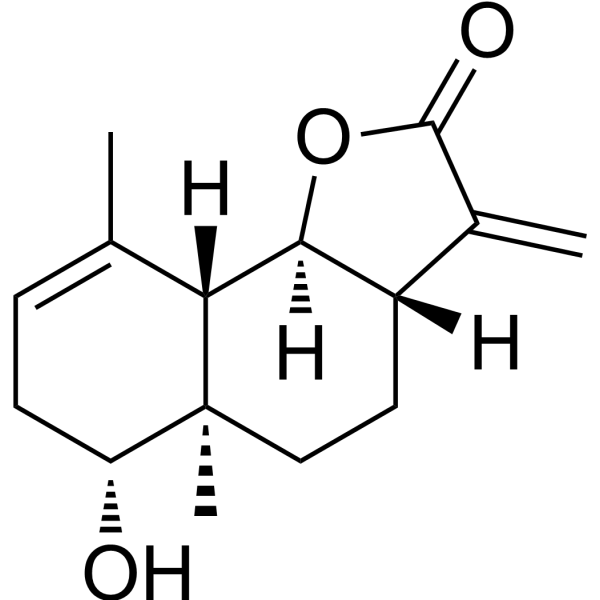 0 ImagesSantamarine (Santamarin; Balchanin) is a sesquiterpene lactone found in Artemisia scoparia. Santamarine shows anti-inflammatory, antioxidant, anticancer and anti-photoaging activities. Santamarine suppresses UVA-induced phosphorylation of JNK and p38 MAPK, nuclear translocation of phosphorylated c-Fos and c-Jun, and AP-1-mediated MMP-1 transcription and secretion. Santamarine suppresses NF-κB signaling, iNOS, COX-2, TNF-α, and IL-1β production. Santamarine inhibits thioredoxin reductase activity, induces ROS production, mitochondrial apoptosis, G2/M cell cycle arrest, and DNA damage, and reduces cancer cell growth. Santamarine can be used for the photoaging, inflammatory diseases and cancer.
-
HOXA1-IN-1
 0 ImagesCat. No.: HY-181823CAS No.: 3118854-61-5HOXA1-IN-1 is a HOXA1 inhibitor. HOXA1-IN-1 downregulates HOXA1 protein levels, suppresses its transcriptional activity, and alters the expression of its downstream target genes. HOXA1-IN-1 induces DNA damage and apoptosis in cancer cells. HOXA1-IN-1 exhibits antitumor efficacy in xenograft models of colorectal cancer and triple-negative breast cancer. HOXA1-IN-1 shows synergistic activity in combination with Cisplatin (HY-17394). HOXA1-IN-1 can be used for the research of colorectal cancer and triple-negative breast cancer.
-
AS2863619 (GMP)
 0 ImagesCat. No.: HY-126675GCAS No.: 2241300-51-4AS2863619 GMP is AS2863619 (HY-126675) produced by using GMP guidelines. GMP small molecules works appropriately as an auxiliary reagent for cell therapy manufacture. AS2863619 is an orally active CDK8/19 inhibitor that also inhibits BMP2, MDA5 and RIG-I receptors. AS2863619 targets Stat5a-CDK8/19 to promote the differentiation of CD4+ T cells into regulatory T cells and induce FOXP3 expression, thereby restoring immune homeostasis and establishing transplant immune tolerance. AS2863619 also enhances the BMP2/SMAD signaling pathway to promote osteogenic differentiation and inhibit adipogenic differentiation. AS2863619 exerts osteoprotective effects by alleviating inflammation-induced impairment of osteogenic function and inducing neutrophil apoptosis (apoptosis). AS2863619 can be applied to research in related fields such as periodontitis-induced bone defects.
-
STAT6-IN-12
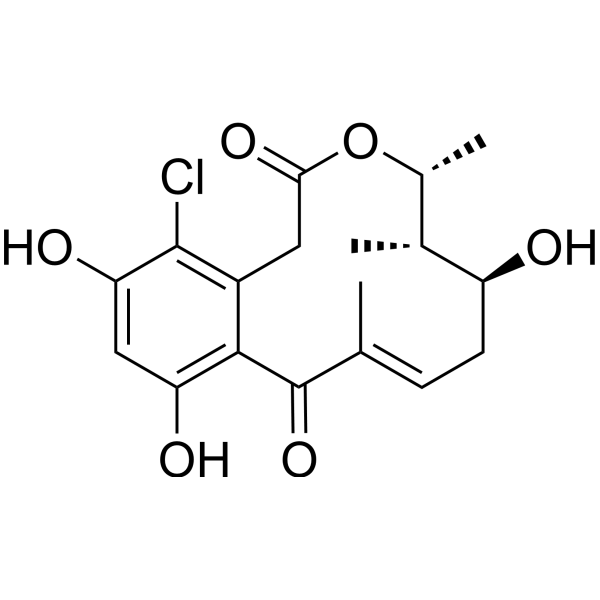 0 ImagesCat. No.: HY-162405CAS No.: 2949393-27-3STAT6-IN-12 is a potent STAT6 inhibitor with an IC50 of 50 nM. STAT6-IN-12 also inhibits Smad2/3 with an IC50 of 68 nM. STAT6-IN-12 inhibits TGFβ-dependent Smad2/3 signaling pathway, IL-4-dependent STAT6 signaling pathway, and cellular inflammatory responses. STAT6-IN-12 can be used for the research of inflammation.
-
H-Leu-Ser-Lys-Leu-OH
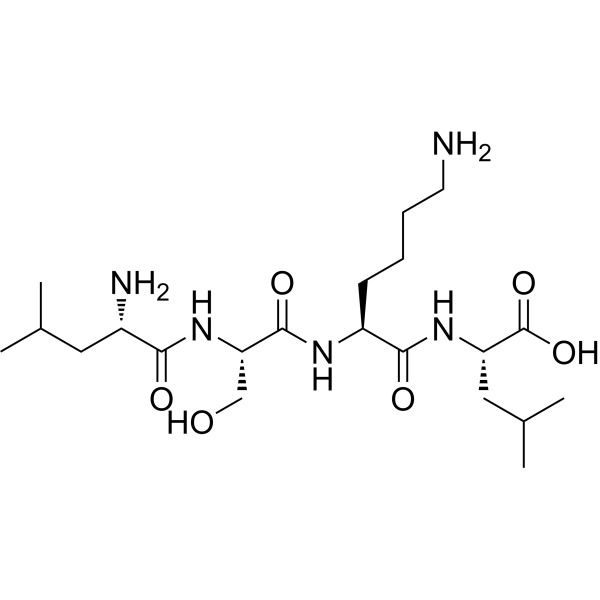 0 ImagesCat. No.: HY-P3971CAS No.: 162559-45-7
-
Hydrochlorothiazide-15N2,13C,d2
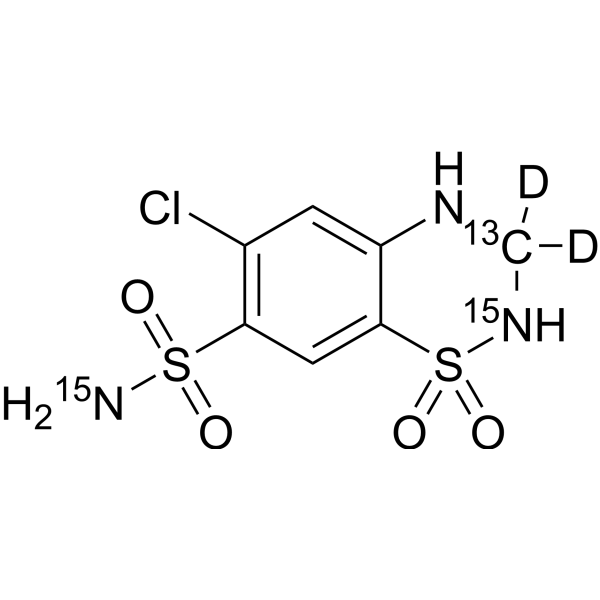 0 ImagesCat. No.: HY-B0252S3CAS No.: 2140316-81-8Synonyms: HCTZ-15N2,13C,d2Hydrochlorothiazide-15N2,13C,d2 is 15N and deuterated labeled Hydrochlorothiazide (HY-B0252). Hydrochlorothiazide (HCTZ), an orally active diuretic agent of the thiazide class, inhibits transforming TGF-β/Smad signaling pathway. Hydrochlorothiazide has direct vascular relaxant effects via opening of the calcium-activated potassium (KCA) channel. Hydrochlorothiazide improves cardiac function, reduces fibrosis and has antihypertensive effect.

-
DCN1-IN-2
 0 ImagesCat. No.: HY-169026CAS No.: 2543578-57-8DCN1-IN-2 is a DCN1 inhibitor with an IC50 value of 2.96 nM. DCN1-IN-2 can alleviate Ang II/TGFβ-induced activation of cardiac fibroblasts. DCN1-IN-2 can reduce ISO-induced cardiac fibrosis and remodeling in mice by selectively inhibiting cullin 3.
-
TGF-β1/Smad3-IN-2
 0 ImagesCat. No.: HY-182038TGF-β1/Smad3-IN-2 is an orally active antifibrotic agent. TGF-β1/Smad3-IN-2 has high affinity for VDR and can inhibit the TGFβ/SMAD3 signaling pathway. TGF-β1/Smad3-IN-2 inhibits hepatic stellate cell activation, reduces extracellular matrix deposition, and alleviates liver fibrosis in a bile duct ligation mouse model. TGF-β1/Smad3-IN-2 can be used for the research of liver fibrosis.




