



Wnt
The Wnt signaling pathways are a group of signal transduction pathways made of proteins that pass signals from outside of a cell through cell surface receptors to the inside of the cell. Three Wnt signaling pathways have been characterized: the canonical Wnt pathway, the noncanonical planar cell polarity pathway, and the noncanonical Wnt/calcium pathway. All three Wnt signaling pathways are activated by the binding of a Wnt-protein ligand to a Frizzled family receptor, which passes the biological signal to the protein Dishevelled inside the cell. The canonical Wnt pathway leads to regulation of gene transcription, the noncanonical planar cell polarity pathway regulates the cytoskeleton that is responsible for the shape of the cell, and the noncanonical Wnt/calcium pathway regulates calcium inside the cell. The clinical importance of Wnt signaling pathway has been demonstrated by mutations that lead to a variety of diseases, including breast and prostate cancer, glioblastoma, type II diabetes.
Wnt Isoform Specific Products
All Product Categories
-
Wnt Related Products (442)
Related Products (442)

-
Antibodies (26)
-
Wnt Isoform Comparison
-
KY-02327
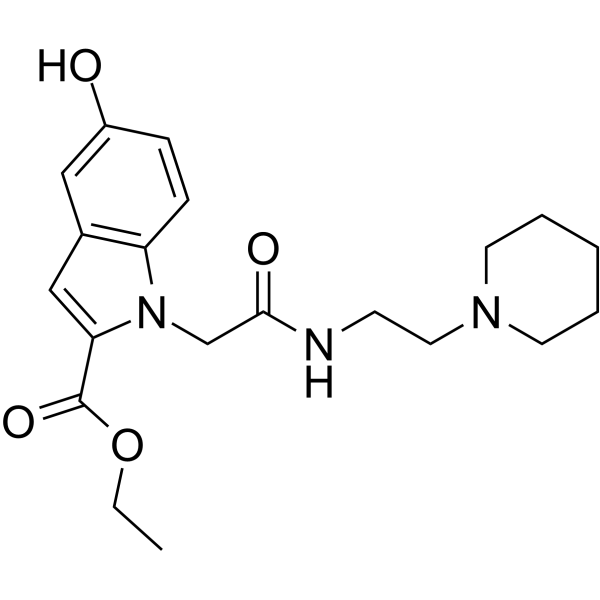 0 ImagesCat. No.: HY-124156CAS No.: 2093407-25-9KY-02327, a metabolically stabilized KY-02061 analog, is a potent Dishevelled (Dvl)-CXXC5 interaction inhibitor. KY-02327 shows an activating effect on the Wnt/β-catenin pathway, resulting in promotion of osteoblast differentiation.
-
Nesuparib hydrochloride
 0 ImagesCat. No.: HY-145584ACAS No.: 2055357-65-6Synonyms: JPI-547/OCN-201 hydrochloride
-
Shizukaol D
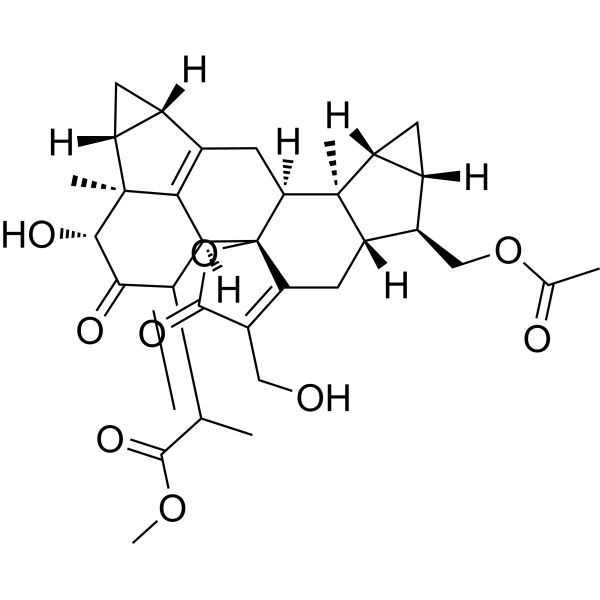 0 ImagesCat. No.: HY-N1302CAS No.: 142279-42-3
-
FJ9
 0 ImagesFJ9 is a NHERF1/PDZ inhibitor with human NHERF1 PDZ1 IC50 1540 μM, NHERF1 PDZ2 IC50 160 μM, and Frizzled-7-Dishevelled PDZ complex Ki 10 μM. FJ9 binds ligand-binding pockets of NHERF1 PDZ domains to block cognate ligand interactions, disrupts Frizzled-7-Dishevelled interactions, and down-regulates canonical Wnt signaling. FJ9 induces apoptosis in cancer cells with intact β-catenin signaling. FJ9 can be used for the research of non-small cell lung cancer, melanoma.
-
EML631
 0 ImagesCat. No.: HY-121511CAS No.: 2101206-36-2EML631 is a SPIN1 inhibitor with a Kd of 3-7 μM. EML631 interacts with the second Tudor domain of SPIN1 and blocks its ability to read the H3K4me3 histone mark. EML631 inhibits the coactivator activity of SPIN1 in the Wnt signaling pathway and reduces the activity of Wnt response reporter genes. EML631 can be used in cancer-related research.
-
BIBO3304 diTFA
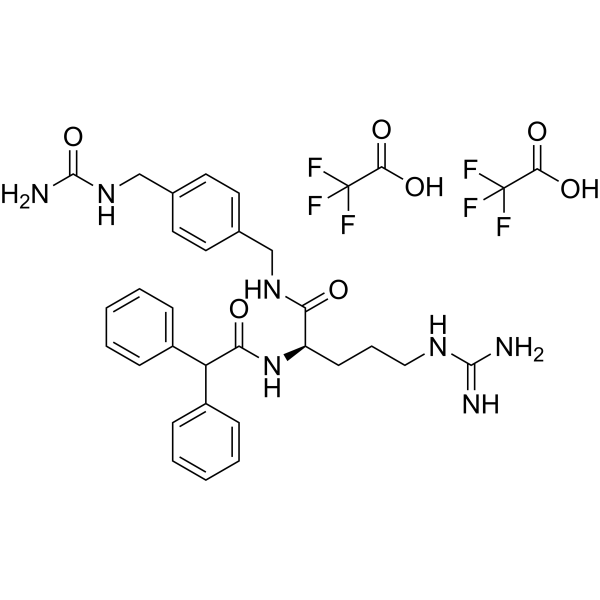 0 ImagesCat. No.: HY-107725ACAS No.: 2310085-85-7BIBO3304 (diTFA) is an orally effective and selective neuropeptide Y (NPY) Y1 receptor antagonist. BIBO3304 (diTFA) has a high affinity for both human and rat Y1 receptors, with IC50 values of 0.38 and 0.72 nM, respectively. BIBO3304 (diTFA) promotes bone-tendon healing through the Wnt/β-catenin signaling pathway.
-
β-catenin-IN-10
 0 ImagesCat. No.: HY-P11660β-catenin-IN-10 is a β-catenin:TCF4 interaction inhibitor with an IC50 of 5.44 μM. β-catenin-IN-10 inhibits the Wnt and AR signaling pathways with IC50 values of 0.105 μM and 1.02 μM, respectively. β-catenin-IN-10 suppresses the proliferation of castration-resistant prostate cancer cells. β-catenin-IN-10 is applicable to research related to prostate cancer.

-
Dinactin
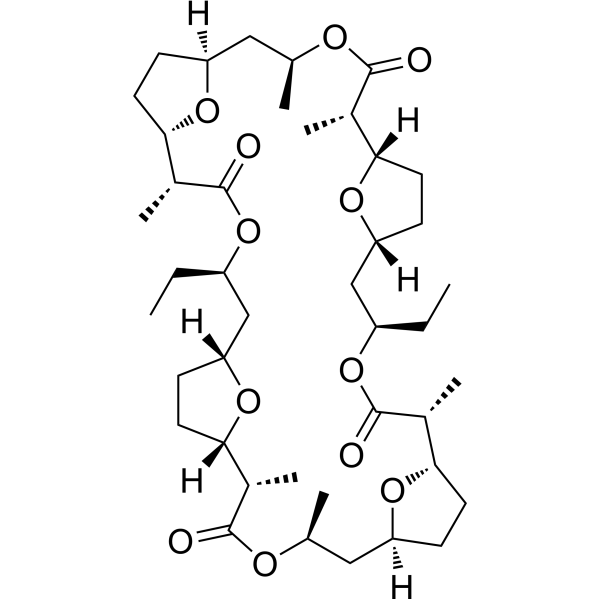 0 ImagesCat. No.: HY-121333CAS No.: 20261-85-2Dinactin, an antibiotic ionophore produced by Streptomyces species, as an effective small molecule targeting Wnt/β-catenin signaling pathway in cancer cells. Dinactin shows marked inhibition of HCT-116 cell growth with an IC50 of 1.1 μM. Dinactin shows anti-proliferative activity against the cancer cells in apoptosis-independent manner. Dinactin is also an effective agent for the research of neuropathic pain.
-
IWP-4 (GMP)
 0 ImagesCat. No.: HY-12879GCAS No.: 686772-17-8IWP-4 (GMP) is the GMP-grade form of IWP-4 (HY-12879). IWP-4 is a Wnt inhibitor with an IC50 of 25 nM. IWP-4 specifically inhibits casein kinase 1δ/ε (CK1δ/ε), with an IC50 of 1.06 μM against wild-type CK1δ, 1.02 μM against the CK1δ kinase domain, and 7.07 μM against CK1ε; it shows enhanced inhibitory activity against the M82F CK1δ mutant (IC50 = 0.14 μM). IWP-4 is applicable to research related to cancer, Alzheimer's disease (AD), and heart failure.
-
OSU-03013
 0 ImagesCat. No.: HY-122352CAS No.: 742112-34-1OSU-03013 is a Celecoxib (HY-14398) analog. OSU-03013 can promote apoptosis, up-regulate E-cadherin, and down-regulate β-catenin, c-myc, Wnt1, and N-cadherin. OSU-03013 reduces cell migration and invasion. OSU-03013 regulates both Wnt and mTOR expression to inhibit colon cancer (CC) cell proliferation. OSU-03013 can be used for CC cancer research.
-
Ginkgetin (Standard)
 0 ImagesGinkgetin (Standard) is the analytical standard of Ginkgetin. This product is intended for research and analytical applications. Ginkgetin, a biflavone, is isolated from Ginkgo biloba leaves. Ginkgetin exhibit anti-tumor, anti-inflammatory, neuroprotective, anti-fungal activities. Ginkgetin is also a potent inhibitor of Wnt signaling, with an IC50 of 5.92 μΜ.
-
SLD1121
 0 ImagesCat. No.: HY-181560CAS No.: 2759011-75-9SLD1121 is an agonist of the Wnt/β-catenin signaling pathway that enhances Wnt signaling by targeting LRP6 (Kd: 4.52-7.49 nM). SLD1121 interacts with the intracellular domain of LRP6, stabilizes LRP6, promotes its nuclear translocation, and facilitates its binding to β-catenin, TCF4 or LEF1 in the nucleus, thereby inducing the expression of Wnt-regulated genes and stem cell-related genes. SLD1121 induces the transition of hair follicles from telogen to anagen in the mouse hair growth cycle and promotes hair growth in mice. SLD1121 is applicable to hair loss-related research.

-
KP-6
 0 ImagesCat. No.: HY-P6441CAS No.: 2102414-23-1KP-6, a polypeptide, is a Wnt/β-catenin signal inhibitor. KP-6 inhibits TGF-β and blocks rush fibrosis signal path crucial in vivo. KP-6 suppresses Renal tissues damage and renal fibrosis, and reverse the course of disease of chronic kidney disease (CKD).
-
TC-E 5001
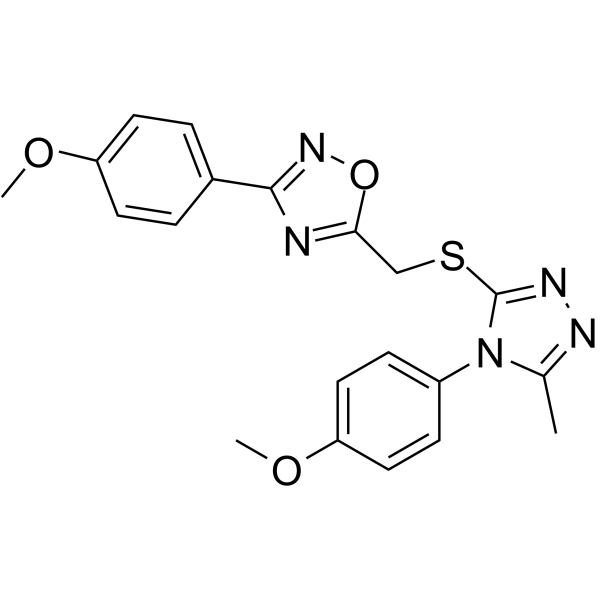 0 ImagesCat. No.: HY-108516CAS No.: 865565-29-3TC-E 5001 is an inhibitor of Wnt pathway that inhibits tankyrase 1/2 (TNKS1/2) via novel adenosine pocket binding, with Kds of 79 nM and 28 nM, respectively. TC-E 5001 also inhibits Axin2 and STF, with IC50s of 0.709 μM and 0.215 μM, respectively.
-
Platycodin D (Standard)
 0 ImagesCat. No.: HY-N1411RCAS No.: 58479-68-8Platycodin D (Standard) is the analytical standard of Platycodin D. This product is intended for research and analytical applications. Platycodin D is a saponin isolated from Platycodon grandiflorus, acts as an activator of AMPKα, with anti-obesity property. WNT/β-catenin pathway mediates the anti-adipogenic effect of platycodin D.
-
UM206_L
 0 ImagesCat. No.: HY-P11867CAS No.: 1242439-00-4UM206_L is a linear Wnt fragment peptide derived from conserved Wnt3a/Wnt5a sequences, inactive in soluble form but capable of activating canonical Wnt/β-catenin signaling when conjugated to magnetic nanoparticles and exposed to a high-gradient, time-varying magnetic field or immobilized on glass surfaces.
-
Wnt/β-catenin-IN-5
 0 ImagesCat. No.: HY-173489CAS No.: 2805248-10-4Wnt/β-catenin-IN-5 (compound 19T) is a Wnt/β-catenin signaling pathway inhibitor. Wnt/β-catenin-IN-5 inhibits HCT 116, SW480, and A549 cells activity with IC50s of 3.05, 3.27 and 34.91 μM, respectively.




