



c-Myc
Myc
The transcription factor c-Myc is a member of the basic helix-loop-helix leucinezipper (bHLHZip) protein family. The target genes of the c-MYC protein participate in different cellular functions, including cell cycle, survival, protein synthesis, cell adhesion, and micro-RNA expression. c-Myc is also one of the four factors used in reprogramming somatic cells to induce pluripotent stem (iPS) cells and is implicated in maintaining cancer stem-like cells (CSCs). Most biological functions of c-Myc require heterodimerization with its activation partner Max.
c-Myc is also part of a dynamic network whose members interact selectively with one another and with various transcriptional coregulators and histone-modifying enzymes. Deregulated expression of c-MYC caused by gene amplification, retroviral insertion, or chromosomal translocation is associated with tumorigenesis. c-Myc has been identified as a highly promising target for cancer therapy.
All Product Categories
-
c-Myc Related Products (261)
Related Products (261)

-
Antibodies (12)
-
FUBP1-IN-2
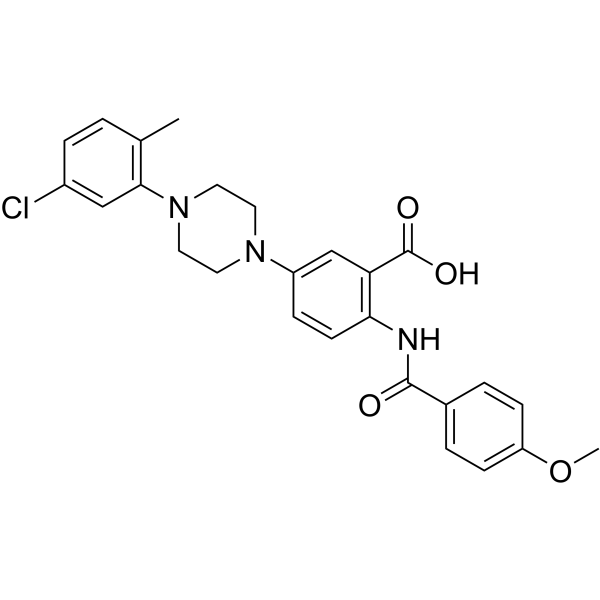 0 ImagesFUBP1-IN-2 (compound 9) is a potent FUBP1 (far upstream binding protein 1) inhibitor. FUBP1-IN-2 inhibits the KH4 FUBP1-FUSE interaction in a gel shift assay. FUBP1-IN-2 binds to FUBP1 in a ChIP assay. FUBP1-IN-2 reduces both c-Myc mRNA and protein expression, increases p21 mRNA and protein expression, and depletes intracellular polyamines.
-
CFT-2718
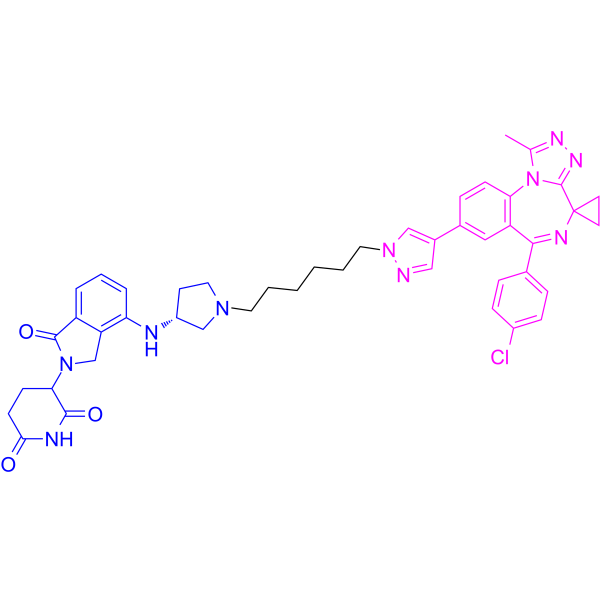 0 ImagesCat. No.: HY-132941Purity: 99.87%CFT-2718 is a selective CRBN-dependent BRD4 PROTAC degrader. CFT-2718 mediates rapid, selective BRD4 degradation, reduces total and phosphorylated Ser2 RPB1 levels, and reduces MYC protein levels. CFT-2718 can inhibit cancer cells proliferation and induce apoptosis. CFT-2718 reduces growth of lung cancer and pancreatic patient-derived xenograft models. CFT-2718 can be used for the research of cancer, such as small-cell lung cancer and pancreatic cancer.
-
Chrysomycin A
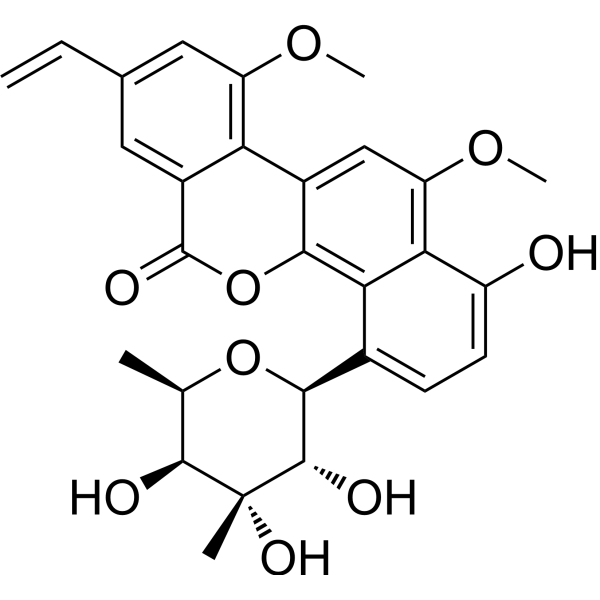 0 ImagesSynonyms: Chr-AChrysomycin A (Chr-A), an antibiotic, can be obtained from Streptomyces. Chrysomycin A exhibits antitumor and anti-tuberculous and MRSA activities. As for glioblastoma, Chrysomycin A inhibits the proliferation, migration, and invasion of cancer cells through the Akt/GSK-3β/β-catenin signaling pathway.
-
MJP6412
 0 ImagesCat. No.: HY-168201CAS No.: 3105406-14-9MJP6412 is a p300 and CBP PROTAC degrader that potently degrades p300 and CBP in 22Rv1 cells with DC50 values of 1.6 nM and 1.2 nM, respectively. MJP6412 downregulates the expression of AR-FL, AR-V7 and c-MYC, as well as androgen receptor target genes (KLK3, FKBP5, TMPRSS2). MJP6412 completely abolishes p300/CBP-dependent histone acetylation (H3K27Ac and H2BNTAC) and induces G1 cell cycle arrest. MJP6412 inhibits cancer cell proliferation and tumor growth. MJP6412 can be used in prostate cancer-related research.
-
dIRF4-2
 0 ImagesCat. No.: HY-185697CAS No.: 3136609-62-3dIRF4-2 is a selective IRF4 PROTAC degrader with a DC50 value of 2.2 μM. dIRF4-2 forms a ternary complex between IRF4 and CRBN, inducing ubiquitination and proteasomal degradation of IRF4. dIRF4-2 downregulates MYC. dIRF4-2 exhibits anticancer activity against myeloma. dIRF4-2 acts as a chemical probe for investigating IRF4 function, mimicking the IRF4 gene knockout phenotype. dIRF4-2 can be used in the research of multiple myeloma.
-
ZS3-046
 0 ImagesCat. No.: HY-176457CAS No.: 3087879-97-5ZS3-046 is a potent TAF1 PROTAC degrader with a DC50 < 10 nM. ZS3-046 recruits the CRBN E3 ubiquitin ligase, promotes polyubiquitination and proteasomal degradation of TAF1, thereby activating p53 and downregulating c-Myc, and ultimately induces apoptosis of tumor cells. ZS3-046 can be used in research related to acute myeloid leukemia.
-
AGB-374
 0 ImagesCat. No.: HY-182242AGB-374 is an orally active NDUFS7 inhibitor. AGB-374 destabilizes NDUFS7 protein and inhibits oxidative phosphorylation by targeting mitochondrial complex I. AGB-374 reduces MYC protein levels in colon cancer cells in vivo and delays tumor growth in syngeneic mouse models of colon cancer. AGB-374 synergistically enhances the cytotoxicity of copper chelators against cancer cells. AGB-374 cooperates with copper chelators to downregulate MYC and NDUFS7 protein levels in cancer cells. AGB-374 can be used for the research of colon cancer.
-
rel-AZ5576
 0 ImagesCat. No.: HY-111537CAS No.: 1333468-05-5rel-AZ5576 is a selective CDK9 inhibitor with the activity of downregulating Mcl-1 and MYC mRNA transcription and protein expression in diffuse large B-cell lymphoma by inhibiting CDK9, promoting MYC protein turnover, reducing MYC phosphorylation on the stable Ser62 residue and downregulating MYC transcriptional targets, inhibiting the growth of diffuse large B-cell lymphoma cell lines in vitro and in vivo and independent of the cell origin.
-
BRD4 Inhibitor-18
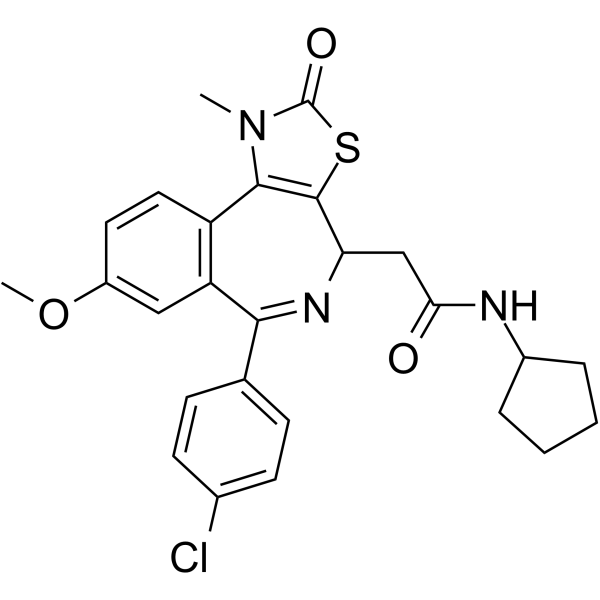 0 ImagesCat. No.: HY-146660CAS No.: 2451219-73-9BRD4 Inhibitor-18 is a highly potent BRD4 inhibitor with an IC50 value of 110 nM. BRD4 Inhibitor-18 has a hydrophobic acetylcyclopentanyl side chain. BRD4 Inhibitor-18 can significantly suppress the proliferation of MV-4-11 cells with high BRD4 level. BRD4 Inhibitor-18 has apoptosis-promoting and G0/G1 cycle-arresting activity.
-
SNX-7081
 0 ImagesCat. No.: HY-111165CAS No.: 908111-22-8SNX-7081 is an Hsp90 inhibitor with Ki and IC50 values of 26 nM and 44 nM, respectively. SNX-7081 blocks the nuclear translocation of NF-κB, inhibits the production of pro-inflammatory cytokines, attenuates the ERK/JNK and PDGF signaling pathways, and suppresses LPS (HY-D1056)-induced nitric oxide production. SNX-7081 inhibits DNA repair, induces G2/M cell cycle arrest, and triggers apoptosis via downregulation of MYC/nucleolin and activation of Fas. SNX-7081 can be used in research related to rheumatoid arthritis and cancer.
-
FTO-IN-16
 0 ImagesCat. No.: HY-179267FTO-IN-16 (Compound 8a-1), a FTO-IN-15 (HY-179266) prodrug, is a potent FTO inhibitor. FTO-IN-16 suppresses acute myeloid leukemia (AML) cell viability, increases m6A levels, downregulates c-Myc and CEBPA, and upregulates ASB2 and RARA. FTO-IN-16 induces apoptosis. FTO-IN-16 demonstrates strong in vivo efficacy in AML mouse xenografts. FTO-IN-16 can be used for the research of AML.
-
BRD4-BD1-IN-4
 0 ImagesCat. No.: HY-187207BRD4-BD1-IN-4 is a selective BRD4 BD1 inhibitor with an IC50 of 0.82 μM and a Kd of 0.98 μM. BRD4-BD1-IN-4 downregulates the expression of c-myc and anti-apoptotic proteins, elevates ROS levels, reduces mitochondrial membrane potential, induces DNA damage and triggers apoptosis. BRD4-BD1-IN-4 inhibits the migration and proliferation of cancer cells. BRD4-BD1-IN-4 can be used in the research of lung cancer, breast cancer and colon cancer.
-
c-MYC/BCL2 ligand 1 iodide
 0 ImagesCat. No.: HY-174403c-MYC/BCL2 ligand 1 iodide is a dual-targeting c-MYC/Bcl-2 G4 ligand with Kd values of 0.90 μM (c-MYC G4) and 0.56 μM (Bcl-2 G4). c-MYC/BCL2 ligand 1 iodide inhibits c-MYC and Bcl-2 gene transcription by binding to G4-forming sequences and downregulates their protein expression. c-MYC/BCL2 ligand 1 iodide inhibits suppresses migration, induces caspase-dependent apoptosis, and triggers cell cycle G1 arrest in MCF-7 cells. c-MYC/BCL2 ligand 1 iodide significantly suppresses tumor growth in a 4T1 syngeneic model with no observable toxicity. c-MYC/BCL2 ligand 1 iodide can be used for the research of breast cancer.
-
Eleven-Nineteen-Leukemia Protein IN-4
 0 ImagesCat. No.: HY-183825Eleven-Nineteen-Leukemia Protein IN-4 is a ENL YEATS domain inhibitor with an IC50 of 62.0 nM and a Kd of 100.4 nM. Eleven-Nineteen-Leukemia Protein IN-4 downregulates MYC expression and inhibits cancer cell growth; it exerts a synergistic effect with the bromodomain inhibitor JQ-1 (HY-13030). Eleven-Nineteen-Leukemia Protein IN-4 can be used in the research of acute myeloid leukemia.
-
USP25/28-IN-2
 0 ImagesCat. No.: HY-122686CAS No.: 2165322-95-0USP25/28-IN-2 is a selectivity dual USP25/28 inhibitor with IC50 values of 0.88 and 1.1 μM, respectively. USP25/28-IN-2 modulates USP25 and USP28 activity to affect downstream pathways, modulates c-Myc oncoprotein total levels and half-life, induces apoptosis, reduces cell viability. USP25/28-IN-2 can be used for the research of colorectal carcinoma, colorectal adenocarcinoma.
-
CDK9-IN-45
 0 ImagesCat. No.: HY-179023CDK9-IN-45 (Compound B11) is a highly selective CDK9 inhibitor with IC50 values for CDK9 and CDK1 of 7.13 and 489.5 nM respectively. CDK9-IN-45 exhibits a potent inhibitory effect on colorectal cancer cells. CDK9-IN-45 induces cell apoptosis and leads to significant accumulation of ROS. CDK9-IN-45 activates Caspase-3, downregulates Mcl-1, XIAP, and c-Myc. CDK9-IN-45 can be used for research on colorectal cancer.
-
P1D-34
 0 ImagesCat. No.: HY-171334AP1D-34 is a Pin1 PROTAC degrader with a DC50 value of 177 nM. P1D-34 also down-regulates Pin1 client proteins such as Cyclin D1, Rb, Mcl-1, Akt, and c-Myc. P1D-34 shows anti-proliferative activities in a panel of acute myeloid leukemia (AML) cell lines. P1D-34 induces cell DNA damage and apoptosis by releasing ROS generation. Pink: PIN1 ligand (HY-171442A), Blue: CRBN ligand (HY-14658), Black: Linker (HY-W014883).
-
Anticancer agent 263
 0 ImagesCat. No.: HY-168886Anticancer agent 263 (compound 7) is a potent anticancer agent. Anticancer agent 263 binds to the G-quadruplex DNA (G4) sequence 22-mer Pu22, a mimic of c-Myc DNA. Anticancer agent 263 is a structure modulator, showcasing a significant enhancement in protein α-helix formation and the capability to form supramolecular network. Anticancer agent 263 shows no cytotoxicity.
-
Scopadulciol
 0 ImagesCat. No.: HY-183390CAS No.: 136565-26-9Scopadulciol is an orally effective β-catenin degrader, HSV-TK activator and proton pump inhibitor. By inducing β-catenin degradation, Scopadulciol downregulates the expression of downstream target genes such as cyclin D1, c-myc, and survivin; it also upregulates DR4/DR5 and downregulates Bcl-2, thereby exerting cytotoxicity and inducing apoptosis in cancer cells. Scopadulciol enhances the tumor-killing and bystander effects of prodrugs via activating HSV-TK, and can inactivate HSV-1. It shows synergistic antiviral effects when combined with Acyclovir (HY-17422) or Ganciclovir (HY-13637), with no cytotoxicity as a single agent. Scopadulciol can be applied in research related to bladder cancer, cervical cancer, glioblastoma, and digestive system cancers.
-
OSU-03013
 0 ImagesCat. No.: HY-122352CAS No.: 742112-34-1OSU-03013 is a Celecoxib (HY-14398) analog. OSU-03013 can promote apoptosis, up-regulate E-cadherin, and down-regulate β-catenin, c-myc, Wnt1, and N-cadherin. OSU-03013 reduces cell migration and invasion. OSU-03013 regulates both Wnt and mTOR expression to inhibit colon cancer (CC) cell proliferation. OSU-03013 can be used for CC cancer research.




