



FKBP12
FKBP12 (FKBP1A) is a highly conserved immunophilin that functions as a peptidyl-prolyl cis-trans isomerase and participates in protein folding, intracellular signaling, and calcium homeostasis[1]. Mechanistically, FKBP12 forms regulatory complexes with multiple signaling proteins, including ryanodine receptors, transforming growth factor-β (TGF-β) type I receptors, and the mammalian target of rapamycin (mTOR), thereby linking protein conformational control to signal transduction pathways[1][2]. A key biological process involving FKBP12 is the regulation of intracellular Ca2+ release, where FKBP12 associates with ryanodine receptor channels and contributes to channel gating and calcium signaling dynamics[1][3]. Through its interaction with immunosuppressive ligands, FKBP12 also serves as an essential component of the calcineurin and mTOR signaling pathways; the FKBP12-FK506 complex inhibits calcineurin, whereas the FKBP12-rapamycin complex binds the FKBP-rapamycin-binding domain of mTOR and suppresses mTOR-dependent cellular growth signaling[1][4]. Disease relevance is supported by genetic studies showing that FKBP12 deficiency in mice causes embryonic lethality associated with severe cardiac defects, highlighting its importance in cardiovascular development and calcium signaling regulation[1]. Compared with the closely related isoform FKBP12.6 (FKBP1B), FKBP12 shares structural similarity and regulatory activity toward ryanodine receptors, but FKBP12.6 exhibits distinct channel-specific interactions, particularly in cardiac calcium release systems[1]. For experimental applications, FK506 (tacrolimus) and rapamycin remain the most widely used FKBP12-binding ligands and serve as valuable chemical tools for investigating calcineurin signaling, mTOR regulation, and protein-protein interaction networks[1][4].
References:
- [1]. Tong M, et al. FK506-Binding Proteins and Their Diverse Functions. Curr Mol Pharmacol. 2015;9(1):48-65. [Content Brief]
- [2]. Hoeffer CA, et al. Removal of FKBP12 enhances mTOR-Raptor interactions, LTP, memory, and perseverative/repetitive behavior. Neuron. 2008 Dec 10;60(5):832-45. doi: 10.1016/j.neuron.2008.09.037. PMID: 19081378; PMCID: PMC2630531.
- [3]. Carmody M, et al. FKBP12 associates tightly with the skeletal muscle type 1 ryanodine receptor, but not with other intracellular calcium release channels. FEBS Lett. 2001 Sep 7;505(1):97-102. [Content Brief]
- [4]. Kolos JM, et al. FKBP Ligands-Where We Are and Where to Go? Front Pharmacol. 2018 Dec 5;9:1425. [Content Brief]
-
FKBP12 Related Products (40)
Related Products (40)

- 1
- 2
-
Rapamycin
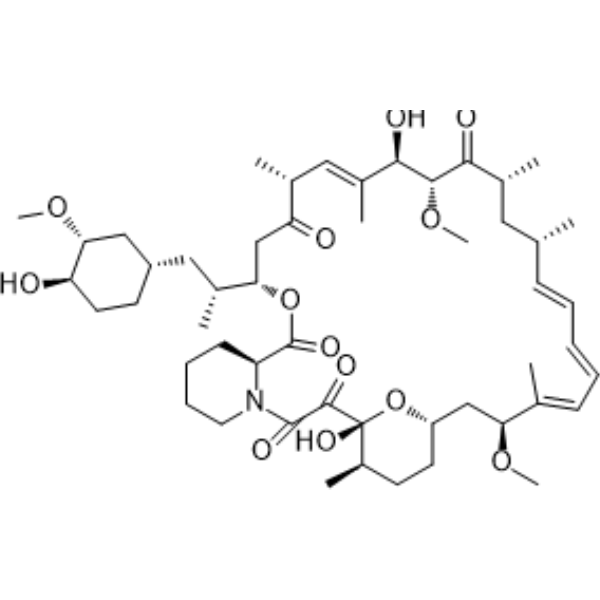 0 ImagesSynonyms: Sirolimus; AY-22989; NSC 226080Rapamycin (Sirolimus; AY 22989) is a potent and specific blood-brain barrier-transmissible mTOR inhibitor with an IC50 of 0.1 nM in HEK293 cells. Rapamycin is a molecular glue that binds FKBP12 and mTOR proteins together, thereby inhibiting mTOR kinase activity. Rapamycin binds to FKBP12 and specifically acts as an allosteric inhibitor of mTORC1. Rapamycin is an autophagy activator, an immunosuppressant.
-
FKBP12 PROTAC dTAG-13
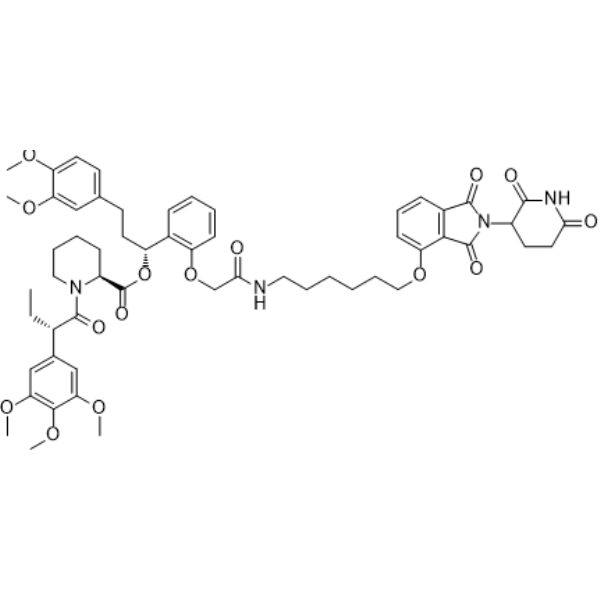 0 ImagesSynonyms: dTAG-13FKBP12 PROTAC dTAG-13 (dTAG-13) is a FKBP12F36V PROTAC degrader and a PXR partial agonist. FKBP12 PROTAC dTAG-13 induces ubiquitination and proteasomal degradation of proteins tagged with FKBP12F36V, without degrading wild-type FKBP12 or un-fused PXR. It weakly promotes the recruitment of SRC-1, strongly inhibits the interaction between NCoR and PXR, and upregulates the expression of CYP3A4 and other drug metabolism-related genes. FKBP12 PROTAC dTAG-13 is applicable to research related to breast cancer and leukemia[1].
-
Shield-1
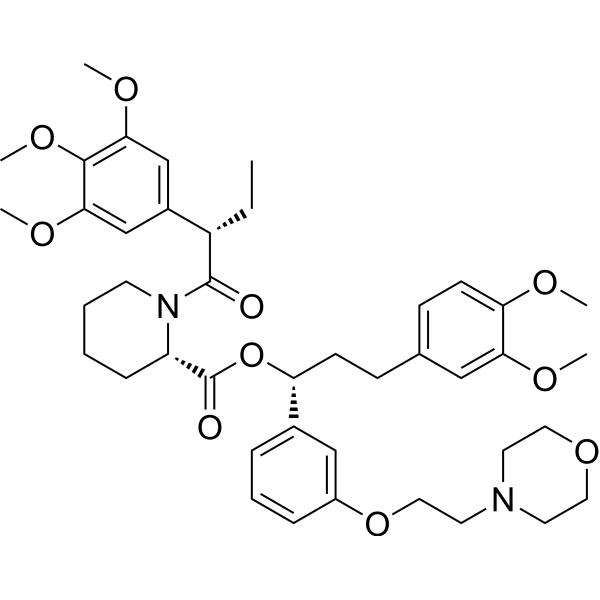 0 ImagesSynonyms: Shld1Shield-1 (Shld1) is a specific, cell-permeant and high-affinity ligand of FK506-binding protein-12 (FKBP), and reverses the instability by binding to mutated FKBP (mtFKBP), allowing conditional expression of mtFKBP-fused proteins. Shield-1 can stabilize proteins tagged with a mutated FKBP12-derived destabilization domain (DD).
-
dTAGV-1 TFA
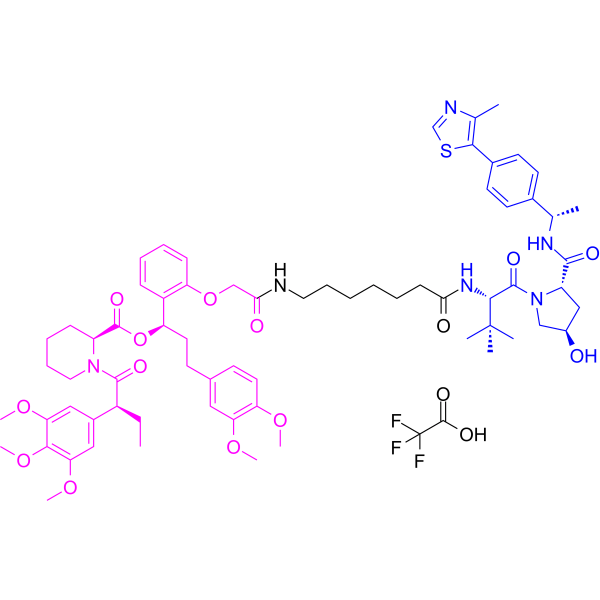 0 ImagesdTAGV-1 TFA is a selective FKBP12F36V PORTAC degrader. dTAGV-1 TFA induces rapid degradation of FKBP12F36V-tagged oncogenic fusion proteins, triggering collapse of downstream cellular signaling pathways, reduced proliferative capacity of cancer cells, and decreased levels of target proteins. dTAGV-1 TFA is applicable to functional validation studies of cancer and undegradable oncoproteins.
-
dTAGV-1 hydrochloride
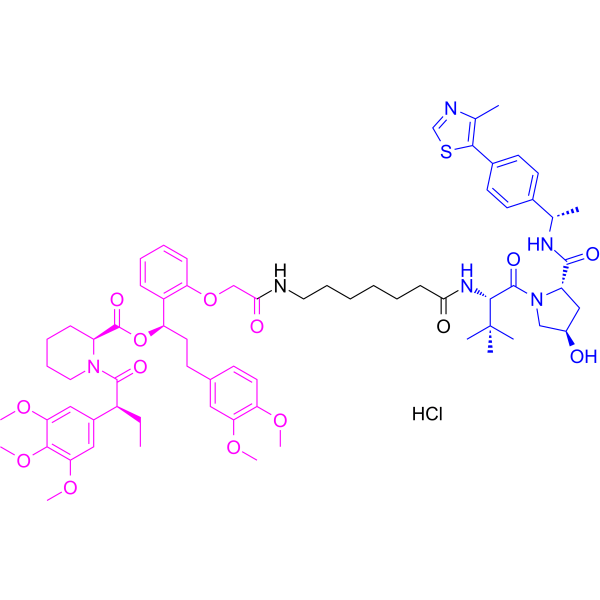 0 ImagesdTAGV-1 hydrochloride is a selective FKBP12F36V PORTAC degrader. dTAGV-1 hydrochloride induces rapid degradation of FKBP12F36V-tagged oncogenic fusion proteins, triggering collapse of downstream cellular signaling pathways, reduced proliferative capacity of cancer cells, and decreased levels of target proteins. dTAGV-1 hydrochloride is applicable to functional validation studies of cancer and undegradable oncoproteins.
-
SP3N hydrochloride
 0 ImagesCat. No.: HY-161794APurity: 99.84%SP3N hydrochloride is a specific degrader of the prolyl isomerase FKBP12. As a prodrug, SP3N hydrochloride is metabolized by Diamine oxidase into the active aldehyde metabolite SP3CHO (HY-161795). SP3N hydrochloride induces the proximity of FKBP12 to the SCFFBXO22 E3 ligase complex, thereby triggering the polyubiquitination and proteasomal degradation of FKBP12. SP3N hydrochloride can be used in cancer research.
-
SP3N
 0 ImagesCat. No.: HY-161794SP3N is a specific degrader of the prolyl isomerase FKBP12. As a prodrug, SP3N is metabolized by Diamine oxidase into the active aldehyde metabolite SP3CHO (HY-161795). SP3N induces the proximity of FKBP12 to the SCFFBXO22 E3 ligase complex, thereby triggering the polyubiquitination and proteasomal degradation of FKBP12. SP3N can be used in cancer research.
-
BRD4/FKBP12 ligand 2
 0 ImagesCat. No.: HY-176476BRD4/FKBP12 ligand 2 is a heterobifunctional BRD4 and FKBP12 (Kd of 1.0 nM) ligand. BRD4/FKBP12 ligand 2 has positive cooperativity in BRD4 binding when pre-bound to FKBP12, and FKBP12-dependent cytotoxicity in cancer cells via the CellTrap effect. BRD4/FKBP12 ligand 2 can be used for the research of hematopoietic malignancy, multiple myeloma, prostate carcinoma, acute myeloid leukemia.
-
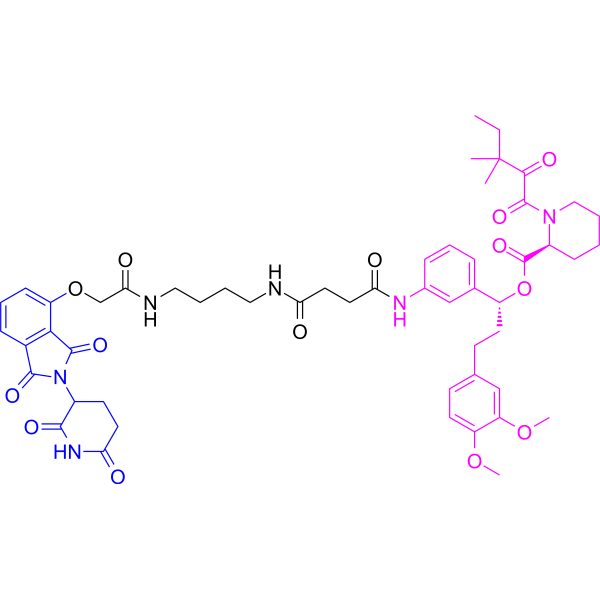
dTAG-47
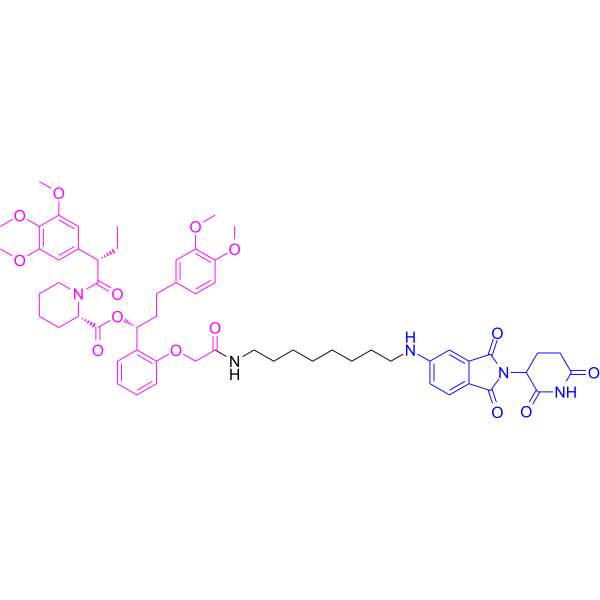 0 ImagesdTAG-47 is a heterobifunctional PROTAC degrader that specifically binds to the FKBP12F36V domain and Cereblon (CRBN). By recruiting the CRBN E3 ubiquitin ligase, dTAG-47 induces ubiquitination and proteasomal degradation of FKBP12F36V-fused Cas9 and tagged KDM5A. dTAG-47 can induce upregulated expression of some endogenous retrovirus (ERV) genes and is suitable for cancer research.
-
Rapamycin (Standard)
 0 ImagesSynonyms: Sirolimus (Standard); AY-22989 (Standard); NSC 226080 (Standard)Rapamycin (Standard) (Sirolimus (Standard)) is the analytical standard of Rapamycin (HY-10219). This product is intended for research and analytical applications. Rapamycin (Sirolimus; AY 22989) is a potent and specific blood-brain barrier-transmissible mTOR inhibitor with an IC50 of 0.1 nM in HEK293 cells. Rapamycin is a molecular glue that binds FKBP12 and mTOR proteins together, thereby inhibiting mTOR kinase activity. Rapamycin binds to FKBP12 and specifically acts as an allosteric inhibitor of mTORC1. Rapamycin is an autophagy activator, an immunosuppressant.
-
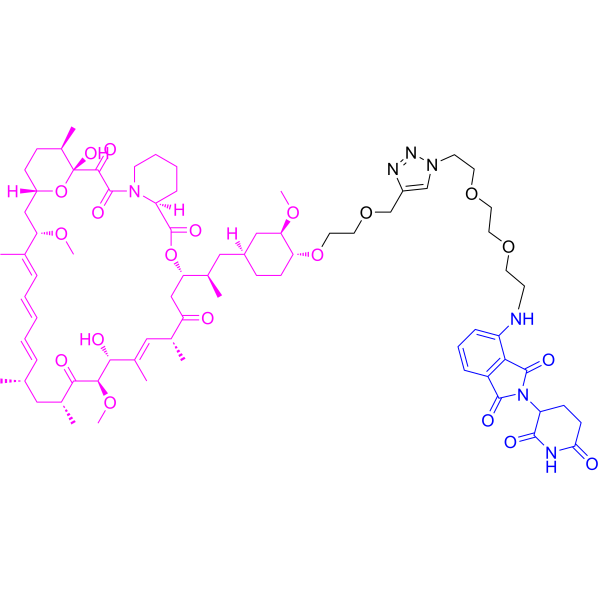
FKBP12 PROTAC dTAG-7
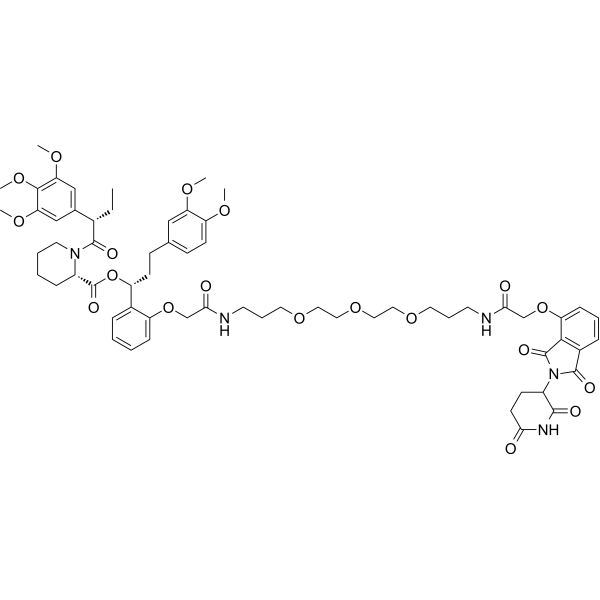 0 ImagesSynonyms: dTAG-7FKBP12 PROTAC dTAG-7 (dTAG-7) is a FKBP12F36V PROTAC degrader. FKBP12 PROTAC dTAG-7 binds FKBP12F36V and CRBN to form a complex, mediating degradation via the ubiquitin-proteasome system. FKBP12 PROTAC dTAG-7 mediates the degradation of FKBP12F36V-tagged nuclear and cytoplasmic proteins, including BRD4, HDAC1, EZH2, MYC, PLK1, KRASG12V, and antigen fusion proteins. FKBP12 PROTAC dTAG-7 enhances MHC class I antigen presentation. FKBP12 PROTAC dTAG-7 is applicable to leukemia-related research.
-
dTAGV-1
 0 ImagesdTAGV-1 is a selective FKBP12F36V PORTAC degrader. dTAGV-1 induces rapid degradation of FKBP12F36V-tagged oncogenic fusion proteins, triggering collapse of downstream cellular signaling pathways, reduced proliferative capacity of cancer cells, and decreased levels of target proteins. dTAGV-1 is applicable to functional validation studies of cancer and undegradable oncoproteins.
-
RapaBlock
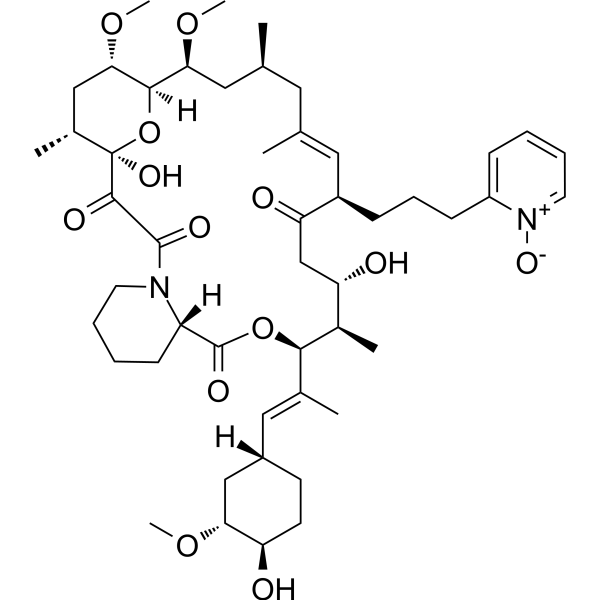 0 ImagesSynonyms: ZZY05-092RapaBlock is a potent, non-immunosuppressive and brain-impermeable FKBP12 ligand.
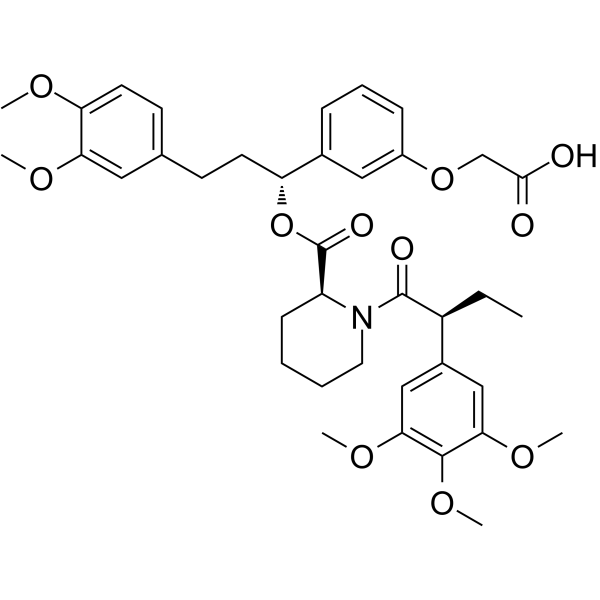
-
AP1867-2-(carboxymethoxy)
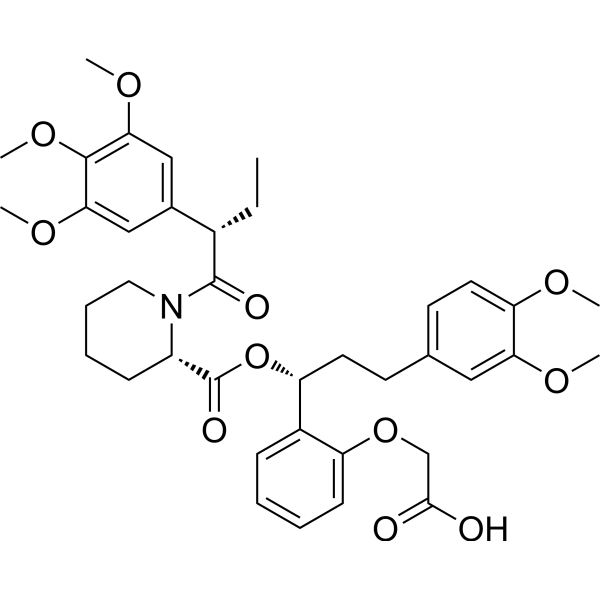 0 ImagesSynonyms: PROTAC FKBP12-binding moiety 2AP1867-2-(carboxymethoxy), the AP1867 (a synthetic FKBP12F36V-directed ligand) based moiety, binds to CRBN ligand via a linker to form dTAG molecules.
-
Rapamycin (GMP)
 0 ImagesCat. No.: HY-10219GCAS No.: 53123-88-9Synonyms: Sirolimus (GMP); AY-22989 (GMP); NSC 226080 (GMP)Rapamycin (Sirolimus) (GMP) is Rapamycin (HY-10219) produced by using GMP guidelines. GMP small molecules works appropriately as an auxiliary reagent for cell therapy manufacture. Rapamycin (Sirolimus; AY 22989) is a potent and specific blood-brain barrier-transmissible mTOR inhibitor with an IC50 of 0.1 nM in HEK293 cells. Rapamycin is a molecular glue that binds FKBP12 and mTOR proteins together, thereby inhibiting mTOR kinase activity. Rapamycin binds to FKBP12 and specifically acts as an allosteric inhibitor of mTORC1. Rapamycin is an autophagy activator, an immunosuppressant.
- 1
- 2



