



Fluorescent Dye
Fluorescence is a phenomenon of photoluminescence in luminescence. When an atom is irradiated by light, some electrons around the nucleus jump from their original orbitals to higher energy orbitals under the influence of light energy, i.e., from the ground state to the first or second excited single-line state, etc. Due to the instability of the first or second excited singlet state, the electron returns from the excited singlet state to the ground state accompanied by released energy, resulting in fluorescence.
Fluorescent dyes can be covalently bound or physically adsorbed in the structure of the substance. The fluorescence properties allow for the characterization, localization and quantitative analysis of the labeled object. Fluorescent dyes have shown great potential for the detection of proteins, nucleic acids, cells, and immunoassays, attributed to the advantages in non-radioactive contamination, simple experimental operation and easy observation.
Fluorescent dyes have penetrated many fields such as pharmacology, physiology, environmental science, and information science, as well as functional studies of proteins and drug screening.
All Product Categories
-
Fluorescent Dye Related Products (4891)
Related Products (4891)

-
Antibodies (4)
-
B261
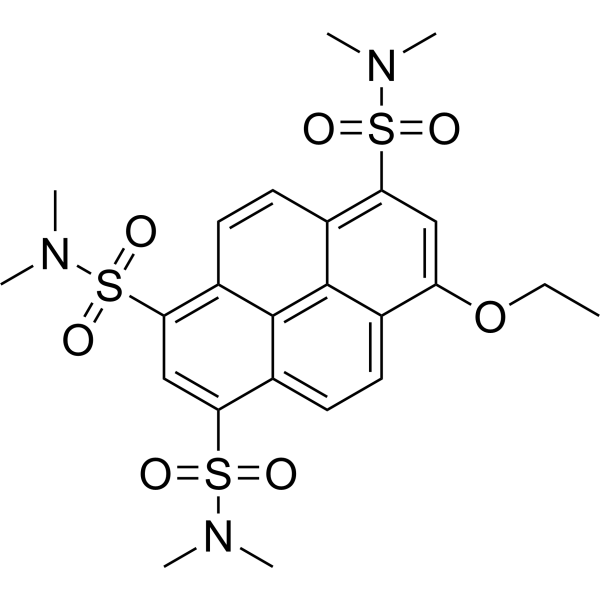 0 ImagesCat. No.: HY-D0095CAS No.: 127070-69-3B261 is a multifunctional dye. Dyes are important tools in biological experiments. They can help researchers observe and analyze cell structures, track biomolecules, evaluate cell functions, distinguish cell types, detect biomolecules, study tissue pathology and monitor microorganisms. Their applications range from basic scientific research to clinical A wide range of diagnostics. Dyes are also widely used in traditional fields such as textile dyeing, as well as in emerging fields such as functional textile processing, food pigments and dye-sensitized solar cells.
-
ATTO 550 NHS ester
 0 ImagesCat. No.: HY-D2019CAS No.: 1005770-00-2ATTO 550 NHS ester is a new fluorescent marker based on the Rhodamine structure. It has strong absorption, high fluorescence quantum yield, high thermal stability and photochemical stability, and is suitable for single molecule detection and high-resolution microscopy. ATTO 550 NHS ester is an NHS ester derivative of ATTO 550 that can be used to label proteins or antibodies.
-
NIR-PN1
 0 ImagesCat. No.: HY-D3222CAS No.: 2413264-79-4NIR-PN1 is a blood-brain barrier-permeable near-infrared fluorescent indicator targeting peroxynitrite anion (ONOO−) (Ex/Em = 510 nm/670 nm). NIR-PN1 reacts with ONOO− to trigger a strong near-infrared fluorescence enhancement, enabling the detection of ONOO− flux. NIR-PN1 allows the imaging of ONOO− flux in various Parkinson's disease models. NIR-PN1 is applicable to Parkinson's disease-related research.
-
NIR-BG2
 0 ImagesCat. No.: HY-165424CAS No.: 3036456-18-2NIR-BG2 is a fluorescent indicator targeting senescence-associated β-galactosidase (SA-β-Gal). NIR-BG2 contains a hemicyanine fluorophore caged by SA-β-Gal; cleavage of its β-galactosyl group by SA-β-Gal generates an electrophilic quinone methide, which can form covalent bonds with adjacent proteins to achieve long-term signal retention. NIR-BG2 activates a near-infrared fluorescent signal upon recognition of SA-β-Gal. NIR-BG2 can be used for non-invasive in vivo imaging of cellular senescence in mouse xenograft models. The excitation/emission wavelengths are 675/708 nm.
-
Gly-Arg-pNA
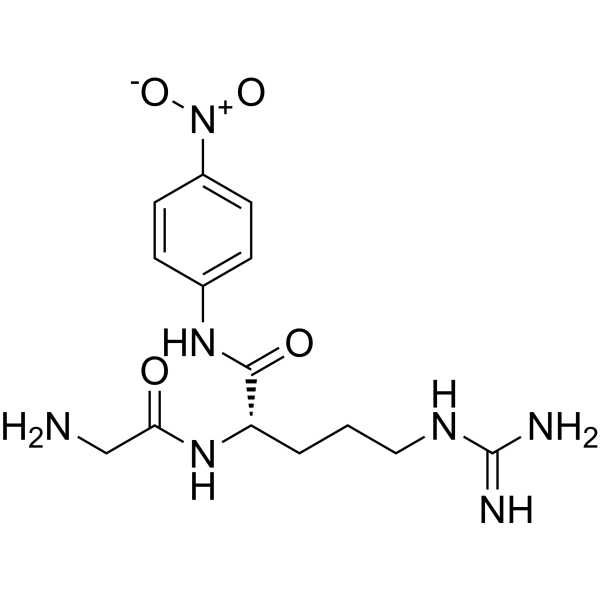 0 ImagesCat. No.: HY-P4465CAS No.: 103192-40-1Gly-Arg-pNA is a fluorogenic substrate for the measurement of protease activity. Gly-Arg-pNA undergoes hydrolysis and releases the fluorescent product p-nitroaniline. p-nitroaniline is in a fluorescent state under ultraviolet light irradiation and can emit a fluorescent signal .
-
Sulfo-Cy3-PEG2-TCO disodium
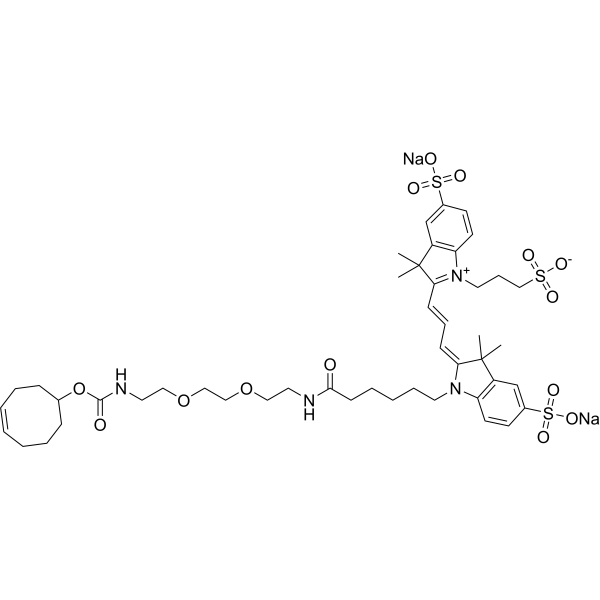 0 ImagesCat. No.: HY-D1867Sulfo-Cy3-PEG2-TCO disodium is a derivative of Cy3 (Cyanine3) (HY-D0822) dye containing sulfonate and TCO groups. The TCO groups of Sulfo-Cy3-PEG2-TCO disodium react with tetrazine functional groups in highly specific click chemistry to form covalent bonds. Thus, Sulfo-Cy3-PEG2-TCO disodium can be covalently bound to some biomolecules (especially antibodies, proteins, etc.) to track their location and dynamic changes in biological samples.
-
IR-7
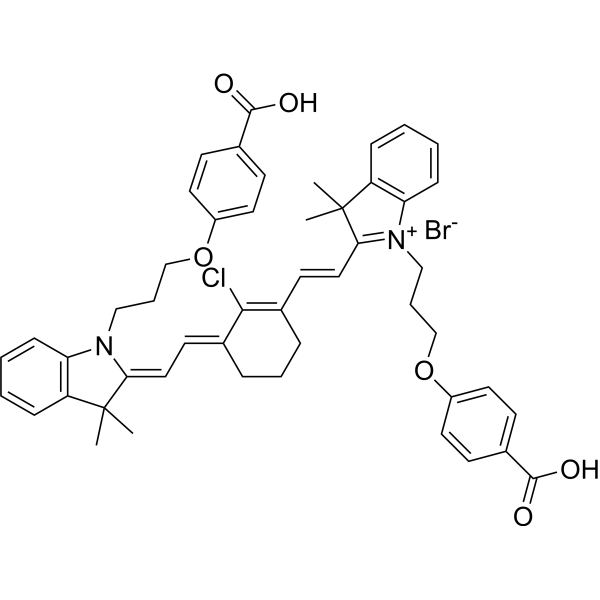 0 ImagesCat. No.: HY-D2228CAS No.: 1895075-45-2IR-7 is a mitochondria-targeted heptamethylindocyanine dye, and can used for cancer study.
-
Cyanine5 NHS ester bromide
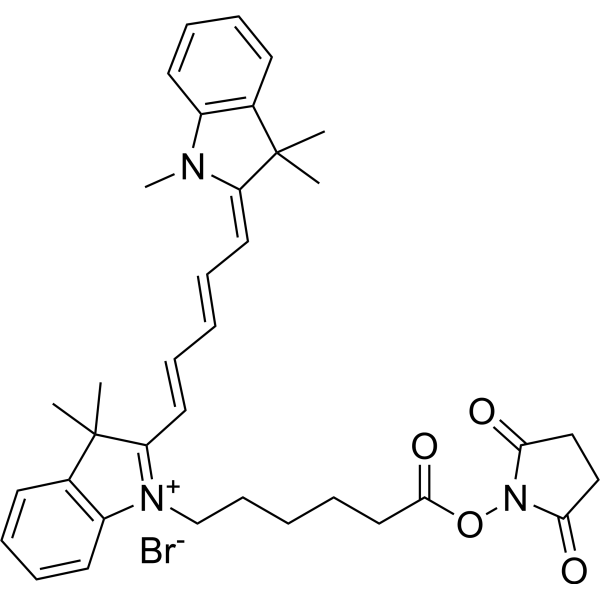 0 ImagesCat. No.: HY-135414ACAS No.: 1653991-59-3Cyanine5 NHS ester bromide is a active compound, can be used to label amino groups in peptides, proteins, and oligonucleotides. Cyanine5 NHS ester bromide is a cyanine dye, fluorescence-labeling neurotensin (8-13) via arginine residues.
-
Cy3 labled ISIS 532401 sodium
 0 ImagesCat. No.: HY-159697DCy3 labled ISIS 532401 sodium is a Cy3 labled ISIS 532401 sodium.
-
Pigment Red 245
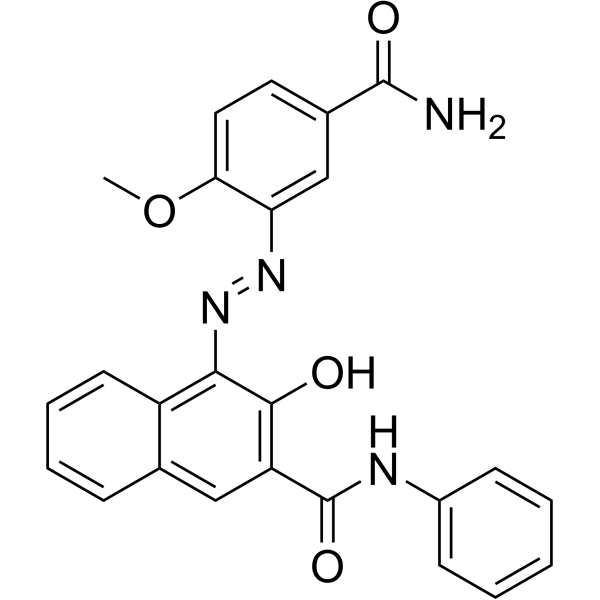 0 ImagesCat. No.: HY-D1201CAS No.: 68016-05-7Pigment Red 245 is a commonly used commercial dye for bulk coloring of plastics and synthetic fibers and for surface coatings such as paints and inks.
-
Sulfo-Cy3 Dextran (MW 100000)
 0 ImagesCat. No.: HY-D3610Synonyms: 100000 (average)Sulfo-Cy3 Dextran (MW 100000) is a sulfonated Cy3 fluorescently labeled dextran with an average molecular weight of 100,000, exhibiting excellent water solubility and biocompatibility. Sulfo-Cy3 Dextran (MW 100000) can be used in biomedical research fields such as fluorescence imaging, vascular permeability assessment, endocytosis studies, and drug delivery system evaluation.
-
M1219
 0 ImagesCat. No.: HY-D3311M1219 is a GSH/ATP dual near-infrared activated fluorescent probe that enables independent real-time monitoring of dynamic changes in intracellular GSH and ATP without spectral crosstalk (GSH: Ex=640 nm, Em=740~800 nm; ATP: Ex=594 nm/610 nm, Em=650~700 nm). M1219 not only visualizes the metabolic regulatory mechanism of TNBC under single/dual-target inhibition of SLC7A11/GLUT1 and accurately evaluates its in vivo efficacy, but also achieves precise localization of the TNBC tumor invasion boundary. M1219 can be used for the research of triple-negative breast cancer.
-
Nissl Staining Solution (Toluidine Blue Method)
 0 ImagesCat. No.: HY-DY2026Nissl Staining Solution (Toluidine Blue Method) is an acidic histological staining labeling reagent based on Toluidine Blue (HY-D0220). Nissl Staining Solution (Toluidine Blue Method) stains brain nuclei, cells, and sections of brain tissues processed for in vitro autoradiography or perfusion. It consistently labels all neuronal somata and differentiates cell layers.
-
Alizarin Red S Staining Solution (2%, pH 4.2)
 0 ImagesCat. No.: HY-DY2045Alizarin Red S Staining Solution (2%, pH 4.2) is a 2% concentration, pH 4.2 anthraquinone dye (sodium alizarin sulfonate) that can be used for intercellular staining of corneal endothelial cell boundaries. Alizarin Red S Staining Solution (2%, pH 4.2) is an anthraquinone dye (sodium alizarin sulfonate) with an optimized pH of 4.2, which undergoes a dye-lake reaction with calcium and serves as an intercellular stain for corneal endothelial cell boundaries. Alizarin Red S Staining Solution (2%, pH 4.2) can be used for screening tests of calcium compounds in synovial fluid, detection of osteoblast differentiation, and staining detection of bone in mice. Excitation/emission wavelength: 500/570 nm.
-
Cy3 labled ISIS 104838 sodium
 0 ImagesCat. No.: HY-145726ECy3 labled ISIS 104838 sodium is a Cy3 labled ISIS 104838 sodium.
-
AIE-Cbz-LD-C7
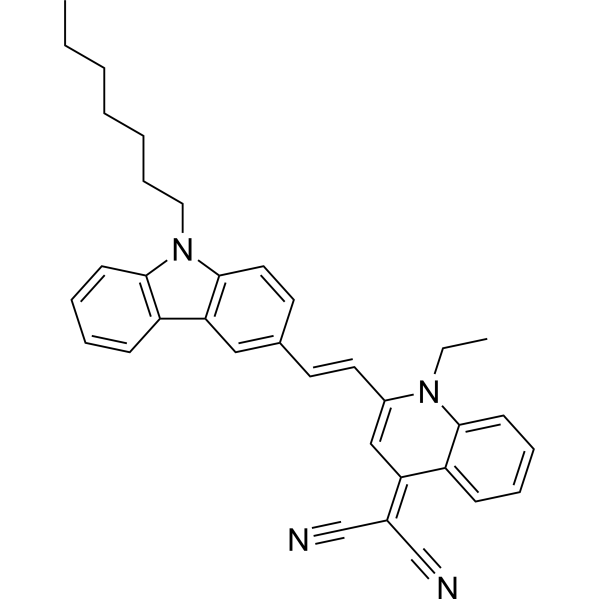 0 ImagesCat. No.: HY-151468CAS No.: 2810130-33-5AIECbz-LD-C7 is an aggregation-induced emission (AIE) probe based on the conjugation of quinoline-malononitrile (QM) and carbazole. AIECbz-LD-C7 has excellent LD-specificity. AIECbz-LD-C7 can be used for tracking the dynamic changes of LDs and studying the association between LDs and lysosome/endoplasmic reticulum (ER).
-
Cy3.5 acetate
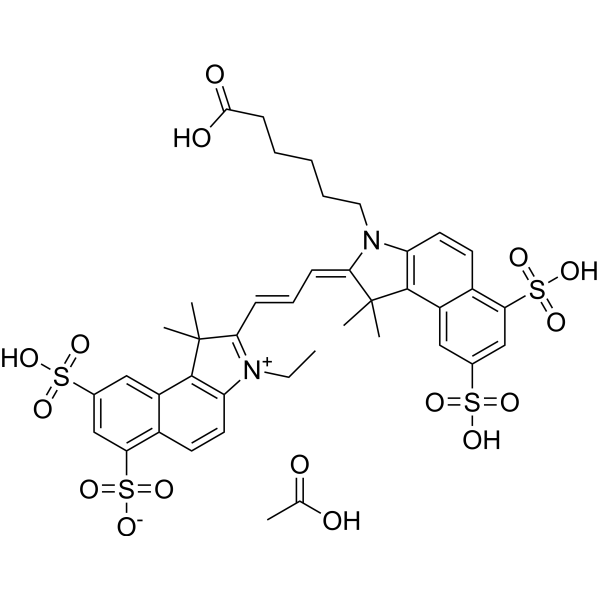 0 ImagesCat. No.: HY-D0922ACy3.5 acetate is a cyanine-based red fluorescent dye (Ex/Em ≈ 560-581/600-612 nm). After covalent conjugation with proteins, Cy3.5 acetate exhibits extraordinary fluorescence enhancement with minimal quenching even at high labeling ratios. Cy3.5 acetate can form a FRET dye pair with Cy5.5, which maintains stable FRET efficiency in various biochemical buffers and deoxygenated systems. Cy3.5 acetate is applicable to studies related to fluorescent labeling of antibodies/proteins, single-molecule FRET imaging of double-stranded DNA and nucleosomes, SPION functionalization, in vivo tracing, and other relevant research.
-
Wheat germ agglutinin-AF680
 0 ImagesCat. No.: HY-NP163ISynonyms: WGA-AF 680Wheat germ agglutinin-AF680 (WGA-AF 680) is a plant lectin that contains the fluorescent dye AF680, which can be used to identify carbohydrate chains. Wheat germ agglutinin-AF680 can be used to assess abnormal glycosylation levels in the body. The specific glycosylation detection sites of Wheat germ agglutinin is bis-GlcNAc, SA.
-
BHHCT
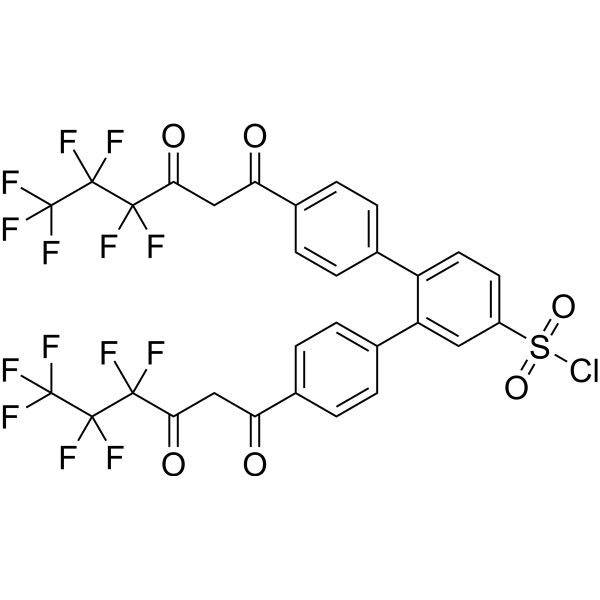 0 ImagesCat. No.: HY-D0117CAS No.: 200862-70-0BHHCT is a multifunctional dye. Dyes are important tools in biological experiments. They can help researchers observe and analyze cell structures, track biomolecules, evaluate cell functions, distinguish cell types, detect biomolecules, study tissue pathology and monitor microorganisms. Their applications range from basic scientific research to clinical A wide range of diagnostics. Dyes are also widely used in traditional fields such as textile dyeing, as well as in emerging fields such as functional textile processing, food pigments and dye-sensitized solar cells.




