



Fluorescent Dye
Fluorescence is a phenomenon of photoluminescence in luminescence. When an atom is irradiated by light, some electrons around the nucleus jump from their original orbitals to higher energy orbitals under the influence of light energy, i.e., from the ground state to the first or second excited single-line state, etc. Due to the instability of the first or second excited singlet state, the electron returns from the excited singlet state to the ground state accompanied by released energy, resulting in fluorescence.
Fluorescent dyes can be covalently bound or physically adsorbed in the structure of the substance. The fluorescence properties allow for the characterization, localization and quantitative analysis of the labeled object. Fluorescent dyes have shown great potential for the detection of proteins, nucleic acids, cells, and immunoassays, attributed to the advantages in non-radioactive contamination, simple experimental operation and easy observation.
Fluorescent dyes have penetrated many fields such as pharmacology, physiology, environmental science, and information science, as well as functional studies of proteins and drug screening.
All Product Categories
-
Fluorescent Dye Related Products (4914)
Related Products (4914)

-
Antibodies (4)

-
Cy5-PEG2-TCO
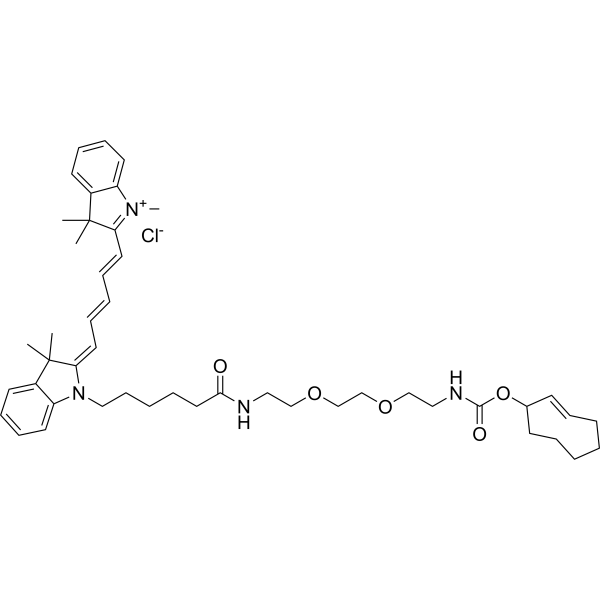 0 ImagesCat. No.: HY-D2142Cy5-PEG2-TCO is a fluorescent dye that reacts with tetrazines. Cy5-PEG2-TCO contains a TCO group that can undergo an inverse electron demand Diels-Alder reaction (iEDDA) with molecules containing a Tetrazine group.
-
ATTO 565
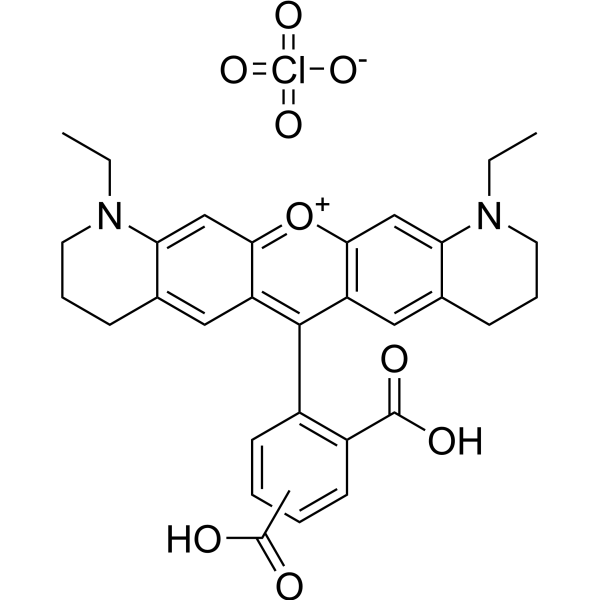 0 ImagesCat. No.: HY-D1958CAS No.: 722538-90-1ATTO 565 is a new type of fluorescent dye with high fluorescence yield, which can be used for most labeling applications, maximum excitation/emission wavelength: 564/590 nm.
-
Dolichos Biflorus Agglutinin
 0 ImagesCat. No.: HY-NP084Dolichos Biflorus Agglutinin is a plant lectin that can be used as a probe to specifically bind biomolecules (such as polysaccharides, peptides, etc.).Dolichos Biflorus Agglutinin is a biological material or organic compound that can be used in life science research.
-
FAM labled Edutirsen sodium
 0 ImagesCat. No.: HY-177628CFAM labled Edutirsen sodiumis a FAM labled Edutirsen sodium.
-
Trisulfo-Cy5.5-Alkyne
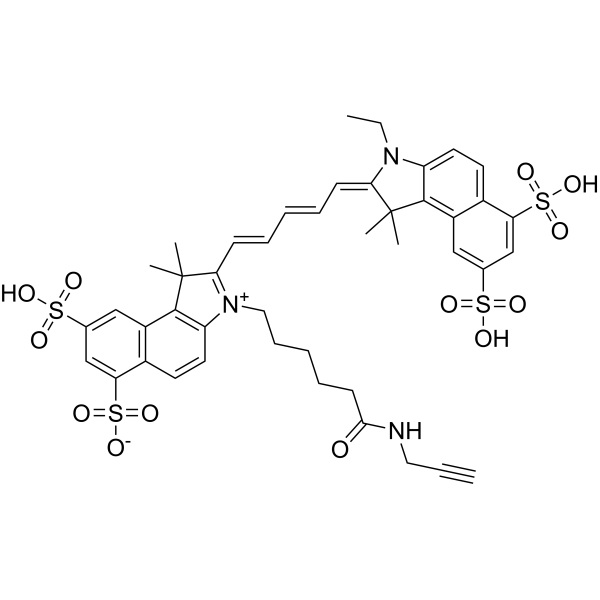 0 ImagesCat. No.: HY-151753CAS No.: 2055046-12-1Trisulfo-Cy5.5-Alkyne is a click chemistry reagent containing an azide group. Trisulfo-Cy5.5-Alkyne can participate in copper-catalyzed Click Chemistry reactions. Trisulfo-Cy5.5-Alkyne is a near infrared (NIR) fluorescent anthocyanin fluorescent dye.
-
DUPA-FITC
 0 ImagesCat. No.: HY-D3347CAS No.: 1123684-41-2DUPA-FITC is a fluorescent reagent targeting PSMA, which specifically binds to prostate cancer cells expressing PSMA without non-specific binding to normal blood cells. DUPA-FITC can label PSMA-expressing prostate cancer cells in whole blood, followed by internalization and trafficking to acidic intracellular endosomes, during which the fluorescence is quenched. When combined with flow cytometry and density gradient centrifugation enrichment, DUPA-FITC enables quantitative analysis of circulating tumor cells in peripheral blood samples from prostate cancer patients.
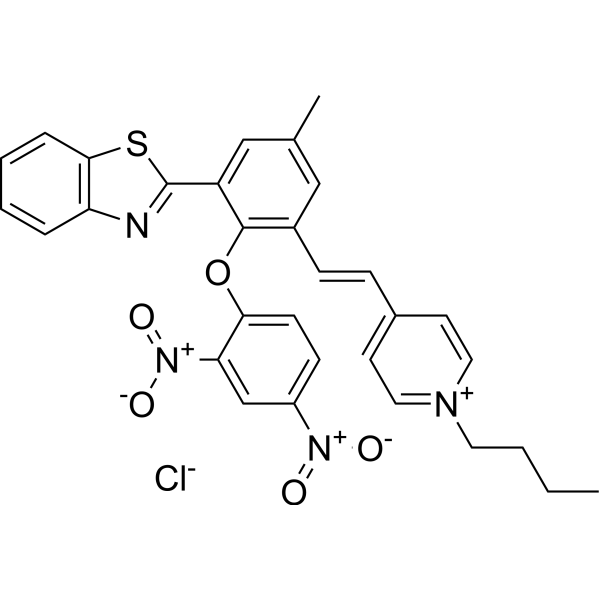
-
EMI-137
 0 ImagesCat. No.: HY-D3352CAS No.: 1081979-12-5Synonyms: AGSCYCSGPPRFECWCYETEGT-Cy5EMI-137 (AGSCYCSGPPRFECWCYETEGT-Cy5) is a fluorescent imaging agent targeting the c-Met receptor. EMI-137 specifically binds to the extracellular domain of the c-Met receptor and is used for fluorescent visualization of c-Met-expressing cells and tissues. EMI-137 can be applied to research related to colorectal cancer.
-
FITC-PEG1000-NH2
 0 ImagesCat. No.: HY-D2794AFITC-PEG1000-NH2 is a non-membrane-permeable fluorescent dye, which is a fluorescently labeled polyethylene glycol derivative with an amine terminal group. FITC-PEG1000-NH2 cannot enter cancer cells, and can be used to prepare FITC-loaded solid lipid nanoparticles for macrophage uptake studies. FITC-PEG1000-NH2 can also be used to label polymers for cell uptake studies.
-
4Arm-PEG5000-RB
 0 ImagesCat. No.: HY-D2894ASynonyms: 4Arm-PEG5000-Rhodamine B4Arm-PEG5000-RB (4Arm-PEG5000-Rhodamine B) is a fluorescent dye composed of Rhodamine B (HY-Y0016) and PEG with a four-arm structure. 4Arm-PEG5000-RB can be used for drug delivery and fluorescence imaging (Ex/Em=546/610 nm).
-
2-Aza-ε-cAMP sodium
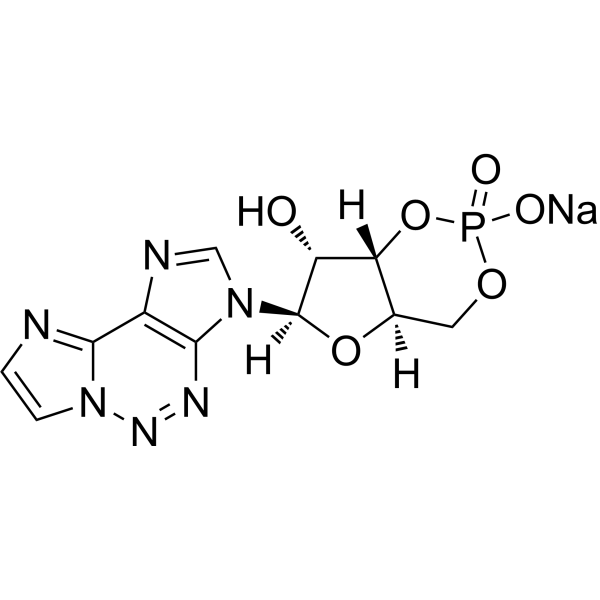 0 ImagesCat. No.: HY-D1187ACAS No.: 1380911-15-82-Aza-ε-cAMP (sodium) is a multifunctional dye. Dyes are important tools in biological experiments. They can help researchers observe and analyze cell structures, track biomolecules, evaluate cell functions, distinguish cell types, detect biomolecules, study tissue pathology and monitor microorganisms. Their applications range from basic scientific research to clinical A wide range of diagnostics. Dyes are also widely used in traditional fields such as textile dyeing, as well as in emerging fields such as functional textile processing, food pigments and dye-sensitized solar cells.
-
16,17-Bis(decyloxy)violanthrone
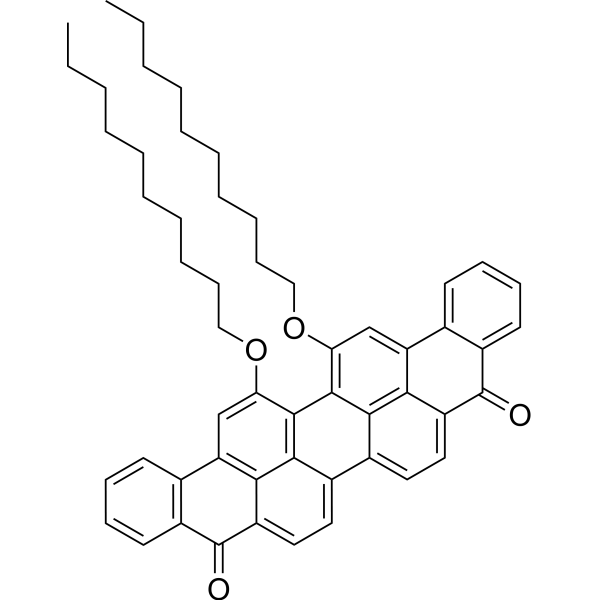 0 ImagesCat. No.: HY-D0963CAS No.: 71550-33-916,17-Bis(decyloxy)violanthrone is a multifunctional dye. Dyes are important tools in biological experiments. They can help researchers observe and analyze cell structures, track biomolecules, evaluate cell functions, distinguish cell types, detect biomolecules, study tissue pathology and monitor microorganisms. Their applications range from basic scientific research to clinical A wide range of diagnostics. Dyes are also widely used in traditional fields such as textile dyeing, as well as in emerging fields such as functional textile processing, food pigments and dye-sensitized solar cells.
-
5(6)-carbonylated rhodamine 110 NHS ester
 0 ImagesCat. No.: HY-D30495(6)-carbonylated rhodamine 110 NHS ester is a reactive ester fluorescent reagent based on 5(6)-carbonylated rhodamine 110. NHS ester is a highly reactive ester capable of covalently coupling with primary amine groups in molecules such as proteins, peptides, amino sugars, and nucleic acids to form stable amide bonds (Ex/Em = 502/527 nm).
-
ZnAF-2F DA
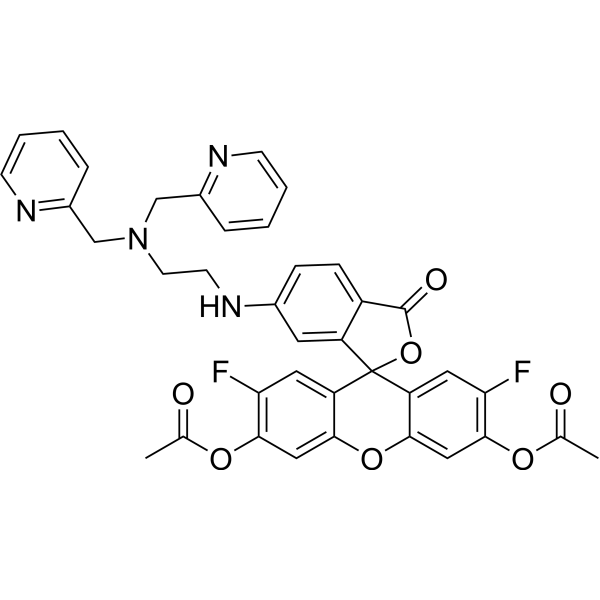 0 ImagesCat. No.: HY-D0161CAS No.: 443302-10-1ZnAF-2F DA is a multifunctional dye. Dyes are important tools in biological experiments. They can help researchers observe and analyze cell structures, track biomolecules, evaluate cell functions, distinguish cell types, detect biomolecules, study tissue pathology and monitor microorganisms. Their applications range from basic scientific research to clinical A wide range of diagnostics. Dyes are also widely used in traditional fields such as textile dyeing, as well as in emerging fields such as functional textile processing, food pigments and dye-sensitized solar cells.
-
High concentration Streptavidin, R-Phycoerythrin conjugate (SAPE)
 0 ImagesCat. No.: HY-D3321AHigh concentration Streptavidin, R-Phycoerythrin conjugate (SAPE) is a streptavidin-labeled phycoerythrin. High concentration Streptavidin, R-Phycoerythrin conjugate (SAPE) can be used in conjunction with biotinylated reagents in anti-Biotin/biotin-labeled systems, suitable for flow cytometry detection, microarray analysis, and microplate detection (Ex/Em = 450-500 nm/575 nm).
-
Flazo Orange
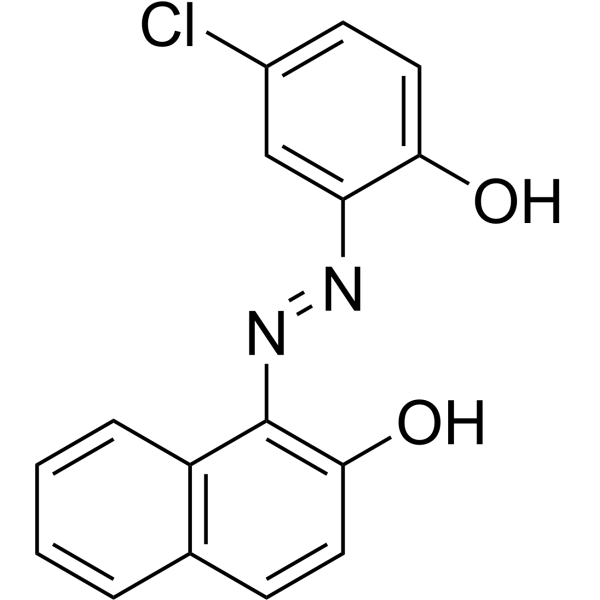 0 ImagesFlazo Orange is a multifunctional dye. Dyes are important tools in biological experiments. They can help researchers observe and analyze cell structures, track biomolecules, evaluate cell functions, distinguish cell types, detect biomolecules, study tissue pathology and monitor microorganisms. Their applications range from basic scientific research to clinical A wide range of diagnostics. Dyes are also widely used in traditional fields such as textile dyeing, as well as in emerging fields such as functional textile processing, food pigments and dye-sensitized solar cells.
-
D-Ala-Lys-AMCA TFA
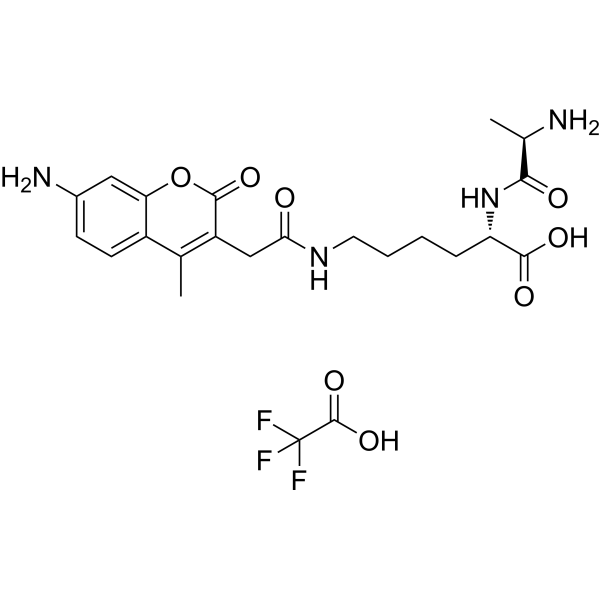 0 ImagesCat. No.: HY-111956AD-Ala-Lys-AMCA TFA is a known proton-coupled oligopeptide transporter 1 (PEPT1) substrate that emits blue fluorescence. D-Ala-Lys-AMCA TFA may be transported into liver cancer cells and Caco-2 cells based on fluorescence analysis. D-Ala-Lys-AMCA TFA can be used for characterizing PEPT1-specific substrates or inhibitors (Ex/Em = 390/480 nm).
-
Tempocholine
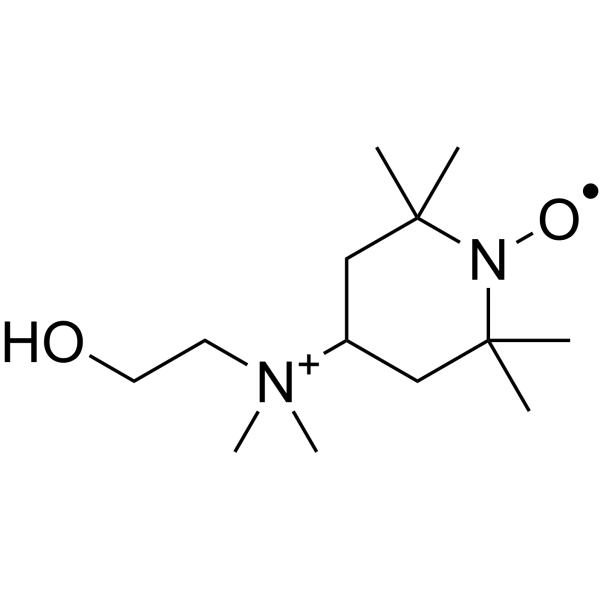 0 ImagesCat. No.: HY-D1767CAS No.: 50669-92-6Tempocholine is a polar tracer.
-
Cy3 labled Cobitolimod sodium
 0 ImagesCat. No.: HY-160040DCy3 labled Cobitolimod sodium is a Cy3 labled Cobitolimod sodium.




