



Fluorescent Dye
Fluorescence is a phenomenon of photoluminescence in luminescence. When an atom is irradiated by light, some electrons around the nucleus jump from their original orbitals to higher energy orbitals under the influence of light energy, i.e., from the ground state to the first or second excited single-line state, etc. Due to the instability of the first or second excited singlet state, the electron returns from the excited singlet state to the ground state accompanied by released energy, resulting in fluorescence.
Fluorescent dyes can be covalently bound or physically adsorbed in the structure of the substance. The fluorescence properties allow for the characterization, localization and quantitative analysis of the labeled object. Fluorescent dyes have shown great potential for the detection of proteins, nucleic acids, cells, and immunoassays, attributed to the advantages in non-radioactive contamination, simple experimental operation and easy observation.
Fluorescent dyes have penetrated many fields such as pharmacology, physiology, environmental science, and information science, as well as functional studies of proteins and drug screening.
All Product Categories
-
Fluorescent Dye Related Products (4894)
Related Products (4894)

-
Antibodies (4)
-
HaloFlipper 30
 0 ImagesCat. No.: HY-D2317HaloFlipper 30 is a fluorescent probe that covalently reacts with HaloTag fusion proteins to form an ester bond, which allows the probe to be stably attached to membrane structures. HaloFlipper 30 has high specificity, precision and good cell permeability.
-
7-Amino-4-methylcoumarin-d4
 0 ImagesCat. No.: HY-D0027S1Synonyms: Coumarin 120-d4; AMC-d47-Amino-4-methylcoumarin-d4 (Coumarin 120-d4) is the deuterium labeled 7-Amino-4-methylcoumarin (HY-D0027). 7-Amino-4-methylcoumarin belongs to the coumarin class, can be isolated from the endophytic fungus Xylaria sp. and has a broad spectrum of antibacterial activity. 7-Amino-4-methylcoumarin is also commonly used as an important laser dye that emits in the blue region, capable of analyzing glycoprotein monosaccharides and N-linked oligosaccharides, and is also utilized in tissue pathology analysis, enzyme activity measurement, and copper ion detection. The excitation wavelength and emission wavelength are 351 nm and 430 nm, respectively.
-
NBD-undecanoic acid
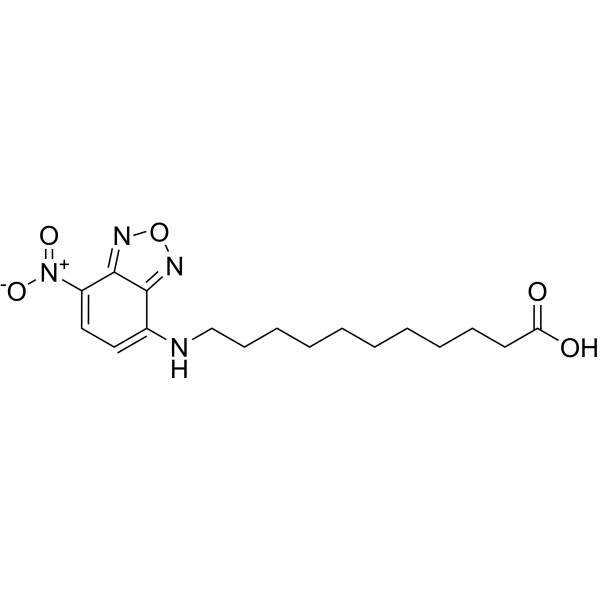 0 ImagesCat. No.: HY-D0787CAS No.: 351002-77-2NBD-undecanoic acid is a multifunctional dye. Dyes are important tools in biological experiments. They can help researchers observe and analyze cell structures, track biomolecules, evaluate cell functions, distinguish cell types, detect biomolecules, study tissue pathology and monitor microorganisms. Their applications range from basic scientific research to clinical A wide range of diagnostics. Dyes are also widely used in traditional fields such as textile dyeing, as well as in emerging fields such as functional textile processing, food pigments and dye-sensitized solar cells.
-
oLOX
 0 ImagesCat. No.: HY-D3208CAS No.: 2241794-11-4oLOX is a fluorescent activity reporter. oLOX can be activated by lysyl oxidase family (LOXF) enzymes, which in turn releases a luciferin fluorescent product that reports LOXF enzyme activity. After oLOX is activated in in vitro fibrotic lung tissues, the fluorescence intensity increases, enabling real-time detection of fibrotic activity. oLOX can be used in studies related to pulmonary fibrosis.
-
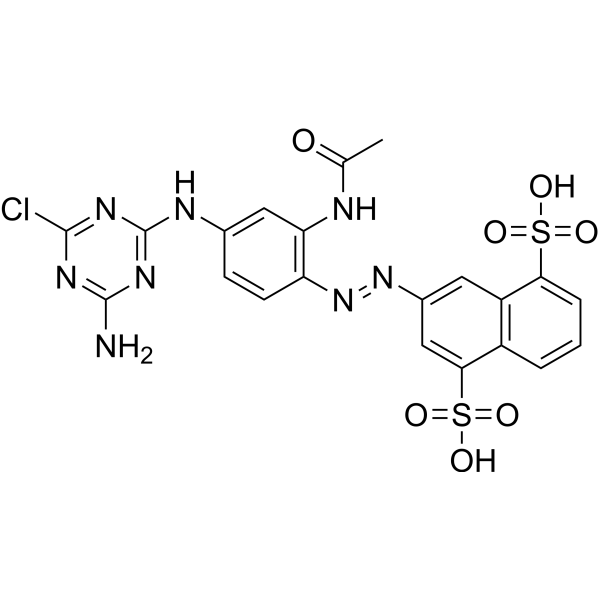
FAM labled Trecovirsen sodium
 0 ImagesCat. No.: HY-149906EFAM labled Trecovirsen sodiumis a FAM labled Trecovirsen sodium.
-
FAM labled Lixadesiran sodium
 0 ImagesCat. No.: HY-177643CFAM labled Lixadesiran sodiumis a FAM labled Lixadesiran sodium.
-
Cy5.5-PEG3400-NH2
 0 ImagesCat. No.: HY-D2553Cy5.5-PEG3400-NH2 is a polyethylene glycol derivative containing Cy5.5 (HY-D0924) fluorescent dye and polyethylene glycol (PEG) and an amino group. The Cy5.5 fluorophore is commonly used in applications such as immunolabeling, nucleic acid labeling, fluorescence microscopy, and flow cytometry. Cy5.5 has an emission maximum around 710 nm. Cy5.5-PEG3400-NH2 can be used for fluorescence imaging, fluorescence tracing and fluorescence labeling.
-
HPsensor 2
 0 ImagesCat. No.: HY-D3520CAS No.: 2484683-99-8HPsensor 2 is a fluorescent probe used to detect the surface hydrophobicity of proteins. The detection mechanism of HPsensor 2 relies on its amphipathic properties. The 2-methoxyethylamine substituents at positions 3 and 5 of its BODIPY core enhance water solubility, enabling it to interact with solvent-exposed hydrophobic regions on proteins. When it binds to these hydrophobic surfaces, the free rotation of the meso-aryl substituent is restricted, increasing molecular rigidity and reducing non-radiative deactivation, which results in a significant enhancement of fluorescence. HPsensor 2 exhibits weak but detectable fluorescence in aqueous environments, and its fluorescence is highly sensitive to changes in protein surface hydrophobicity (Ex/Em = 528/579 nm).
-
BOD-Tz-TMR
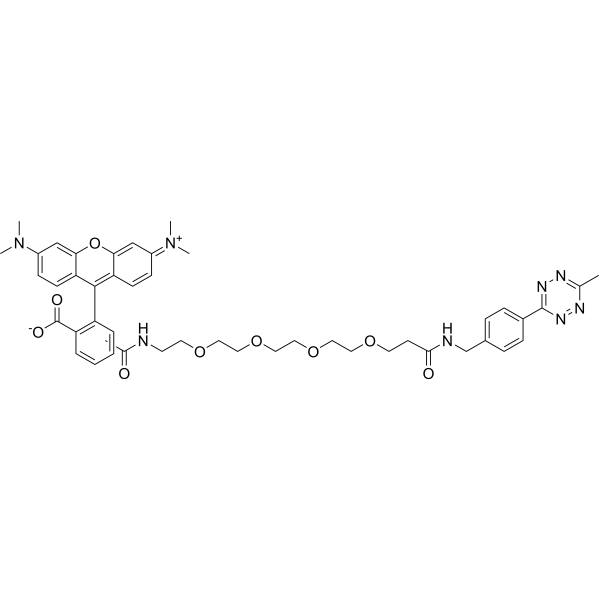
 0 ImagesCat. No.: HY-D3418BOD-Tz-TMR is a fluorescent probe used for nitric oxide (NO) detection and atherosclerotic plaque imaging.BOD-Tz-TMR has a detection limit of 31 nM for NO. BOD-Tz-TMR functions via Förster resonance energy transfer (FRET) and bioorthogonal reactions, in which the tetrazine linker quenches fluorescence through the energy transfer to dark state (ETDS) mechanism. The interaction of BOD-Tz-TMR with NO triggers a ratiometric shift in fluorescence from BODIPY (Ex/Em: 488 nm/512 nm, green channel) to TMR (Em: 592 nm, red channel). BOD-Tz-TMR labels macrophages through a bioorthogonal reaction with BCN, enabling its targeted accumulation at atherosclerotic plaque sites to detect endogenous NO associated with lesion progression. BOD-Tz-TMR can be used in studies related to atherosclerosis.
-
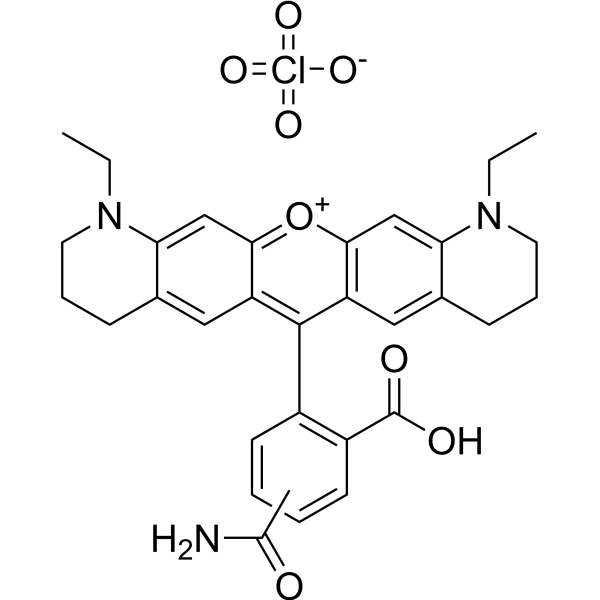
ATTO 565 NHS ester
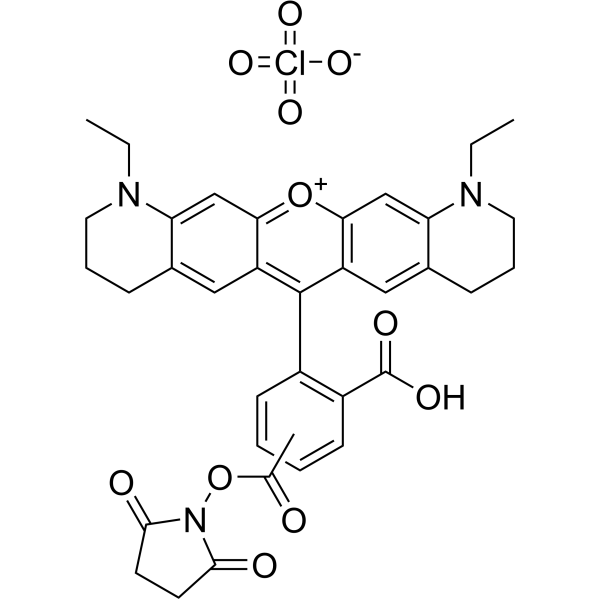 0 ImagesCat. No.: HY-D1959CAS No.: 1443553-12-5ATTO 565 NHS ester is a new fluorescent marker based on the Rhodamine structure. It has strong absorption, high fluorescence quantum yield, high thermal stability and photochemical stability, and is suitable for single molecule detection and high-resolution microscopy. ATTO 565 NHS ester is an NHS ester derivative of ATTO 565 that can be used to label proteins or antibodies.
-
Sulfo-Cy7.5 carboxylic acid
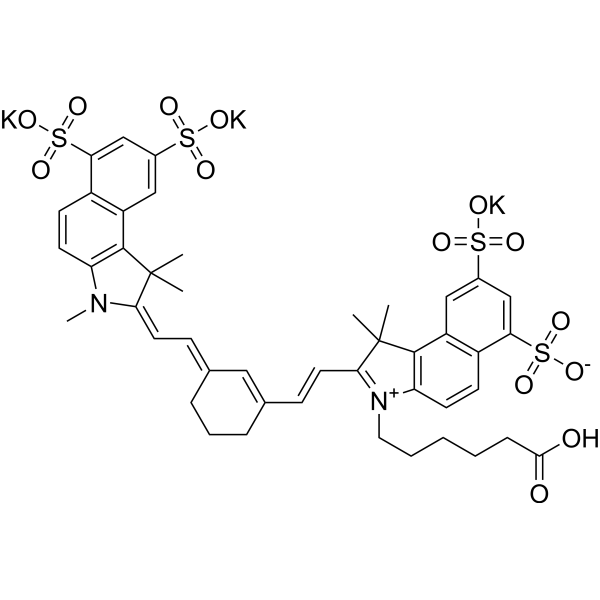 0 ImagesCat. No.: HY-D1866CAS No.: 2760599-02-6Sulfo-Cy7.5 carboxylic acid is a dye derivative of Cyanine 7.5 (Cy7.5) (HY-D0926) with carboxylic acid and sulfonate ion (sulfonate) functional groups. The sulfonate ion increases the water solubility of the compound, making it suitable for use in aqueous solutions. Cy7.5 is a near-infrared fluorescent dye commonly used in biomedical research areas such as biomarkers and cell imaging. Sulfo-Cy7.5 carboxylic acid can be covalently bound to some biomolecules (especially antibodies, proteins, etc.) to track their location and dynamic changes in biological samples.
-
DSPE PEG(2000)-N-Cyanine 5.5
 0 ImagesCat. No.: HY-N15909CAS No.: 2389048-57-9DSPE PEG(2000)-N-Cyanine 5.5 is a phospholipid. Phospholipids have good biocompatibility and significant amphiphilic characteristics, making them the main and suitable dosage form or excipient in drug formulations, thereby achieving better therapeutic effects. DSPE PEG(2000)-N-Cyanine 5.5 can be used in drug delivery research.
-
Ready-to-Use Giemsa Staining Solution
 0 ImagesCat. No.: HY-DY2028Ready-to-Use Giemsa Staining Solution is a ready-to-use Romanowsky-type staining solution that can be used for staining blood and cell smears, bacteria, chromosome banding, parasites, and other specimens. Ready-to-Use Giemsa Staining Solution stains blood smears to reveal blood parasites including Plasmodium, microfilariae, and trypanosomes. Ready-to-Use Giemsa Staining Solution enables morphological identification of blood cells, and can also stain fixed cells to observe muscle cell nuclei, distinguish myotubes from myoblasts, and quantitatively analyze the differentiation status of myoblasts.
-
Probe L
 0 ImagesCat. No.: HY-D3082CAS No.: 2222720-58-1Probe L is an AIE-based dual-sensing fluorescent probe for the detection of Zn2+ and single-stranded DNA (ssDNA). Coordination of Probe L with Zn2+ restricts intramolecular rotation and triggers ESIPT, turning on fluorescence at 490 nm. Upon further binding of the Probe L-Zn2+ complex to ssDNA, enhanced emission is generated at 550 nm. Ex/Em = 365/490 nm (Zn2+); Ex/Em = 365/550 nm (ssDNA).
-
PE-AF700
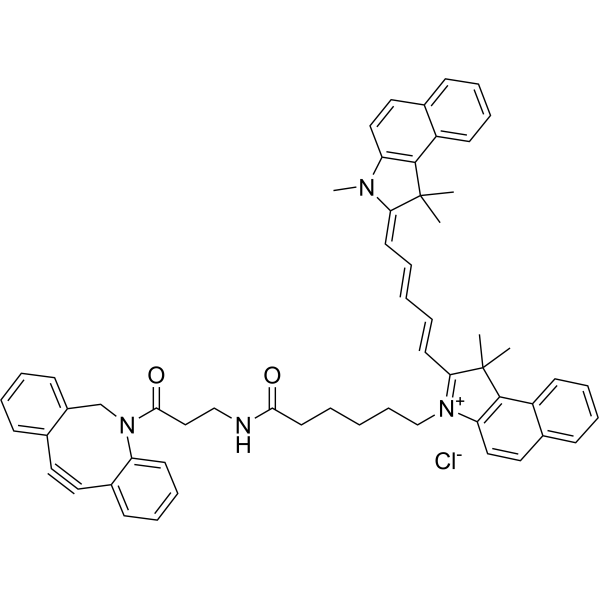
 0 ImagesCat. No.: HY-D3327PE-AF700 is a tandem fluorescent dye used for flow cytometry, consisting of the donor phycoerythrin (PE) and the acceptor Alexa Fluor 700 (AF700) (Ex/Em = 488 nm/715 nm).
-
DDAO phosphate diTEA
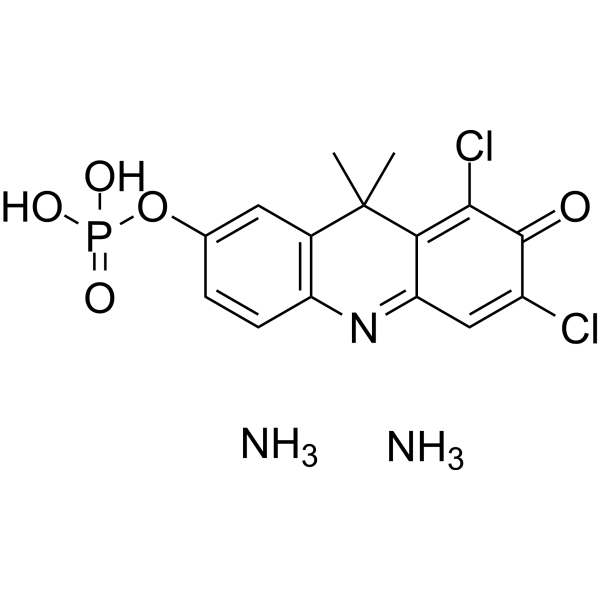 0 ImagesCat. No.: HY-D1739DDAO phosphate diTEA is an amphoteric surfactant derived from DDAO (dimethyldodecylamine oxide). The head group of DDAO in DDAO phosphate diTEA exists in a non-ionic state at pH > 7 and in a cationic state at pH < 5 due to protonation of the oxygen atom. When combined with the anionic surfactant SDS, DDAO can incorporate into mixed micelles, reducing the net micellar charge and attenuating electrostatic repulsion between SDS head groups. DDAO can be used to formulate the ONOO⁻-targeting probe DDAO-PN, which generates significant near-infrared fluorescence at 657 nm.




