



HRASLS2
HRASLS2 (also known as PLAAT2) belongs to the H-RAS-like suppressor/phospholipase A and acyltransferase (HRASLS/PLAAT) family, a group of lipid-metabolizing enzymes originally identified through their association with class II tumor suppressor activity and negative regulation of Ras-related signaling pathways[1][2]. Mechanistically, HRASLS2 functions as a Ca2+-independent phospholipid-metabolizing enzyme that exhibits phospholipase A1/A2 and acyltransferase activities, thereby participating directly in phospholipid remodeling and membrane lipid homeostasis[1][3]. Through these enzymatic activities, HRASLS2 contributes to the generation and turnover of bioactive lipid intermediates that are linked to cellular growth control and signaling regulation[1][2]. In disease-related studies, HRASLS family proteins were initially characterized as tumor suppressor-associated factors, and HRASLS2 has been reported to suppress colony formation and promote cell death in several cancer cell models, supporting its relevance to cancer biology and experimental oncology research[2]. Compared with related isoforms, HRASLS2 shares the conserved catalytic framework of the HRASLS/PLAAT family but displays distinct enzymatic properties and physiological functions, indicating that individual family members participate in phospholipid metabolism through non-identical mechanisms and biological contexts[1][3]. Therefore, HRASLS2 serves as a useful experimental model for investigating lipid metabolic regulation, phospholipid remodeling, and the relationship between membrane lipid homeostasis and tumor-associated cellular phenotypes[1][2][3].
References:
- [1]. Uyama T, et al. Characterization of the human tumor suppressors TIG3 and HRASLS2 as phospholipid-metabolizing enzymes. Biochim Biophys Acta. 2009 Dec;1791(12):1114-24. [Content Brief]
- [2]. Mardian EB, et al. The HRASLS (PLA/AT) subfamily of enzymes. J Biomed Sci. 2015 Oct 26;22:99. [Content Brief]
- [3]. Liu X, et al. Physical layer encryption scheme based on biological genetic variation mechanisms in CO-OFDM system. Opt Express. 2025 Oct 6;33(20):42528-42541. [Content Brief]
All Product Categories
-
HRASLS2 Related Products (1)
Related Products (1)

-
LEI110
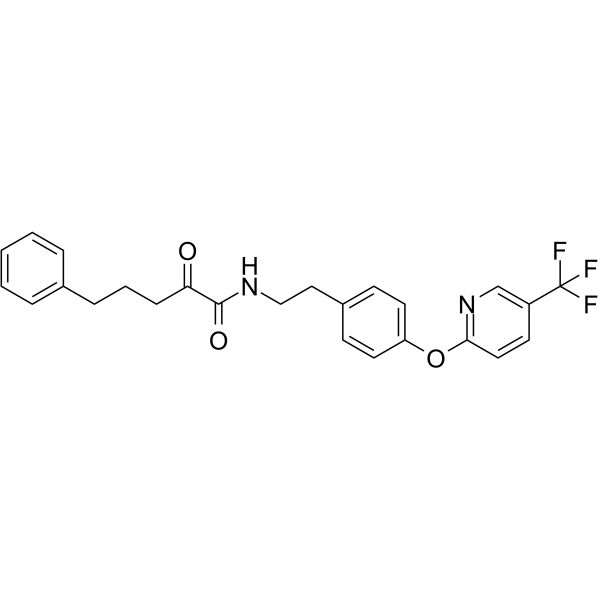 0 ImagesLEI110 is a pan-inhibitor of the HRASLS family and an inhibitor of AP-2α, with a Ki of 20 nM against PLA2G16. LEI110 exhibits inhibitory activity against PLA2G16, HRASLS2, RARRES3 and iNAT, with pIC50 values of 7.0, 6.8, 6.8 and 7.6, respectively. LEI110 binds to the active site of PLA2G16, reduces intracellular arachidonic acid levels, and attenuates oleic acid-induced lipolysis. LEI110 stabilizes AP-2α, impairs its DNA-binding ability, inhibits the transcription of DNA damage repair genes, induces the accumulation of oxidative DNA damage, suppresses cell proliferation and clonogenicity, and sensitizes HCC cells to DNA-damaging agents. LEI110 can be used in research related to obesity, fatty liver disease, the common cold and hepatocellular carcinoma.



