



Isotope-Labeled Compounds
Isotope-labeled compounds are chemical substances in which some atoms in their molecules are replaced by isotope atoms. The range of stable isotope products can cover from gases to complex molecules. Isotope-labeled compounds could provide a site-specific investigation of structures, making molecules easily detectable by mass spectrometry and NMR, and maintaining the physico-chemical properties of the target molecule at the same time.
MCE isotope-labeled compounds are all stable isotope-labeled compounds and are non-radioactive labeled substances. MCE isotope-labeled compounds are unique tools for identifying and understanding biological and chemical processes. Stable isotope-labeled products are now getting more and more popular among scientists. The scope of application is gradually penetrating into various scientific fields, such as life sciences, food and medicine, agriculture, environment, geology, etc. Stable isotope-labeled compounds have a wide range of applications in the Life Science areas, such as Metabolomics, Proteomics, Clinical studies, Deuterium drugs, etc.
All Product Categories
-
Isotope-Labeled Compounds Related Products (11091)
Related Products (11091)

-
4-Methylbenzenesulfonhydrazide-d3
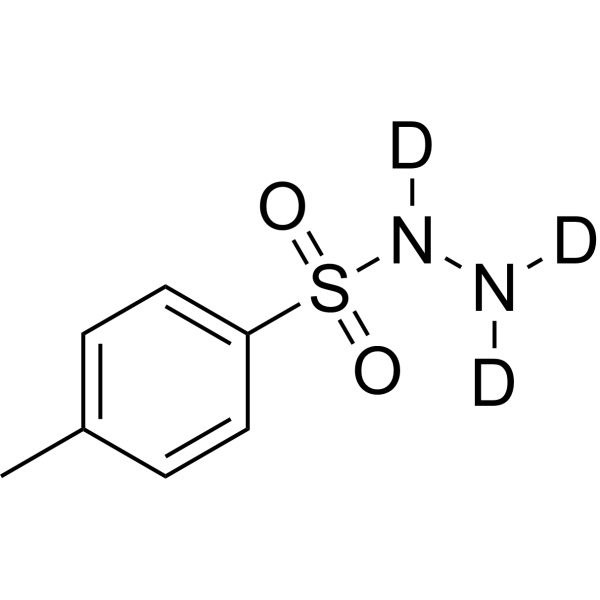 0 Images4-Methylbenzenesulfonhydrazide-d3 is the deuterium labeled 4-Methylbenzenesulfonhydrazide.
-
Lafutidine-d10
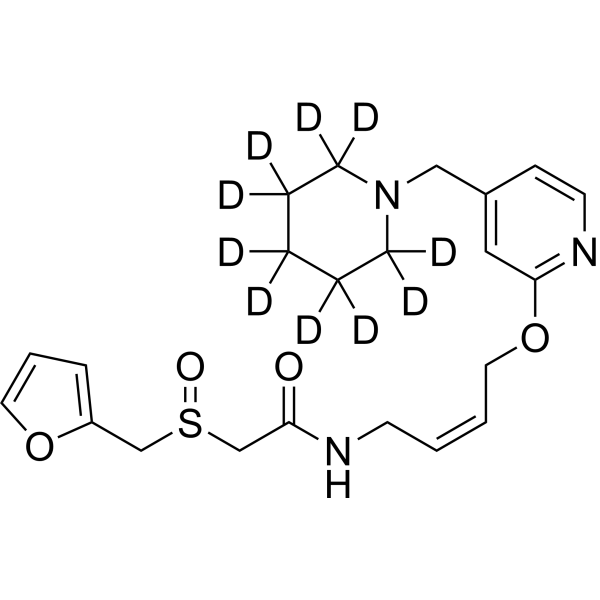 0 ImagesCat. No.: HY-B0160SCAS No.: 1795136-26-3Lafutidine-d10 is deuterium labeled Lafutidine. Lafutidine (FRG-8813) is a histamine H2-receptor antagonist (H2RA), with proven gastric mucosal protective effects. Lafutidine can be used for the research of gastroesophageal reflux disease.
-
2,6-Diethylaniline-15N
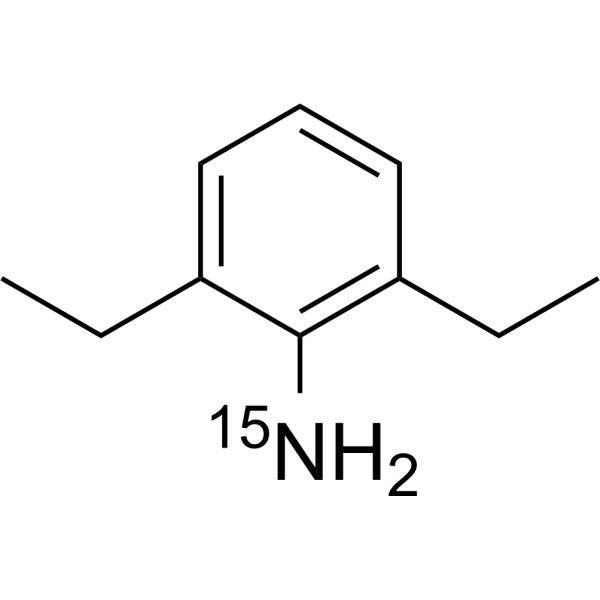 0 ImagesCat. No.: HY-W017455S1CAS No.: 287488-24-82,6-Diethylaniline-15N is the deuterium labeled 2,6-Diethylaniline.
-
Tyr-{Gly-13C2,15N}-Gly-Phe-Met-OH TFA
 0 ImagesCat. No.: HY-P0073S1Synonyms: Met-Enkephalin-13C2,15N TFA; Methionine enkephalin-13C2,15N TFA; Metenkefalin-13C2,15N TFATyr-{Gly-13C2,15N}-Gly-Phe-Met-OH TFA (Met-Enkephalin-13C2,15N TFA) is the 13C- and 15N-labeled Tyr-Gly-Gly-Phe-Met-OH TFA. Tyr-Gly-Gly-Phe-Met-OH regulates human immune function and inhibits tumor growth via binding to the opioid receptor.
-
Cyclopropylmethyl bromide-d3
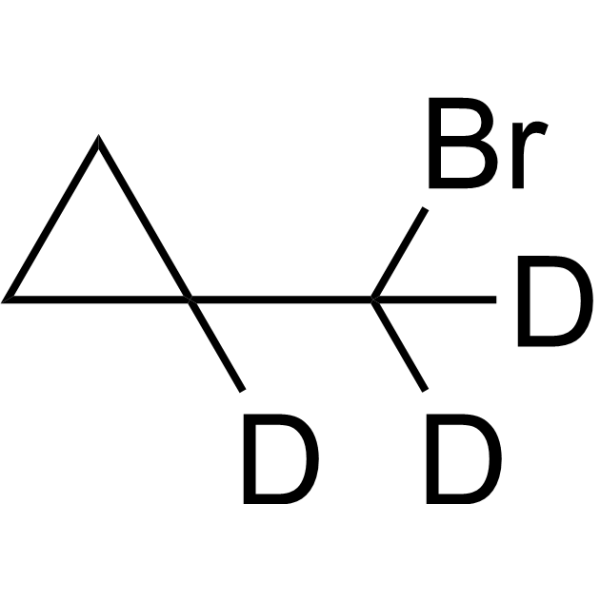 0 ImagesCat. No.: HY-Y1100S1CAS No.: 1219799-17-3Cyclopropylmethyl bromide-d3 is the deuterium labeled Cyclopropylmethyl bromide (HY-Y1100). Cyclopropylmethyl bromide is an intermediate. Cyclopropylmethyl bromide can be used in the preparation of Firocoxib (HY-14670). Firocoxib (ML 1785713) is a potent, selective, orally active COX-2 inhibitor.
-
1-Methyl-5-(3-pyridinyl)-2-pyrrolidinone-13C2,d4
 0 ImagesCat. No.: HY-W588192SCAS No.: 2703688-58-61-Methyl-5-(3-pyridinyl)-2-pyrrolidinone-13C2,d4 is the 13C and deuterium labeled isotope of 1-Methyl-5-(3-pyridinyl)-2-pyrrolidinone (HY-W588192).
-
2-Isopropyl-3-methoxypyrazine-d3
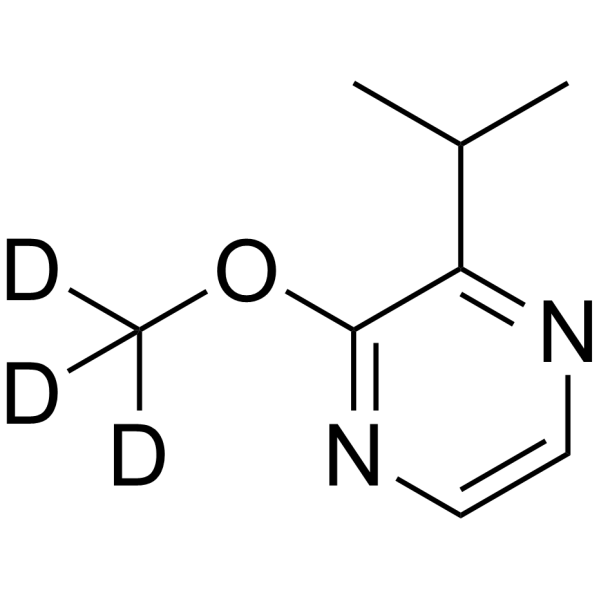 0 ImagesCat. No.: HY-W012578SCAS No.: 588732-60-92-Isopropyl-3-methoxypyrazine-d3 is the deuterium labeled 2-Isopropyl-3-methoxypyrazine.
-
(Z,Z)-5,11-Eicosadienoic Acid Methyl Ester-d3
 0 ImagesCat. No.: HY-W744888(Z,Z)-5,11-Eicosadienoic Acid Methyl Ester-d3 is the deuterium labeled (Z,Z)-5,11-Eicosadienoic Acid Methyl Ester.
-
Quinapril-d5
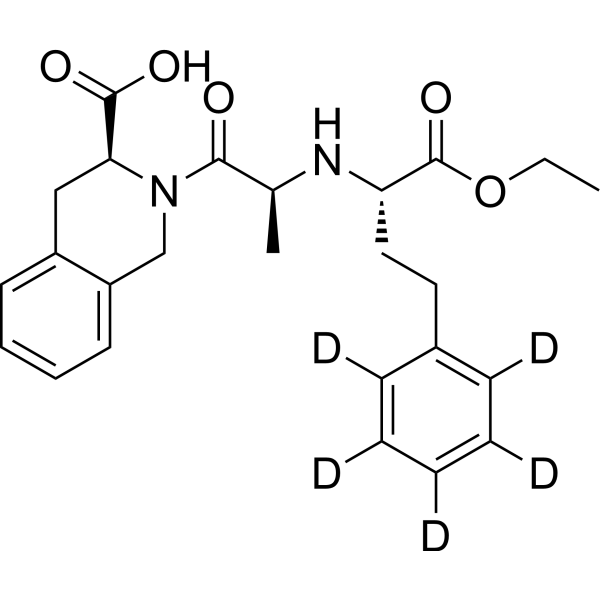 0 ImagesCat. No.: HY-B0477ASCAS No.: 1279029-79-6Quinapril-d5 is the deuterium labeled Quinapril.
-
N-(Methyl-d3)-2-nitroaniline
 0 ImagesCat. No.: HY-W699583CAS No.: 112333-14-9N-(Methyl-d3)-2-nitroaniline is the deuterium labeled N-Methyl-2-nitroaniline (HY-W878971).
-
1-Dodecanol-13C
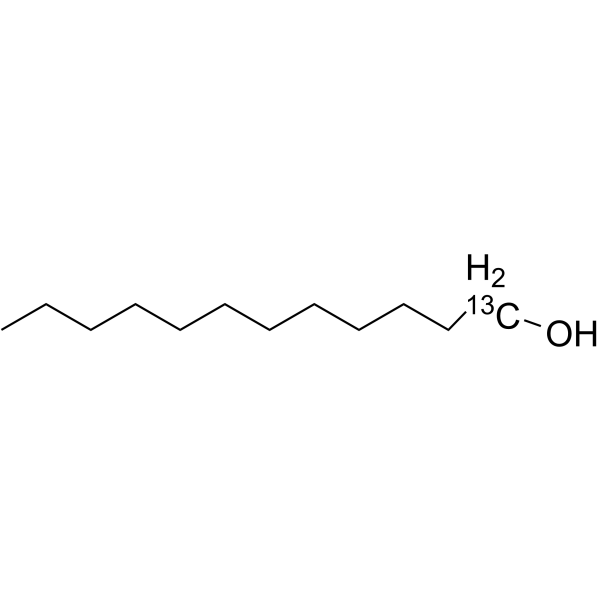 0 ImagesCat. No.: HY-Y0289SCAS No.: 88170-32-51-Dodecanol-13C is the 13C-labeled 1-Dodecanol. 1-Dodecanol is an endogenous metabolite.
-
D-Lyxose-13C-2
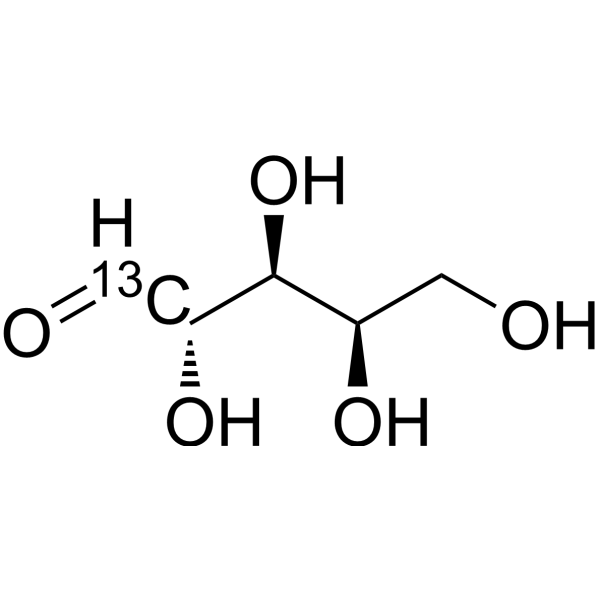 0 ImagesCat. No.: HY-128753S3CAS No.: 70849-22-8D-Lyxose-13C-2 is the 13C labeled D-Lyxose. D-Lyxose is an endogenous metabolite. D-Lyxose is a rare pentose sugar with significant potential for drug synthesis. D-Lyxose can be used as a starting material for anti-tumor drugs such as alpha galactose ceramide immunostimulants. D-Lyxose can be used as a precursor for L-nucleoside analogs for the development of antiviral drugs. D-Lyxose can be used as a synthetic intermediate for other rare sugars such as L-ribose.
-
Dibenzazepinone-d4
 0 ImagesCat. No.: HY-W739808CAS No.: 1189706-86-2Dibenzazepinone-d4 is the deuterium labeled 5H-Dibenzo[b,f]azepin-10(11H)-one (HY-W103288).
-
Ivabradine-d3 hydrochloride
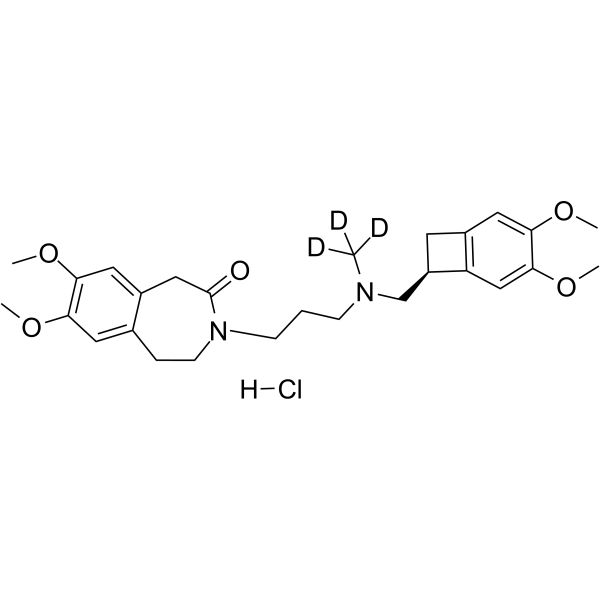 0 ImagesCat. No.: HY-B0162AS1CAS No.: 1217809-61-4Ivabradine-d3 (hydrochloride) is the deuterium labeled Ivabradine hydrochloride. Ivabradine hydrochloride is a new If inhibitor with IC50 of 2.9 μM, and used as a pure heart rate lowering agent.
-
2-Chloro-5-thiazolecarboxylic Acid-13C3,15N
 0 ImagesCat. No.: HY-W7491452-Chloro-5-thiazolecarboxylic Acid-13C3,15N is the 13C- and 15N-labeled 2-Chlorothiazole-5-carboxylic acid (HY-21734).
-
rU Phosphoramidite-15N
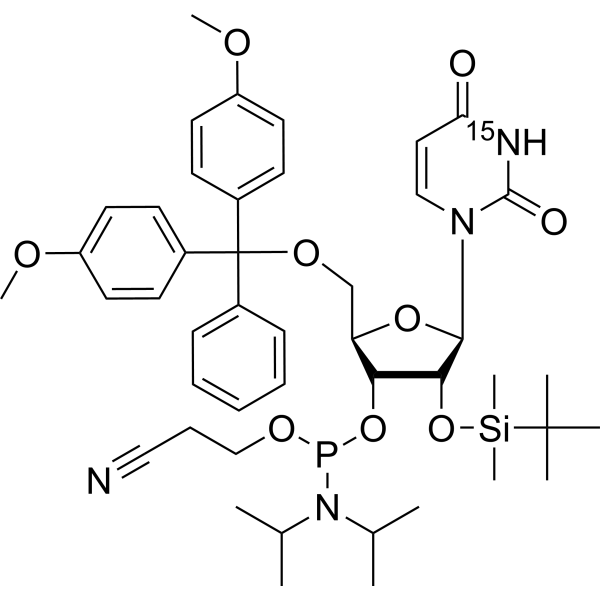 0 ImagesCat. No.: HY-W048482S4CAS No.: 1193204-41-9Synonyms: DMT-2'O-TBDMS-rU phosphoramidite-15NrU Phosphoramidite-15N (DMT-2'O-TBDMS-rU phosphoramidite-15N) is 15N labeled rU Phosphoramidite (HY-W048482). rU Phosphoramidite is a phosphorite monomer that can be used in the synthesis of oligonucleotides.
-
Ribavirin-13C2
 0 ImagesCat. No.: HY-W779404CAS No.: 1279035-36-7Synonyms: Ribasphere-13C2
-
C18(Plasm)-18:1 PC-d9
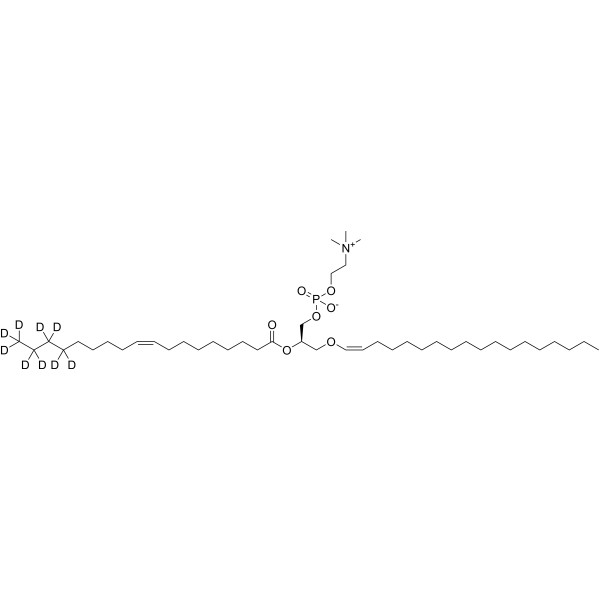 0 ImagesCat. No.: HY-146848SCAS No.: 2315262-03-2C18(plasm)-18:1 PC-d9 is deuterium labeled C18(plasm)-18:1 PC.

-
Bendamustine-d8 hydrochloride
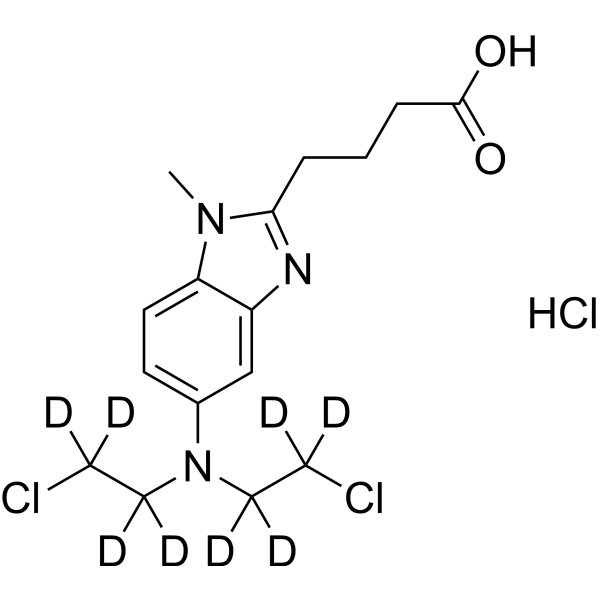 0 ImagesCat. No.: HY-B0077S1CAS No.: 1185068-23-8Synonyms: SDX-105-d8Bendamustine-d8 (hydrochloride) is deuterium labeled Bendamustine (hydrochloride). Bendamustine hydrochloride (SDX-105), a purine analogue, is a DNA cross-linking agent. Bendamustine hydrochloride activats DNA-damage stress response and apoptosis. Bendamustine hydrochloride has potent alkylating, anticancer and antimetabolite properties.



