



Isotope-Labeled Compounds
Isotope-labeled compounds are chemical substances in which some atoms in their molecules are replaced by isotope atoms. The range of stable isotope products can cover from gases to complex molecules. Isotope-labeled compounds could provide a site-specific investigation of structures, making molecules easily detectable by mass spectrometry and NMR, and maintaining the physico-chemical properties of the target molecule at the same time.
MCE isotope-labeled compounds are all stable isotope-labeled compounds and are non-radioactive labeled substances. MCE isotope-labeled compounds are unique tools for identifying and understanding biological and chemical processes. Stable isotope-labeled products are now getting more and more popular among scientists. The scope of application is gradually penetrating into various scientific fields, such as life sciences, food and medicine, agriculture, environment, geology, etc. Stable isotope-labeled compounds have a wide range of applications in the Life Science areas, such as Metabolomics, Proteomics, Clinical studies, Deuterium drugs, etc.
All Product Categories
-
Isotope-Labeled Compounds Related Products (11126)
Related Products (11126)

-
Sodium 2-oxobutanoate-13C4,d2 hydrate
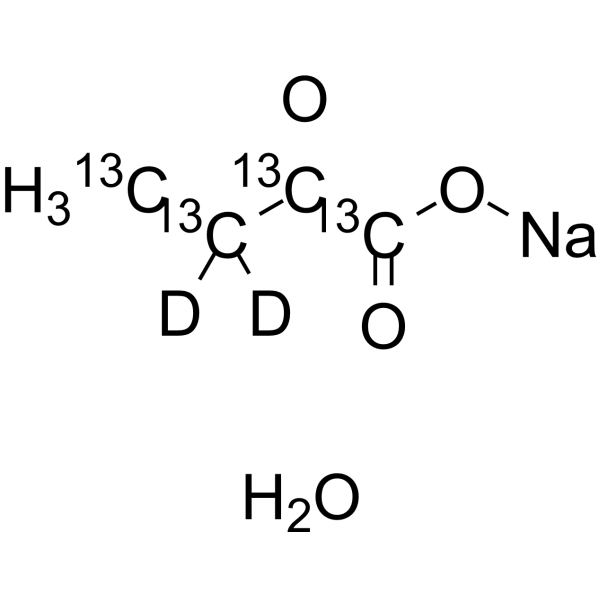 0 ImagesCat. No.: HY-W005355SCAS No.: 1049736-26-6Sodium 2-oxobutanoate-13C4,d2 (hydrate) is the deuterium and 13C labeled Sodium 2-oxobutanoate hydrate.
-
Methyl-d3 hydrazinecarboxylate
 0 ImagesCat. No.: HY-W703174CAS No.: 1794752-06-9Methyl-d3 hydrazinecarboxylate is the deuterium labeled Methyl hydrazinecarboxylate (HY-Y0902).
-
3-Vinylpyridine-d4
 0 ImagesCat. No.: HY-W015919SCAS No.: 1216466-39-53-Vinylpyridine-d4 is the deuterated-labeled 3-Vinylpyridine.
-
Ethinylestradiol sulfate-d4
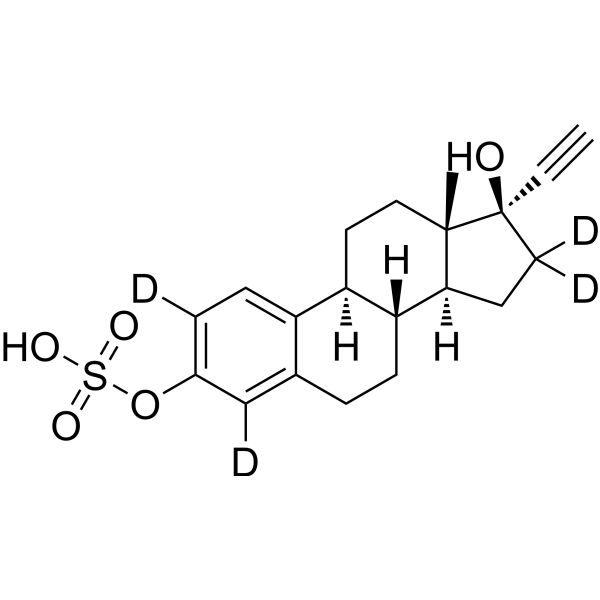 0 ImagesCat. No.: HY-154775SEthinylestradiol sulfate-d4 is deuterated labeled Ethinylestradiol sulfate.
-
Iodobenzene-d2
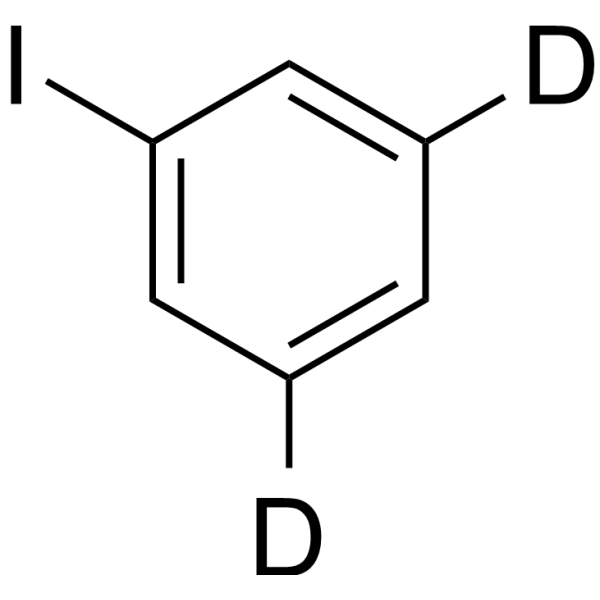 0 ImagesCat. No.: HY-Y0747S1CAS No.: 51209-48-4Synonyms: 1-Iodobenzene-d2Iodobenzene-d2 is the deuterium labeled 1-Iodobenzene. Iodobenzene can undergo Ullmann coupling reaction on copper catalyst to generate biphenyl. Iodobenzene can undergo Suzuki reaction with phenylboronic acid to generate biphenyl.
-
trans-3'-Hydroxy Cotinine-d3 N-b-D-Glucuronide
 0 ImagesCat. No.: HY-W765751trans-3'-Hydroxy Cotinine-d3 N-b-D-Glucuronide is the deuterium labeled trans-3'-Hydroxy Cotinine N-b-D-Glucuronide.
-
Apatinib 25-N-oxide-d8 dihydrochloride
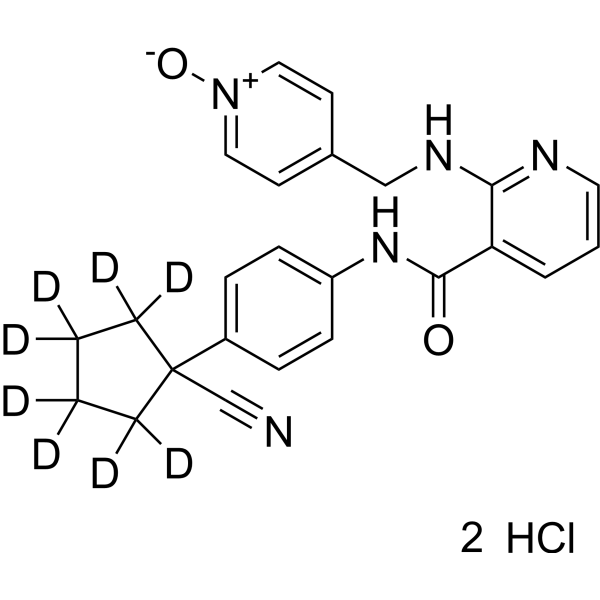 0 ImagesCat. No.: HY-142440SApatinib 25-N-oxide-d8 (dihydrochloride) is the deuterium labeled Apatinib 25-N-oxide dihydrochloride.
-
Myristic acid-d1
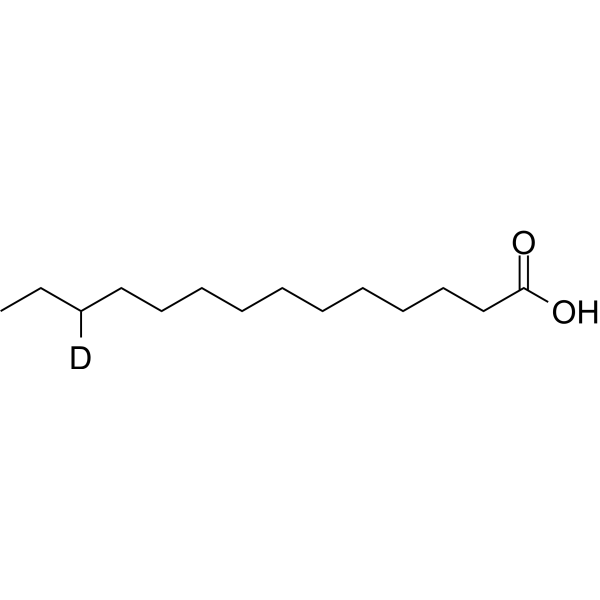 0 ImagesCat. No.: HY-N2041S5CAS No.: 358730-97-9Myristic acid-d is the deuterium labeled Myristic acid. Myristic acid is a saturated 14-carbon fatty acid occurring in most animal and vegetable fats, particularly butterfat and coconut, palm, and nutmeg oils.
-
Potassium cyanate-13C,15N
 0 ImagesCat. No.: HY-Y1352S1Potassium cyanate-13C,15N is the 13C and 15N labeled Potassium cyanate.
-
5,6-Epoxyeicosatrienoic acid-d11
 0 ImagesCat. No.: HY-132184SCAS No.: 1881277-30-0Synonyms: 5,6-EET-d11; (±)5,6-EpETrE-d115,6-Epoxyeicosatrienoic acid-d11 (5,6-EET-d11) is deuterium labeled 5,6-Epoxyeicosatrienoic acid. 5,6-Epoxyeicosatrienoic acid is one of the four major epoxyeicosatrienoic acid (EET) isomers metabolized from Arachidonic acid (HY-109590). 5,6-Epoxyeicosatrienoic acid induces peripheral vasodilation and lowers blood pressure by inhibiting T-type calcium channels (Cav3.2: IC50 = 0.54 μM). 5,6-Epoxyeicosatrienoic acid causes vasoconstriction in hypoxic pulmonary blood vessels via activating Rho kinase in a membrane depolarization-dependent manner. 5,6-Epoxyeicosatrienoic acid induces mechanical pain by activating TRPA1. 5,6-Epoxyeicosatrienoic acid can be used in studies related to hypoxic pulmonary vasoconstriction, mechanical hyperalgesia and hypertension.
-
2,2′,4,4′,6-Pentabromo diphenyl ether-13C12
 0 ImagesCat. No.: HY-166904S2,2′,4,4′,6-Pentabromo diphenyl ether-13C12 is 13C labeled 2,2′,4,4′,6-Pentabromo diphenyl ether.
-
Saroglitazar sulfoxide-d4
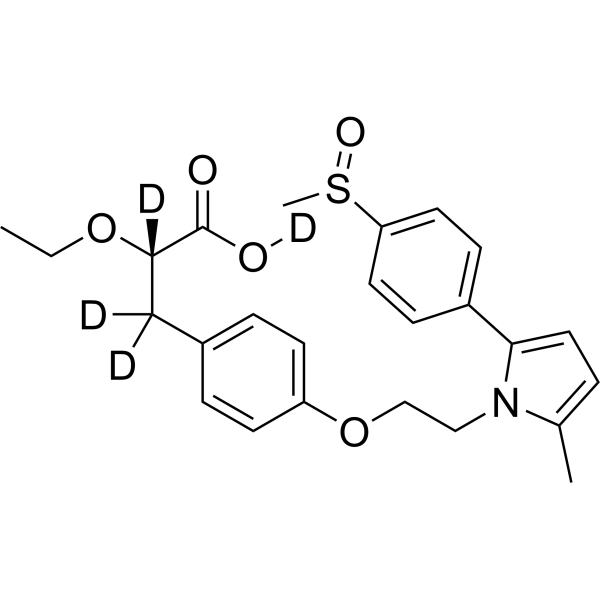 0 ImagesCat. No.: HY-142255S1Saroglitazar sulfoxide-d4 is the deuterium labeled Saroglitazar sulfoxide.
-
Uridine 5'-monophosphate-15N2 dilithium
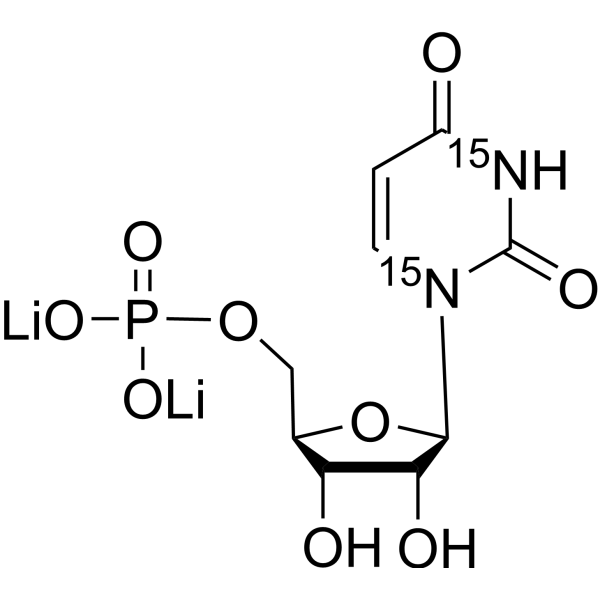 0 ImagesCat. No.: HY-101981S5Purity: 98.00%Synonyms: 5'-Uridylic acid-15N2 dilithiumUridine 5'-monophosphate-15N2 (5'- Uridylic acid-15N2) dilithium is 15N labeled Uridine 5'-monophosphate (HY-101981). Uridine 5'-monophosphate (5'-Uridylic acid) is an orally active mitochondrial ATP-dependent potassium channel activator that has a protective effect on the heart. Uridine 5'-monophosphate can promote the synthesis of CDP-choline and induce apoptosis in intestinal epithelial cells, which is beneficial for gut development and reduces diarrhea.
-
2,6-Dichlorobenzoic acid-d3
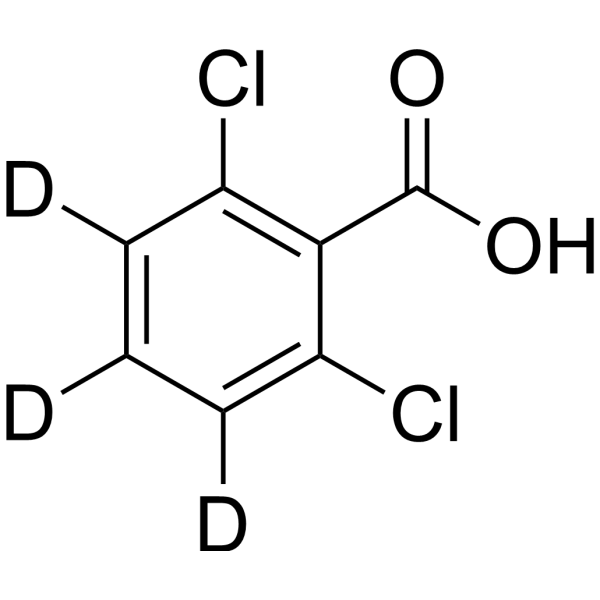 0 ImagesCat. No.: HY-W012507SCAS No.: 1219805-50-12,6-Dichlorobenzoic acid-d3 is the deuterium labeled 2,6-Dichlorobenzoic acid.
-
3-Amino-5-hydroxybenzoic acid-15N
 0 ImagesCat. No.: HY-178298SCAS No.: 1260092-82-73-Amino-5-hydroxybenzoic acid-15N is a 15N-labeled form of 3-Amino-5-hydroxybenzoic acid.

-
CER1 (d18:1/26:0/18:1)-d9
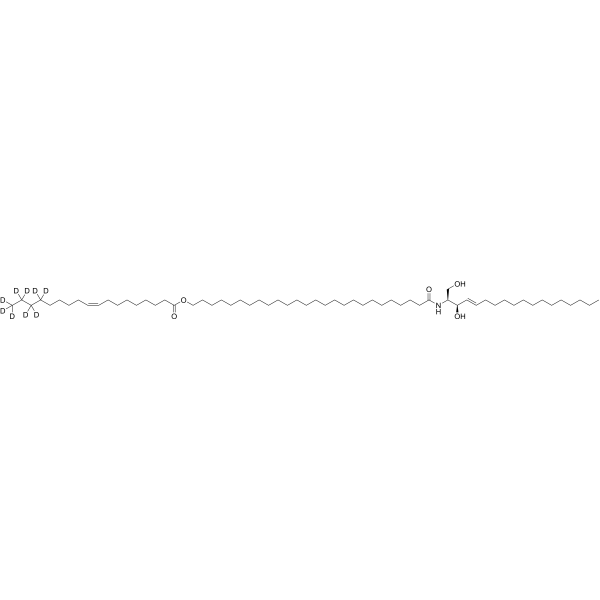 0 ImagesCER1 (d18:1/26:0/18:1)-d9 is deuterium labeled CER1 (d18:1/26:0/18:1).
-
5-Ethynyl-2'-deoxyuridine-13C2
 0 ImagesCat. No.: HY-118411S1CAS No.: 1610530-35-2Synonyms: EdU-13C25-Ethynyl-2'-deoxyuridine-13C2 (EdU-13C2) is the 13C-labeled 5-Ethynyl-2'-deoxyuridine (HY-118411). 5-Ethynyl-2'-deoxyuridine (EdU), a thymidine analogue, is incorporated into cellular DNA during DNA replication and the subsequent reaction of EdU with a fluorescent azide in a “Click” reaction. EdU staining is a fast, sensitive and reproducible method to study cell proliferation. 5-Ethynyl-2'-deoxyuridine is an alkyl chain-based PROTAC linker that can be used in the synthesis of PROTACs. 5-Ethynyl-2'-deoxyuridine is a click chemistry reagent, it contains an Alkyne group and can undergo copper-catalyzed azide-alkyne cycloaddition (CuAAc) with molecules containing Azide groups.
-
Tandospirone-d8
 0 ImagesCat. No.: HY-14558SCAS No.: 1794835-73-6Synonyms: SM-3997-d8Tandospirone-d8 (SM-3997-d8) is deuterium labeled Tandospirone. Tandospirone (SM-3997) is a potent and selective 5-HT1A receptor partial agonist, with a Ki of 27 nM. Tandospirone has anxiolytic and antidepressant activities. Tandospirone can be used for the research of the central nervous system disorders and the underlying mechanisms.
-
Baloxavir marboxil-d1
 0 ImagesCat. No.: HY-109025S2CAS No.: 2246959-10-2Synonyms: S-033188-d1; RG 6152-d1Baloxavir marboxil-d1 (S-033188-d1) is the d1-labeled Baloxavir marboxil (HY-109025). Baloxavir marboxil (S-033188) is a selective inhibitor of influenza cap-dependent endonuclease. Baloxavir marboxil, a potent antiviral agent, shows activity against influenza A and B virus.



