



mTOR
Mammalian target of Rapamycin
mTOR (mammalian target of Rapamycin) is a protein that in humans is encoded by the mTOR gene. mTOR is a serine/threonine protein kinase that regulates cell growth, cell proliferation, cell motility, cell survival, protein synthesis, and transcription. mTOR belongs to the phosphatidylinositol 3-kinase-related kinase protein family. mTOR integrates the input from upstream pathways, including growth factors and amino acids. mTOR also senses cellular nutrient, oxygen, and energy levels. The mTOR pathway is dysregulated in human diseases, such as diabetes, obesity, depression, and certain cancers. Rapamycin inhibits mTOR by associating with its intracellular receptor FKBP12. The FKBP12-rapamycin complex binds directly to the FKBP12-Rapamycin Binding (FRB) domain of mTOR, inhibiting its activity.
mTOR Isoform Specific Products
All Product Categories
-
mTOR Inhibitors
(516)
View all products
-
mTOR Agonists
(8)
View all products
-
mTOR Antagonist
(1)
View all products
-
mTOR Activators
(73)
View all products
-
mTOR Modulators
(16)
View all products
-
mTOR p53 Inhibitor
(1)
View all products
-
mTOR Degraders
(2)
View all products
-
mTOR Control
(1)
View all products
-
mTOR Substrate
(1)
View all products
-
mTOR Ligands
(2)
View all products
-
mTOR Related Products (660)
Related Products (660)

-
Antibodies (14)
-
mTOR Signaling Pathway
-
mTOR Isoform Comparison
-
Rapastinel acetate
 0 ImagesCat. No.: HY-16728ACAS No.: 491872-39-0Synonyms: GLYX-13 acetateRapastinel (GLYX-13) acetate is a potent NMDAR modulator capable of crossing the blood-brain barrier, and it exhibits extremely high affinity for human NMDAR (EC50=0.0017-9.9 nM). Rapastinel acetate enhances ERK signaling and activates the mTOR pathway, thereby upregulating the expression of BDNF and VGF, and inducing significant neuroplastic changes such as enhanced LTP and increased mature dendritic spine density in the hippocampus. Rapastinel acetate moderately elevates the efflux of dopamine, norepinephrine and 5-HT in the prefrontal cortex, and uniquely avoids side effects of traditional antidepressants such as dissociation, addiction or sedation. Rapastinel acetate is applicable to the research of major depressive disorder and hepatocellular carcinoma.
-
LGB321
 0 ImagesCat. No.: HY-15901CAS No.: 1210417-75-6LGB321 is an inhibitor of PIM2-dependent multiple myeloma cell lines, effectively inhibiting proliferation and key signaling pathways such as mTOR-C1 and phosphorylation of BAD.
-
Chalcomoracin
 0 ImagesCat. No.: HY-N20674CAS No.: 76472-89-4Chalcomoracin is an orally active anticancer agent. Chalcomoracin exhibits anticancer, antibacterial, and α-glucosidase inhibitory activities, with an IC50 of 14.23 µM against yeast α-glucosidase and an IC50 of 5.5 μM against FabI of Staphylococcus aureus. Chalcomoracin reduces the phosphorylation levels of ERK, JNK, and P38; enhances the phosphorylation level of ERK1/2; regulates the MAPK, mTOR, AKT, and p53 signaling pathways; upregulates the expression of Chop, Bip, PINK1, GRP78, and GADD153; and downregulates the expression of Alix. Chalcomoracin induces apoptosis (apoptosis), endoplasmic reticulum stress (endoplasmic reticulum stress), paraptosis (paraptosis), ROS production, mitophagy (mitophagy), and autophagy (autophagy); it inhibits cancer cell viability, colony-forming ability, migration, invasion, proliferation, tumorigenesis, fatty acid synthesis, S. aureus growth, vitreous-stimulated retinal cell activity, and cell cycle progression at the G0/G1 phase. Chalcomoracin can be used in research related to hepatocellular carcinoma, non-small cell lung cancer, triple-negative breast cancer, prostate cancer, proliferative vitreoretinopathy, pancreatic cancer, diabetes, and bacterial infections.
-
M-1111
 0 ImagesCat. No.: HY-176948CAS No.: 1887095-86-4M-1111 is a Rapa-Link inhibitor. M-1111 is covalently linked by Rapamycin (HY-10219) and an inhibitor of the active site mTOR. M-1111 has strong inhibitory activity on the mTORC1 signaling pathway (pS6 and p4E-BP1). M-1111 has nanomolar-level inhibitory activity against various cancer cells. M-1111 completely inhibits p4E-BP1 without inhibiting pAkt S473. M-1111 can be used for research on liver cancer, kidney cancer, and colorectal cancer.
-
ICSN3250 hydrochloride
 0 ImagesCat. No.: HY-112774ACAS No.: 1561902-79-1ICSN3250 hydrochloride is a halitulin analogue and a mTORC1 inhibitor. ICSN3250 hydrochloride directly binds to mTOR's FRB domain and displaces phosphatidic acid (PA), reversing mTORC1 activation. ICSN3250 hydrochloride shows high cytotoxicity in cancer cells (nanomolar concentration) through a caspase-independent cell death mechanism. ICSN3250 hydrochloride specifically inhibits the mTORC1 pathway, inducing autophagy and G0-G1 cell-cycle arrest in cancer cells. ICSN3250 hydrochloride can be used for the study of cancer .
-
PI3K/mTOR-IN-18
 0 ImagesCat. No.: HY-176854CAS No.: 1220699-39-7PI3K/mTOR-IN-18 (Compound 12) is a highly selective dual PI3K/mTOR inhibitor. PI3K/mTOR-IN-18 shows antitumor effects via competitive binding to PI3Kα (Ki=0.130 nM) and mTOR (Ki=0.111 nM). PI3K/mTOR-IN-18 blocks the PI3K/AKT/mTOR pathway and inhibits tumor cell proliferation (IC50=144 nM). PI3K/mTOR-IN-18 is promising for research of solid tumors (e.g., breast, NSCLC).
-
PI3K/mTOR Inhibitor-14
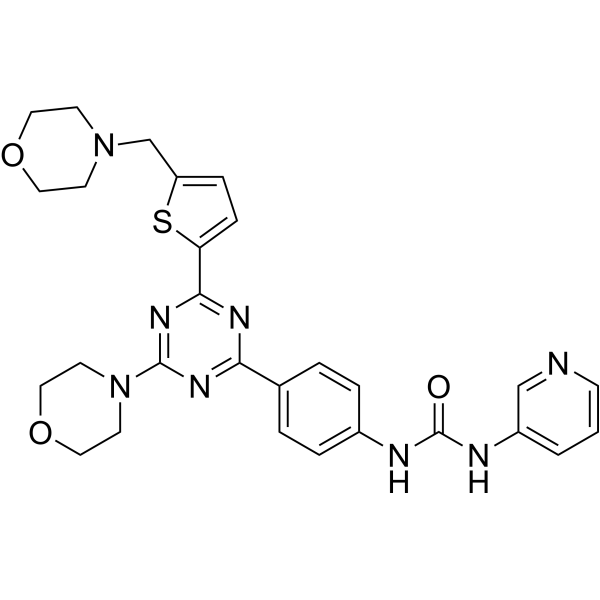 0 ImagesCat. No.: HY-156445CAS No.: 2919684-77-6
-
mTOR/HDAC6-IN-1
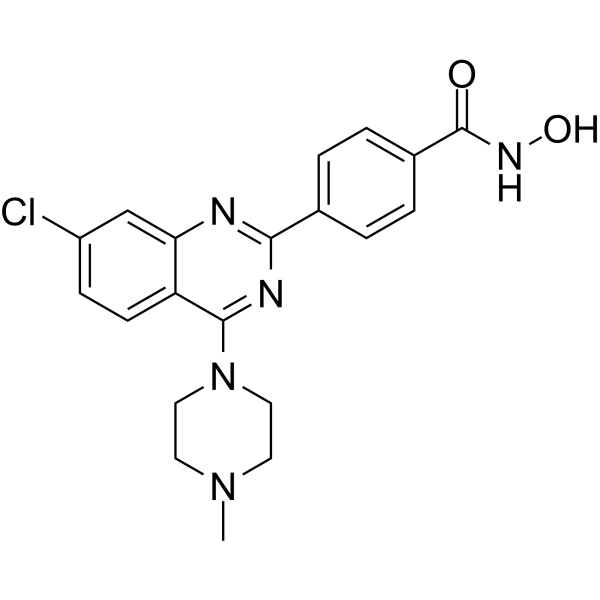 0 ImagesCat. No.: HY-144449CAS No.: 2986747-52-6
-
Daporinad hydrochloride
 0 ImagesCat. No.: HY-50876ACAS No.: 2727965-45-7Synonyms: FK866 hydrochloride; APO866 hydrochlorideDaporinad (FK866) hydrochloride is a non-competitive inhibitor of nicotinamide phosphoribosyltransferase (Nampt), with a Ki value of 0.3 nM. Daporinad hydrochloride depletes NAD+ and ATP levels, inhibits mTORC1 and MAPK/ERK pathways, and activates TFEB to induce autophagy. Daporinad hydrochloride causes the depletion of the endoplasmic reticulum Ca²⁺ pool, ultimately weakening the mitogen-induced Ca²⁺ signal and the activation and function of T cells. Daporinad hydrochloride induces cell cycle arrest and apoptosis, and inhibits cell proliferation. Daporinad hydrochloride can be used for the study of myeloma, liver cancer, and immunosuppression.
-
ROR1-IN-3
 0 ImagesCat. No.: HY-174382ROR1-IN-3 (Compound 24d) is a potent and highly selective ROR1 kinase inhibitor (IC50 = 17.6 nM). ROR1-IN-3 demonstrates robust antitumor activity and inhibitory effect against ROR1 both in vitro and in vivo. ROR1-IN-3 has robust antiproliferative efficacy in vitro and in vivo. ROR1-IN-3 induces apoptosis in cancer cell lines. ROR1-IN-3 inhibits ROR1 downstream AKT/mTOR and NF-κB signaling pathway. ROR1-IN-3 can be studied in antitumor research.
-
PI3K/mTOR Inhibitor-7
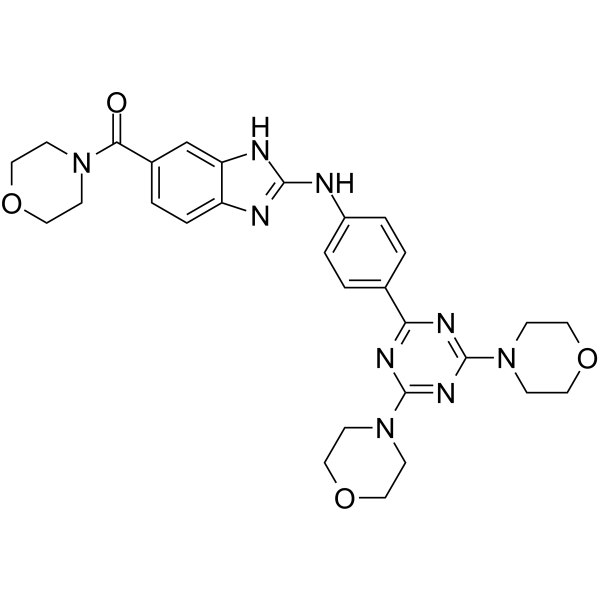 0 ImagesCat. No.: HY-147614CAS No.: 2456295-65-9PI3K/mTOR Inhibitor-7 (Compound 19i) is a potent and dual inhibitor of PI3K/mTOR. PI3K/mTOR Inhibitor-7 shows 4.7-fold higher potency than the positive control gedatolisib (0.3 vs. 1.4 μM, IC50 values). PI3K/mTOR Inhibitor-7 significantly suppresses the PI3K/Akt/mTOR signaling pathway at 10 μM. PI3K/mTOR Inhibitor-7 has the potential for the research of cancer diseases.
-
PI3K/Akt/mTOR-IN-7
 0 ImagesCat. No.: HY-183272CAS No.: 2925588-01-6PI3K/Akt/mTOR-IN-7 is an AKT/mTOR and JAK2/STAT3 inhibitor. PI3K/Akt/mTOR-IN-7 restores p-Akt, p-mTOR, and p-STAT3 expression, reduces pro-apoptotic Caspase-3 mRNA expression. PI3K/Akt/mTOR-IN-7 reduces intracellular ROS accumulation and inhibits NO production. PI3K/Akt/mTOR-IN-7 can be used for research on stroke, Alzheimer's disease and Parkinson's disease.
-
CAII/VII-IN-1
 0 ImagesCat. No.: HY-178362CAS No.: 3085155-69-4CAII/VII-IN-1 is an orally active hCA II (KI = 12.3 nM), and hCA VII (KI = 22.6 nM) inhibitor, showing no significant activity against hCA I. CAII/VII-IN-1 shows excellent neuroprotective activity in vivo Pilocarpine (HY-B0726A)-induced seizure model. CAII/VII-IN-1 can upregulate KCC2 and inhibit mTOR, exerting neuroprotective effects. CAII/VII-IN-1 does not show any significant neurotoxic effects or alterations in liver and kidney function. CAII/VII-IN-1 can be used for the study of epilepsy.
-
PI3K/Akt/mTOR-IN-6
 0 ImagesCat. No.: HY-180853PI3K/Akt/mTOR-IN-6 (Compound JW4) is an orally active PI3K/Akt/mTOR pathway inhibitor. PI3K/Akt/mTOR-IN-6 induces Apoptosis in cells via the mitochondrial pathway. PI3K/Akt/mTOR-IN-6 shows potent anti-NSCLC activity.
-
Topo I/II-IN-2
 0 ImagesCat. No.: HY-170912Topo I/II-IN-2 (Compound 3g) is an inhibitor of Topo I and Topo II. Topo I/II-IN-2 inhibits NCI-H446 cells and NCI-H1048 cells with IC50s of 1.30 μM and 1.42 μM, respectively. Topo I/II-IN-2 induces mitochondrial Apoptosis, mitochondrial dysfunction and activity generation. Topo I/II-IN-2 inhibits the PI3K/Akt/mTOR pathway. Topo I/II-IN-2 prevents SCLC (small cell lung cancer) cell proliferation, invasion, and migration in vitro. .
-
Acesulfame potassium (Standard)
 0 ImagesAcesulfame potassium (Standard) is the analytical standard of Acesulfame potassium (HY-D0195). This product is intended for research and analytical applications. Acesulfame potassium is a synthetic sweetener. Long-term use of Acesulfame potassium can affect cognitive function, possibly by altering the neurometabolic functions in mice. Acesulfame potassium can suppress autophagic degradation of PD-L1 in RIL-175 and SK-Hep1 cells through the ERK1/2-mTORC1-ULK1 pathway, which may be related to immune evasion in cancer cells. Acesulfame potassium can be used in research on neurological diseases, metabolic disorders, cancer, and immune evasion.
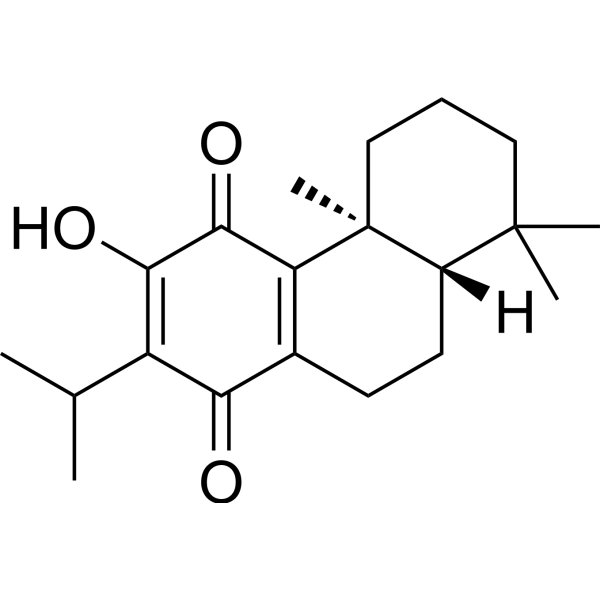
-
α-Solanine (Standard)
 0 ImagesCat. No.: HY-N6602RCAS No.: 20562-02-1α-Solanine (Standard) is the analytical standard of α-Solanine. This product is intended for research and analytical applications. α-solanine, a bioactive component and one of the major steroidal glycoalkaloids in Solanum nigrum, has been observed to inhibit growth and induce apoptosis in cancer cells.
-
Sialorphin
 0 ImagesCat. No.: HY-P11642CAS No.: 131748-26-0Sialorphin is a neutral endopeptidase (NEP) and aminopeptidase N (APN) inhibitor that responds to androgen signals. Sialorphin blocks the degradation of endogenous opioid peptides and interacts with μ-, δ-, κ-opioid receptors. Sialorphin regulates the ERK/mTOR signaling pathway by inducing cell cycle arrest, enhancing ERK1/2 activity, and reducing the phosphorylation levels of mTOR, 4E-BP1, p70S6K; accordingly, Sialorphin exhibits antiproliferative activity against colorectal cancer, glioma and prostate cancer cells without cytotoxicity. In addition, Sialorphin also produces antinociceptive responses, regulates sexual behavior, relaxes corpus cavernosum smooth muscle, and alleviates experimental colitis. Sialorphin is also a copper (II) ion-binding ligand. Sialorphin has been used in mechanistic studies related to cancer, pain management and inflammatory bowel disease.




