



RDC Linkers
Radionuclide-drug conjugates (RDCs) integrate a targeting ligand, a radionuclide payload, and a chelator-linker system that connects these functional components while preserving biological targeting and radiochemical stability[1][2]. Linkers therefore serve as critical structural elements that influence the in vivo performance, biodistribution, clearance profile, and therapeutic index of radiopharmaceutical constructs[2]. Mechanistically, linker chemistry can be used to modulate interactions with biological systems and to optimize tissue-specific pharmacokinetics, thereby affecting radiation delivery to tumors and normal organs[2][3]. In oncology-focused RDC development, linker design directly contributes to tumor targeting efficiency because radionuclides must remain associated with the targeting vector during circulation and target engagement[1][4]. Compared with other conjugate technologies such as antibody-drug conjugates, RDCs place additional emphasis on maintaining radiometal-chelator integrity and controlling radiopharmaceutical disposition under physiological conditions[2]. Distinct linker architectures, including cleavable and pharmacokinetically engineered designs, have been investigated to improve clearance from non-target tissues and reduce off-target radiation exposure while preserving tumor uptake[2][3]. For experimental applications, linker optimization has become an important strategy for improving imaging contrast, therapeutic efficacy, dosimetry, and safety, making linker engineering a central component of next-generation RDC and radiopharmaceutical research[2][3][4].
References:
- [1]. Xijing L, et al. Recent advances in radionuclide drug conjugates (RDCs) for cancer therapy. Bioorg Chem. 2025;160:109240. [Content Brief]
- [2]. Stoddard A, et al. Linker Chemistry in Radiopharmaceutical Design. Bioconjug Chem. 2026 Apr 15;37(4):630-657. [Content Brief]
- [3]. Berton C, et al. New tactics in the design of theranostic radiotracers. Npj Imaging. 2024 Aug 2;2(1):23. [Content Brief]
- [4]. Zhang Y, et al. Comparison of Radionuclide Drug Conjugates With Boron Neutron Capture Therapy: An Overview of Targeted Charged Particle Radiation Therapy. Med Res Rev. 2025 May;45(3):867-886. [Content Brief]
-
RDC Linkers Related Products (1)
Related Products (1)

-
p-SCN-Bn-deferoxamine
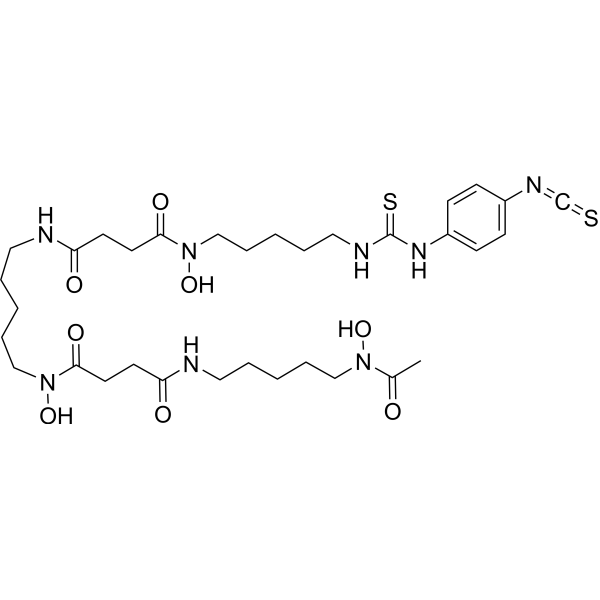 0 ImagesP-SCN-Bn-deferoxamine is a bifunctional chelating agent that can link radioactive metal nuclides (such as Zr-89) and biological targeting molecules (such as antibodies). P-SCN-Bn-deferoxamine can be used for the research of immune PET imaging.



