



Tetracosactide

Based on 1 Customer Validation
Tetracosactide (Tetracosactrin) is an analogue of adrenocorticotrophic hormone (ACTH). Tetracosactide is the agonist for melanocortin-4 receptor (MC4R) that activates human MC4R with an EC50 of 0.65 nM. Tetracosactide can stimulate the release of corticosteroids such as cortisol from the adrenal gland. Tetracosactide is currently used for the research of ulcerative colitis and Crohn's disease, juvenile/adult rheumatoid arthritis and osteoarthrosis.
For research use only. We do not sell to patients.
- Purity : 99.46%
- CAS No.: 16960-16-0
- Formula: C136H210N40O31S
- Molecular Weight:2933.44
-
Storage:
Sealed storage, away from moisture and light, under nitrogen.
Powder -80°C, 2 years , -20°C, 1 year* In solvent : -80°C, 6 months; -20°C, 1 month (sealed storage, away from moisture and light, under nitrogen)


To place orders, for customer services and technical support, please contact: MedChemExpress USA
Tel: 609-228-6898 E-mail: [email protected] [email protected]


-
 Biological Activity
-
Chemical Information
-
Solvent & Solubility
- Protocols
- Purity & Documentation
- References
-
 Help & FAQs


-
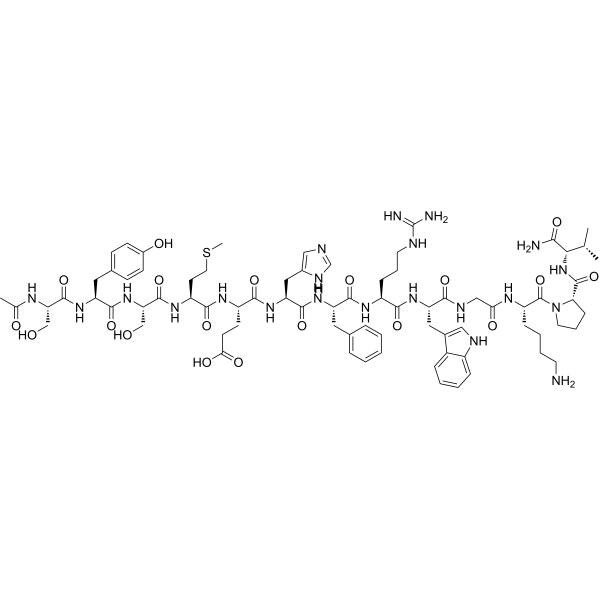
HY-P0252
α-MSHMC4R Agonist -
HY-P1208
PG-931Melanocortin 4 Receptor Agonist -
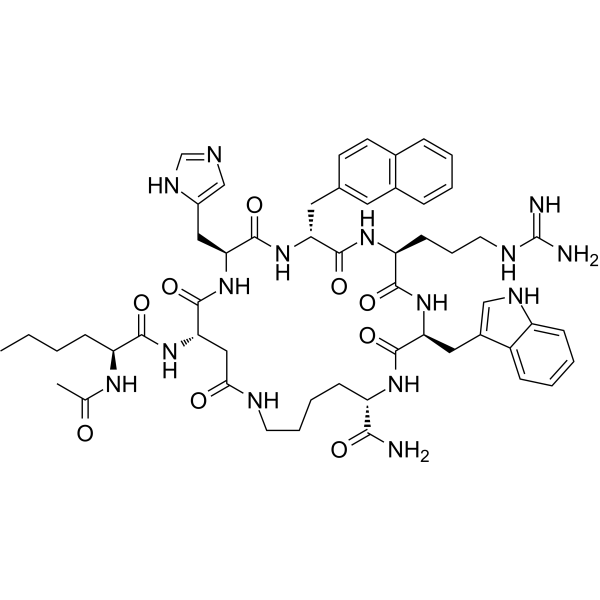
HY-P0227
SHU 9119MC3/4R Antagonist -
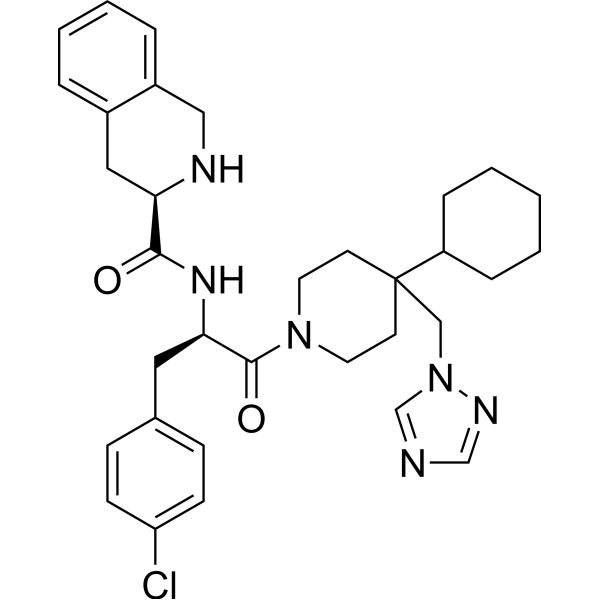
HY-10624
THIQMC4R Agonist -
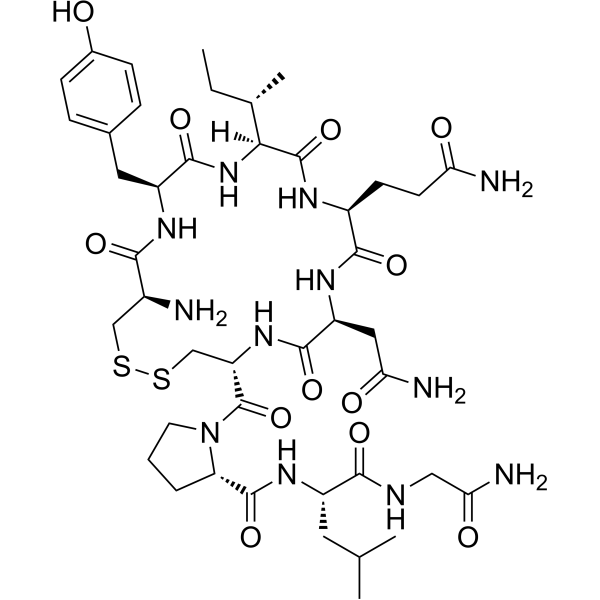
HY-17571
OxytocinHypothalamic Peptide -
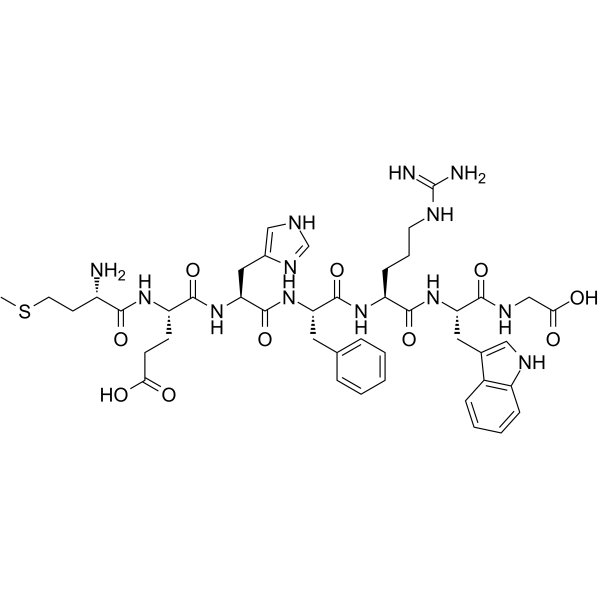
HY-P1478
Adrenocorticotropic Hormone (ACTH) (4-10), humanMelanocortin Receptor Agonist -

HY-P1211
Adrenocorticotropic Hormone (ACTH) (1-39), humanMelanocortin Receptor Agonist -
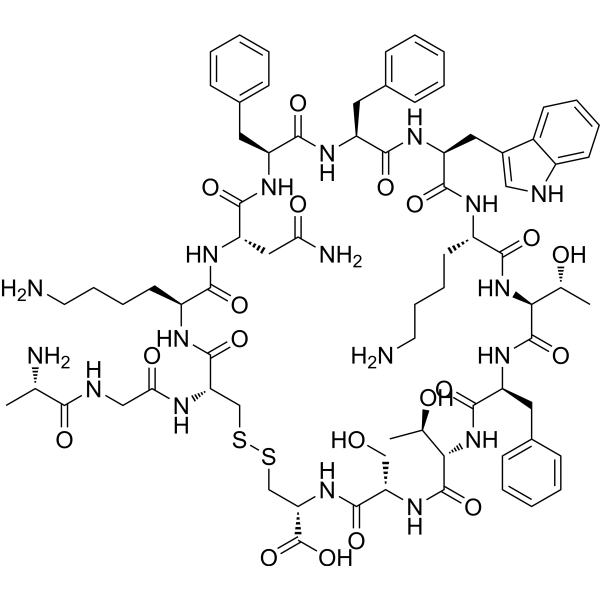
HY-P0084
Cyclic somatostatinPeptide -

HY-P1477
Adrenocorticotropic hormone (1-39), ratMelanocortin Receptor Agonist


Biological Activity
Description
IC50 & Target
[3]|
MC4R 0.65 nM (EC50) |
Cellular Effect
|
Cell Line

|
Type | Value | Description | References |
|---|---|---|---|---|
| HEK293 | EC50 |
0.65 nM
Compound: ACTH(1-24)
|
Agonist activity at wild type human melanocortin-4 receptor expressed in HEK293 cells co-transfected with CRE/beta-galactosidase reporter gene assessed as stimulatory response after 6 hrs
Agonist activity at wild type human melanocortin-4 receptor expressed in HEK293 cells co-transfected with CRE/beta-galactosidase reporter gene assessed as stimulatory response after 6 hrs
|
[PMID: 24517312] |
In Vitro
Tetracosactide (11 nM, 3-60 h) promotes the protein synthesis in rats/mice adrenal slices, promotes the secretion of cortisol, 11-deoxycorticosterone, and aldosterone[4].
MedChemExpress (MCE) has not independently confirmed the accuracy of these methods. They are for reference only. Further protocols information, click here.
In Vivo
MedChemExpress (MCE) has not independently confirmed the accuracy of these methods. They are for reference only.
-
Animal Model:Rabbits spinal cord IR injury models[2]
-
Dosage:0.5 mg/kg
-
Administration:iv, single dose
-
Result:Reduced MDA, XO, MPO, caspase-3 in tissue and serum, inproved the levels of CAT.
Clinical Trial
| NCT Number | Sponsor | Condition | Start Date |
Phase
|
|---|---|---|---|---|
| NCT01329991 | Plexxikon| | 2011-05 | PHASE1 |


Chemical Information
-
CAS No. 16960-16-0
-
Appearance Solid
-
Molecular Weight 2933.44
-
Formula C136H210N40O31S
-
Color White to off-white
-
Synonyms
Tetracosactrin; ACTH(1–24)
-
Sequence
Ser-Tyr-Ser-Met-Glu-His-Phe-Arg-Trp-Gly-Lys-Pro-Val-Gly-Lys-Lys-Arg-Arg-Pro-Val-Lys-Val-Tyr-Pro
-
Sequence Shortening
SYSMEHFRWGKPVGKKRRPVKVYP
-
Shipping
Room temperature in continental US; may vary elsewhere.
-
Storage
Sealed storage, away from moisture and light, under nitrogen
Powder -80°C 2 years -20°C 1 year * In solvent : -80°C, 6 months; -20°C, 1 month (sealed storage, away from moisture and light, under nitrogen)


Solvent & Solubility
In Vitro:
H2O : ≥ 200 mg/mL (68.18 mM)
* "≥" means soluble, but saturation unknown.
Please refer to the solubility information to select the appropriate solvent. Once prepared, please aliquot and store the solution to prevent product inactivation from repeated freeze-thaw cycles.
Storage method and period of stock solution: -80°C, 6 months; -20°C, 1 month (sealed storage, away from moisture and light, under nitrogen). When stored at -80°C, please use it within 6 months. When stored at -20°C, please use it within 1 month.
* Note: If you choose water as the stock solution, please dilute it to the working solution, then filter and sterilize it with a 0.22 μm filter before use.
Please refer to the solubility information to select the appropriate solvent. Once prepared, please aliquot and store the solution to prevent product inactivation from repeated freeze-thaw cycles.
Storage method and period of stock solution: -80°C, 6 months; -20°C, 1 month (sealed storage, away from moisture and light, under nitrogen). When stored at -80°C, please use it within 6 months. When stored at -20°C, please use it within 1 month.
* Note: If you choose water as the stock solution, please dilute it to the working solution, then filter and sterilize it with a 0.22 μm filter before use.
Concentration (start) × Volume (start) = Concentration (final) × Volume (final)

Protocols
-
Collagen-Induced Arthritis
Collagen-induced arthritis (CIA) is an autoimmune murine model of rheumatoid arthritis in which immunization with type II collagen (CII) emulsified in an adjuvant induces a T cell- and autoantibody-driven inflammatory arthritis characterized by synovial hyperplasia, immune cell infiltration, and joint destruction. The model typically relies on genetically susceptible mouse strains (e. g. , DBA/1) and reproduces key features of human rheumatoid arthritis, including anti-collagen immune responses and progressive joint inflammation. Disease onset generally occurs within ~3-4 weeks after immunization, depending on antigen/adjuvant combinations and protocol variation. The immunopathology is driven by adaptive immune activation against CII, leading to systemic and local joint inflammation mediated by pro-inflammatory cytokines and effector immune cells, making CIA a standard preclinical platform for evaluating immunomodulatory and anti-arthritic interventions.
-
Research Protocol for Endocrine Diseases
Endocrine diseases often arise from disrupted hormone production, hormone signaling, or target-tissue responsiveness; for diabetes-focused endocrine disease models, insulin signaling regulates glucose uptake, hepatic glucose output, lipid metabolism, and β-cell compensation. Type 2 diabetes develops through interacting defects in insulin resistance, β-cell dysfunction, adipose inflammation, hepatic glucose overproduction, altered incretin signaling, and ectopic lipid metabolism. A major unresolved question is whether endocrine dysfunction is driven primarily by target-tissue insulin resistance, intrinsic β-cell failure, immune/inflammatory stress, or combined multi-organ failure that differs by disease stage.
-
DSS-Induced Colitis
Dextran sulfate sodium (DSS)-induced colitis is generated by administering DSS in mouse drinking water, producing epithelial injury, barrier disruption, weight loss, diarrhea, fecal blood, colon shortening, histologic mucosal damage, and inflammatory mediator changes; the model is mainly used to study acute or chronic intestinal inflammation resembling selected features of ulcerative colitis. DSS injury is interpreted through clinical and tissue readouts rather than a single molecular endpoint: daily body weight, stool consistency, and bleeding are combined into a disease activity index, while colon length, histology, cytokines, myeloperoxidase activity, intestinal permeability, and tight-junction markers provide complementary measures of inflammation and barrier damage.
-
TNBS-Induced Colitis
TNBS-induced colitis is produced by intrarectal delivery of 2,4,6-trinitrobenzene sulfonic acid in ethanol, where ethanol disrupts the mucosal barrier and TNBS haptenates colonic proteins, generating immune-mediated colonic inflammation with weight loss, diarrhea, ulceration, transmural injury, inflammatory-cell infiltration, and cytokine responses. The model is used as an experimental intestinal inflammation model with Crohn’s disease–like features, especially when Th1-type responses, IL-12–dependent inflammation, chronic relapsing inflammation, or fibrosis-related endpoints are studied.


Purity & Documentation
-
Data Sheet (271 KB)
-
SDS (557 KB)
- English - EN (557 KB)
- Français - FR (557 KB)
- Deutsch - DE (557 KB)
- Norwegian - NO (557 KB)
- Español - ES (557 KB)
- Swedish - SV (557 KB)
- Italian - IT (557 KB)
- Korean - KR (557 KB)
- Portuguese - PT (557 KB)
-
Handling Instructions (2659 KB)
References
[2]. Kertmen H, et al., Comparative effects of methylprednisolone and tetracosactide (ACTH1-24) on ischemia/reperfusion injury of the rabbit spinal cord. Arch Med Sci. 2018 Oct;14(6):1459-1470. [Content Brief]
[3]. Haslach EM, et al., Identification of tetrapeptides from a mixture based positional scanning library that can restore nM full agonist function of the L106P, I69T, I102S, A219V, C271Y, and C271R human melanocortin-4 polymorphic receptors (hMC4Rs). J Med Chem. 2014 Jun 12;57(11):4615-28. [Content Brief]
[4]. Lindhe O, et al., Irreversible binding and adrenocorticolytic activity of the DDT metabolite 3-methylsulfonyl-DDE examined in tissue-slice culture. Environ Health Perspect. 2001 Feb;109(2):105-10. [Content Brief]


Complete Stock Solution Preparation Table
Please refer to the solubility information to select the appropriate solvent. Once prepared, please aliquot and store the solution to prevent product inactivation from repeated freeze-thaw cycles.
Storage method and period of stock solution: -80°C, 6 months; -20°C, 1 month (sealed storage, away from moisture and light, under nitrogen). When stored at -80°C, please use it within 6 months. When stored at -20°C, please use it within 1 month.
| Optional Solvent | Concentration Solvent Mass | 1 mg | 5 mg | 10 mg | 25 mg |
|---|---|---|---|---|---|
| H2O | 1 mM | 0.3409 mL | 1.7045 mL | 3.4090 mL | 8.5224 mL |
| 5 mM | 0.0682 mL | 0.3409 mL | 0.6818 mL | 1.7045 mL | |
| 10 mM | 0.0341 mL | 0.1704 mL | 0.3409 mL | 0.8522 mL | |
| 15 mM | 0.0227 mL | 0.1136 mL | 0.2273 mL | 0.5682 mL | |
| 20 mM | 0.0170 mL | 0.0852 mL | 0.1704 mL | 0.4261 mL | |
| 25 mM | 0.0136 mL | 0.0682 mL | 0.1364 mL | 0.3409 mL | |
| 30 mM | 0.0114 mL | 0.0568 mL | 0.1136 mL | 0.2841 mL | |
| 40 mM | 0.0085 mL | 0.0426 mL | 0.0852 mL | 0.2131 mL | |
| 50 mM | 0.0068 mL | 0.0341 mL | 0.0682 mL | 0.1704 mL | |
| 60 mM | 0.0057 mL | 0.0284 mL | 0.0568 mL | 0.1420 mL |
* Note: If you choose water as the stock solution, please dilute it to the working solution, then filter and sterilize it with a 0.22 μm filter before use.


Tetracosactide Related Classifications
HY-P0060 Related Classifications
 Powered by Bioz