



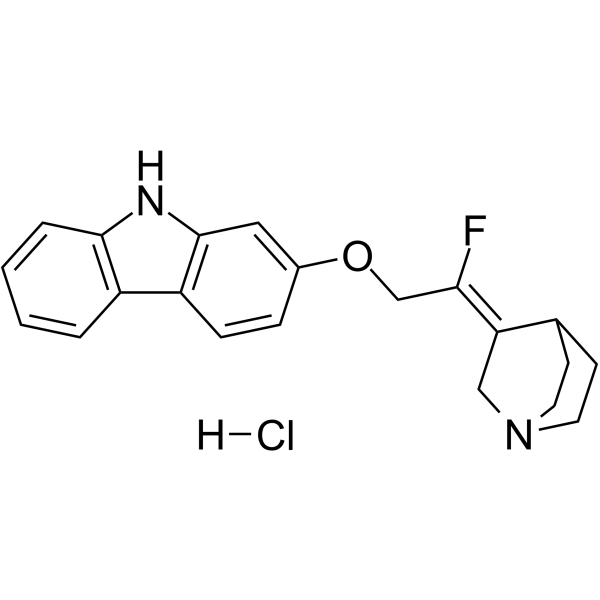
YM-53601 free base
Based on 6 publication(s) in Google Scholar
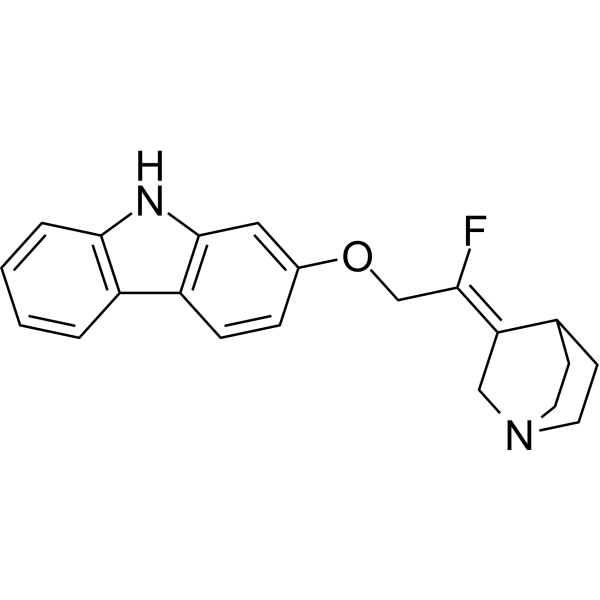
YM-53601 free base, a squalene synthase inhibitor, reduces plasma cholesterol and triglyceride levels in vivo. YM-53601 free base inhibits squalene synthase derived from human hepatoma cells with an IC50 of 79 nM. Lipid-lowering agent. YM-53601 free base is also an inhibitor of farnesyl-diphosphate farnesyltransferase 1 (FDFT1) enzyme activity and abrogates HCV propagation.
For research use only. We do not sell to patients.
- CAS No.: 182959-28-0
- Formula: C21H21FN2O
- Molecular Weight:336.40
-
Storage:
Please store the product under the recommended conditions in the Certificate of Analysis.

To place orders, for customer services and technical support, please contact: MedChemExpress USA
Tel: 609-228-6898 E-mail: [email protected] [email protected]


-
 Biological Activity
-
Chemical Information
- Protocols
- Purity & Documentation
- References
-
 Help & FAQs


-
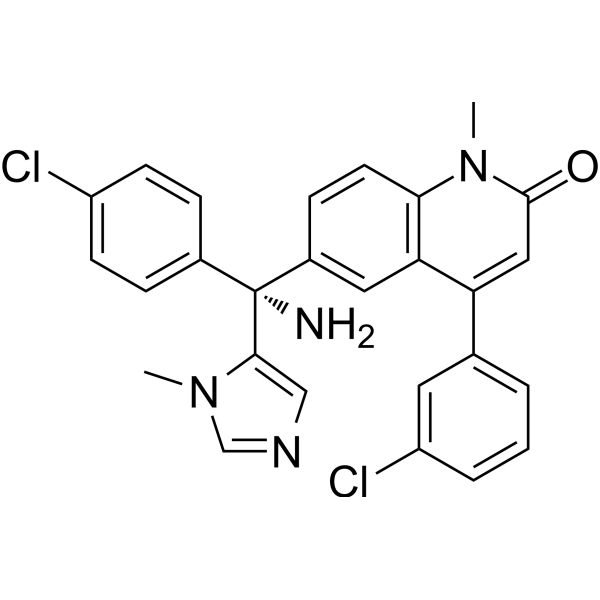
HY-10502
TipifarnibFTase Inhibitor -
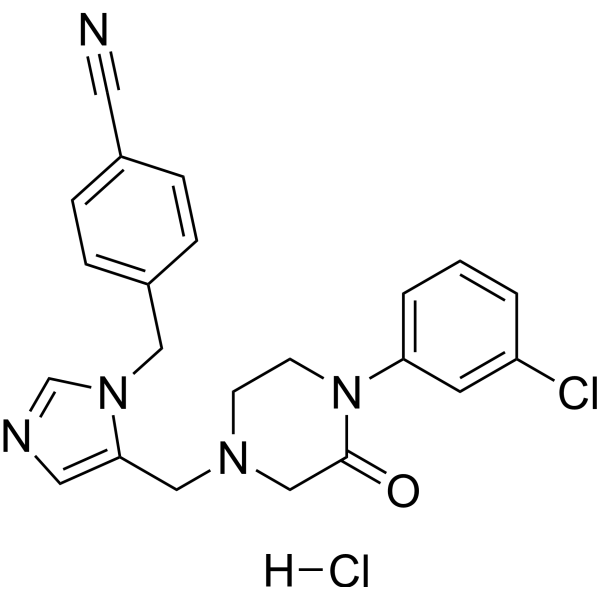
HY-16273A
L-778123 hydrochlorideFarnesyl Transferase Inhibitor -
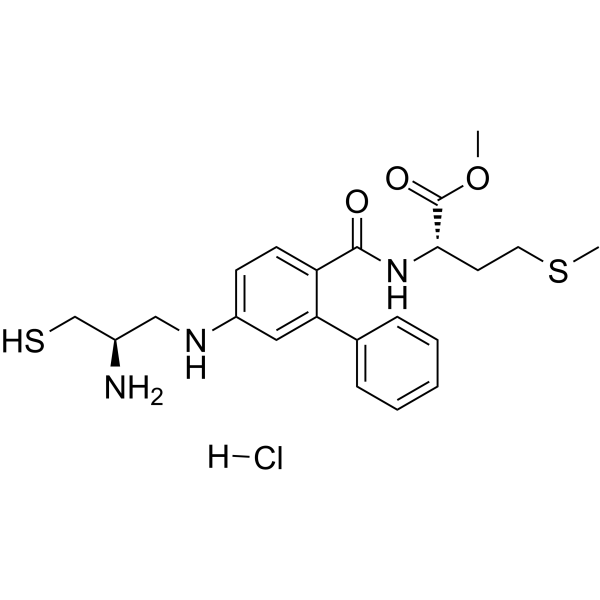
HY-15872A
FTI-277 hydrochlorideFTase Inhibitor -
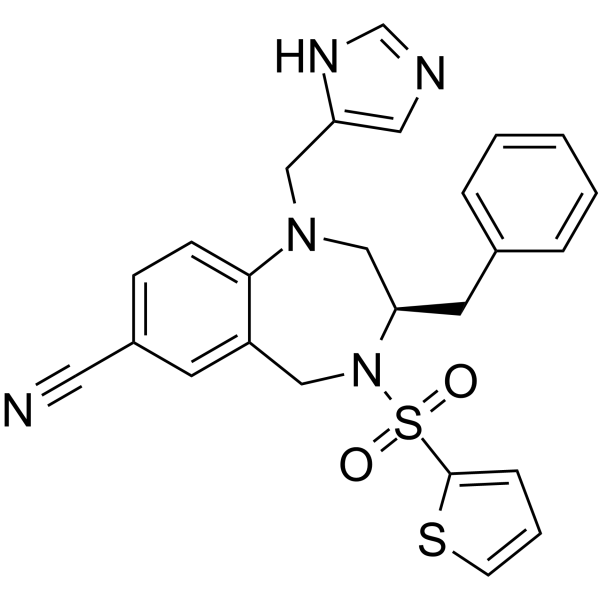
HY-16111
BMS-214662Farnesyl Transferase Inhibitor -
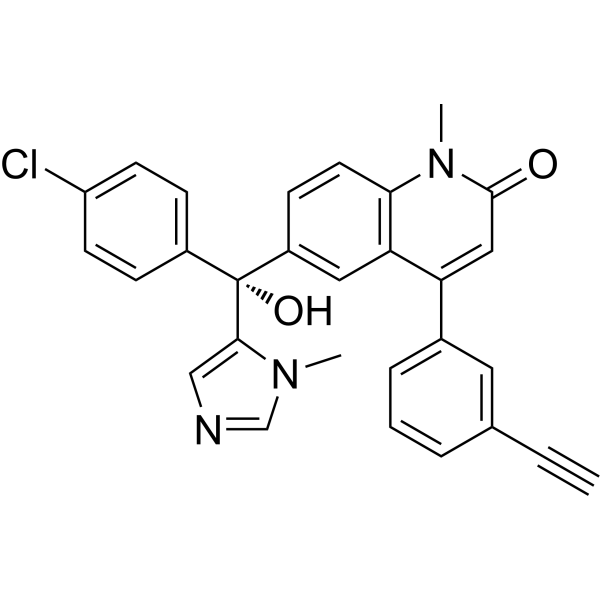
HY-16373
CP-609754Farnesyltransferase Inhibitor -
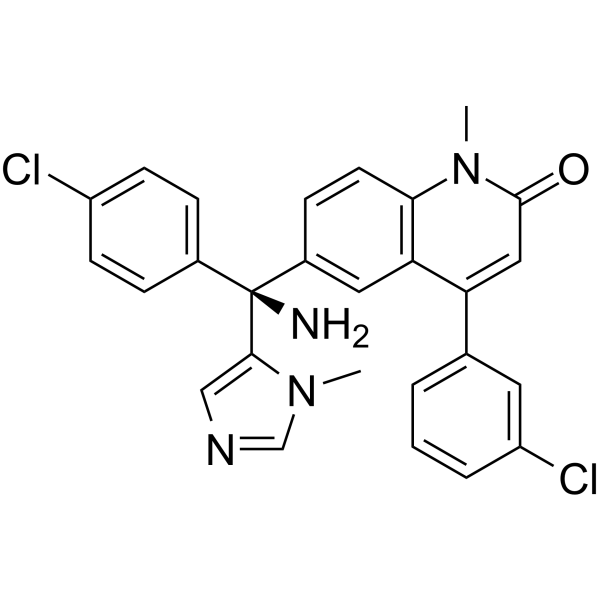
HY-10502A
Tipifarnib (S enantiomer) -
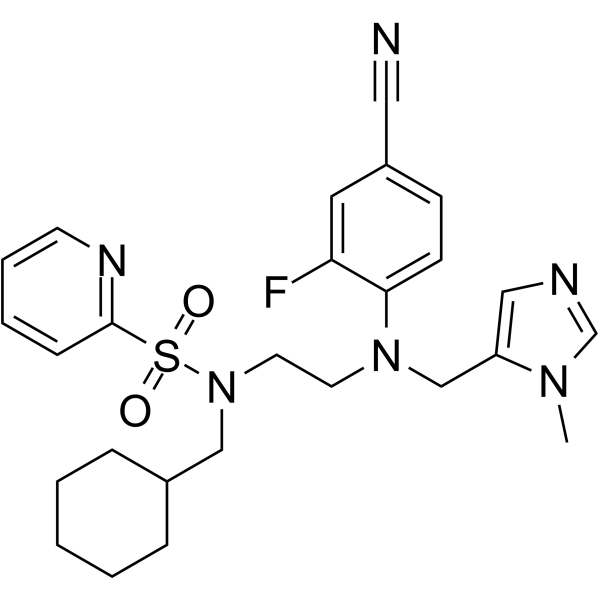
HY-128350
FGTI-2734Farnesyl/Geranylgeranyl Transferase Inhibitor -

HY-10502R
Tipifarnib (Standard)Reference Standard -
HY-100313A
YM-53601Squalene Synthase Inhibitor -
HY-15136
LonafarnibFarnesyltransferase Inhibitor -
HY-16273
L-778123FPTase/GGPTase-I Iinhibitor -
HY-119257
ABT-100Farnesyltransferase Inhibitor
Publications Citing Use of MedChemExpress (MCE) YM-53601 free base
More

Biological Activity
Description
IC50 & Target
Target: Squalene synthetase[1]
In Vitro
YM-53601 free base inhibits squalene synthase activities in hepatic microsomes from several species of rat, hamster, guinea-pig, rhesus monkey, and human-derived HepG2 cell with IC50s of 90, 170, 46, 45, and 79 nM, respectively[1].
YM-53601 free base inhibits conversion of [3H]farnesyl diphosphate to [3H]squalene by hamster liver squalene synthase with the IC50 of 170 nM[2].
YM-53601 (1 μM) free base potentiates the susceptibility of H35 cells to thapsigargin, lonidamine, and doxorubicin. YM-53601 (1 μM) free base reduces the mitochondrial cholesterol levels in both H35 and HepG2 cells[4].
MedChemExpress (MCE) has not independently confirmed the accuracy of these methods. They are for reference only. Further protocols information, click here.
-
Cell Line:H35 and HepG2 cells
-
Concentration:1 μM
-
Incubation Time:24 hours
-
Result:Reduced the mitochondrial cholesterol levels in both H35 and HepG2 cells.
In Vivo
YM-53601 free base also reduces plasma non-HDL cholesterol levels in hamsters by approximately 70% at an oral dose of 50 mg/kg/day for 5 days[2].
YM-53601 free base potentiates Doxorubicin-mediated hepatocellular carcinoma cells (HCC) growth arrest and cell death in vivo[4]. "
MedChemExpress (MCE) has not independently confirmed the accuracy of these methods. They are for reference only.
-
Animal Model:Sprague-Dawley (SD) rats weighing 150-170 g[1]
-
Dosage:6.25, 12.5, 25 or 50 mg/kg
-
Administration:Given a single p.o.
-
Result:Inhibited cholesterol biosynthesis from acetate in a dose-dependent manner in rats. The ED50 value for YM-53601 cholesterol biosynthesis inhibition is 32 mg/kg.
-
Animal Model:Five- to six-week-old male BALB/c athymic (nu/nu) nude mice[4]
-
Dosage:15 mg/kg
-
Administration:2 wk of daily treatment by p.o. gavage
-
Result:Significantly decreased the intratumor cholesterol levels.


Chemical Information
-
CAS No. 182959-28-0
-
Molecular Weight 336.40
-
Formula C21H21FN2O
-
SMILES
F/C(COC1=CC(NC2=C3C=CC=C2)=C3C=C1)=C4CN5CCC/4CC5
-
Structure Classification
-
Shipping
Room temperature in continental US; may vary elsewhere.
-
Storage
Please store the product under the recommended conditions in the Certificate of Analysis.


Publications (6)
-
Journal Impact Factor
-
Most Recent
-
Adv Sci (Weinh)
Targeting FDFT1 Reduces Cholesterol and Bile Acid Production and Delays Hepatocellular Carcinoma Progression Through the HNF4A/ALDOB/AKT1 Axis. [Abstract]2025 Mar;12(12):e2411719. PMID: 39899681 -
Int J Mol Sci
3 β-Hydroxy-12-oleanen-27-oic Acid Exerts an Antiproliferative Effect on Human Colon Carcinoma HCT116 Cells via Targeting FDFT1. [Abstract]2023 Oct 9;24(19):15020. PMID: 37834468 -
Neoplasia
Cholesterol biosynthesis as a drug-induced vulnerability in diffuse large B cell lymphoma insensitive to EZH2 inhibition. [Abstract]2025 Oct 27:70:101243. PMID: 41151153 -
-
bioRxiv
SAGA/ATAC complexes sustain aberrant chromatin regulation and promote tumorigenesis in diffuse midline glioma. [Abstract]2026 Jan 23:2026.01.22.701194. PMID: 41648478 -

Protocols
-
Cell Cytotoxicity Assay
Cytotoxicity assays are usually based on the assessment of cell membrane damage, which can also be indirectly detected by measuring cell viability. Detection methods include MTT assay, CKK-8 assay, LDH assay and ATP assay, etc.
-
Liver Cancer Modeling
Liver cancer can be classified into primary liver cancer and secondary liver cancer. Secondary liver cancer is the metastatic liver cancer. Primary liver cancer includes hepatocellular carcinoma (HCC), intrahepatic cholangiocarcinoma (ICC) and fibrolamellar HCC, of which HCC is the most common form, accounting for approximately 90% of primary liver cancers[1]. HCC mouse models include chemical agent-induced models, transplanted tumor models, and genetic engineered models.


Purity & Documentation
References
[1]. T Ugawa, et al. YM-53601, a novel squalene synthase inhibitor, reduces plasma cholesterol and triglyceride levels in several animal species. Br J Pharmacol. 2000 Sep;131(1):63-70. [Content Brief]
[2]. Tsukasa Ishihara, et al. Syntheses of 3-ethylidenequinuclidine derivatives as squalene synthase inhibitors. Part 2: enzyme inhibition and effects on plasma lipid levels. Bioorg Med Chem. 2003 Aug 15;11(17):3735-45. [Content Brief]
[3]. Eun-Mee Park, et al. Farnesyl-diphosphate farnesyltransferase 1 regulates hepatitis C virus propagation. FEBS Lett. 2014 May 2;588(9):1813-20. [Content Brief]
[4]. Joan Montero,et al.Mitochondrial cholesterol contributes to chemotherapy resistance in hepatocellular carcinoma. Cancer Res. 2008 Jul 1;68(13):5246-56. [Content Brief]

Calculators
Concentration (start) × Volume (start) = Concentration (final) × Volume (final)


YM-53601 free base Related Classifications
HY-100313 Related Classifications
 Powered by Bioz