



A 1120 (Standard)
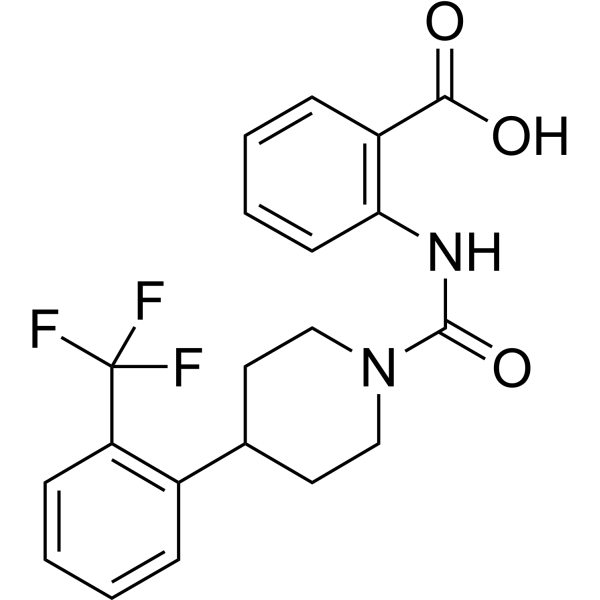
A 1120 (Standard) is the analytical standard of A 1120 (HY-107633). This product is intended for research and analytical applications. A 1120 is a high-affinity nonretinoid retinol-binding protein 4 (RBP4) antagonist with a Ki value of 8.3 nM. A 1120 disrupts the interaction between RBP4 and its binding partner transthyretin.
For research use only. We do not sell to patients.
- CAS No.: 1152782-19-8
- Formula: C20H19F3N2O3
- Molecular Weight:392.37
-
Storage:
Please store the product under the recommended conditions in the Certificate of Analysis.


To place orders, for customer services and technical support, please contact: MedChemExpress USA
Tel: 609-228-6898 E-mail: [email protected] [email protected]


-
 Biological Activity
-
Chemical Information
- Protocols
- Purity & Documentation
- References
-
 Help & FAQs


-
HY-107633
A 1120RBP4 Antagonist -
HY-16450
SB 204990ATP Citrate Lyase Inhibitor -
HY-D0885B
Phosphocreatine disodiumEndogenous Metabolite -
HY-107635
TMN355Cyclophilin A Inhibitor -
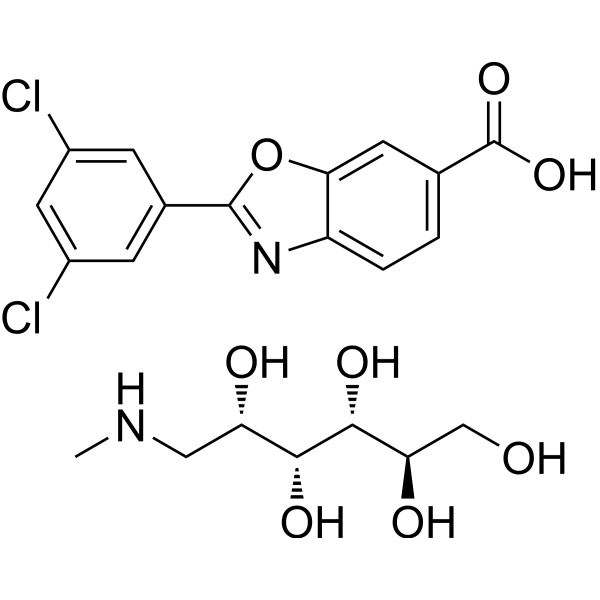
HY-14852A
Tafamidis meglumineTransthyretin Stabilizer -
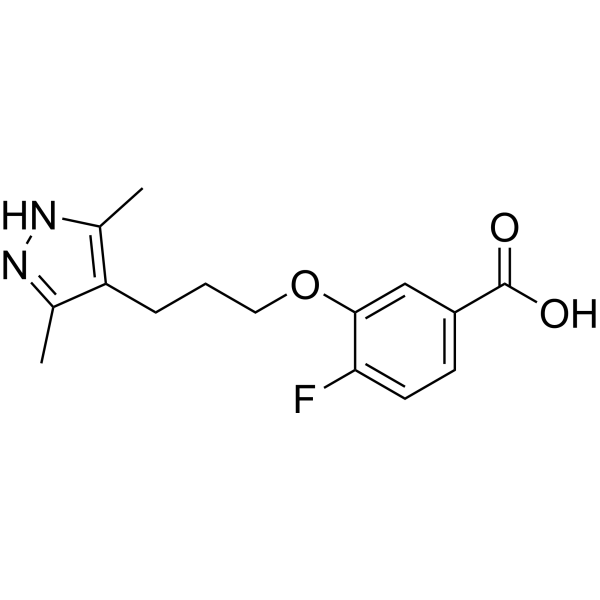
HY-109165
AcoramidisTransthyretin Stabilizer -
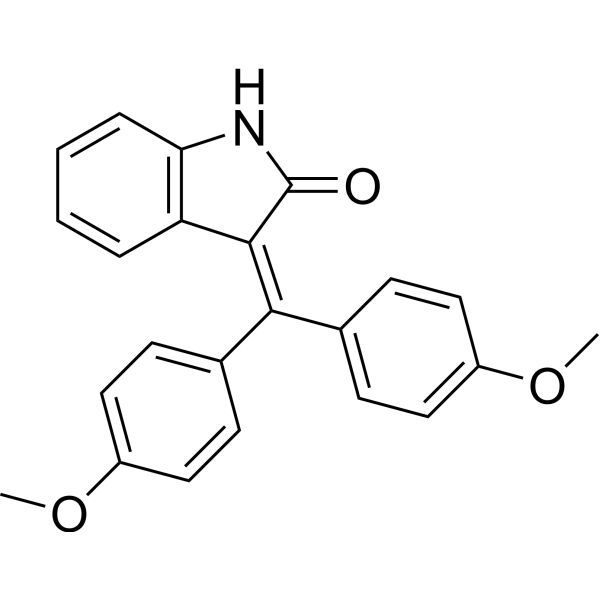
HY-18965
TAS-301PKC Inhibitor -
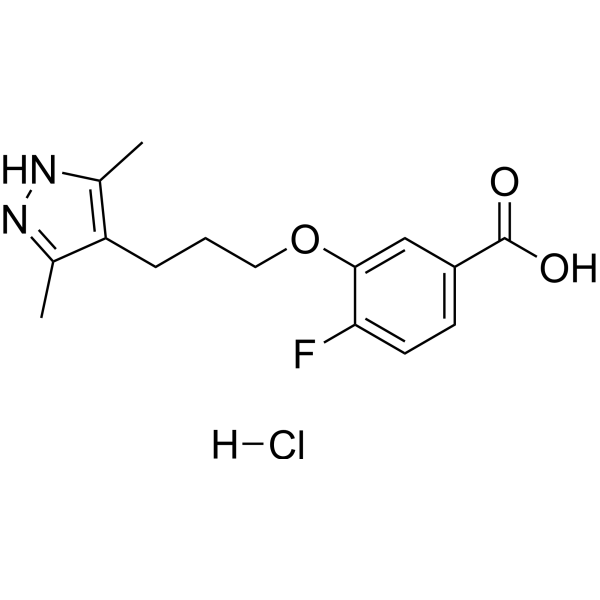
HY-109165A
Acoramidis hydrochlorideTransthyretin Stabilizer -
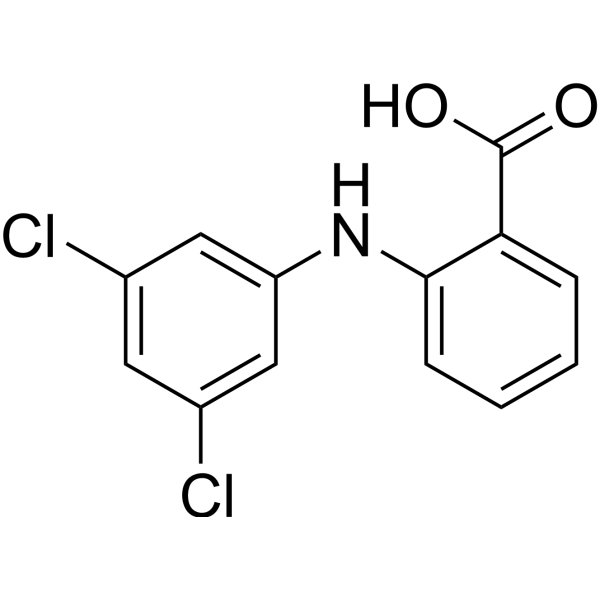
HY-113950
Dichlorophenyl-ABATTR Amyloid Fibril Formation Inhibitor -
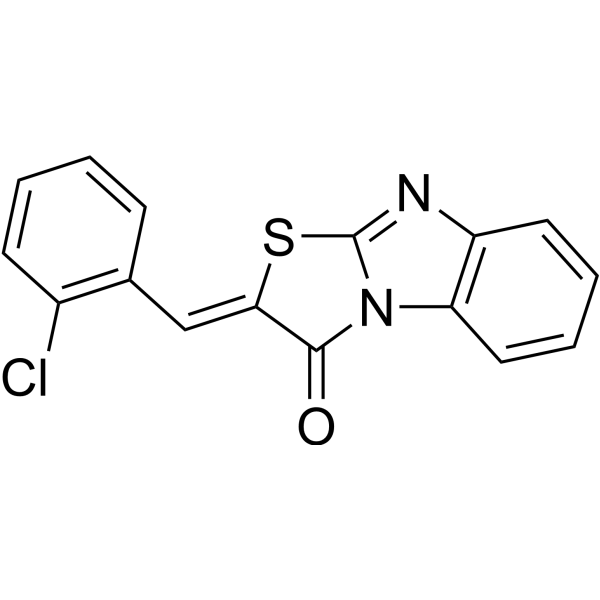
HY-153577
WT-TTR inhibitor 1WT-TTR Inhibitor -

HY-W017542
L-Pyrohomoglutamic acidBuilding Block -
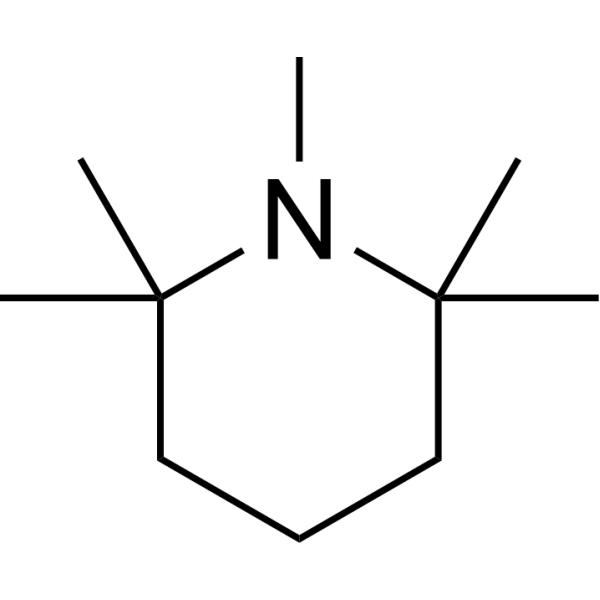
HY-B1382
PempidineGanglion-Blocking Agent


Biological Activity
Description
IC50 & Target
Ki: 8.3 nM (Retinol-binding protein 4)[1]


Chemical Information
-
CAS No. 1152782-19-8
-
Molecular Weight 392.37
-
Formula C20H19F3N2O3
-
SMILES
FC(F)(C1=C(C2CCN(C(NC3=C(C=CC=C3)C(O)=O)=O)CC2)C=CC=C1)F
-
Shipping
Room temperature in continental US; may vary elsewhere.
-
Storage
Please store the product under the recommended conditions in the Certificate of Analysis.

Protocols
-
Pull-down
The pull-down assay is an in vitro technique used to detect physical interactions between two or more proteins and an invaluable tool for confirming a predicted protein-protein interaction or identifying novel interacting partners. This method typically involves the use of affinity purification with various wash and elution steps.
-
Protocol for Yeast Two-Hybrid (Y2H) Assay
The yeast two-hybrid assay detects binary protein-protein interactions by separating a transcription factor into a DNA-binding domain fused to a "bait" protein and a transcriptional activation domain fused to a "prey" protein; if bait and prey interact in yeast, the transcription factor is reconstituted and activates reporter genes such as HIS3, ADE2, lacZ, MEL1, or other selectable/readable reporters. The readout is yeast growth on selective medium and/or reporter activity, which reflects proximity-dependent transcriptional activation in the yeast nucleus rather than direct biochemical binding in the original mammalian, tumor, neuronal, macrophage, or organoid context. Because yeast two-hybrid can generate false positives and false negatives, interaction claims should be validated using independent assays such as co-immunoprecipitation, Western blot, immunofluorescence colocalization, BiFC, pull-down, or mammalian two-hybrid assays.


Purity & Documentation
References
[1]. Motani A, et al. Identification and characterization of a non-retinoid ligand for retinol-binding protein 4 which lowers serum retinol-binding protein 4 levels in vivo. J Biol Chem. 2009 Mar 20;284(12):7673-80. [Content Brief]
[2]. Dobri N, et al. A1120, a nonretinoid RBP4 antagonist, inhibits formation of cytotoxic bisretinoids in the animal model of enhanced retinal lipofuscinogenesis. Invest Ophthalmol Vis Sci. 2013 Jan 7;54(1):85-95. [Content Brief]

Calculators
Concentration (start) × Volume (start) = Concentration (final) × Volume (final)


A 1120 (Standard) Related Classifications
HY-107633R Related Classifications
 Powered by Bioz