



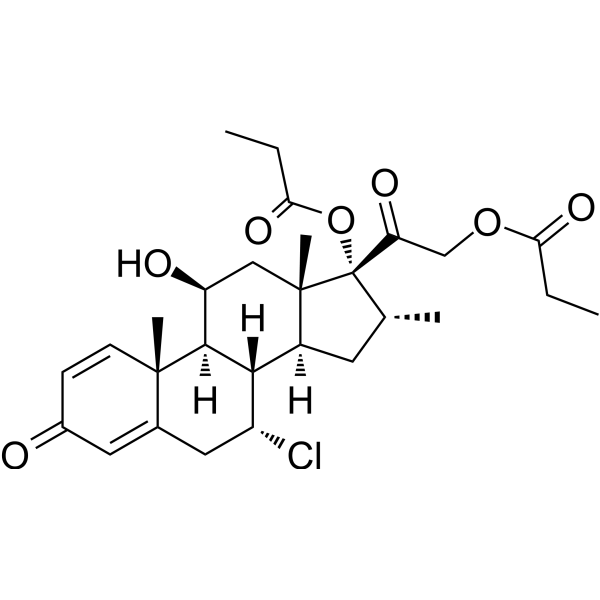
Alclometasone dipropionate
Alclometasone dipropionate (Sch 22219) is a steroid compound. Alclometasone dipropionate can be used for the research of dermatitis and skin itch.
For research use only. We do not sell to patients.
- CAS No.: 66734-13-2
- Formula: C28H37ClO7
- Molecular Weight:521.04
-
Storage:Pure form -20°C, 3 years ; In solvent -80°C, 6 months , -20°C, 1 month

To place orders, for customer services and technical support, please contact: MedChemExpress USA
Tel: 609-228-6898 E-mail: [email protected] [email protected]


-
 Biological Activity
-
Chemical Information
- Protocols
- Purity & Documentation
- References
-
 Help & FAQs


-

HY-106566R
Alclometasone dipropionate (Standard)Steroid -
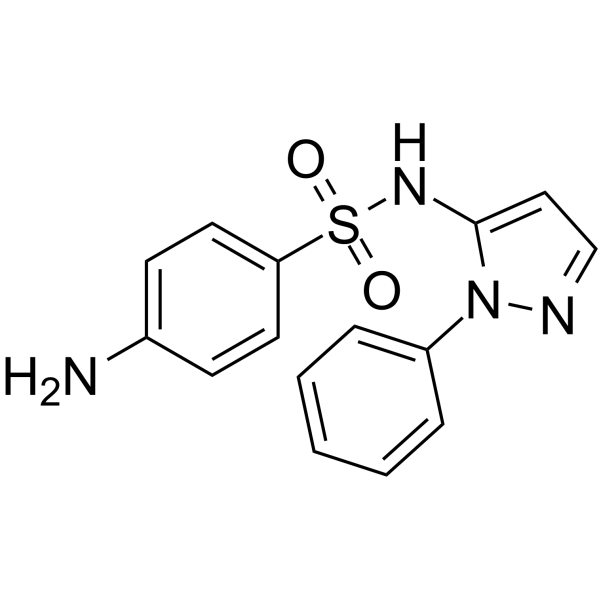
HY-B1218
SulfaphenazoleCYP2C9 Inhibitor -
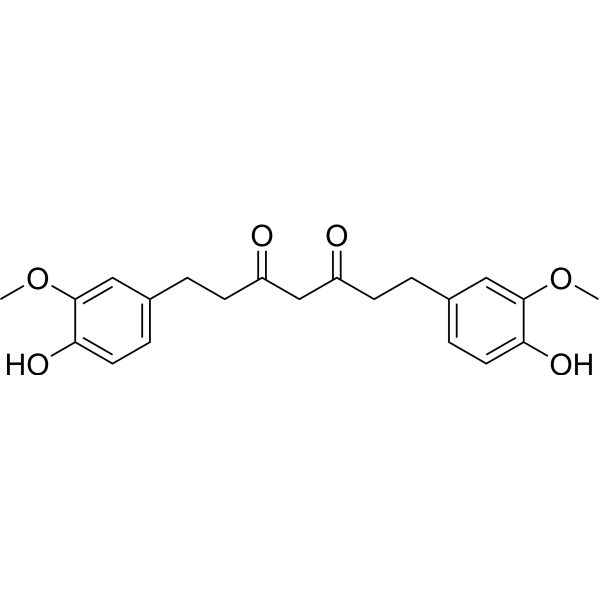
HY-N0893
TetrahydrocurcuminCytochrome P450 Inhibitor -

HY-B1218R
Sulfaphenazole (Standard)CYP2C9 Inhibitor -
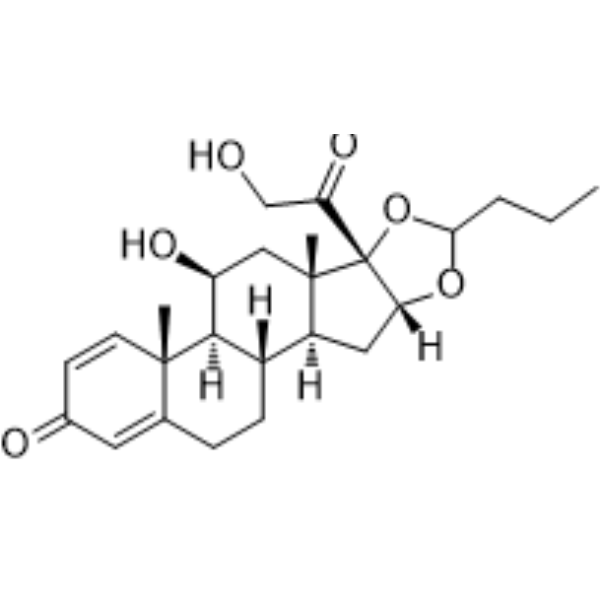
HY-13580
BudesonideGlucocorticoid Receptor Agonist -
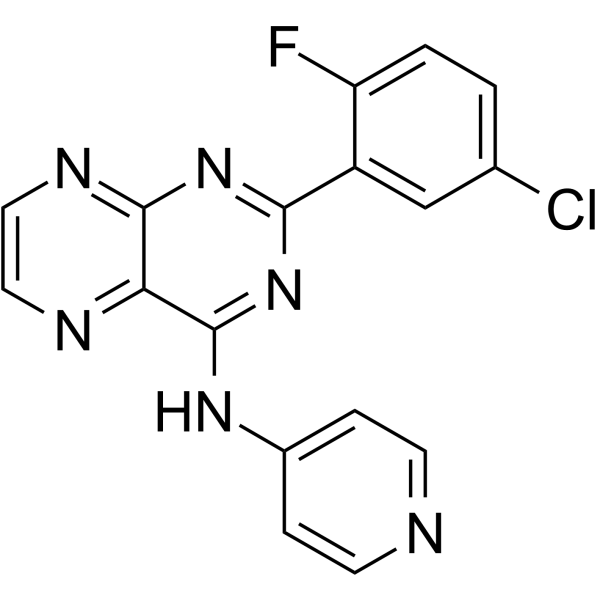
HY-13227
SD-208TGF-β Receptor Inhibitor -
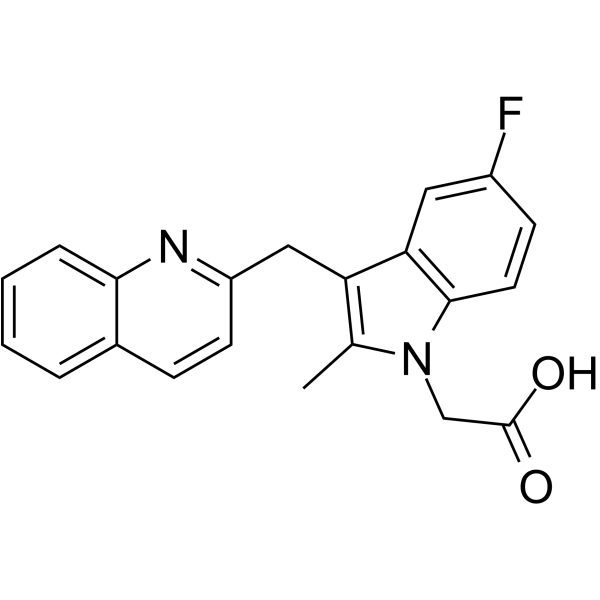
HY-15342
TimapiprantProstaglandin Receptor Antagonist -

HY-N0893R
Tetrahydrocurcumin (Standard)Cytochrome P450 Inhibitor -
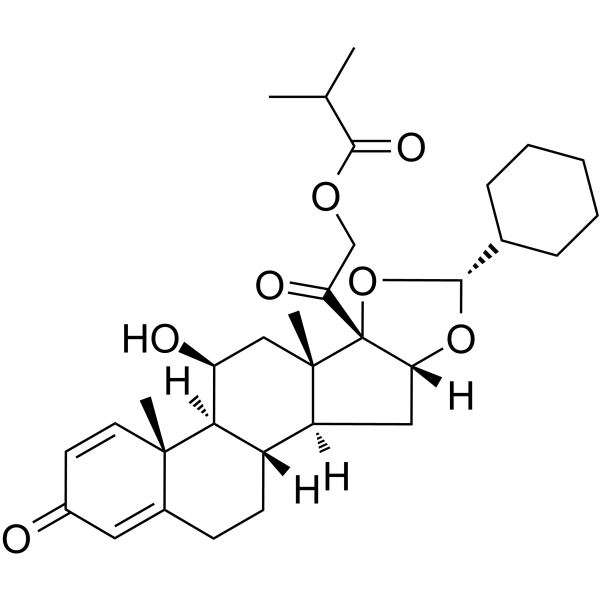
HY-B0625
CiclesonideGlucocorticoid -
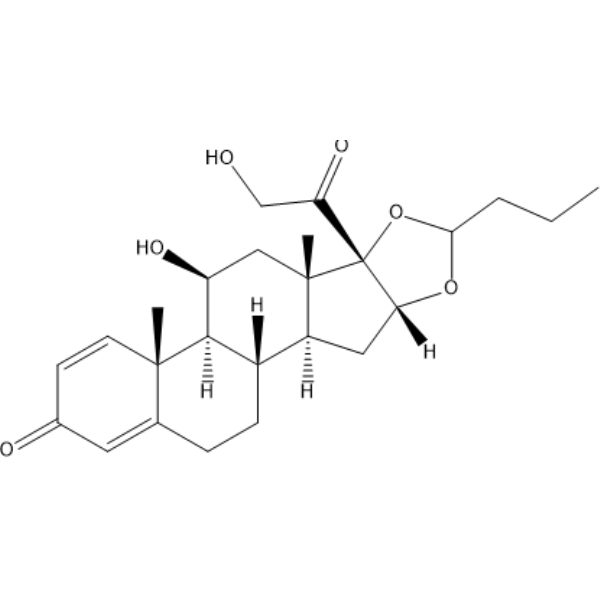
HY-13580R
Budesonide (Standard) -

HY-141633
Sucrose monolaurateSurfactant -
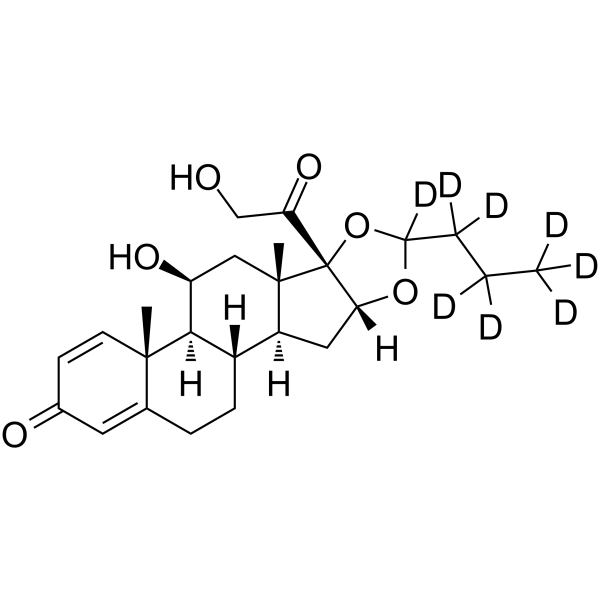
HY-13580S
Budesonide-d8Stable Isotope


Biological Activity
Description
In Vitro
Alclometasone dipropionate (0.01-100 ng/mL; 24 h) suppresses cytokine production of CD3/CD2 stimulation with IC50s of 5.54, 1.76, 2.09, 0.89, 3.26 and 0.76 ng/mL for IL-2, IL-3, IL-4, IL-5, IFN-γ and GM-CSF, respectively in human PBMC[1].
MedChemExpress (MCE) has not independently confirmed the accuracy of these methods. They are for reference only. Further protocols information, click here.
In Vivo
MedChemExpress (MCE) has not independently confirmed the accuracy of these methods. They are for reference only.
-
Animal Model:Lewis rats with tuberculin-induced delayed allergic reaction[2]
-
Dosage:0.1% (20 μL)
-
Administration:Both sides of the ears; 0.1% (20 μL) 3 h before and 2 h after tuberculin challenge
-
Result:Partially inhibited the increase in amount of dye leaked.
-
Animal Model:Brown-Norway rats with egg albumin-induced passive cutaneous anaphylaxis reaction[2]
-
Dosage:0.1% (20 μL)
-
Administration:Both sides of the ears; 0.1% (20 μL) 6 h before egg albumin challenge
-
Result:Significantly suppressed the increase in amount of dye leaked in this passive cutaneous anaphylaxis reaction.
Clinical Trial
| NCT Number | Sponsor | Condition | Start Date |
Phase

|
|---|---|---|---|---|
| NCT01329991 | Plexxikon| | 2011-05 | PHASE1 |


Chemical Information
-
CAS No. 66734-13-2
-
Appearance Liquid (Density: 1.0766g/cm³)
-
Molecular Weight 521.04
-
Formula C28H37ClO7
-
Color Colorless to light yellow
-
SMILES
CCC(OCC([C@@]1([C@@]2([C@@]([C@@]3([H])[C@]([C@@]4(C(C[C@H]3Cl)=CC(C=C4)=O)C)([H])[C@H](C2)O)([H])C[C@H]1C)C)OC(CC)=O)=O)=O
-
Synonyms
Sch 22219
-
Shipping
Room temperature in continental US; may vary elsewhere.
-
Storage
Pure form -20°C 3 years In solvent -80°C 6 months -20°C 1 month

Protocols
-
TPA/Croton Oil Ear Edema and Dermatitis
The TPA (12-O-tetradecanoylphorbol-13-acetate) and croton oil-induced mouse ear edema model is a well-established acute cutaneous inflammation system used to evaluate topical anti-inflammatory activity by measuring edema formation, neutrophil infiltration, vascular permeability, and cytokine-mediated skin responses in vivo. The inflammatory response is triggered by topical application of phorbol esters (TPA) or croton oil constituents, leading to rapid activation of protein kinase C signaling, leukocyte recruitment, and increased vascular permeability, which can be quantified by ear thickness, weight, dye extravasation, and biochemical markers such as myeloperoxidase (MPO) activity and pro-inflammatory mediators in ear tissue homogenates. This model is widely used for screening anti-inflammatory agents, where reductions in edema and inflammatory biomarkers reflect suppression of acute dermal inflammation and immune cell infiltration. Histological evaluation typically confirms epidermal


Purity & Documentation
-
Data Sheet (275 KB)
-
SDS (419 KB)
- English - EN (419 KB)
- Français - FR (419 KB)
- Deutsch - DE (419 KB)
- Norwegian - NO (419 KB)
- Español - ES (419 KB)
- Swedish - SV (419 KB)
- Italian - IT (419 KB)
- Korean - KR (419 KB)
- Portuguese - PT (419 KB)
-
Handling Instructions (2659 KB)
References
[1]. Sakuma S, et al. Tacrolimus suppressed the production of cytokines involved in atopic dermatitis by direct stimulation of human PBMC system. (Comparison with steroids). Int Immunopharmacol. 2001 Jun;1(6):1219-26. [Content Brief]
[2]. Sengoku T, et al. Possible inhibitory mechanism of FK506 (tacrolimus hydrate) ointment for atopic dermatitis based on animal models. Eur J Pharmacol. 1999 Aug 27;379(2-3):183-9. [Content Brief]

Calculators
Concentration (start) × Volume (start) = Concentration (final) × Volume (final)


Alclometasone dipropionate Related Classifications
HY-106566 Related Classifications
 Powered by Bioz