



Anecortave acetate

Based on 1 Customer Validation
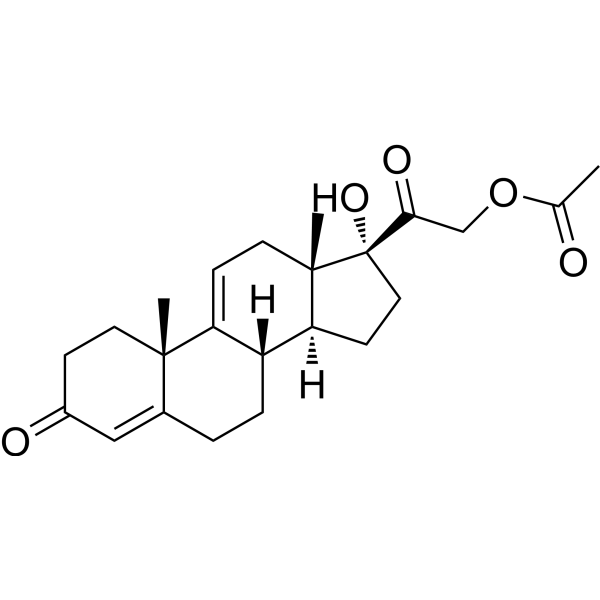
Anecortave acetate is a potent ocular angiostatic agent. Anecortave acetate inhibits neovascularization which is induced by many different angiogenic factors, and increases plasminogen activator inhibitor-1 (PAI-1) mRNA expression. Anecortave acetate can be used to research ocular neovascular diseases.
For research use only. We do not sell to patients.
- Purity : 99.81%
- CAS No.: 7753-60-8
- Formula: C23H30O5
- Molecular Weight:386.48
-
Storage:
Please store the product under the recommended conditions in the Certificate of Analysis.

To place orders, for customer services and technical support, please contact: MedChemExpress USA
Tel: 609-228-6898 E-mail: [email protected] [email protected]


-
 Biological Activity
-
Chemical Information
-
Solvent & Solubility
- Protocols
- Purity & Documentation
- References
-
 Help & FAQs


-
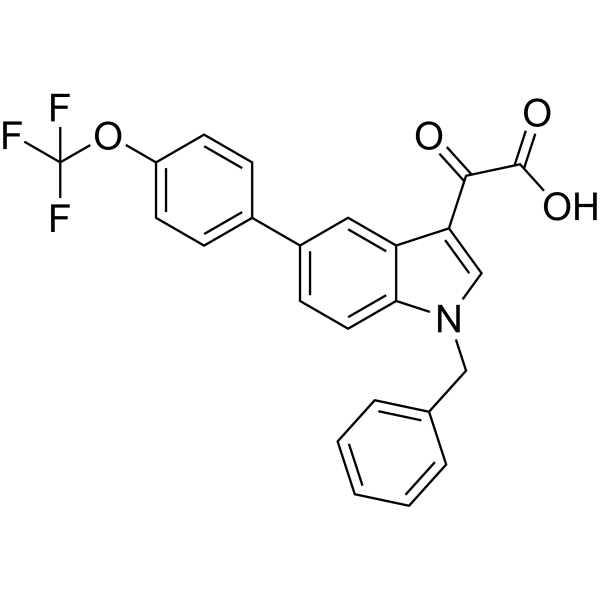
HY-15253
TiplaxtininApoptosis Inducer -
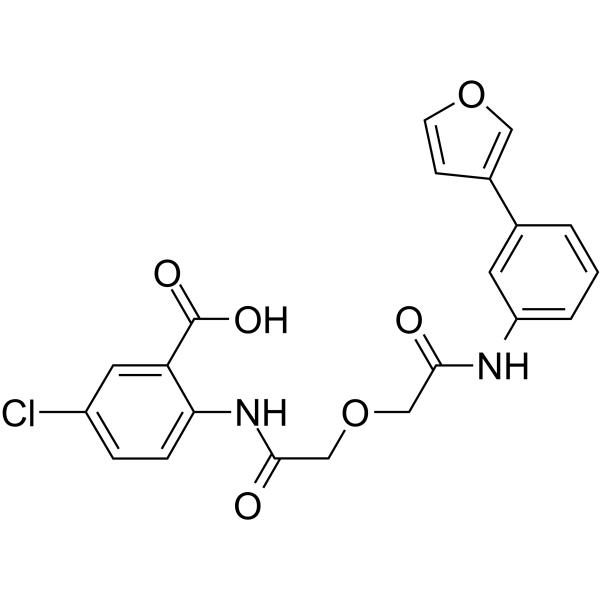
HY-101761
TM5441PAI-1 Inhibitor -
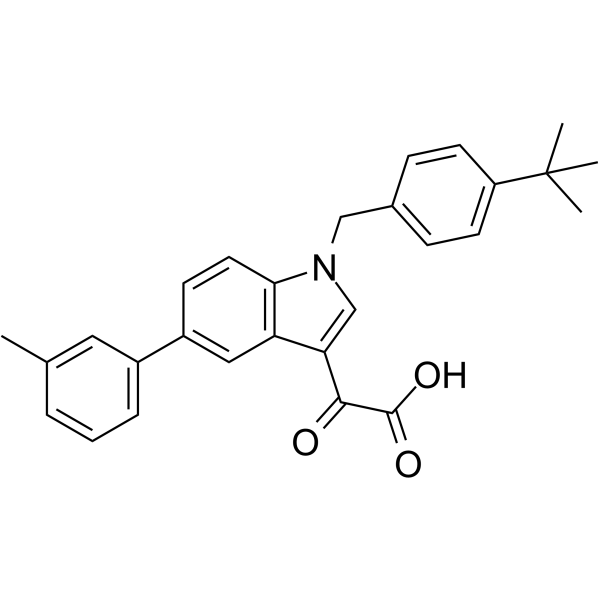
HY-14759
AleplasininPAI-1 Inhibitor -
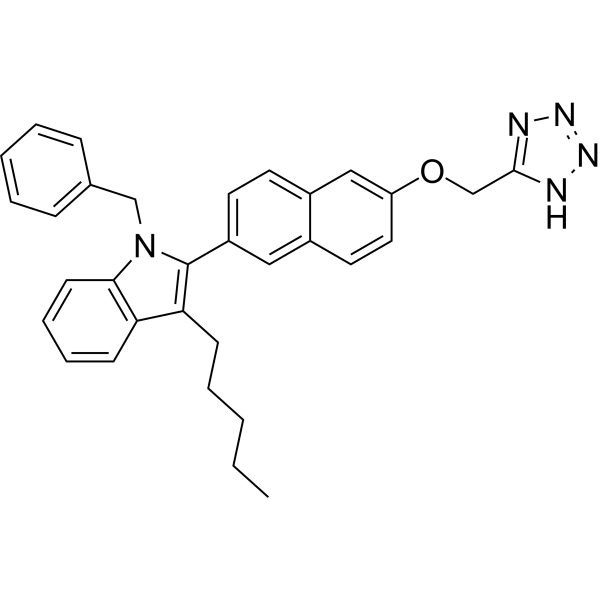
HY-122098
DiaplasininPAI-1 Inhibitor -
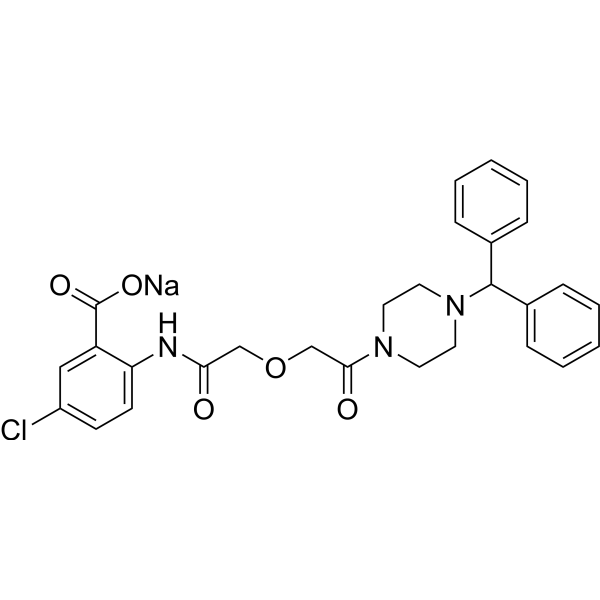
HY-100447
TM5275 sodiumPAI-1 Inhibitor -
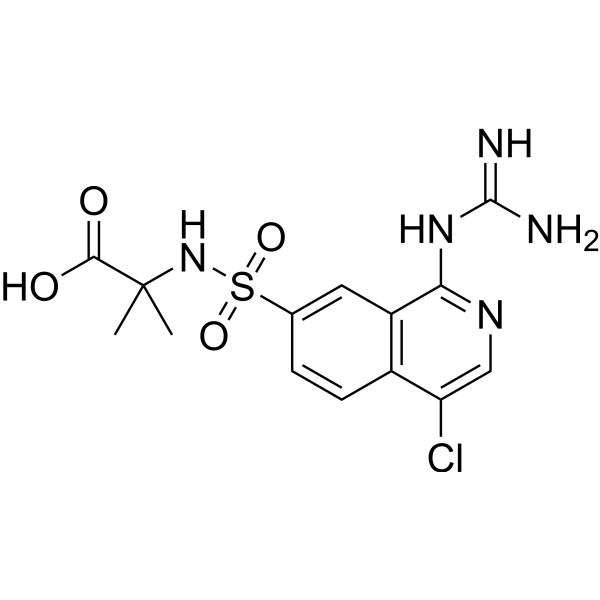
HY-101214
UK-371804uPA Inhibitor -

HY-122542A
PPACK dihydrochlorideThrombin/GZMK Inhibitor -

HY-101761R
TM5441 (Standard)Reference Standard -
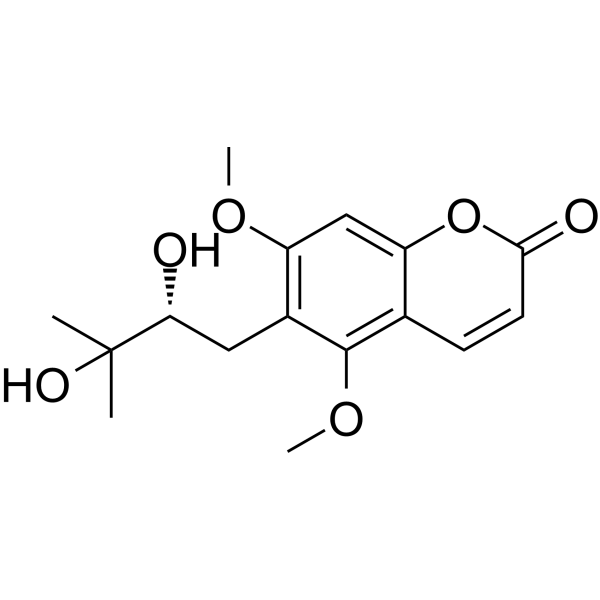
HY-N0518
ToddalolactonePAI-1 Inhibitor -
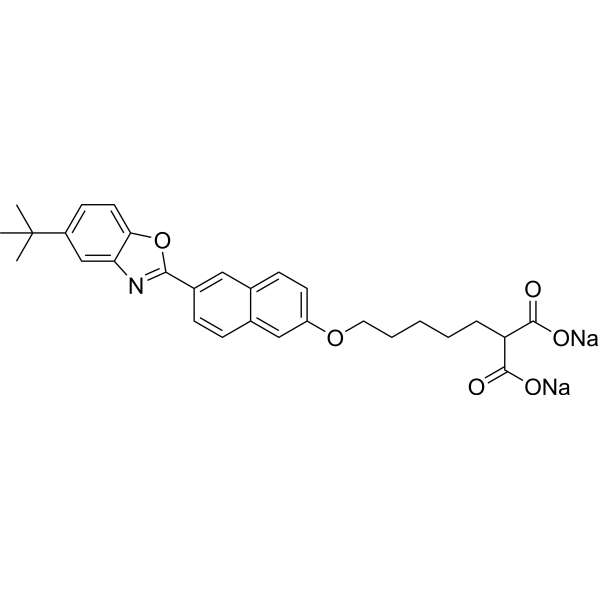
HY-122714
SK-216PAI-1 Inhibitor -
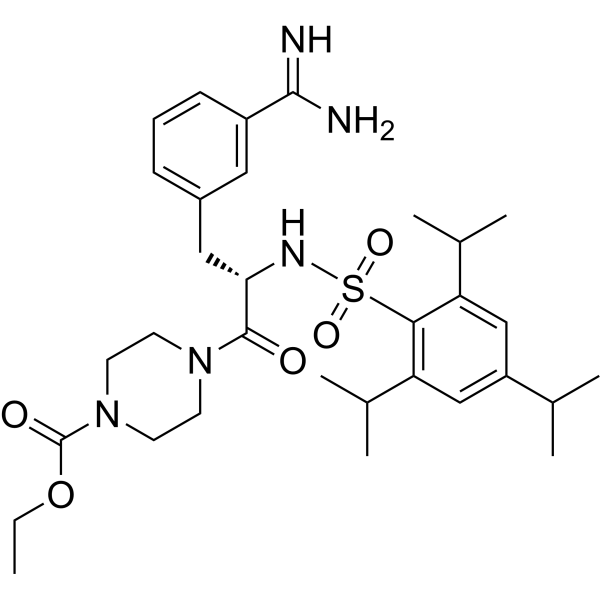
HY-100415
UKI-1uPA Inhibitor -
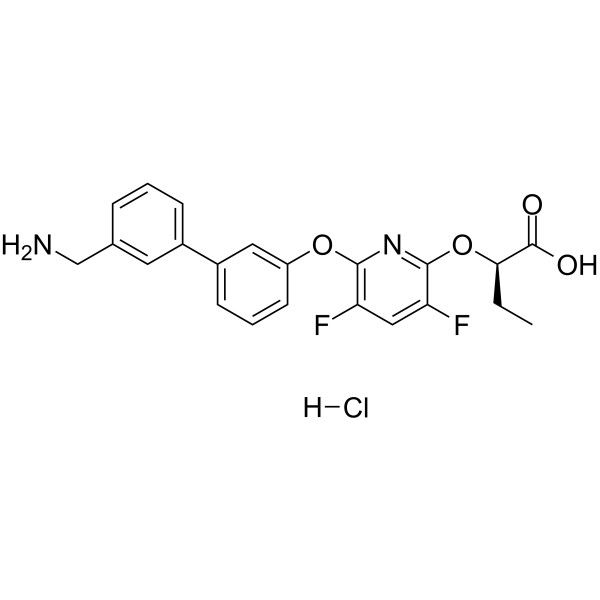
HY-126361A
ZK824190 hydrochlorideuPA Inhibitor


Biological Activity
Description
IC50 & Target
PAI-1[2]
Cellular Effect
|
Cell Line

|
Type | Value | Description | References |
|---|---|---|---|---|
| C2C12 | EC50 |
2.12 x 10⁻⁷ M
Compound: VBP3
|
Inhibition of TNFalpha-induced NFkappaB activation in mouse C2C12 cells incubated for 24 hrs prior to TNFalpha induction measured after 24 hrs by luciferase reporter gene assay
Inhibition of TNFalpha-induced NFkappaB activation in mouse C2C12 cells incubated for 24 hrs prior to TNFalpha induction measured after 24 hrs by luciferase reporter gene assay
|
[PMID: 23498916] |
| C2C12 | EC50 |
2.12 x 10⁻¹ μM
Compound: VBP3
|
Inhibition of TNFalpha-induced NFkappaB activation in mouse C2C12 cells incubated for 24 hrs prior to TNFalpha induction measured after 24 hrs by luciferase reporter gene assay
Inhibition of TNFalpha-induced NFkappaB activation in mouse C2C12 cells incubated for 24 hrs prior to TNFalpha induction measured after 24 hrs by luciferase reporter gene assay
|
[PMID: 23498916] |
In Vivo
MedChemExpress (MCE) has not independently confirmed the accuracy of these methods. They are for reference only.
-
Animal Model:Sprague-Dawley albino rats (intravitreally injected with premixed antibiotics to influence retinal vessel growth)[2]
-
Dosage:5 μl of a 10% suspension of Anecortave acetate
-
Administration:Injected into eyes
-
Result:significantly inhibited pathologic retinal angiogenesis in this model, while not significantly affecting normal intraretinal vessels.
Increased 6-to-9-fold PAI-1 mRNA at 1 to 3 days after injection.
Clinical Trial
| NCT Number | Sponsor | Condition | Start Date |
Phase
|
|---|---|---|---|---|
| NCT01329991 | Plexxikon| | 2011-05 | PHASE1 |


Chemical Information
-
CAS No. 7753-60-8
-
Appearance Solid
-
Molecular Weight 386.48
-
Formula C23H30O5
-
Color White to off-white
-
SMILES
C[C@@]12[C@](O)(CC[C@]1([C@@]3(CCC4=CC(CC[C@@]4(C3=CC2)C)=O)[H])[H])C(COC(C)=O)=O
-
Synonyms
Anecortave
-
Shipping
Room temperature in continental US; may vary elsewhere.
-
Storage
Please store the product under the recommended conditions in the Certificate of Analysis.


Solvent & Solubility
In Vitro:
Methanol : 1 mg/mL (2.59 mM; Need ultrasonic)
Concentration (start) × Volume (start) = Concentration (final) × Volume (final)

Protocols
-
RT-PCR
Reverse transcription technology uses RNA as a template to synthesize DNA. RT-PCR is simple, specific and sensitive, and can be used to detect gene expression levels and expression differences in cells; detect RNA virus content; clone cDNA sequences of specific genes.
-
RNA extraction experimental
By lysing cells, releasing RNA, and removing impurities such as proteins and DNA, high-purity RNA products are finally obtained. The commonly used traditional method is the guanidine isothiocyanate/phenol/chloroform method (Trizol), which is suitable for a variety of animal materials including animal tissues, microorganisms, cultured cells, etc., and most plant materials.
-
Real Time qPCR (Q-PCR)
Real-time quantitative PCR (qPCR) quantifies an amplifiable nucleic-acid target by monitoring fluorescence during PCR cycling rather than measuring product only after amplification. The increase in fluorescence tracks accumulation of PCR product, and the quantification cycle (Cq; historically also Ct/CP) is related to the initial amount of target: samples containing more starting target generally reach the defined fluorescence threshold in fewer cycles.


Purity & Documentation
-
Data Sheet (274 KB)
-
SDS (393 KB)
- English - EN (393 KB)
- Français - FR (393 KB)
- Deutsch - DE (393 KB)
- Norwegian - NO (393 KB)
- Español - ES (393 KB)
- Swedish - SV (393 KB)
- Italian - IT (393 KB)
- Korean - KR (393 KB)
- Portuguese - PT (393 KB)
-
Handling Instructions (2659 KB)
References
[1]. Clark AF. Mechanism of action of the angiostatic cortisene anecortave acetate. Surv Ophthalmol. 2007 Jan;52 Suppl 1:S26-34. [Content Brief]
[2]. Penn JS, et al. The effect of an angiostatic steroid on neovascularization in a rat model of retinopathy of prematurity. Invest Ophthalmol Vis Sci. 2001 Jan;42(1):283-90. [Content Brief]


Complete Stock Solution Preparation Table
| Optional Solvent | Concentration Solvent Mass | 1 mg | 5 mg | 10 mg | 25 mg |
|---|---|---|---|---|---|
| Methanol | 1 mM | 2.5875 mL | 12.9373 mL | 25.8746 mL | 64.6864 mL |


Anecortave acetate Related Classifications
HY-116868 Related Classifications
 Powered by Bioz