



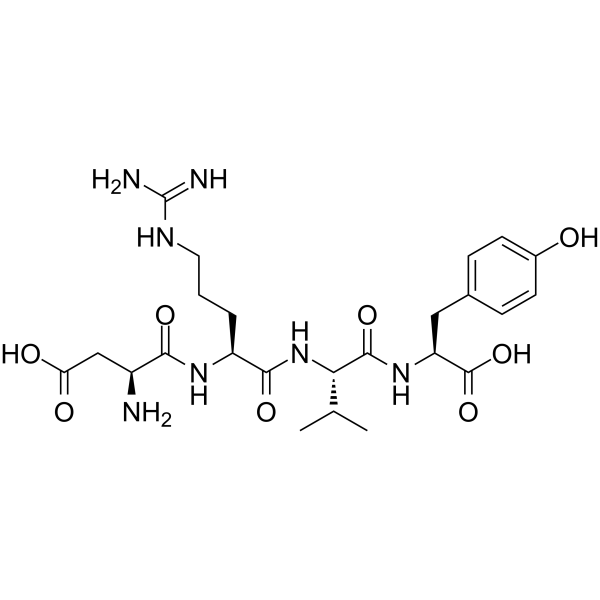
Angiotensin II (1-4), human
Angiotensin II (1-4), human is an endogenous peptide produced from AT I by angiotensin-converting-enzyme (ACE). Angiotensin II binds the AT II type 1 (AT1) receptor, stimulating GPCRs in vascular smooth muscle cells and increasing intracellular Ca2+ levels. Angiotensin II also acts at the Na+/H+ exchanger in the proximal tubules of the kidney.
For research use only. We do not sell to patients.
- CAS No.: 52580-29-7
- Formula: C24H37N7O8
- Molecular Weight:551.59
-
Storage:
Please store the product under the recommended conditions in the Certificate of Analysis.

To place orders, for customer services and technical support, please contact: MedChemExpress USA
Tel: 609-228-6898 E-mail: [email protected] [email protected]


-
 Biological Activity
-
Chemical Information
-
Solvent & Solubility
- Protocols
- Purity & Documentation
- References
-
 Help & FAQs


-
HY-P1769
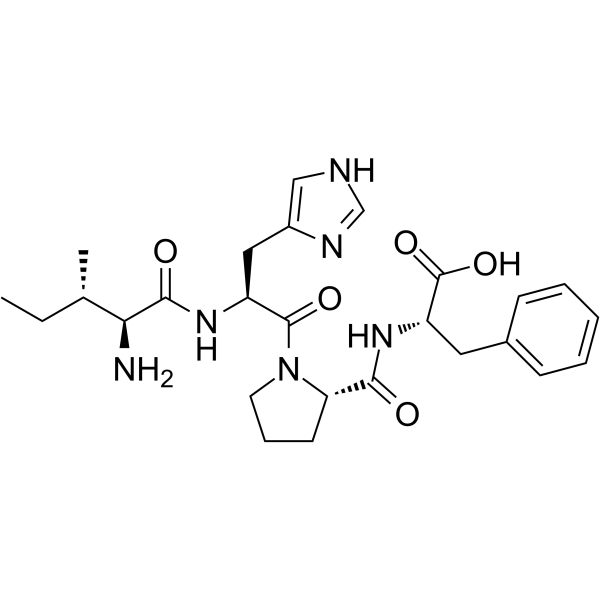
Angiotensin II (5-8), human -
HY-P0080
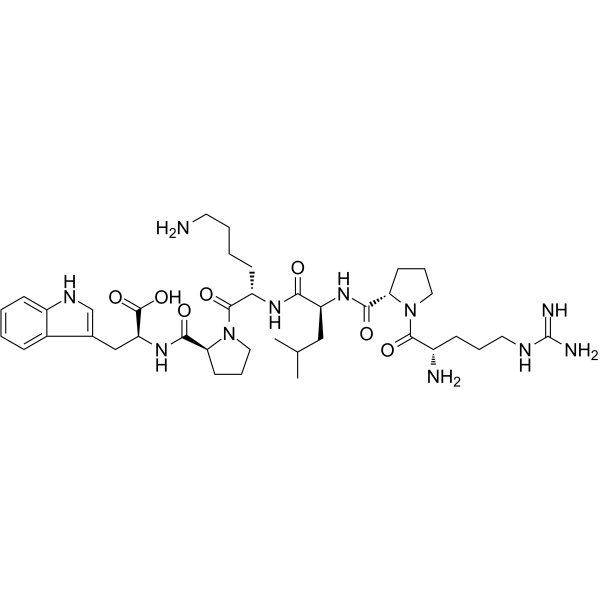
NovokininAT2 Receptor Agonist -
HY-P1486
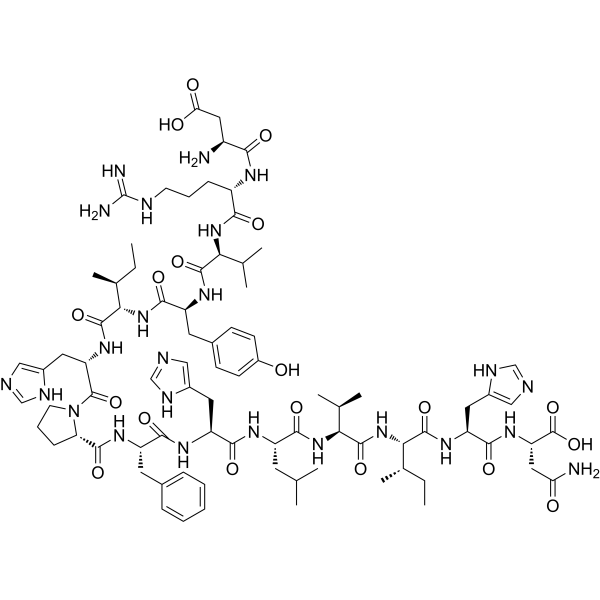
Angiotensinogen (1-14), humanEndogenous Metabolite -
HY-114161
H-Val-Pro-Pro-OHAngiotensin Receptor Inhibitor -
HY-P0108
Angiotensin II 5-valineAngiotensin Receptor Agonist -
HY-114161A
H-Val-Pro-Pro-OH TFAAngiotensin Receptor Inhibitor -
HY-P3138
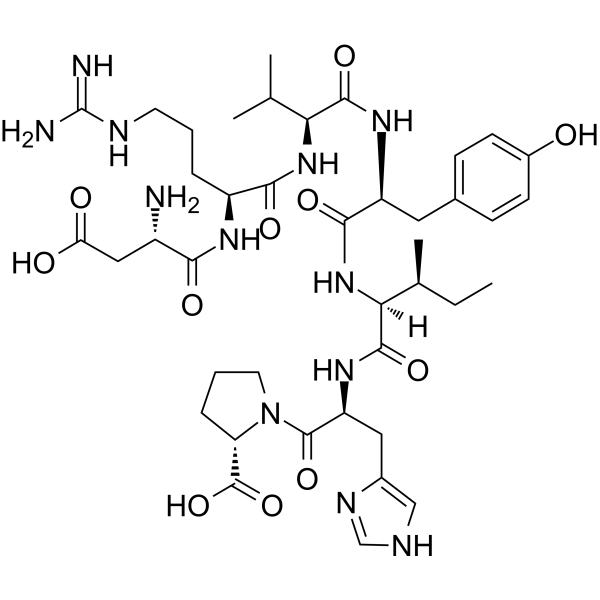
(Sar1)-Angiotensin IIAT1 Agonist -
HY-12403
TalfirastideVasodilator Agent -
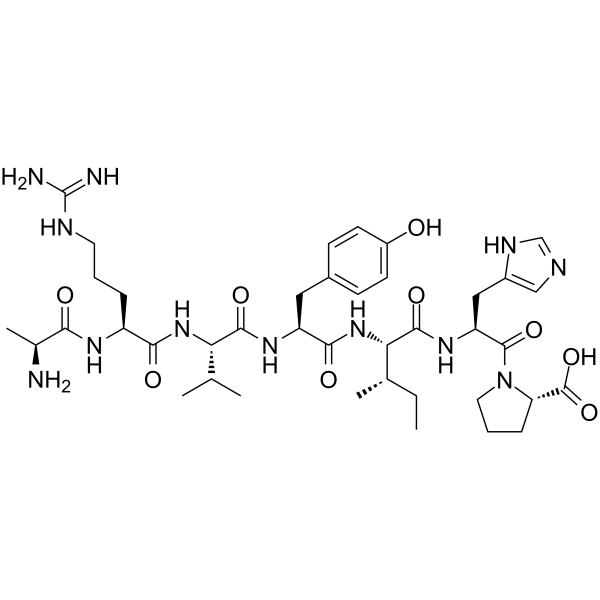
HY-P3108
AlamandineMrgD Ligand -
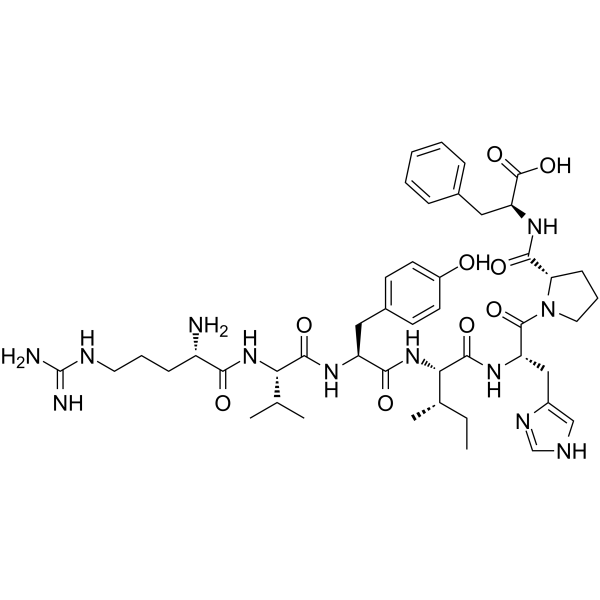
HY-P1540
Angiotensin III, human, mouseAT2R Agonist -
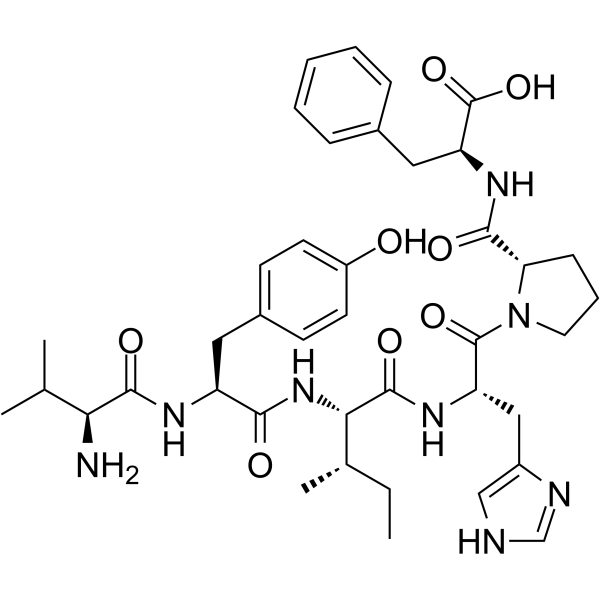
HY-P1515
Angiotensin II (3-8), human -
HY-P1815
C-Type Natriuretic Peptide (1-53), humanNatriuretic Peptide
All Angiotensin Receptor Isoforms
More

Biological Activity
Description


Chemical Information
-
CAS No. 52580-29-7
-
Molecular Weight 551.59
-
Formula C24H37N7O8
-
Sequence
Asp-Arg-Val-Tyr
-
Sequence Shortening
DRVY
-
Shipping
Room temperature in continental US; may vary elsewhere.
-
Storage
Please store the product under the recommended conditions in the Certificate of Analysis.


Solvent & Solubility
In Vitro
H2O
Peptide Solubility and Storage Guidelines:
1. Calculate the length of the peptide.
2. Calculate the overall charge of the entire peptide according to the following table:
| Contents | Assign value | |
|---|---|---|
| Acidic amino acid | Asp (D), Glu (E), and the C-terminal -COOH. | -1 |
| Basic amino acid | Arg (R), Lys (K), His (H), and the N-terminal -NH2 | +1 |
| Neutral amino acid | Gly (G), Ala (A), Leu (L), Ile (I), Val (V), Cys (C), Met (M), Thr (T), Ser (S), Phe (F), Tyr (Y), Trp (W), Pro (P), Asn (N), Gln (Q) | 0 |
3. Recommended solution:
| Overall charge of peptide | Details |
|---|---|
| Negative (<0) |
1. Try to dissolve the peptide in water first. 2. If water fails, add NH4OH (<50 μL). 3. If the peptide still does not dissolve, add DMSO (50-100 μL) to solubilize the peptide. |
| Positive (>0) |
1. Try to dissolve the peptide in water first. 2. If water fails, try dissolving the peptide in a 10%-30% acetic acid solution. 3. If the peptide still does not dissolve, try dissolving the peptide in a small amount of DMSO. |
| Zero (=0) |
1. Try to dissolve the peptide in organic solvent (acetonitrile, methanol, etc.) first. 2. For very hydrophobic peptides, try dissolving the peptide in a small amount of DMSO, and then dilute the solution with water to the desired concentration. |

Protocols
-
Ca2+ Staining Technique
Ca2+ staining is an experimental technique that utilizes specific fluorescent probes (such as Fluo-4 AM, Fura-2, etc.) to qualitatively or quantitatively detect dynamic changes in intracellular Ca2+ concentrations; this is achieved by monitoring the changes in fluorescent signals generated when these probes bind to free intracellular calcium ions. The underlying principle relies primarily on the presence of chelating groups within the probe's molecular structure that possess high affinity for calcium ions.


Purity & Documentation
References
[1]. De Giusti VC, et al. Modulation of the cardiac sodium/bicarbonate cotransporter by the renin angiotensin aldosterone system: pathophysiological consequences. Front Physiol. 2014 Jan 17;4:411. [Content Brief]
[2]. Moon JY, et al. Recent Update of Renin-angiotensin-aldosterone System in the Pathogenesis of Hypertension. Electrolyte Blood Press. 2013 Dec;11(2):41-5. [Content Brief]

Calculators
Concentration (start) × Volume (start) = Concentration (final) × Volume (final)


Angiotensin II (1-4), human Related Classifications
HY-P1792 Related Classifications
 Powered by Bioz