



Thrombospondin 1 Antibody (YA3275)(PBS only)
(Synonyms: TSP; THBS; TSP1; TSP-1; THBS-1)Thrombospondin 1 Antibody (YA3275) is a Rabbit-derived and non-conjugated IgG monoclonal antibody, targeting to Thrombospondin 1.
-
Host:
Rabbit
-
Isotype:
IgG
-
Application:
WB, IHC-P
-
Reactivity :
Human, Mouse
-
Formulation:
Supplied in PBS, pH 7.4.
-
Conjugation:
Non-conjugated


To place orders, for customer services and technical support, please contact: MedChemExpress USA
Tel: 609-228-6898 E-mail: [email protected] [email protected]





Applications
| Application |
WB

WB: Western Blot
|
IHC-P
IHC-P: Immunohistochemistry-Paraffin
|
|---|---|---|
| Dilution Ratio | 1:500-1:1000 | 1:50-1:100 |


Product Details
Thrombospondin 1 Antibody (YA3275) is a Rabbit-derived and non-conjugated IgG monoclonal antibody, targeting to Thrombospondin 1.
-
Host Rabbit

-
Species ReactivityHuman, Mouse

-
Observed Molecular WeightObserved band size: 170 kDa
Note: Due to possible protein modifications or aggregation, the molecular weight should be confirmed by actual measurement, and the predicted value is for reference only.

-
Calculated Molecular Weight Predicted band size: 129 kDa

Recombinant protein of human Thrombospondin 1 aa547-1170.
Affinity Purified
Non-conjugated
IgG


Product Properties
-
Appearance
Liquid
-
Formulation
Supplied in PBS, pH 7.4.
-
Storage & Stability
Stored at -20°C for 1 year. Avoid repeated freeze / thaw cycles.
-
Shipping
Shipping with blue ice.


Verification Images
-
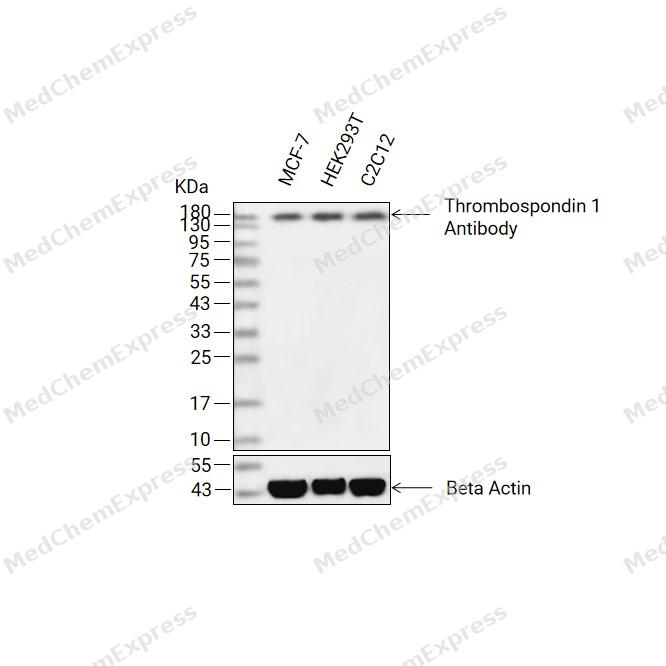 Western blot analysis of extracts from MCF-7(lane 2(20ug) ,HEK293T(lane 3(20ug) and C2C12(lane 4(20ug) using Thrombospondin 1 Antibody (HY-P83530) Rabbit mAb. Proteins were transferred to a PVDF membrane and blocked with 5% non-fat milk in TBST for 2 hour at room temperature. The primary antibody (1/1000) and Loading control antibody (Beta Actin, HY-P83730, 1/10000) was used in 5% non-fat milk in TBST at 4°C overnight. Goat Anti-Mouse/Rabbit IgG-HRP Secondary Antibody (1/10000) was used for 1 hour at room temperature.
 -
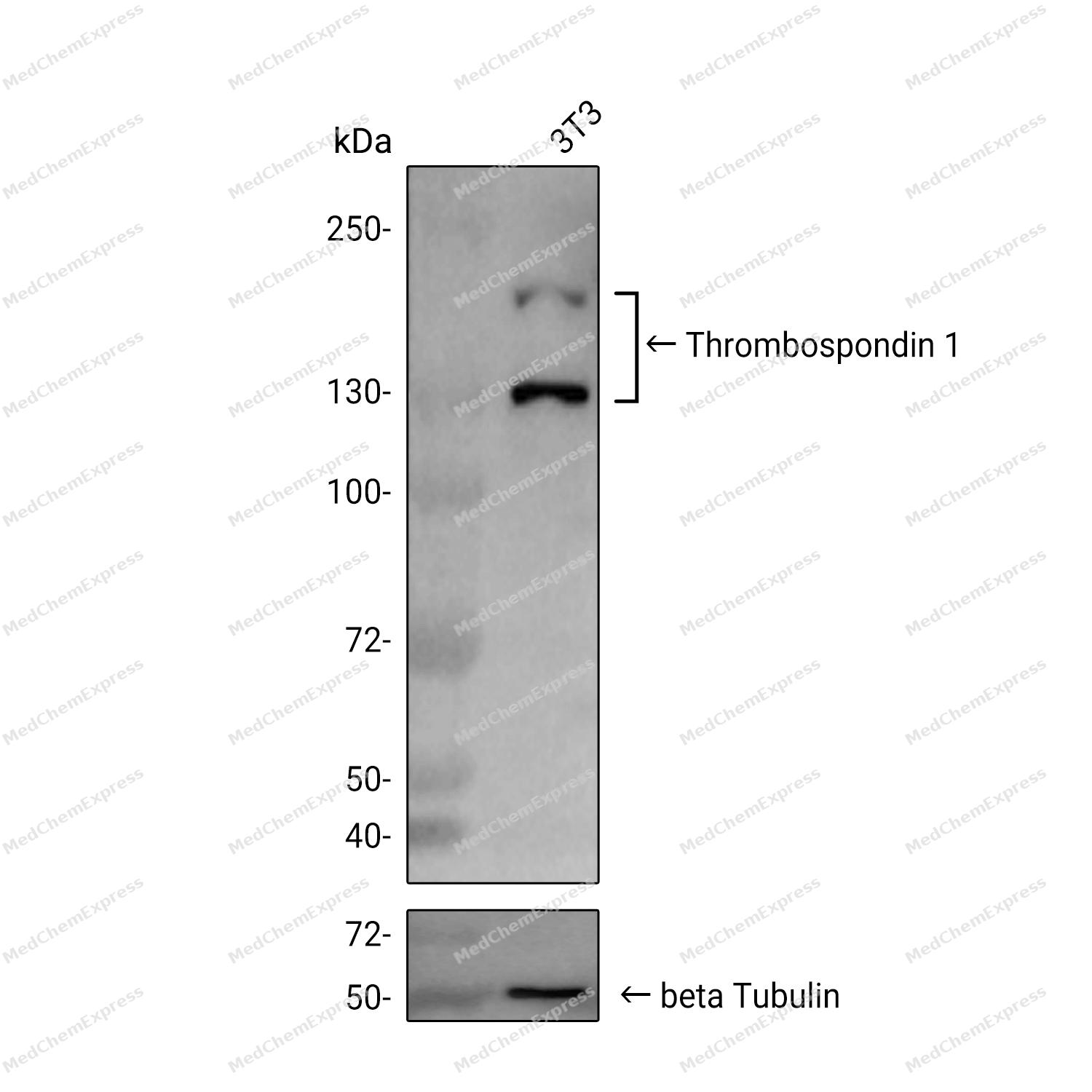 Western blot analysis was performed on extracts from 3T3 (lane 1, 15 μg) using Thrombospondin 1 Rabbit mAb. Proteins were transferred to a PVDF membrane and blocked with 5% non - fat milk in TBST at 4°C overnight. The primary antibody (1:500 dilution) and the loading control antibody (beta-Tubulin(HRP), HY-P80955A, 1:5000 dilution) was incubated in 5% non-fat milk in TBST for 1 hour at 37°C. Goat Anti - Rabbit IgG - HRP Secondary Antibody (1:20000 dilution) was then applied for 40 minutes at 37°C.
 -
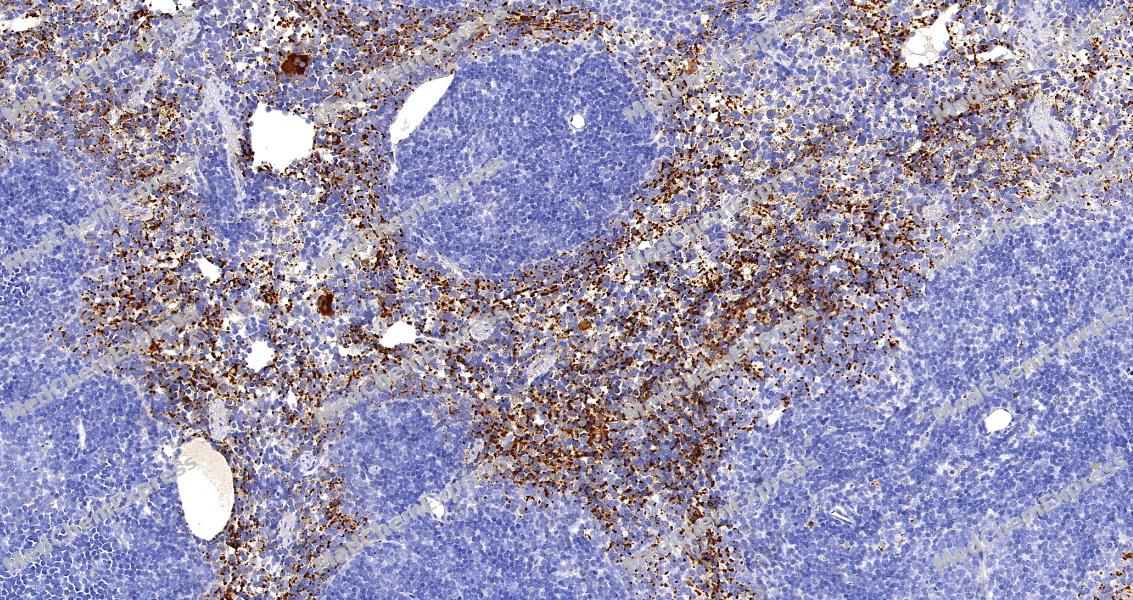 Immunohistochemical analysis of paraffin-embedded mouse spleen tissue using Thrombospondin 1 Antibody. The section was pre-treated using heat mediated antigen retrieval with sodium citrate buffer (pH 6.0) for 8 minutes. The tissues were blocked in QuickBlock for 20 minutes at room temperature, washed with ddH2O and PBS, and then probed with the primary antibody at 1/100 dilution in 4℃ overnight. The detection was performed using an HRP conjugated compact polymer system. DAB was used as the chromogen. Tissues were counterstained with hematoxylin and mounted with DPX.
 -
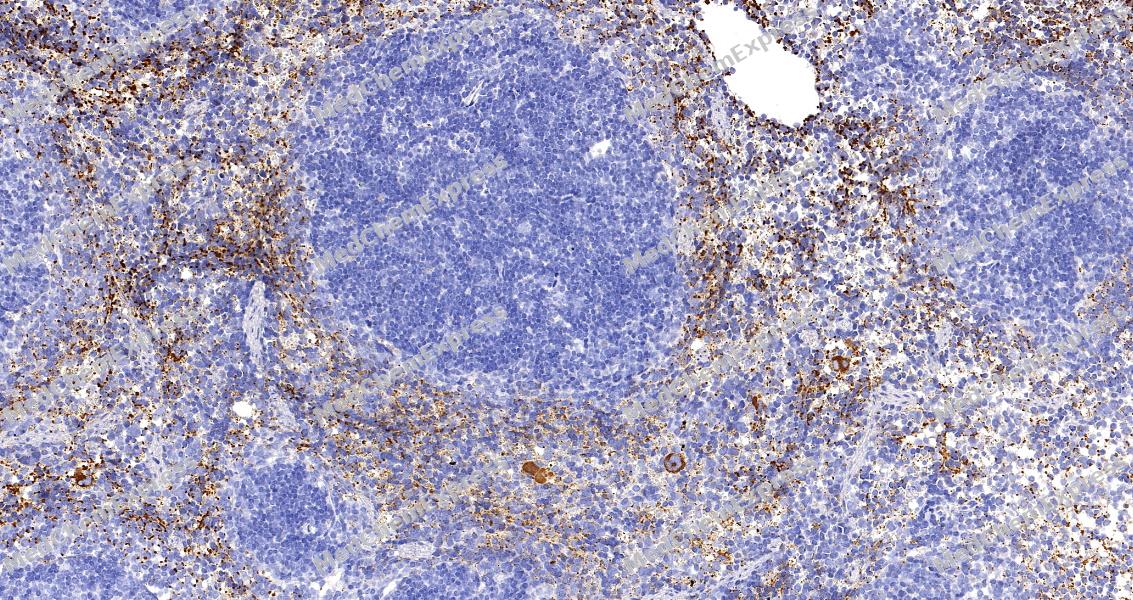 Immunohistochemical analysis of paraffin-embedded mouse spleen tissue using Thrombospondin 1 Antibody. The section was pre-treated using heat mediated antigen retrieval with sodium citrate buffer (pH 6.0) for 8 minutes. The tissues were blocked in QuickBlock for 20 minutes at room temperature, washed with ddH2O and PBS, and then probed with the primary antibody at 1/100 dilution in 4℃ overnight. The detection was performed using an HRP conjugated compact polymer system. DAB was used as the chromogen. Tissues were counterstained with hematoxylin and mounted with DPX.


Background
-
Function
Thrombospondin 1 is an Adhesive glycoprotein that mediates cell-to-cell and cell-to-matrix interactions. Multifunctional, involved in inflammation, angiogenesis, wound healing, reactive oxygen species (ROS) signaling, nitrous oxide (NO) signaling, apoptosis, senescence, aging, cellular self-renewal, stemness, and cardiovascular and metabolic homeostasis. Negatively modulates dendritic cell activation and cytokine release, as part of an autocrine feedback loop, contributing to the resolution of inflammation and immune homeostasis. Ligand for receptor CD47. Modulates nitrous oxide (NO) signaling via CD47, hence playing a role as a pressor agent, supporting blood pressure. Plays a role in endothelial cell senescence, acting via CD47, by increasing the abundance and activation of NADPH oxidase NOX1, and so generating excess ROS. Inhibits stem cell self-renewal, acting via CD47 signaling, probably by regulation of the stem cell transcription factors POU5F1/OCT4, SOX2, MYC/c-Myc and KLF4. Negatively modulates wound healing, acting via CD47. Ligand for receptor CD36. Involved in inducing apoptosis in podocytes in response to elevated free fatty acids, acting via CD36. Plays a role in suppressing angiogenesis, acting, depending on context, via CD36 or CD47. Promotes cellular senescence in a TP53-CDKN1A-RB1 signaling-dependent manner. Ligand for immunoglobulin-like cell surface receptor SIRPA. Involved in ROS signaling in non-phagocytic cells, stimulating NADPH oxidase-derived ROS production, acting via interaction with SIRPA. Plays a role in metabolic dysfunction in diet-induced obesity, perhaps acting by exacerbating adipose inflammatory activity; its effects may be mediated, at least in part, through enhanced adipocyte proliferation. Plays a role in ER stress response, via its interaction with the activating transcription factor 6 alpha (ATF6) which produces adaptive ER stress response factors. May be involved in age-related conditions, including metabolic dysregulation, during normal aging[1][2][3][4][5][6][7][8][9][10][11][12][13].
-
Subcellular Localization
Secreted; Cell surface; Secreted, extracellular space, extracellular matrix; Endoplasmic reticulum; Sarcoplasmic reticulum
-
Expression
Tissue_specificity:Platelet expression (protein level) (PubMed: 101549) . Expression (protein level) in immature and mature dendritic cells derived from monocytes (PubMed: 14568985) .
Induction:Expression is induced by PGE2, S.aureus and lipopolysaccharide (PubMed:14568985) . Induced in arteries and lung parenchyma following injury or stress (PubMed:27742621) . Expression in vasculature, including arteries, increases in normal aging (PubMed:29042481, PubMed:32679764) -
Isoforms & Post-Translational Modification
P07996 has 2 isomers: P07996-1: 129383 Da (predicted); P07996-2: 120148 Da (predicted).
-
Subunit
Homotrimer; disulfide-linked (PubMed:101549, PubMed:18285447). Can bind to fibrinogen, fibronectin, laminin, type V collagen and integrins alpha-V/beta-1, alpha-V/beta-3 and alpha-IIb/beta-3 (PubMed:2478219, PubMed:6489349, PubMed:6693501). Binds heparin (PubMed:101549, PubMed:16407063, PubMed:18065761). Interacts (via the C-terminal domain) with CD47 (PubMed:19004835, PubMed:8550562). Interacts (via the TSP type I repeats) with CD36; the interaction conveys an antiangiogenic effect (PubMed:10613822, PubMed:1371676). Interacts (via the TSP type I repeats) with HRG; the interaction blocks the antiangiogenic effect of THBS1 with CD36 (PubMed:11134179). Interacts with ATF6 (via lumenal domain) (By similarity). Interacts with FN1; this interaction is enhanced by TNFAIP6, which may act as a bridging molecule between FN1 and THBS1 (PubMed:18042364). Interacts with SIRPA; the interaction stimulates phosphorylation of SIRPA (PubMed:24511121)
-
SwissProt ID
-
Synonyms
TSP; THBS; TSP1; TSP-1; THBS-1
-
Research Field
Epigenetics and Nuclear Signaling


Documentation

 Powered by Bioz
