



Apyrase
Based on 5 publication(s) in Google Scholar
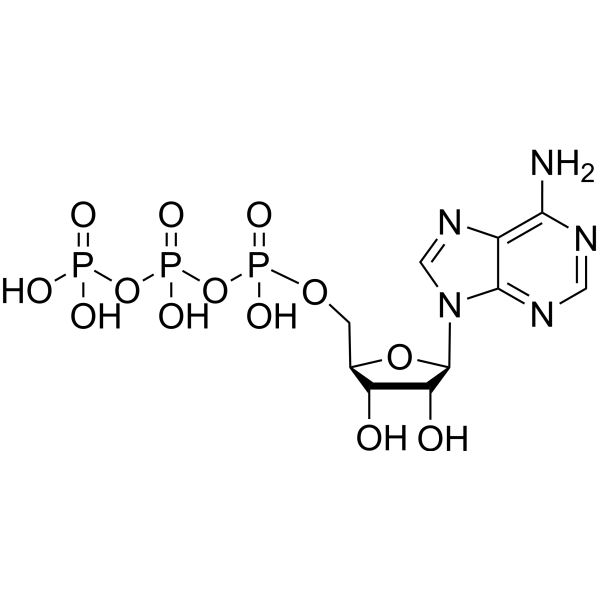
Apyrase is an Nucleoside triphosphate diphosphohydrolase (NTPDase). Apyrase can hydrolyze extracellular adenosine triphosphate (ATP) and adenosine diphosphate (ADP). Apyrase can inhibit Stx2 toxin release of enterohemorrhagic Escherichia coli (EHEC) infection and protect the intestinal barrier function. Apyrase can be used for the research of infection and inflammation, such as hemorrhagic colitis.
For research use only. We do not sell to patients.
- CAS No.: 9000-95-7
-
Storage:
Please store the product under the recommended conditions in the Certificate of Analysis.


To place orders, for customer services and technical support, please contact: MedChemExpress USA
Tel: 609-228-6898 E-mail: [email protected] [email protected]


-
 Biological Activity
-
Technical Parameters
-
Chemical Information
- Protocols
- Purity & Documentation
- References
-
 Help & FAQs


-
HY-B0131
Prostaglandin E1Vasodilator -
HY-B2176
ATPEndogenous Metabolite -
HY-14397
IndomethacinCOX1/2 Inhibitor -
HY-100564
2',3'-cGAMPSTING Agonist -
HY-100545
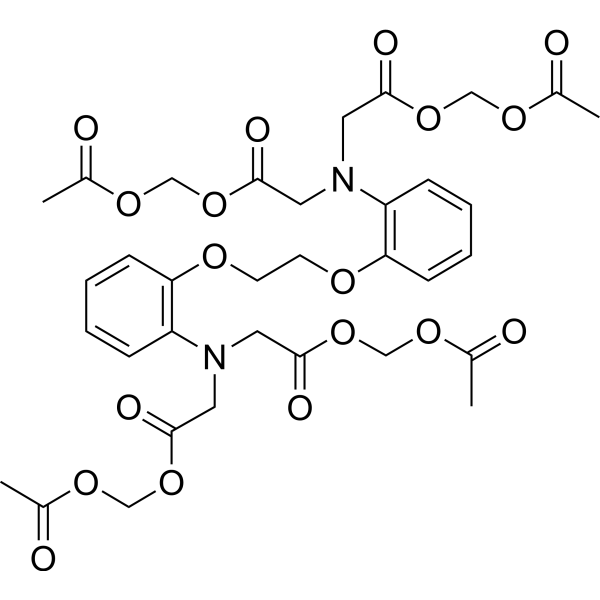
BAPTA-AMCa2+ Chelator -
HY-B0545
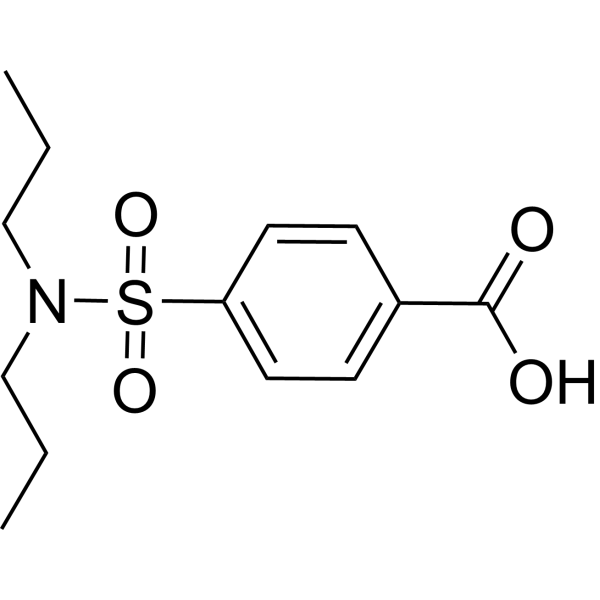
ProbenecidBacterial Inhibitor -
HY-10583
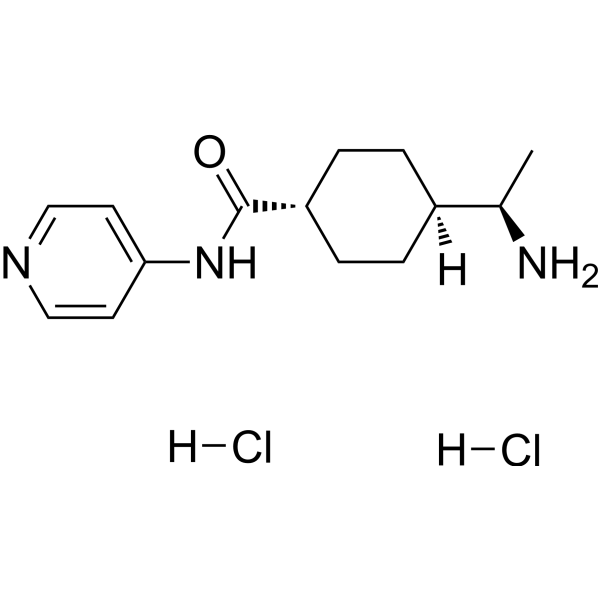
Y-27632 dihydrochlorideROCK Inhibitor -
HY-100218A
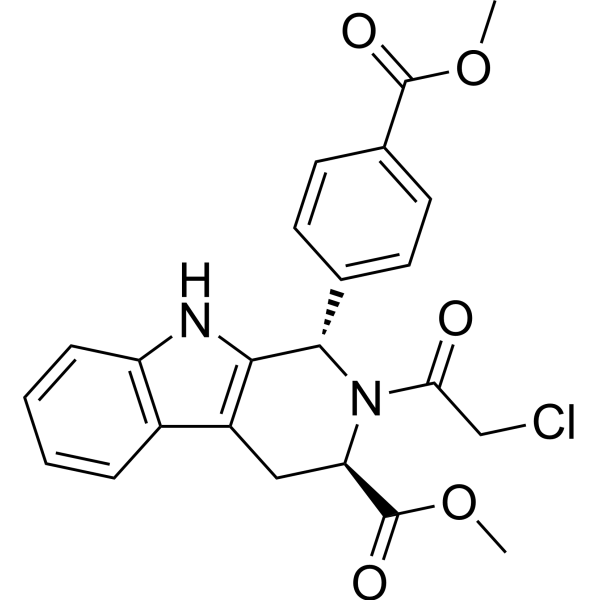
RSL3GPX4 Inhibitor -

HY-134541
SM-102Ionizable Amino Lipid -
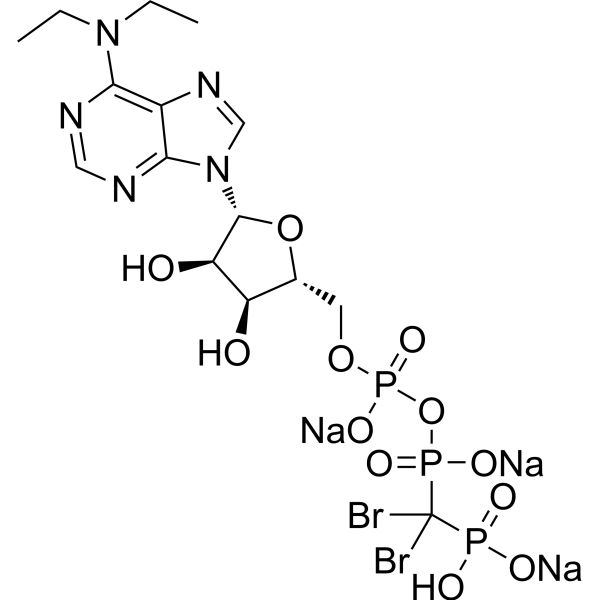
HY-103265
ARL67156 trisodiumNTPDase Inhibitor -
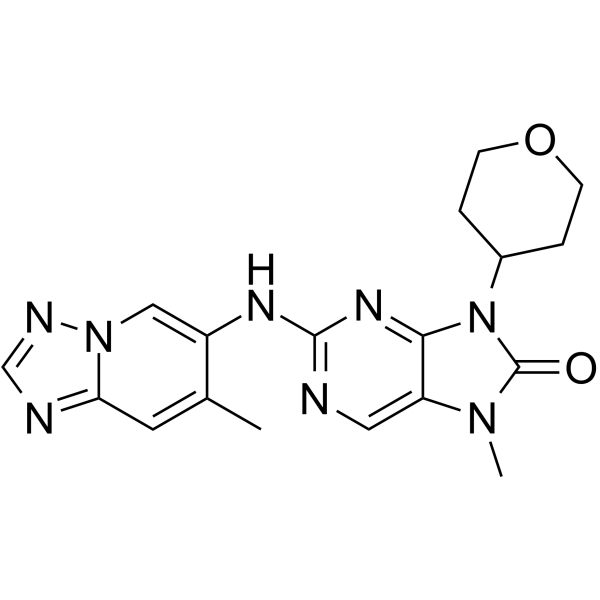
HY-111783
AZD-7648DNA-PK Inhibitor -
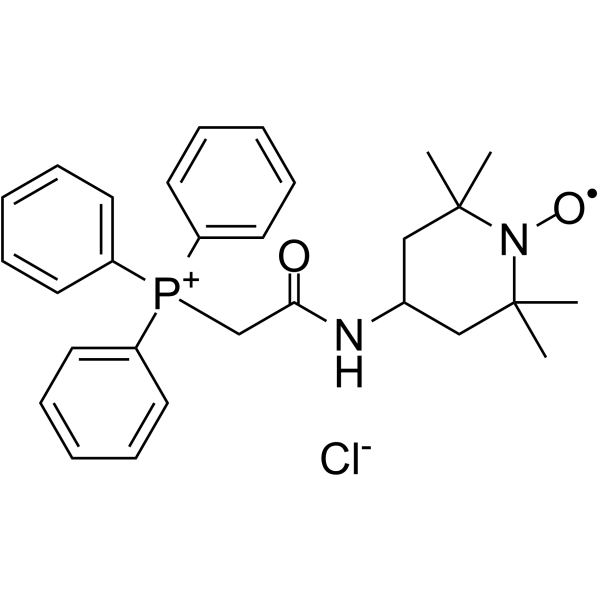
HY-112879
Mito-TEMPOAntioxidant
Publications Citing Use of MedChemExpress (MCE) Apyrase
More

Biological Activity
Description
In Vitro
Product Information
Apyrase requires divalent metal ions for activity,with optimal activity observed with Ca at 5 mM.For hydrolysis of organic di-and triphosphates,the optimal pH is 6.For inorganic substrates,the optimal pH is 5.1.
Instructions
This product is soluble in water (1 mg/mL).The concentration of the enzyme solution in water should be greater than 1mg/mL. It can be stored stably by freezing and dividing it into equal parts. Buffer solutions with a pH value between 5 and 7.5 can be used as solvents for cryogenic equal division storage. For enzyme solutions <1mg/mL, dissolve them in HEPES buffer (pH 7.5), which contains 1mM MgC12, 1mM DTT, 1mM EDTA and 1mg/mL bovine albumin.
Repeated freeze-thaw cycles and exposure to room temperature for several hours will cause the enzyme to lose its activity. When Apyrase solution is stored at 0-4°C, it will gradually form a black insoluble precipitate.
MedChemExpress (MCE) has not independently confirmed the accuracy of these methods. They are for reference only. Further protocols information, click here.
EC Number
3.6.1.5
Specific Activity
≥ 3 U/mg protein
Unit Definition
One unit is defined as the amount of enzyme that will liberate 1.0 μmole of inorganic phosphate from ATP or ADP per min at pH 6.5 at 30°C.

Technical Parameters
-
Activators
Divalent metal ions are required for activity and best activity is observed with calcium ion at 5 mM


Chemical Information
-
CAS No. 9000-95-7
-
Appearance Solid
-
Color Gray to brown
-
SMILES
[Apyrase]
-
Shipping
Room temperature in continental US; may vary elsewhere.
-
Storage
Please store the product under the recommended conditions in the Certificate of Analysis.


Publications (5)
-
Journal Impact Factor
-
Most Recent
-
Adv Sci (Weinh)
PANX2 Suppresses Lung Adenocarcinoma Progression by Inducing Disulfidptosis and Enhancing Antitumor Immunity. [Abstract]2026 May 29:e75662. PMID: 42210821 -
Adv Sci (Weinh)
Early Radial Extracorporeal Shockwave Stimulation on Proximal Tibial Circular Osteotomy Site Enhanced Heterotopic Skin Wound Healing via Small Extracellular Vesicles. [Abstract]2026 Jan 8:e17257. PMID: 41504389 -
Pigment Cell Melanoma Res
2025 Sep;38(5):e70048. PMID: 40913269 -
Curr Eye Res
Integrated Spatiotemporal and Correlative Analysis of ATP-Related Signaling Components in Lens Development. [Abstract]2026 Apr;51(4):359-373. PMID: 41310968 -
bioRxiv
2026 May 14:2026.05.11.724407. PMID: 42182450

Protocols
-
Research Protocol for Infectious Diseases
Infectious-disease experiments test how pathogens interact with host barriers, innate immune receptors, inflammatory signaling, pathogen replication, and tissue injury; pattern-recognition receptors such as TLRs, RIG-I-like receptors, NOD-like receptors, and inflammasomes detect microbial molecules and activate NF-κB, interferon, and cytokine responses. The central hypothesis is that infection severity reflects the balance between pathogen burden and host response: protective inflammation restricts pathogen growth, whereas excessive or mislocalized inflammation contributes to tissue damage and disease phenotype. Unresolved questions include which host pathways are protective versus pathogenic, why some infection models fail to translate to human disease, and which combined readouts best predict clinically relevant infection outcomes.
-
DSS-Induced Colitis
Dextran sulfate sodium (DSS)-induced colitis is generated by administering DSS in mouse drinking water, producing epithelial injury, barrier disruption, weight loss, diarrhea, fecal blood, colon shortening, histologic mucosal damage, and inflammatory mediator changes; the model is mainly used to study acute or chronic intestinal inflammation resembling selected features of ulcerative colitis. DSS injury is interpreted through clinical and tissue readouts rather than a single molecular endpoint: daily body weight, stool consistency, and bleeding are combined into a disease activity index, while colon length, histology, cytokines, myeloperoxidase activity, intestinal permeability, and tight-junction markers provide complementary measures of inflammation and barrier damage.
-
TNBS-Induced Colitis
TNBS-induced colitis is produced by intrarectal delivery of 2,4,6-trinitrobenzene sulfonic acid in ethanol, where ethanol disrupts the mucosal barrier and TNBS haptenates colonic proteins, generating immune-mediated colonic inflammation with weight loss, diarrhea, ulceration, transmural injury, inflammatory-cell infiltration, and cytokine responses. The model is used as an experimental intestinal inflammation model with Crohn’s disease–like features, especially when Th1-type responses, IL-12–dependent inflammation, chronic relapsing inflammation, or fibrosis-related endpoints are studied.
-
Research Protocol for Inflammation-related Diseases
The NLRP3 inflammasome is a cytosolic innate immune signaling platform that integrates priming signals and danger-signal activation to promote caspase-1 activation, maturation of IL-1β and IL-18, and gasdermin D-mediated pyroptotic cell death. The core experimental logic is to determine whether inflammatory disease phenotypes are driven by increased NLRP3 expression, ASC-containing inflammasome assembly, caspase-1 cleavage, GSDMD cleavage, and extracellular release of IL-1β/IL-18 rather than by nonspecific cell injury alone. The pathway is strongly linked to inflammation-related disease phenotypes because monosodium urate crystals activate NALP3/NLRP3 inflammasome signaling in gout-like crystal inflammation, cholesterol crystals activate NLRP3 inflammasomes in atherogenesis models, and DSS-induced intestinal inflammation has been reported to involve NLRP3 inflammasome activity. However, experimental colitis studies also show context-dependent protective effects of NLRP3 inflammasome co


Purity & Documentation
-
Data Sheet (273 KB)
-
SDS (418 KB)
- English - EN (418 KB)
- Français - FR (418 KB)
- Deutsch - DE (418 KB)
- Norwegian - NO (418 KB)
- Español - ES (418 KB)
- Swedish - SV (418 KB)
- Italian - IT (418 KB)
- Korean - KR (418 KB)
- Portuguese - PT (418 KB)
-
Handling Instructions (2659 KB)
References

Calculators
Concentration (start) × Volume (start) = Concentration (final) × Volume (final)


Apyrase Related Classifications
HY-P2764 Related Classifications
 Powered by Bioz