



Arachidonylcyclopropylamide
Based on 2 publication(s) in Google Scholar
Arachidonylcyclopropylamide (ACPA) is a potent and selective CB1 receptors agonist. Arachidonylcyclopropylamide inhibits forskolin-stimulated cAMP production in CHO cells transfected with human cannabinoid CB1 receptors (IC50=2 nM).
For research use only. We do not sell to patients.
- Purity : 99.9%
- CAS No.: 229021-64-1
- Formula: C23H37NO
- Molecular Weight:343.55
-
Storage:
Solution, -20°C, 2 years


To place orders, for customer services and technical support, please contact: MedChemExpress USA
Tel: 609-228-6898 E-mail: [email protected] [email protected]


-
 Biological Activity
-
Chemical Information
- Protocols
- Purity & Documentation
- References
-
 Help & FAQs


-
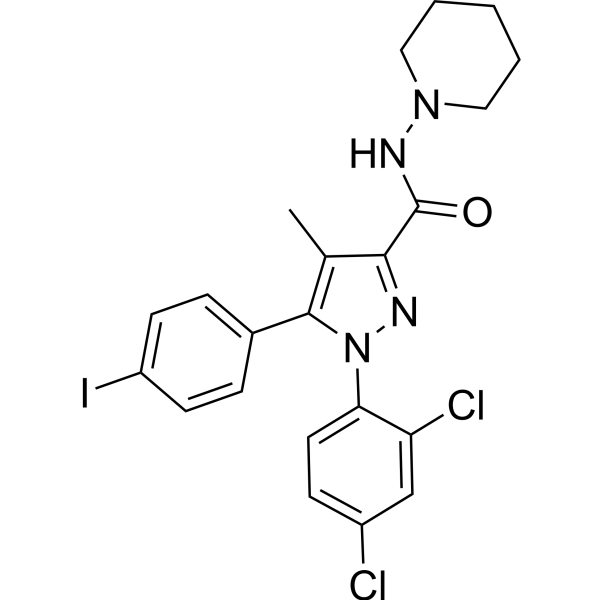
HY-15443
AM251CB1 Receptor Antagonist -

HY-113421
Linoleoyl ethanolamideFatty Acid Ethanolamide -
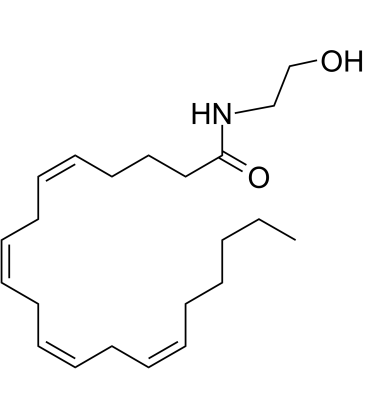
HY-10863
AnandamideCB1/2 Agonist -
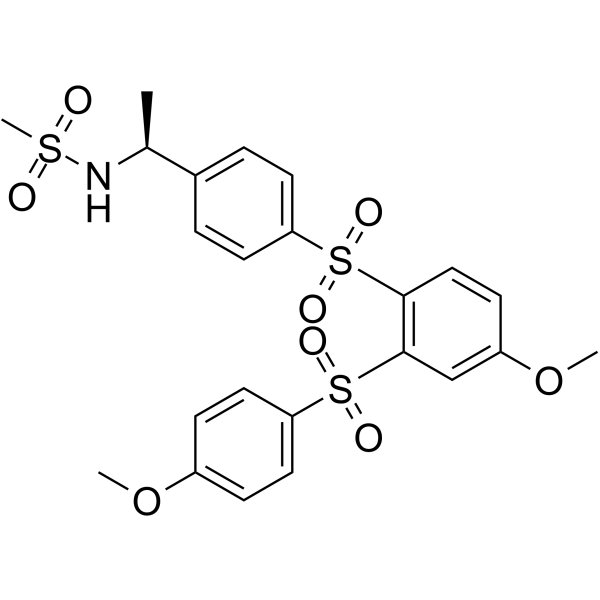
HY-121852
SCH 336CB2 Agonist -
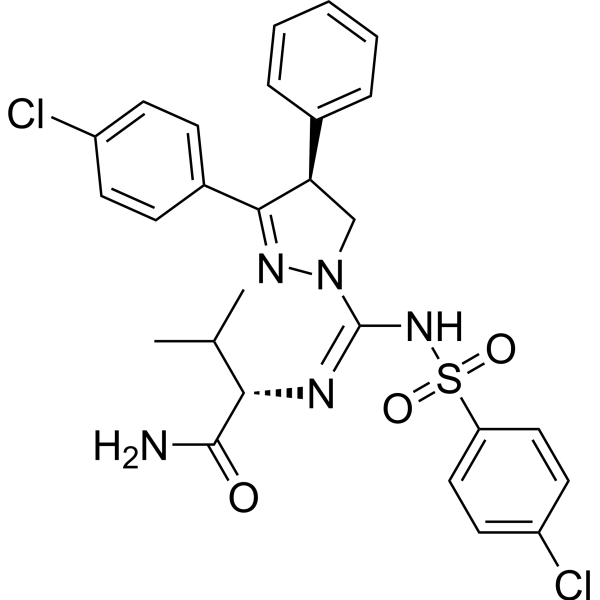
HY-18697
JD-5037CB1 Receptor Antagonist -
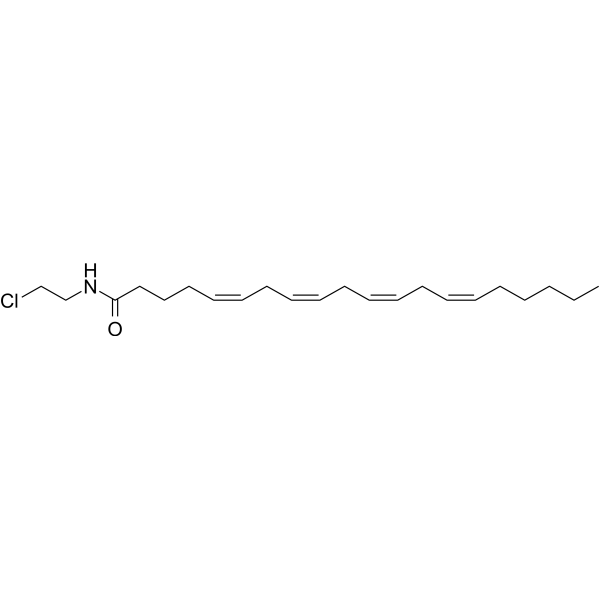
HY-110004
ACEABiochemical Assay Reagent -
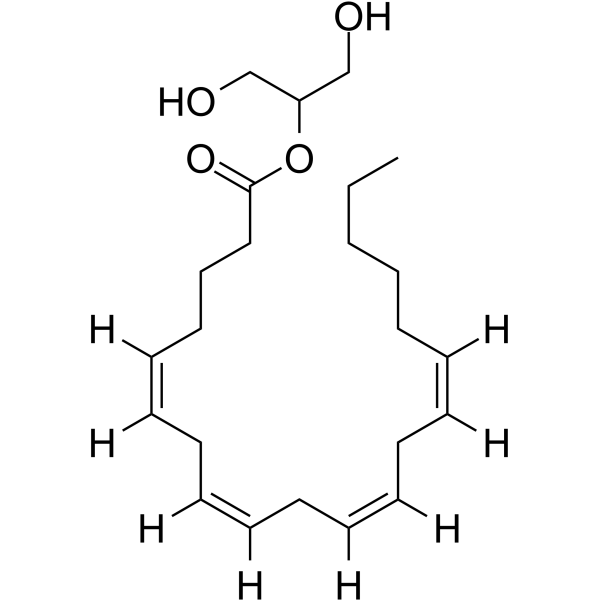
HY-W011051
2-Arachidonoylglycerol -

HY-15443R
AM251 (Standard)CB1 Receptor Antagonist -
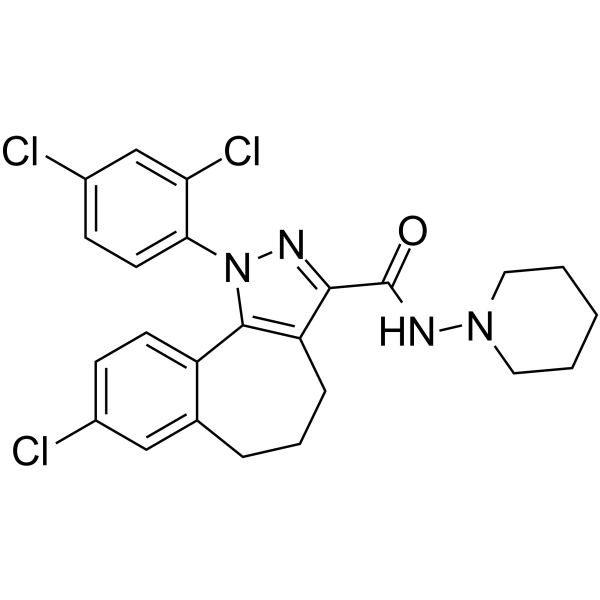
HY-117139
NESS 0327Cannabinoid Antagonist -
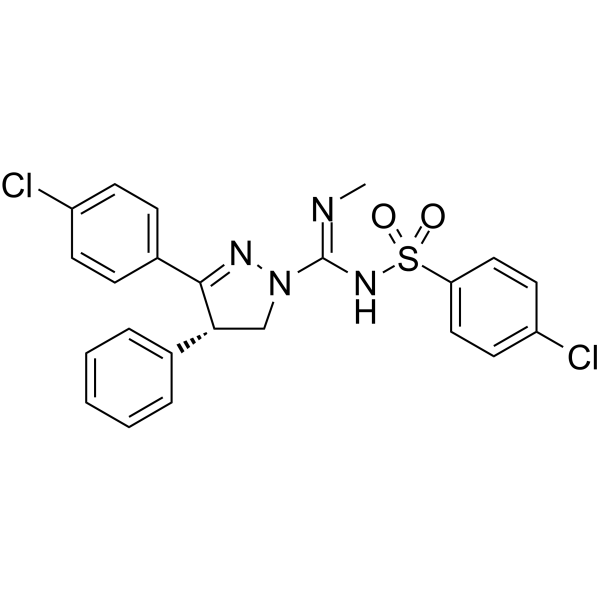
HY-14791
IbipinabantCB1 Antagonist -
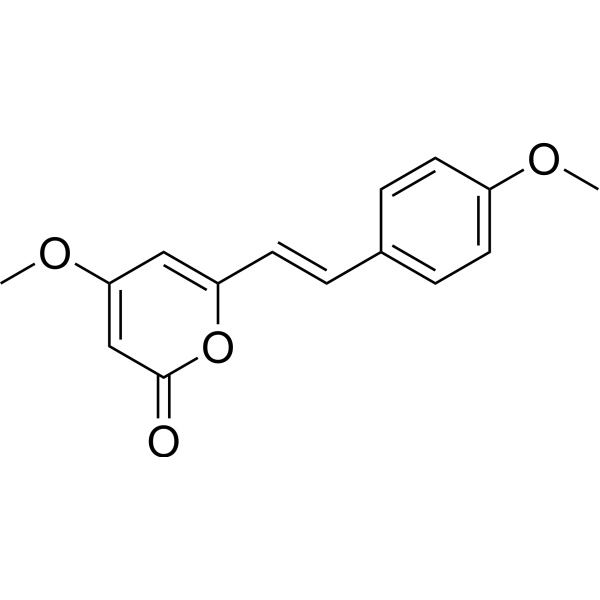
HY-N0919
YangoninCannabinoid Receptor Inhibitor -
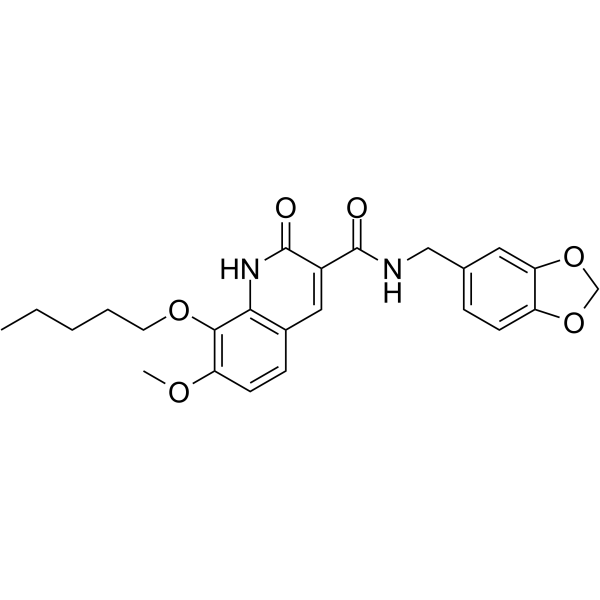
HY-103325
JTE-907Cannabinoid CB2 Receptor Inverse Agonist
Publications Citing Use of MedChemExpress (MCE) Arachidonylcyclopropylamide
More

Biological Activity
Description
In Vitro
Arachidonylcyclopropylamide induces a dose-dependent increase in BV-2 cell migration (EC50=2.2 nM)[2].
MedChemExpress (MCE) has not independently confirmed the accuracy of these methods. They are for reference only. Further protocols information, click here.


Chemical Information
-
CAS No. 229021-64-1
-
Appearance Liquid
-
Molecular Weight 343.55
-
Formula C23H37NO
-
Color Colorless to light yellow
-
SMILES
CCCCC/C=C\C/C=C\C/C=C\C/C=C\CCCC(NC1CC1)=O
-
Synonyms
ACPA
-
Shipping
Room temperature in continental US; may vary elsewhere.
-
Storage
Solution, -20°C, 2 years


Publications (2)
-
Journal Impact Factor
-
Most Recent
-
CNS Neurosci Ther
Cannabinoid Receptors CB1 and CB2 Activation Restores Hippocampal Lipid Profiles and Alleviates Autism-Like Behaviors in Valproic Acid-Induced ASD Rats. [Abstract]2025 Aug;31(8):e70591. PMID: 40852923 -
Life Sci
Activation of CB1R alleviates autism spectrum disorder-like behavior and synaptic impairments. [Abstract]2025 Sep 15:377:123797. PMID: 40484367

Protocols
-
Cell Cytotoxicity Assay
Cytotoxicity assays are usually based on the assessment of cell membrane damage, which can also be indirectly detected by measuring cell viability. Detection methods include MTT assay, CKK-8 assay, LDH assay and ATP assay, etc.


Purity & Documentation
-
Data Sheet (261 KB)
-
SDS (393 KB)
- English - EN (393 KB)
- Français - FR (393 KB)
- Deutsch - DE (393 KB)
- Norwegian - NO (393 KB)
- Español - ES (393 KB)
- Swedish - SV (393 KB)
- Italian - IT (393 KB)
- Korean - KR (393 KB)
- Portuguese - PT (393 KB)
-
Handling Instructions (2659 KB)
References

Calculators
Concentration (start) × Volume (start) = Concentration (final) × Volume (final)


Arachidonylcyclopropylamide Related Classifications
HY-110003 Related Classifications
 Powered by Bioz