



Captopril-d3

Based on 1 Customer Validation
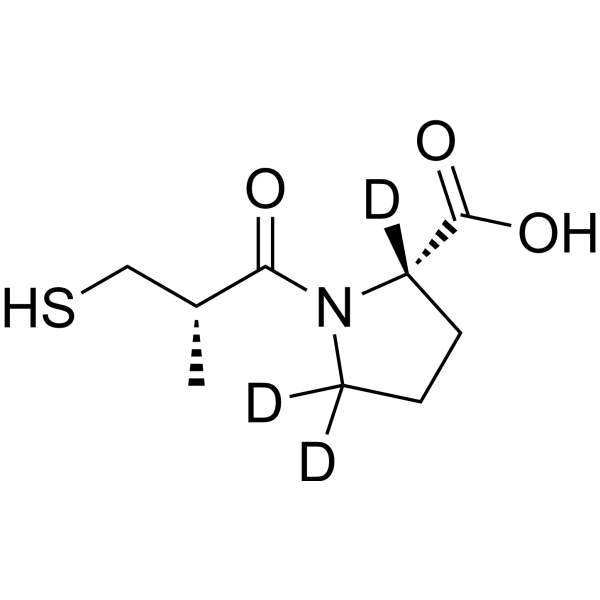
Captopril-d3 is deuterium labeled Captopril. Captopril (SQ 14225), antihypertensive agent, is a thiol-containing competitive, orally active angiotensin-converting enzyme (ACE) inhibitor (IC50=0.025 μM) and has been widely used for research of hypertension and congestive heart failure. Captopril is also a New Delhi metallo-β-lactamase-1 (NDM-1) inhibitor with an IC50 of 7.9 μM.
Nur für Forschungszwecke. Wir verkaufen nicht an Patienten.
- Reinheit : 99.39%
- CAS. Nr.: 1356383-38-4
- Formel: C9H12D3NO3S
- Molecular Weight:220.30
-
Speicherung:
-20°C, sealed storage, away from moisture
* In solvent : -80°C, 6 months; -20°C, 1 month (sealed storage, away from moisture)

To place orders, for customer services and technical support, please contact: MedChemExpress USA
Tel: 609-228-6898 E-mail: [email protected] [email protected]


-
 Biologische Aktivität
-
Chemical Information
- Protokoll
- Reinheit & Dokumentation
- Verweise
-
 Help & FAQs


-
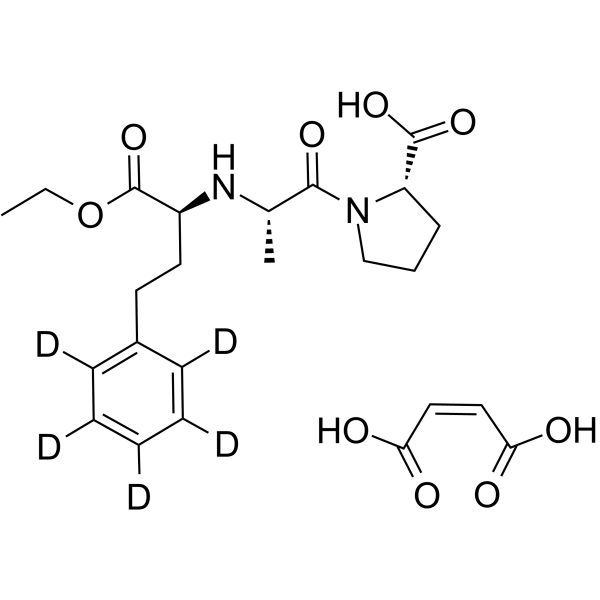
HY-B0331AS
Enalapril-d5 maleateStable Isotope -
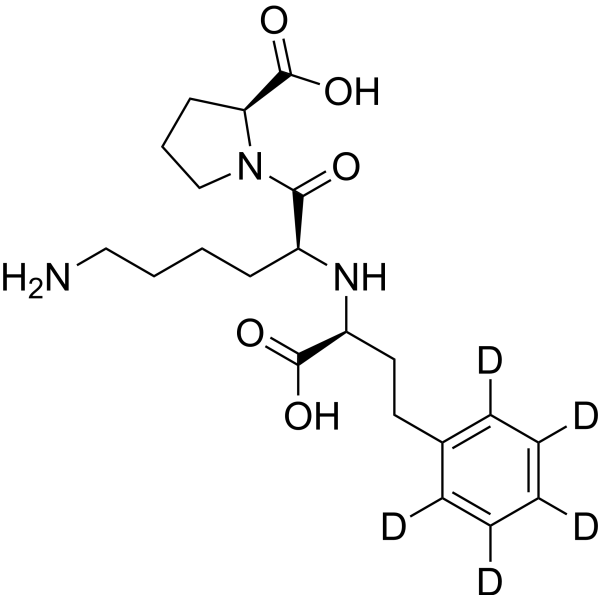
HY-18206S
Lisinopril-d5Stable Isotope -
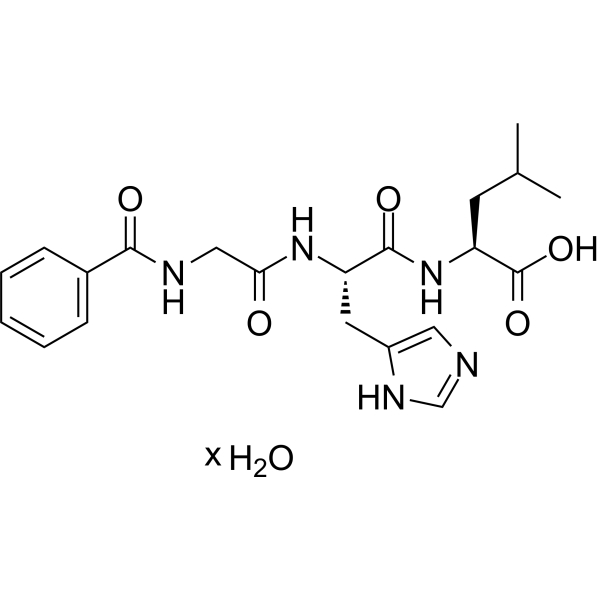
HY-137875
Hippuryl-His-Leu-OH hydrateACE Substrate -

HY-B1433
PerindoprilatACE Inhibitor -
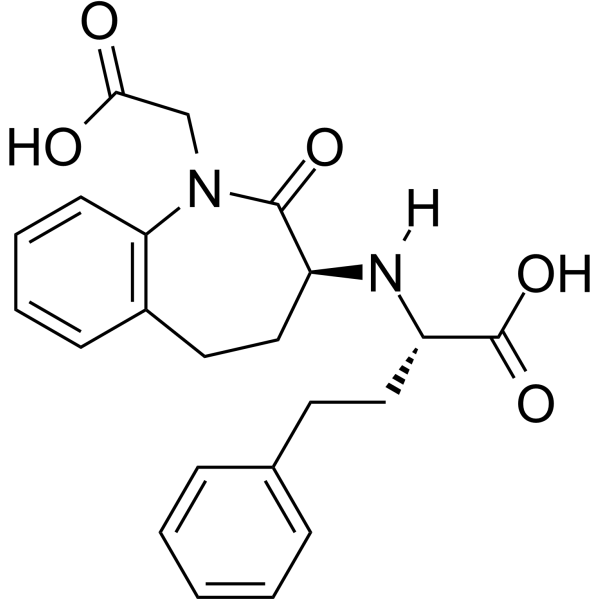
HY-118472
BenazeprilatACE Inhibitor -
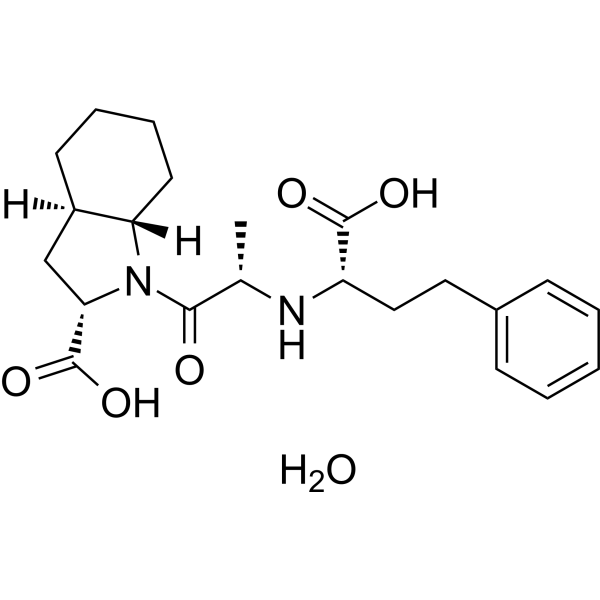
HY-A0116A
Trandolaprilate hydrateACE Inhibitor -

HY-B1433R
Perindoprilat (Standard)ACE Inhibitor -

HY-118472R
Benazeprilat (Standard)ACE Inhibitor -

HY-A0117
TemocaprilatACE Inhibitor


Biologische Aktivität
Beschreibung
In Vitro
Stable heavy isotopes of hydrogen, carbon, and other elements have been incorporated into drug molecules, largely as tracers for quantitation during the drug development process. Deuteration has gained attention because of its potential to affect the pharmacokinetic and metabolic profiles of drugs[1].
MedChemExpress (MCE) has not independently confirmed the accuracy of these methods. They are for reference only.
Anwendung
1. This compound can be used as a tracer
2. This compound can be used as an internal standard for quantitative analysis by NMR, GC-MS, or LC-MS.


Chemical Information
-
CAS. Nr. 1356383-38-4
-
Unlabeled CAS 62571-86-2
-
Appearance Solid
-
Molecular Weight 220.30
-
Formel C9H12D3NO3S
-
Color White to off-white
-
SMILES
OC([C@@]1(CCC([2H])(N1C([C@@H](CS)C)=O)[2H])[2H])=O
-
Synonyms
SQ 14225-d3
-
Versand
Room temperature in continental US; may vary elsewhere.
-
Speicherung
-20°C, sealed storage, away from moisture
* In solvent : -80°C, 6 months; -20°C, 1 month (sealed storage, away from moisture)


Reinheit & Dokumentation
-
Data Sheet (271 KB)
-
SDS (557 KB)
- English - EN (557 KB)
- Français - FR (557 KB)
- Deutsch - DE (557 KB)
- Norwegian - NO (557 KB)
- Español - ES (557 KB)
- Swedish - SV (557 KB)
- Italian - IT (557 KB)
- Korean - KR (557 KB)
- Portuguese - PT (557 KB)
-
Handling Instructions (2659 KB)
Verweise
[1]. Russak EM, et al. Impact of Deuterium Substitution on the Pharmacokinetics of Pharmaceuticals. Ann Pharmacother. 2019;53(2):211-216. [Content Brief]
[2]. Afrin S, et al. Eritadenine from Edible Mushrooms Inhibits Activity of Angiotensin Converting Enzyme in Vitro. J Agric Food Chem. 2016;64(11):2263-2268. [Content Brief]
[3]. Esmaeili S, et al. Captopril/enalapril inhibit promiscuous esterase activity of carbonic anhydrase at micromolar concentrations: An in vitro study. Chem Biol Interact. 2017;265:24-35. [Content Brief]
[4]. Li N, et al. Simplified captopril analogues as NDM-1 inhibitors. Bioorg Med Chem Lett. 2014;24(1):386-389. [Content Brief]
[5]. Tzakos, A.G., et al., The molecular basis for the selection of captopril cis and trans conformations by angiotensin I converting enzyme. Bioorg Med Chem Lett, 2006. 16(19): p. 5084-7. [Content Brief]
[6]. Song, J.C. and C.M. White, Clinical pharmacokinetics and selective pharmacodynamics of new angiotensin converting enzyme inhibitors: an update. Clin Pharmacokinet, 2002. 41(3): p. 207-24. [Content Brief]

Calculators
Konzentration (Stammlösung) × Volumen (Stammlösung) = Konzentration (Ziellösung) × Volumen (Ziellösung)


Captopril-d3 Related Classifications
HY-B0368S Related Classifications
 Powered by Bioz