



Mosnodenvir

Based on 1 Customer Validation
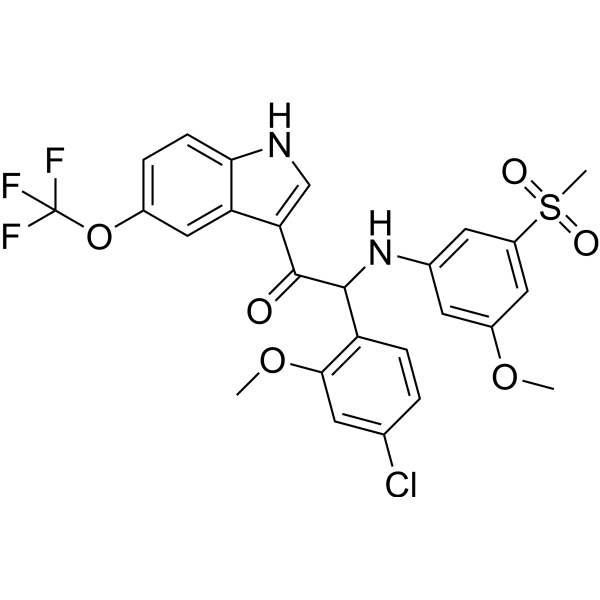
Mosnodenvir (JNJ-1802) is an orally active pan serotype dengue virus (DENV) inhibitor, with EC50 values ranging from 0.057 to 11 nM for four dengue virus (DENV) serotypes. Mosnodenvir blocks viral replication by inhibiting the formation of complexes between two viral proteins, nonstructural protein 3 (NS3) and NS4B, thereby preventing the formation of new viral RNA. Mosnodenvir exhibits picomolar to nanomolar antiviral activity in vitro and has antiviral efficacy in mice and non-human primates.
Nur für Forschungszwecke. Wir verkaufen nicht an Patienten.
- Reinheit : 99.77%
- CAS. Nr.: 2890688-86-3
- Formel: C26H22ClF3N2O6S
- Molecular Weight:582.98
-
Speicherung:Powder -20°C, 3 years , 4°C, 2 years ; In solvent -80°C, 6 months , -20°C, 1 month

To place orders, for customer services and technical support, please contact: MedChemExpress USA
Tel: 609-228-6898 E-mail: [email protected] [email protected]


-
 Biologische Aktivität
-
Chemical Information
-
Lösungsmittel & Löslichkeit
- Protokoll
- Reinheit & Dokumentation
- Verweise
-
 Help & FAQs


-
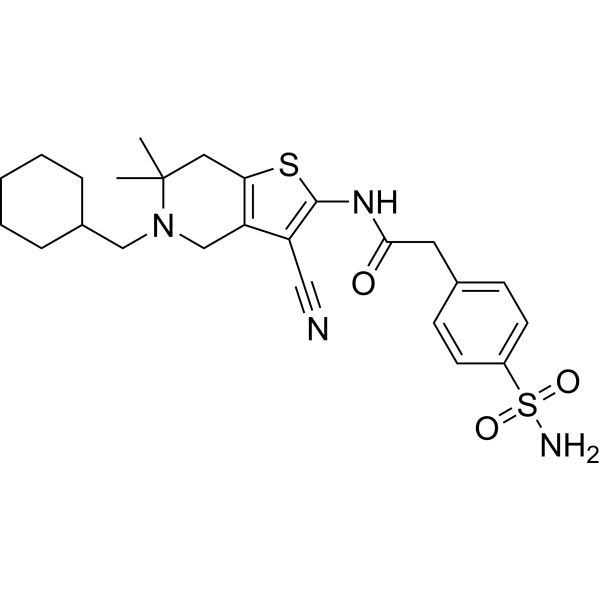
HY-138543
NITD-688NS4B Inhibitor -
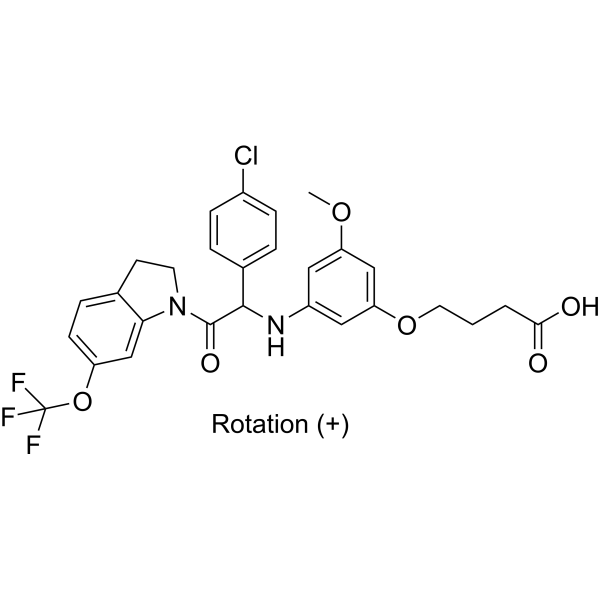
HY-139602
(+)-JNJ-A07NS3-NS4B Interaction Inhibitor -
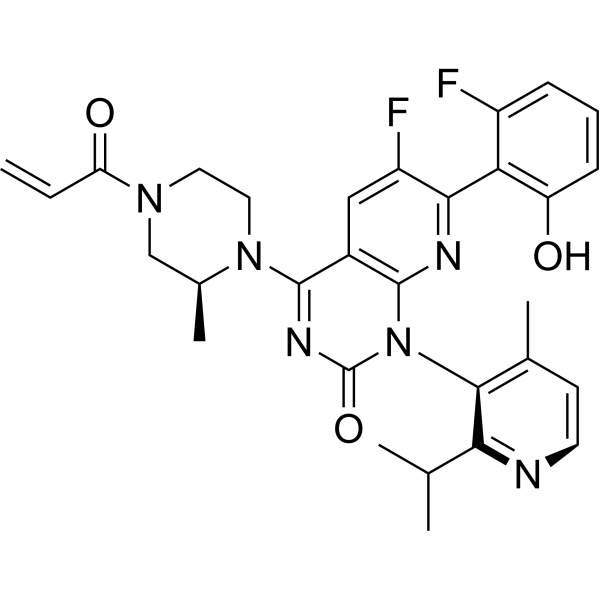
HY-114277
SotorasibKRAS G12C Inhibitor -
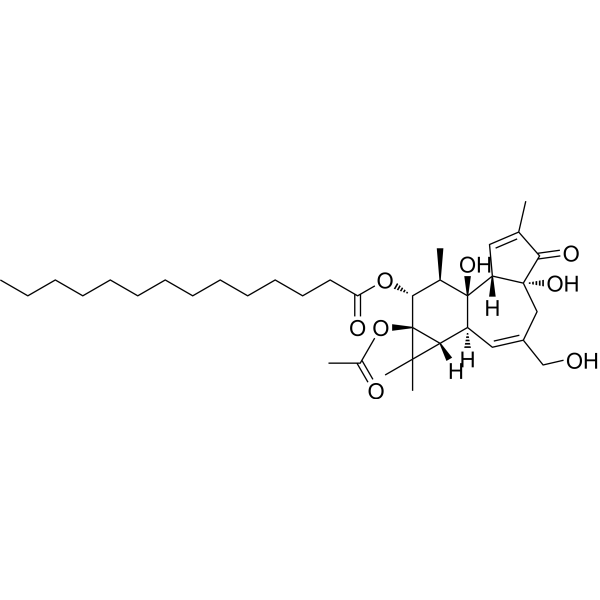
HY-18739
Phorbol 12-myristate 13-acetatePKC Activator -
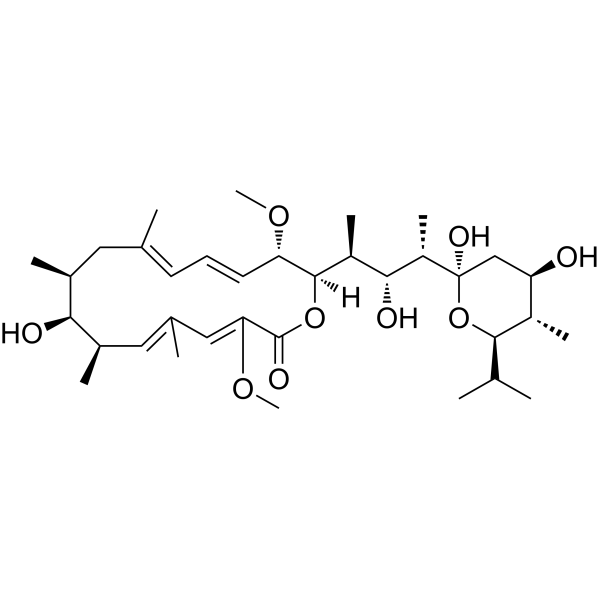
HY-100558
Bafilomycin A1V-ATPase Inhibitor -
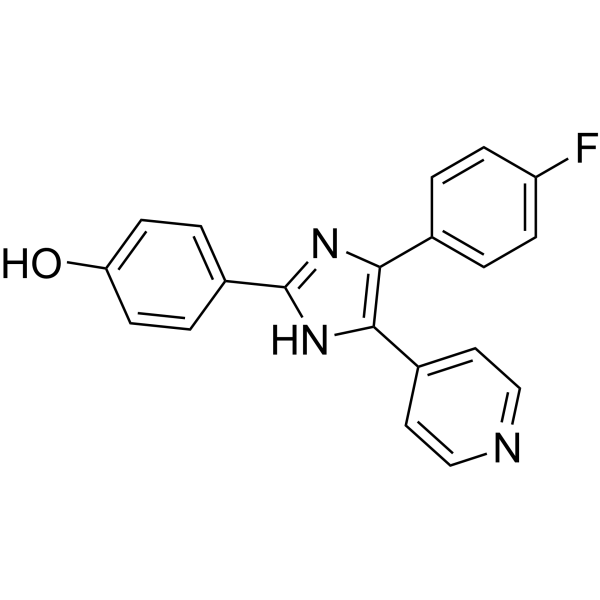
HY-10295
SB 202190p38 MAPK Inhibitor -
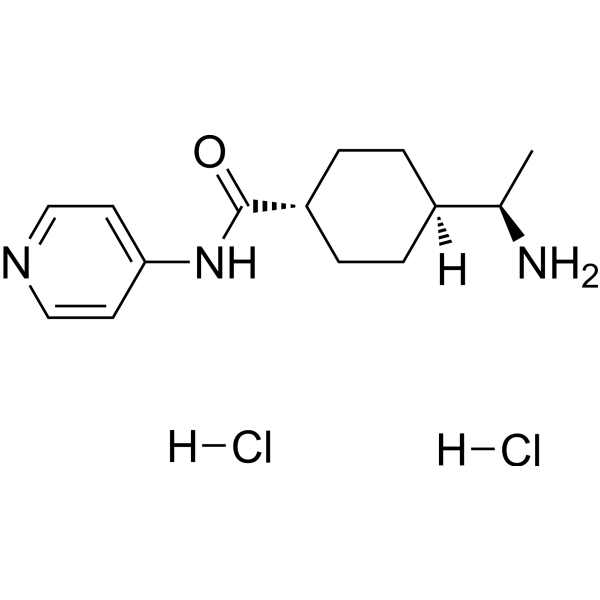
HY-10583
Y-27632 dihydrochlorideROCK Inhibitor -
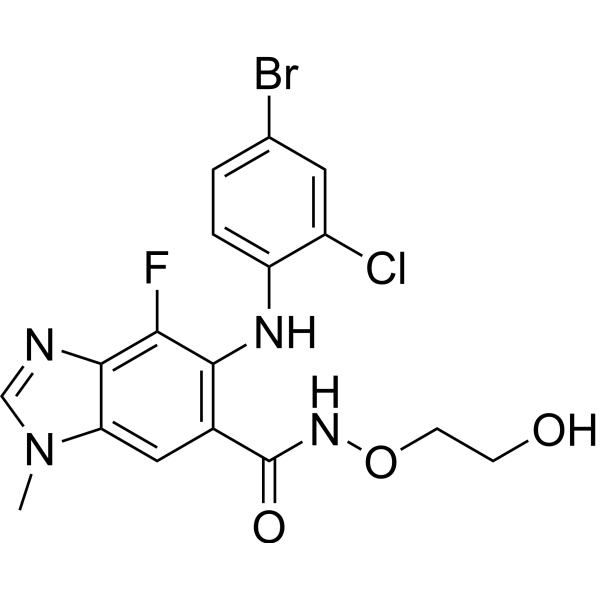
HY-50706
SelumetinibMEK1/2 Inhibitor -
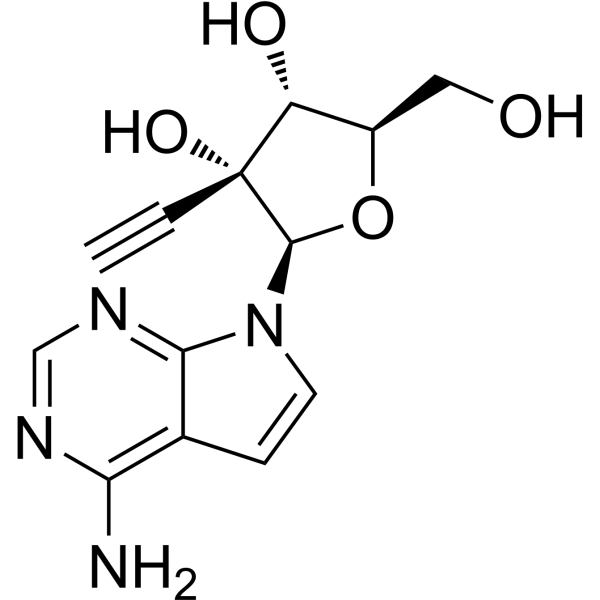
HY-12957
NITD008Flaviviruse Inhibitor -
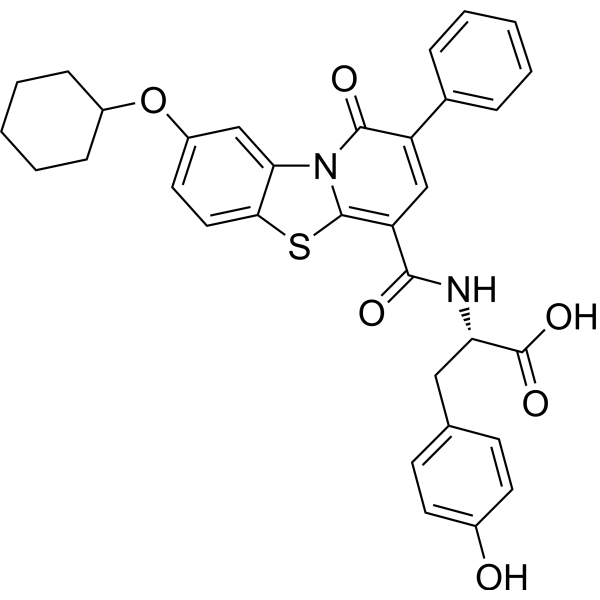
HY-100749
HeE1-2TyrRdRp Inhibitor


Biologische Aktivität
Beschreibung
IC50 & Target
DENV[1].
Cellular Effect
|
Cell Line

|
Type | Value | Description | References |
|---|---|---|---|---|
| Vero | CC50 |
2.6 μM
Compound: 24a; JNJ-1802
|
Cytotoxicity against african green monkey Vero cells by ATPlite cell viability luminescence assay
Cytotoxicity against african green monkey Vero cells by ATPlite cell viability luminescence assay
|
[PMID: 38482827] |
In Vitro
Mosnodenvir exhibits antiviral activity and limited cytotoxicity in Vero, C6/36, Huh-7, and THP-1/DC-SIGN cells infected with DENV[2]. Mosnodenvir (0.00256 nM-8 nM, 24 h) has inhibitory effects on infection of two DENV 2 strains (DENV-2/16681 and DENV-2/RL) in Vero cells[3].
MedChemExpress (MCE) has not independently confirmed the accuracy of these methods. They are for reference only.
-
Cell Line:Vero cells (African green monkey kidney cells)
-
Concentration:0.00256 nM-8 nM
-
Incubation Time:24 h
-
Result:Inhibited virus replication, with a nearly 100% inhibitory effect at concentrations of 1.6 nM or higher.
In Vivo
MedChemExpress (MCE) has not independently confirmed the accuracy of these methods. They are for reference only.
-
Animal Model:AG129 mouse model infected with dengue virus (DENV)[2].
-
Dosage:0.2-60 mg/kg
-
Administration:Oral gavage (p.o.); first administration 1 hour before DENV attack; b.i.d; 3 days
-
Result:Reduced the level of viral RNA and increased the survival rate of mice.
-
Animal Model:DENV-2/16681 rhesus macaque model[2].
-
Dosage:0.01, 0.18, 3 mg/kg
-
Administration:Oral gavage (p.o.); once daily; 11 days
-
Result:Inhibited virus replication without causing DENV IgG and IgM seroconversion.


Chemical Information
-
CAS. Nr. 2890688-86-3
-
Appearance Solid
-
Molecular Weight 582.98
-
Formel C26H22ClF3N2O6S
-
Color White to off-white
-
SMILES
CS(C1=CC(OC)=CC(N[C@@H](C2=C(C=C(C=C2)Cl)OC)C(C(C3=C4)=CNC3=CC=C4OC(F)(F)F)=O)=C1)(=O)=O
-
Synonyms
JNJ-1802
-
Versand
Room temperature in continental US; may vary elsewhere.
-
Speicherung
Powder -20°C 3 years 4°C 2 years In solvent -80°C 6 months -20°C 1 month


Lösungsmittel & Löslichkeit
In Vitro:
DMSO : 100 mg/mL (171.53 mM; Need ultrasonic; Hygroscopic DMSO has a significant impact on the solubility of product, please use newly opened DMSO)
Please refer to the solubility information to select the appropriate solvent. Once prepared, please aliquot and store the solution to prevent product inactivation from repeated freeze-thaw cycles.
Storage method and period of stock solution: -80°C, 6 months; -20°C, 1 month. When stored at -80°C, please use it within 6 months. When stored at -20°C, please use it within 1 month.
Please refer to the solubility information to select the appropriate solvent. Once prepared, please aliquot and store the solution to prevent product inactivation from repeated freeze-thaw cycles.
Storage method and period of stock solution: -80°C, 6 months; -20°C, 1 month. When stored at -80°C, please use it within 6 months. When stored at -20°C, please use it within 1 month.
Konzentration (Stammlösung) × Volumen (Stammlösung) = Konzentration (Ziellösung) × Volumen (Ziellösung)
In Vivo:
Select the appropriate dissolution method based on your experimental animal and administration route.
- For the following dissolution methods, please ensure to first prepare a clear stock solution using an In Vitro approach and then sequentially add co-solvents:
- To ensure reliable experimental results, the clarified stock solution can be appropriately stored based on storage conditions. As for the working solution for In Vivo experiments, it is recommended to prepare freshly and use it on the same day.
- The percentages shown for the solvents indicate their volumetric ratio in the final prepared solution. If precipitation or phase separation occurs during preparation, heat and/or sonication can be used to aid dissolution.
Add each solvent one by one: 10% DMSO 40% PEG300 5% Tween-80 45% Saline
Solubility: ≥ 2.5 mg/mL (4.29 mM); Clear solution
This protocol yields a clear solution of ≥ 2.5 mg/mL (saturation unknown).
Taking 1 mL working solution as an example, add 100 μL DMSO stock solution (25.0 mg/mL) to 400 μL PEG300, and mix evenly; then add 50 μL Tween-80 and mix evenly; then add 450 μL Saline to adjust the volume to 1 mL.
Preparation of Saline: Dissolve 0.9 g sodium chloride in ddH₂O and dilute to 100 mL to obtain a clear Saline solution.
In Vivo Dissolution Calculator
Please enter the basic information of animal experiments:
-
-
-
-
Recommended: Prepare an additional quantity of animals to account for potential losses during experiments.
Please enter your animal formula composition:
-
%DMSO +
Recommended: Keep the proportion of DMSO in working solution below 2% if your animal is weak.
-
%+
-
+%Tween-80 + +
-
%Saline +
The co-solvents required include: DMSO, . All of co-solvents are available by MedChemExpress (MCE). , Tween 80. All of co-solvents are available by MedChemExpress (MCE).
Working solution concentration: 0.22 mg/mL
Method for preparing stock solution: mg drug dissolved in μL DMSO. Stock solution concentration: mg/mL.
1. Take μL DMSO stock solution;
2. Add μL .
μL , mix evenly;
3. Then add μL Tween 80, mix evenly;
4. Then add μL
Please ensure that the stock solution in the first step is dissolved to a clear state, and add co-solvents in sequence. You can use ultrasonic heating (ultrasonic cleaner, recommended frequency 20-40 kHz), vortexing, etc. to assist dissolution.


Reinheit & Dokumentation
-
Data Sheet (280 KB)
-
SDS (251 KB)
- English - EN (251 KB)
- Français - FR (251 KB)
- Deutsch - DE (251 KB)
- Norwegian - NO (251 KB)
- Español - ES (251 KB)
- Swedish - SV (251 KB)
- Italian - IT (251 KB)
- Korean - KR (251 KB)
- Portuguese - PT (251 KB)
-
Handling Instructions (2659 KB)
Verweise
[1]. Ackaert O, et al. Safety, tolerability and pharmacokinetics of JNJ-1802, a pan-serotype dengue direct antiviral small molecule, in a Phase 1, double-blind, randomized, dose-escalation study in healthy volunteers. Clin Infect Dis. 2023 May 10:ciad284. [Content Brief]
[2]. Goethals O, et al. Blocking NS3-NS4B interaction inhibits dengue virus in non-human primates. Nature. 2023 Mar;615(7953):678-686. [Content Brief]
[3]. McCormack CP, et al. Modelling the impact of JNJ-1802, a first-in-class dengue inhibitor blocking the NS3-NS4B interaction, on in-vitro DENV-2 dynamics. PLoS Comput Biol. 2023 Dec 6;19(12):e1011662. [Content Brief]


Complete Stock Solution Preparation Table
Please refer to the solubility information to select the appropriate solvent. Once prepared, please aliquot and store the solution to prevent product inactivation from repeated freeze-thaw cycles.
Storage method and period of stock solution: -80°C, 6 months; -20°C, 1 month. When stored at -80°C, please use it within 6 months. When stored at -20°C, please use it within 1 month.
| Optional Solvent | Concentration Solvent Mass | 1 mg | 5 mg | 10 mg | 25 mg |
|---|---|---|---|---|---|
| DMSO | 1 mM | 1.7153 mL | 8.5766 mL | 17.1532 mL | 42.8831 mL |
| 5 mM | 0.3431 mL | 1.7153 mL | 3.4306 mL | 8.5766 mL | |
| 10 mM | 0.1715 mL | 0.8577 mL | 1.7153 mL | 4.2883 mL | |
| 15 mM | 0.1144 mL | 0.5718 mL | 1.1435 mL | 2.8589 mL | |
| 20 mM | 0.0858 mL | 0.4288 mL | 0.8577 mL | 2.1442 mL | |
| 25 mM | 0.0686 mL | 0.3431 mL | 0.6861 mL | 1.7153 mL | |
| 30 mM | 0.0572 mL | 0.2859 mL | 0.5718 mL | 1.4294 mL | |
| 40 mM | 0.0429 mL | 0.2144 mL | 0.4288 mL | 1.0721 mL | |
| 50 mM | 0.0343 mL | 0.1715 mL | 0.3431 mL | 0.8577 mL | |
| 60 mM | 0.0286 mL | 0.1429 mL | 0.2859 mL | 0.7147 mL | |
| 80 mM | 0.0214 mL | 0.1072 mL | 0.2144 mL | 0.5360 mL | |
| 100 mM | 0.0172 mL | 0.0858 mL | 0.1715 mL | 0.4288 mL |


Mosnodenvir Related Classifications
HY-153810 Related Classifications
 Powered by Bioz