



Pinacidil monohydrate
Based on 5 publication(s) in Google Scholar
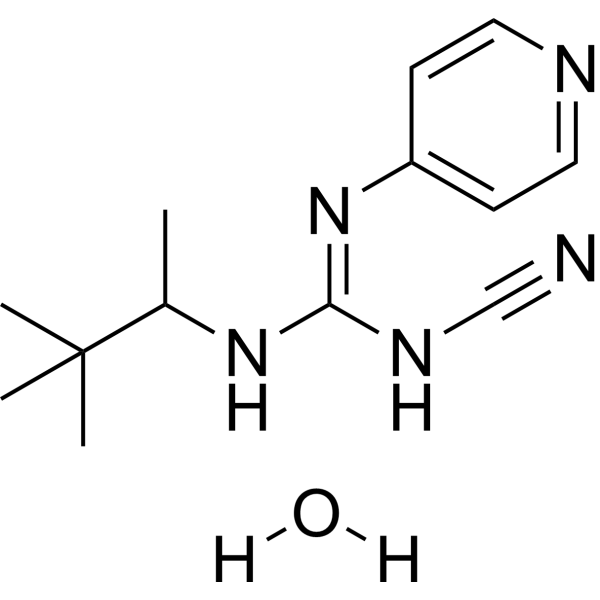
Pinacidil (P-1134) monohydrate is a potent activator of ATP-sensitive potassium channel. Pinacidil monohydrate is an antihypertensive agent hyperpolarizes vascular smooth muscle by opening K+ channels. Pinacidil monohydrate enhances K+-efflux in smooth muscle. Pinacidil monohydrate has vasorelaxant properties. Pinacidil monohydrate is able to inhibit spontaneous tone and of reducing agonist induced contractions. Pinacidil monohydrate can be studied in research area such as cardiovascular diseases.
For research use only. We do not sell to patients.
- Purity : 99.92%
- CAS No.: 85371-64-8
- Formula: C13H21N5O
- Molecular Weight:263.34
-
Storage:
-20°C, sealed storage, away from moisture
* In solvent : -80°C, 6 months; -20°C, 1 month (sealed storage, away from moisture)

To place orders, for customer services and technical support, please contact: MedChemExpress USA
Tel: 609-228-6898 E-mail: [email protected] [email protected]


-
 Biological Activity
-
Chemical Information
-
Solvent & Solubility
- Purity & Documentation
- References
-
 Help & FAQs


-
HY-B0112
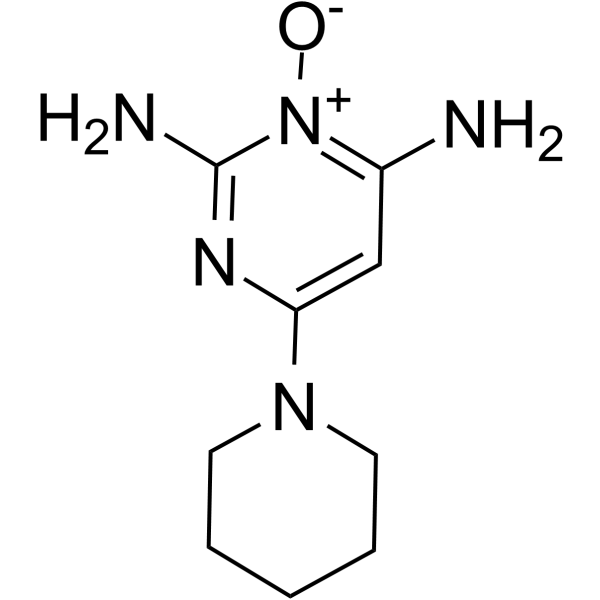
MinoxidilEndogenous Metabolite -
HY-12496
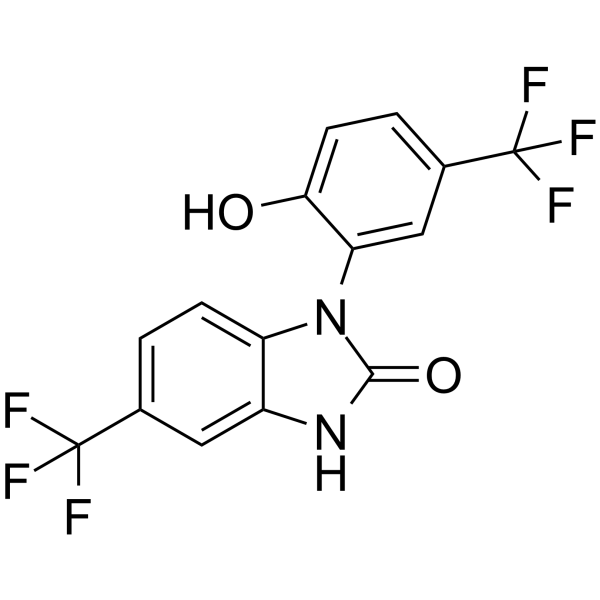
NS-1619BK Channel Opener -

HY-14290AR
Pinacidil monohydrate (Standard)Potassium Channel Activator -
HY-B1140
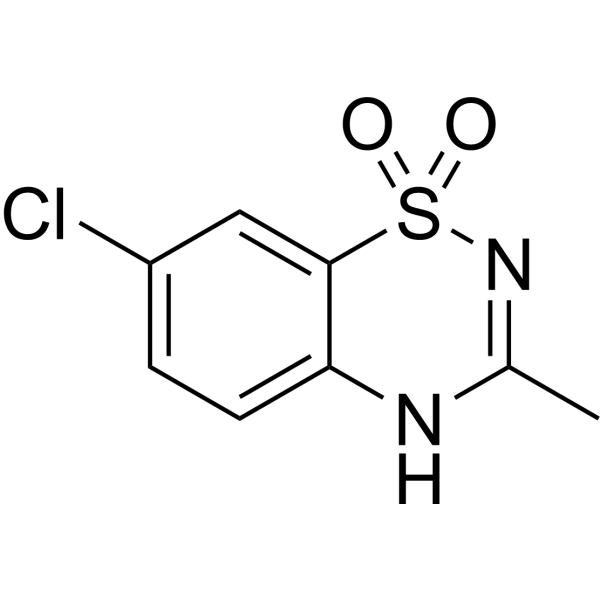
DiazoxideAutophagy Inducer -
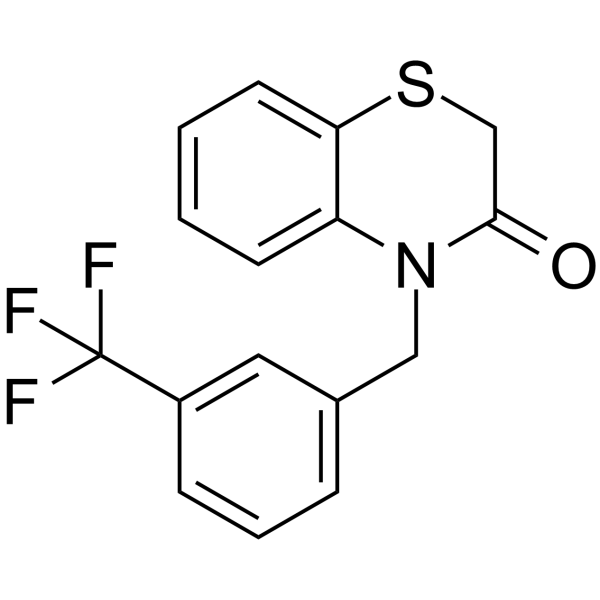
HY-15707
NS6180KCa3.1 Channel Inhibitor -
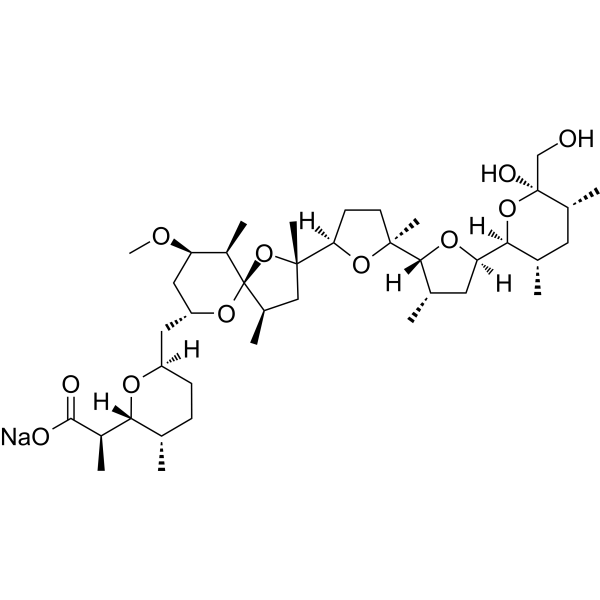
HY-100381
Nigericin sodium saltNLRP3 Activator -

HY-B1140R
Diazoxide (Standard)Autophagy Inducer -
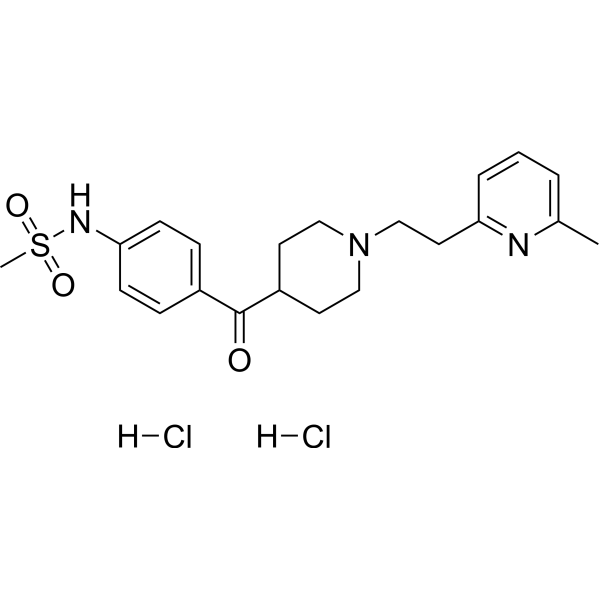
HY-15551
E-4031hERG Channels Blocker -
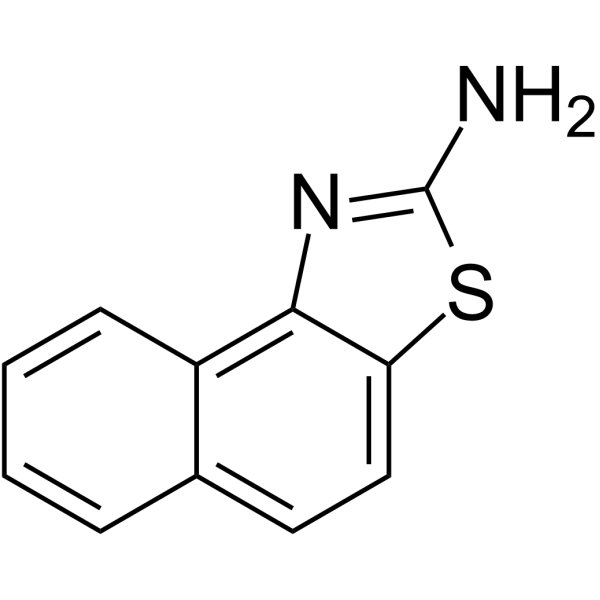
HY-111655
SKA-31KCa2/KCa3.1 Activator -
HY-10015
PAP-1Kv1.3 Blocker -
HY-50694
SenicapocGardos Channel Blocker -
HY-B0753
GliclazidePotassium Currents Blocker
Publications Citing Use of MedChemExpress (MCE) Pinacidil monohydrate
More Customer Validation & Images

-
In Vivo Efficacy Study
-
In Vivo Efficacy Study
-
In Vivo Efficacy Study


Biological Activity
Description
In Vitro
Pinacidil (0-2 mM, 48 h) monohydrate induces DNA fragmentation in a dose-dependent manner and is prominent at 1 mM in HepG2 cells[2].
Pinacidil (1-2 mM, 36 h) monohydrate induces loss of phospholipid asymmetry, resulting in appearance of phosphatidylserine on the outer layer of the plasma membrane detected by annexin-V binding in HepG2 cells[2].
Pinacidil (1 mM, 0-48 h) monohydrate induces apoptosis in a time-related manner without involvement of KATP channels in HepG2 cells[2].
Pinacidil (1 mM) monohydrate induces a rapid and sustained increase in [K+] and [Ca2+] in HepG2 cells[2].
Pinacidil (1 mM, 0-60 min) monohydrate induces Ca2+ influx through activation of the reverse mode of Na+/Ca2+ exchanger which is achieved by increased [Na+]i attributed to activation of NKCC[2].
Pinacidil (1-100 μM and 0.3-30 μM, 30 min) monohydrate produces a concentration-dependent inhibition of responses to noradrenaline in rat aorta and portal vein[3].
Pinacidil (1-100 μM) monohydrate produces a concentration-dependent inhibition of responses to KCl (10-80 mmol/L) in rat aorta[3].
Pinacidil (0.3-30 μM) monohydrate produces an inhibition of responses to KCl (5-80 mmol/L) and the –log IC50 against KCl (20 mmol/L) contraction was 6.2[3].
Pinacidil (0.1-100 μM) monohydrate is capable of producing almost total relaxation of tissue, and remains unaffected in the presence of Apamin (HY-P0256) (0.1 μM) in guinea-pig trachea[3].
Pinacidil (0.3-10 μM, 4.5-7 min) monohydrate abolishes spontaneous multispike complexes and mechanical activity, and results in a concentration-dependent hyperpolarization in rat portal vein[3].
Pinacidil (0.3-30 μM, 10-35 min) monohydrate produces a greater and longer lasting increase in 86Rb exchange in the aorta than in the portal vein[3].
MedChemExpress (MCE) has not independently confirmed the accuracy of these methods. They are for reference only.
In Vivo
Pinacidil (10-100 μg, i.t., one single dose) monohydrate produces dose-dependent and significant antinociception in diabetic mice and a dose of 100 μg results no significant antinociception in non-diabetic mice (ED50 = 18.5), whereas ED50 for diabetic mice is 95.6[4].
Pinacidil (30 μg, i.c.v., one single dose) monohydrate is not affected by the pretreatment of β-Funaltrexamine (HY-101318) (20 and 40 mg/kg, s.c.) on the antinociception in diabetic mice[4].
Pinacidil (30 μg, i.t., one single dose) monohydrate has a dose-dependently reduction of antinociceptive effect with β-Funaltrexamine (20 and 40 mg/kg, s.c.), and is antagonized by the pretreatment with 7-Benzylidenenaltrexon (HY-169867) (0.3 mg/kg), Naltriben (0.3 mg/kg) (HY-133717), or nor-Binaltorphimine (20 mg/kg, s.c.) (HY-117040) in diabetic mice[4].
MedChemExpress (MCE) has not independently confirmed the accuracy of these methods. They are for reference only.


Chemical Information
-
CAS No. 85371-64-8
-
Appearance Solid
-
Molecular Weight 263.34
-
Formula C13H21N5O
-
Color White to light yellow
-
SMILES
[H]O[H].CC(C)(C)C(N/C(NC#N)=N/C1=CC=NC=C1)C
-
Synonyms
P-1134 monohydrate
-
Shipping
Room temperature in continental US; may vary elsewhere.
-
Storage
-20°C, sealed storage, away from moisture
* In solvent : -80°C, 6 months; -20°C, 1 month (sealed storage, away from moisture)


Publications (5)
-
Journal Impact Factor
-
Most Recent
-
Bone Res
mTORC1 induces plasma membrane depolarization and promotes preosteoblast senescence by regulating the sodium channel Scn1a. [Abstract]2022 Mar 8;10(1):25. PMID: 35256591 -
-
Dev Cell
KCNJ8/ABCC9-containing K-ATP channel modulates brain vascular smooth muscle development and neurovascular coupling. [Abstract]2022 Jun 6;57(11):1383-1399.e7. PMID: 35588738 -
Sci Rep
Repositioning pinacidil and its anticonvulsant and anxiolytic properties in murine models. [Abstract]2024 Sep 30;14(1):22695. PMID: 39349563
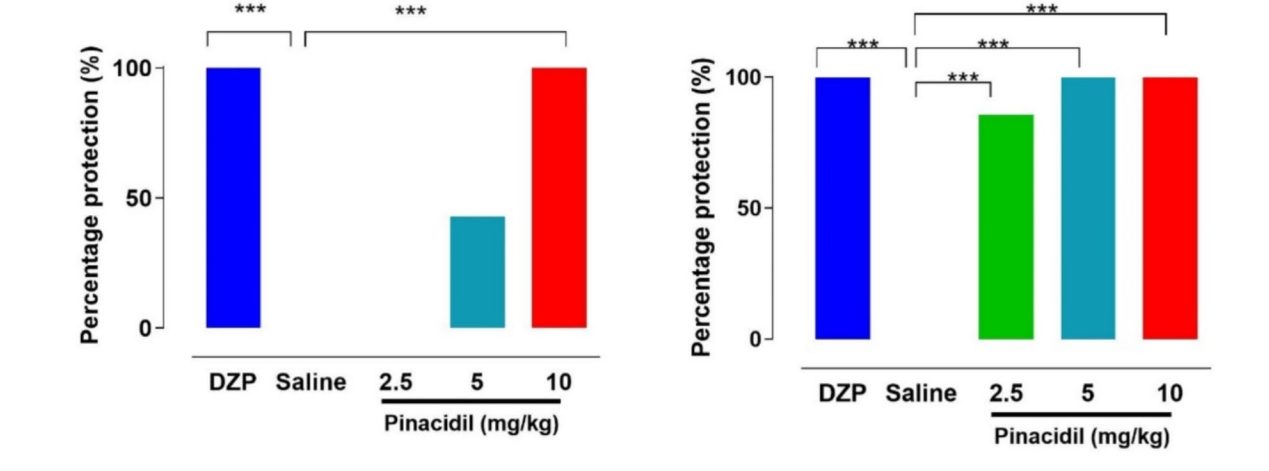
Pinacidil monohydrate purchased from MedChemExpress. Usage Cited in: Sci Rep. 2024 Sep 30;14(1):22695. [Abstract]
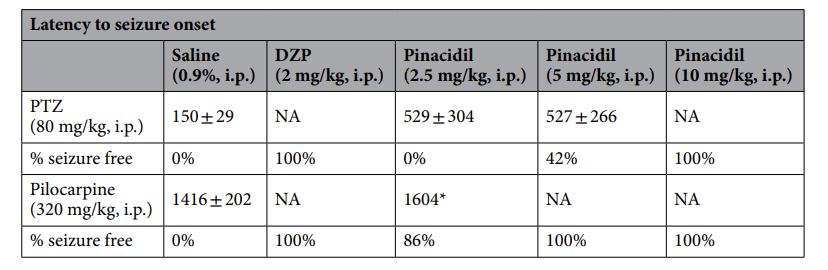
Anticonvulsant effect of pinacidil (2.5-10 mg/kg) and diazepam against seizures at maximum Racine score (7/8) in Wistar rats (n = 6). % of protected animals on PTZ-induced seizures % of protected animals on Pilocarpine induced-seizures.
Pinacidil monohydrate purchased from MedChemExpress. Usage Cited in: Sci Rep. 2024 Sep 30;14(1):22695. [Abstract]
In the PTZ test the time to first seizure was increased by around 3.5 times compared to the saline group for the 2.5 and 5 mg/kg doses of pinacidil.
Pinacidil monohydrate purchased from MedChemExpress. Usage Cited in: Sci Rep. 2024 Sep 30;14(1):22695. [Abstract]
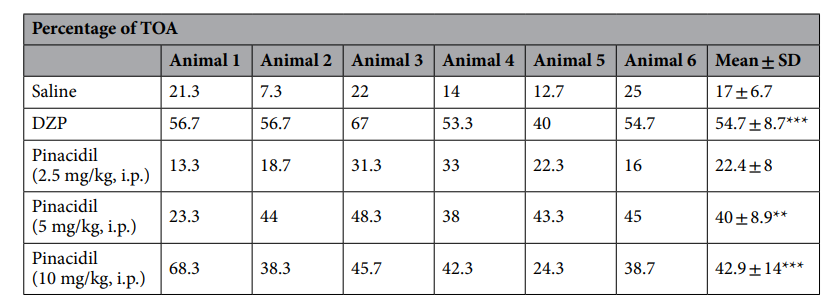
Percentage of time in open arms after pinacidil administration in Wistar rats (n = 6).
-


Solvent & Solubility
In Vitro:
DMSO : 100 mg/mL (379.74 mM; Need ultrasonic; Hygroscopic DMSO has a significant impact on the solubility of product, please use newly opened DMSO)
Ethanol : 50 mg/mL (189.87 mM; Need ultrasonic)
H2O : < 0.1 mg/mL (insoluble)
Please refer to the solubility information to select the appropriate solvent. Once prepared, please aliquot and store the solution to prevent product inactivation from repeated freeze-thaw cycles.
Storage method and period of stock solution: -80°C, 6 months; -20°C, 1 month (sealed storage, away from moisture). When stored at -80°C, please use it within 6 months. When stored at -20°C, please use it within 1 month.
Please refer to the solubility information to select the appropriate solvent. Once prepared, please aliquot and store the solution to prevent product inactivation from repeated freeze-thaw cycles.
Storage method and period of stock solution: -80°C, 6 months; -20°C, 1 month (sealed storage, away from moisture). When stored at -80°C, please use it within 6 months. When stored at -20°C, please use it within 1 month.
Concentration (start) × Volume (start) = Concentration (final) × Volume (final)
In Vivo:
Select the appropriate dissolution method based on your experimental animal and administration route.
- For the following dissolution methods, please ensure to first prepare a clear stock solution using an In Vitro approach and then sequentially add co-solvents:
- To ensure reliable experimental results, the clarified stock solution can be appropriately stored based on storage conditions. As for the working solution for In Vivo experiments, it is recommended to prepare freshly and use it on the same day.
- The percentages shown for the solvents indicate their volumetric ratio in the final prepared solution. If precipitation or phase separation occurs during preparation, heat and/or sonication can be used to aid dissolution.
Add each solvent one by one: 10% EtOH 40% PEG300 5% Tween-80 45% Saline
Solubility: ≥ 2.5 mg/mL (9.49 mM); Clear solution
This protocol yields a clear solution of ≥ 2.5 mg/mL (saturation unknown).
Taking 1 mL working solution as an example, add 100 μL EtOH stock solution (25.0 mg/mL) to 400 μL PEG300, and mix evenly; then add 50 μL Tween-80 and mix evenly; then add 450 μL Saline to adjust the volume to 1 mL.
Preparation of Saline: Dissolve 0.9 g sodium chloride in ddH₂O and dilute to 100 mL to obtain a clear Saline solution.
Add each solvent one by one: 10% EtOH 90% (20% SBE-β-CD in Saline)
Solubility: ≥ 2.5 mg/mL (9.49 mM); Clear solution
This protocol yields a clear solution of ≥ 2.5 mg/mL (saturation unknown).
Taking 1 mL working solution as an example, add 100 μL EtOH stock solution (25.0 mg/mL) to 900 μL 20% SBE-β-CD in Saline, and mix evenly.
Preparation of 20% SBE-β-CD in Saline (4°C, storage for one week): 2 g SBE-β-CD powder is dissolved in 10 mL Saline, completely dissolve until clear.
Add each solvent one by one: 10% EtOH 90% Corn Oil
Solubility: ≥ 2.5 mg/mL (9.49 mM); Clear solution
This protocol yields a clear solution of ≥ 2.5 mg/mL (saturation unknown). If the continuous dosing period exceeds half a month, please choose this protocol carefully.
Taking 1 mL working solution as an example, add 100 μL EtOH stock solution (25.0 mg/mL) to 900 μL Corn oil, and mix evenly.
Add each solvent one by one: 10% DMSO 40% PEG300 5% Tween-80 45% Saline
Solubility: ≥ 1.83 mg/mL (6.95 mM); Clear solution
This protocol yields a clear solution of ≥ 1.83 mg/mL (saturation unknown).
Taking 1 mL working solution as an example, add 100 μL DMSO stock solution (18.3 mg/mL) to 400 μL PEG300, and mix evenly; then add 50 μL Tween-80 and mix evenly; then add 450 μL Saline to adjust the volume to 1 mL.
Preparation of Saline: Dissolve 0.9 g sodium chloride in ddH₂O and dilute to 100 mL to obtain a clear Saline solution.
Add each solvent one by one: 10% DMSO 90% (20% SBE-β-CD in Saline)
Solubility: ≥ 1.83 mg/mL (6.95 mM); Clear solution
This protocol yields a clear solution of ≥ 1.83 mg/mL (saturation unknown).
Taking 1 mL working solution as an example, add 100 μL DMSO stock solution (18.3 mg/mL) to 900 μL 20% SBE-β-CD in Saline, and mix evenly.
Preparation of 20% SBE-β-CD in Saline (4°C, storage for one week): 2 g SBE-β-CD powder is dissolved in 10 mL Saline, completely dissolve until clear.
In Vivo Dissolution Calculator
Please enter the basic information of animal experiments:
-
-
-
-
Recommended: Prepare an additional quantity of animals to account for potential losses during experiments.
Please enter your animal formula composition:
-
%DMSO +
Recommended: Keep the proportion of DMSO in working solution below 2% if your animal is weak.
-
%+
-
+%Tween-80 + +
-
%Saline +
The co-solvents required include: DMSO, . All of co-solvents are available by MedChemExpress (MCE). , Tween 80. All of co-solvents are available by MedChemExpress (MCE).
Working solution concentration: 0.22 mg/mL
Method for preparing stock solution: mg drug dissolved in μL DMSO. Stock solution concentration: mg/mL. * In solvent : -80°C, 6 months; -20°C, 1 month (sealed storage, away from moisture)
1. Take μL DMSO stock solution;
2. Add μL .
μL , mix evenly;
3. Then add μL Tween 80, mix evenly;
4. Then add μL
Please ensure that the stock solution in the first step is dissolved to a clear state, and add co-solvents in sequence. You can use ultrasonic heating (ultrasonic cleaner, recommended frequency 20-40 kHz), vortexing, etc. to assist dissolution.


Purity & Documentation
-
Data Sheet (282 KB)
-
SDS (393 KB)
- English - EN (393 KB)
- Français - FR (393 KB)
- Deutsch - DE (393 KB)
- Norwegian - NO (393 KB)
- Español - ES (393 KB)
- Swedish - SV (393 KB)
- Italian - IT (393 KB)
- Korean - KR (393 KB)
- Portuguese - PT (393 KB)
-
Handling Instructions (2659 KB)
References


Complete Stock Solution Preparation Table
Please refer to the solubility information to select the appropriate solvent. Once prepared, please aliquot and store the solution to prevent product inactivation from repeated freeze-thaw cycles.
Storage method and period of stock solution: -80°C, 6 months; -20°C, 1 month (sealed storage, away from moisture). When stored at -80°C, please use it within 6 months. When stored at -20°C, please use it within 1 month.
| Optional Solvent | Concentration Solvent Mass | 1 mg | 5 mg | 10 mg | 25 mg |
|---|---|---|---|---|---|
| Ethanol / DMSO | 1 mM | 3.7974 mL | 18.9869 mL | 37.9737 mL | 94.9343 mL |
| 5 mM | 0.7595 mL | 3.7974 mL | 7.5947 mL | 18.9869 mL | |
| 10 mM | 0.3797 mL | 1.8987 mL | 3.7974 mL | 9.4934 mL | |
| 15 mM | 0.2532 mL | 1.2658 mL | 2.5316 mL | 6.3290 mL | |
| 20 mM | 0.1899 mL | 0.9493 mL | 1.8987 mL | 4.7467 mL | |
| 25 mM | 0.1519 mL | 0.7595 mL | 1.5189 mL | 3.7974 mL | |
| 30 mM | 0.1266 mL | 0.6329 mL | 1.2658 mL | 3.1645 mL | |
| 40 mM | 0.0949 mL | 0.4747 mL | 0.9493 mL | 2.3734 mL | |
| 50 mM | 0.0759 mL | 0.3797 mL | 0.7595 mL | 1.8987 mL | |
| 60 mM | 0.0633 mL | 0.3164 mL | 0.6329 mL | 1.5822 mL | |
| 80 mM | 0.0475 mL | 0.2373 mL | 0.4747 mL | 1.1867 mL | |
| 100 mM | 0.0380 mL | 0.1899 mL | 0.3797 mL | 0.9493 mL |


Pinacidil monohydrate Related Classifications
HY-14290A Related Classifications
 Powered by Bioz