



C14-4

Based on 1 Customer Validation
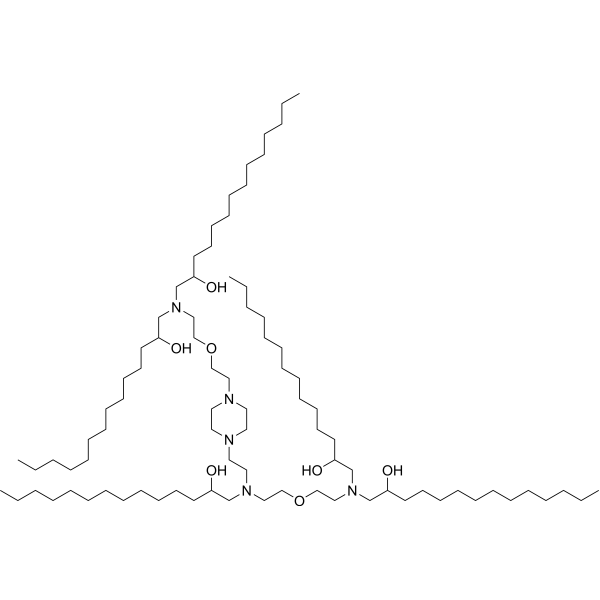
C14-4 is an ionizable lipid utilized for the synthesis of lipid nanoparticles (LNPs). C14-4 enhances mRNA delivery, enabling the effective transport of mRNA to primary human T cells, which in turn induces functional protein expression. C14-4 demonstrates high transfection efficiency while maintaining low cytotoxicity.
For research use only. We do not sell to patients.
- Purity : 98.26%
- CAS No.: 2639634-80-1
- Formula: C84H173N5O7
- Molecular Weight:1365.30
-
Storage:Pure form -20°C, 3 years ; In solvent -80°C, 6 months , -20°C, 1 month

To place orders, for customer services and technical support, please contact: MedChemExpress USA
Tel: 609-228-6898 E-mail: [email protected] [email protected]


-
 Biological Activity
-
Chemical Information
-
Solvent & Solubility
- Protocols
- Purity & Documentation
- References
-
 Help & FAQs


-
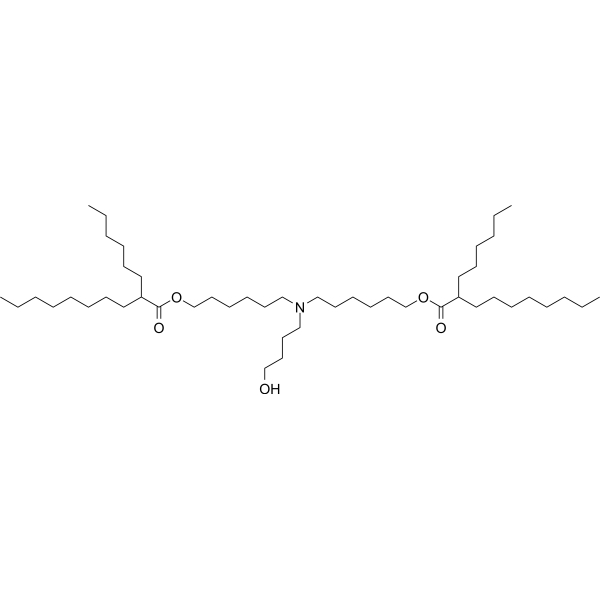
HY-138170
ALC-0315Lipid Nanoparticle Component -
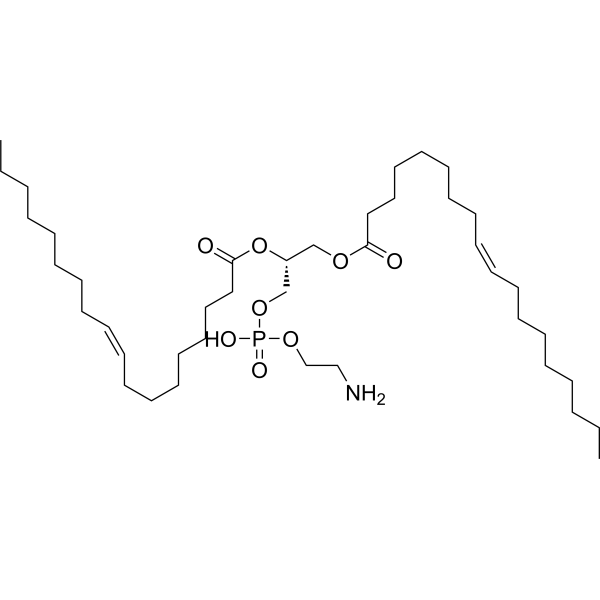
HY-112005
DOPEFerroptosis Inhibitor -
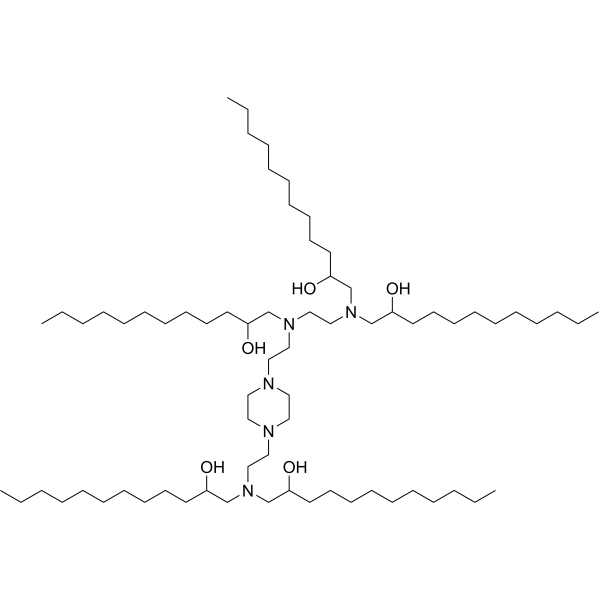
HY-145405
C12-200Cationic Lipidoid -
HY-112251
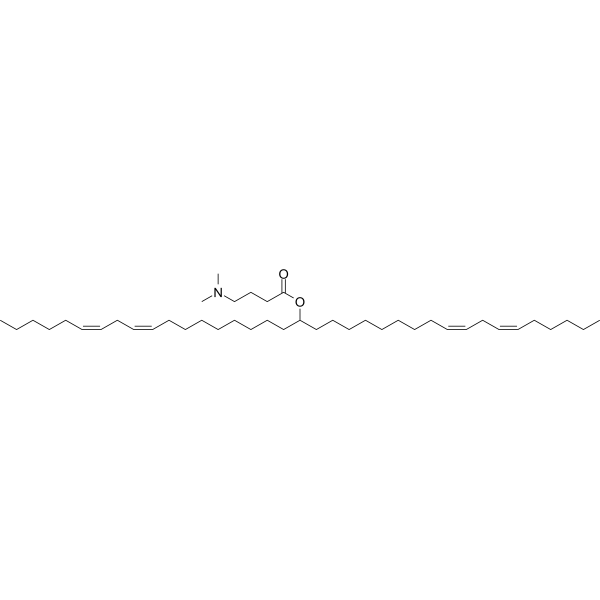
D-Lin-MC3-DMAsiRNA Delivery Vehicle -

HY-134541
SM-102Ionizable Amino Lipid -
HY-151507
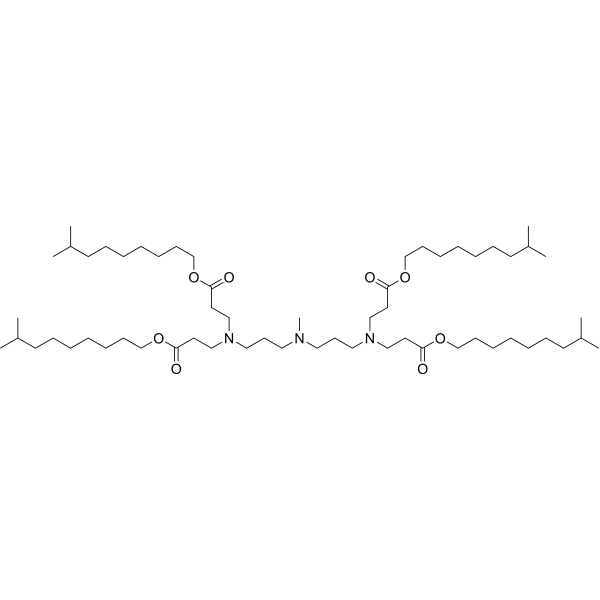
306Oi10Ionizable Lipidoid -
HY-N0171A
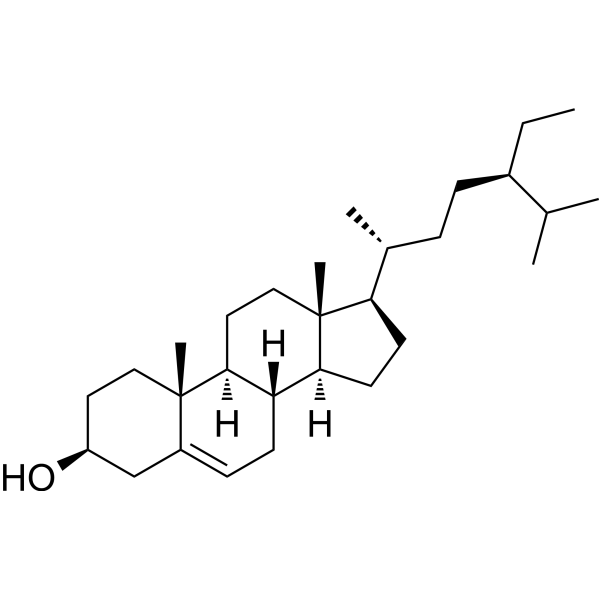
Beta-Sitosterol (purity>98%)Dietary Plant Sterols -
HY-134781
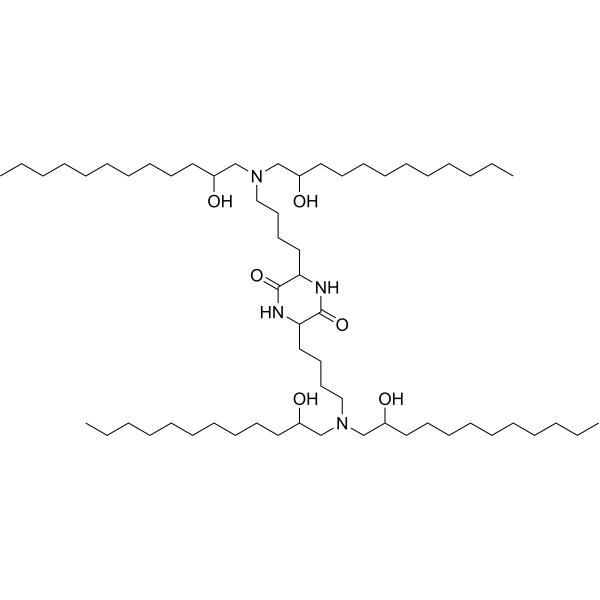
CKK-E12Ionizable Lipid -
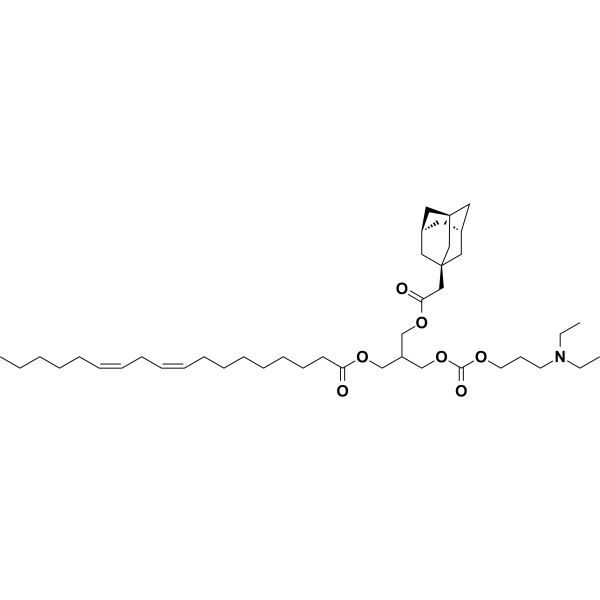
HY-154974
LNP Lipid-8Ionizable Lipid -
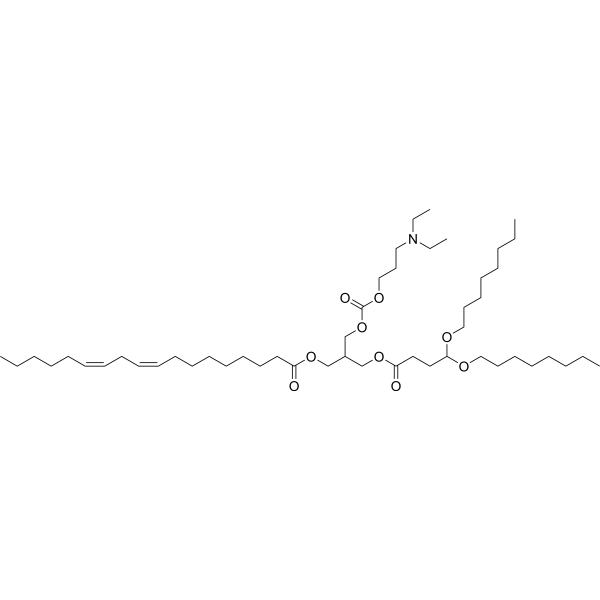
HY-46760
LP01Cationic Lipid -
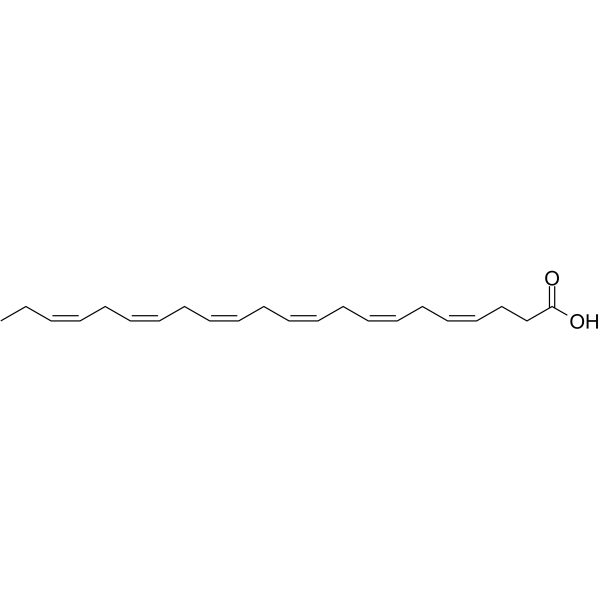
HY-B2167
Docosahexaenoic acidomega-3 Fatty Acid -
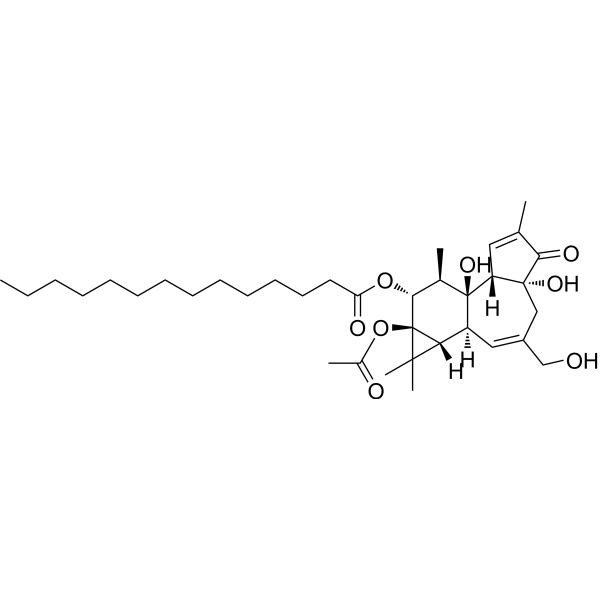
HY-18739
Phorbol 12-myristate 13-acetatePKC Activator


Biological Activity
Description
In Vitro
C14-4 (30 ng C14-4 LNPs/60000 cells, 48 h) promotes the expression of luciferase in primary human T cell Jurkat cells by enhancing mRNA delivery with low cytotoxicity[1].
MedChemExpress (MCE) has not independently confirmed the accuracy of these methods. They are for reference only. Further protocols information, click here.
-
Cell Line:Jurkat cells
-
Concentration:30 ng C14-4 LNPs/60000 cells
-
Incubation Time:48 h
-
Result:Promoted the expression of luciferase and had minimal cytotoxicity.


Chemical Information
-
CAS No. 2639634-80-1
-
Appearance Liquid (Density: 0.946±0.06 g/cm3)
-
Molecular Weight 1365.30
-
Formula C84H173N5O7
-
Color Colorless to light yellow
-
SMILES
OC(CCCCCCCCCCCC)CN(CCN1CCN(CC1)CCOCCN(CC(CCCCCCCCCCCC)O)CC(CCCCCCCCCCCC)O)CCOCCN(CC(CCCCCCCCCCCC)O)CC(CCCCCCCCCCCC)O
-
Synonyms
C14-494
-
Shipping
Room temperature in continental US; may vary elsewhere.
-
Storage
Pure form -20°C 3 years In solvent -80°C 6 months -20°C 1 month


Solvent & Solubility
In Vitro:
Ethanol : 100 mg/mL (73.24 mM; Need ultrasonic)
DMSO : 100 mg/mL (73.24 mM; Need ultrasonic; Hygroscopic DMSO has a significant impact on the solubility of product, please use newly opened DMSO)
Please refer to the solubility information to select the appropriate solvent. Once prepared, please aliquot and store the solution to prevent product inactivation from repeated freeze-thaw cycles.
Storage method and period of stock solution: -80°C, 6 months; -20°C, 1 month. When stored at -80°C, please use it within 6 months. When stored at -20°C, please use it within 1 month.
Please refer to the solubility information to select the appropriate solvent. Once prepared, please aliquot and store the solution to prevent product inactivation from repeated freeze-thaw cycles.
Storage method and period of stock solution: -80°C, 6 months; -20°C, 1 month. When stored at -80°C, please use it within 6 months. When stored at -20°C, please use it within 1 month.
Concentration (start) × Volume (start) = Concentration (final) × Volume (final)
In Vivo:
Select the appropriate dissolution method based on your experimental animal and administration route.
- For the following dissolution methods, please ensure to first prepare a clear stock solution using an In Vitro approach and then sequentially add co-solvents:
- To ensure reliable experimental results, the clarified stock solution can be appropriately stored based on storage conditions. As for the working solution for In Vivo experiments, it is recommended to prepare freshly and use it on the same day.
- The percentages shown for the solvents indicate their volumetric ratio in the final prepared solution. If precipitation or phase separation occurs during preparation, heat and/or sonication can be used to aid dissolution.
In Vivo Dissolution Calculator
Please enter the basic information of animal experiments:
-
-
-
-
Recommended: Prepare an additional quantity of animals to account for potential losses during experiments.
Please enter your animal formula composition:
-
%DMSO +
Recommended: Keep the proportion of DMSO in working solution below 2% if your animal is weak.
-
%+
-
+%Tween-80 + +
-
%Saline +
The co-solvents required include: DMSO, . All of co-solvents are available by MedChemExpress (MCE). , Tween 80. All of co-solvents are available by MedChemExpress (MCE).
Working solution concentration: 0.22 mg/mL
Method for preparing stock solution: mg drug dissolved in μL DMSO. Stock solution concentration: mg/mL.
1. Take μL DMSO stock solution;
2. Add μL .
μL , mix evenly;
3. Then add μL Tween 80, mix evenly;
4. Then add μL
Please ensure that the stock solution in the first step is dissolved to a clear state, and add co-solvents in sequence. You can use ultrasonic heating (ultrasonic cleaner, recommended frequency 20-40 kHz), vortexing, etc. to assist dissolution.

Protocols
-
RNA extraction experimental
By lysing cells, releasing RNA, and removing impurities such as proteins and DNA, high-purity RNA products are finally obtained. The commonly used traditional method is the guanidine isothiocyanate/phenol/chloroform method (Trizol), which is suitable for a variety of animal materials including animal tissues, microorganisms, cultured cells, etc., and most plant materials.
-
Western Blot
Western blotting (WB) is a commonly used experimental method in molecular biology, biochemistry, and immunogenetics for identifying and quantifying target proteins. It combines gel electrophoresis with immunoassay, enabling researchers to analyze protein expression, post-translational modifications, and molecular weight.
-
Cell Cytotoxicity Assay
Cytotoxicity assays are usually based on the assessment of cell membrane damage, which can also be indirectly detected by measuring cell viability. Detection methods include MTT assay, CKK-8 assay, LDH assay and ATP assay, etc.
-
Mammalian live/dead viability and cytotoxicity staining
Live/dead viability and cytotoxicity staining assays are based on the simultaneous detection of intracellular esterase activity in metabolically active (viable) cells and membrane integrity loss in non-viable cells. In commonly used dual-staining approaches, membrane-permeant fluorogenic substrates are converted by intracellular esterases into fluorescent products in live cells, while impermeant DNA-binding dyes selectively enter cells with compromised plasma membranes and label nucleic acids in dead or dying cells, enabling discrimination between viable and non-viable populations by fluorescence microscopy or flow cytometry.
-
Protocol For Protein Expression And Purification
Recombinant protein expression in Escherichia coli followed by purification of a His-tagged soluble protein by immobilized metal affinity chromatography (IMAC), with optional MBP fusion and TEV tag removal when the construct includes these elements. The biological readout is production of the encoded target protein, detected as an inducible band at the expected molecular mass by SDS-PAGE and quantified by total protein assay or chromatographic absorbance; the purification readout is enrichment of the target protein in elution fractions after selective binding of polyhistidine residues to immobilized Ni2+/metal-chelate resin and elution by imidazole-containing buffer. Expression is driven by an inducible bacterial expression system, commonly T7/lac-based, in which IPTG or lactose/auto-induction activates transcription and translation of the cloned gene; lower induction temperature, lower inducer concentration, induction timing, and solubility-enhancing fusion tags can influence the frac
-
Cell Viability Determination by MTT Colorimetric Assay
The following protocol uses the MTT colorimetric assay as a classic literature-established method for assessing cell viability/metabolic activity in cultured mammalian cells. MTT[3-(4,5-dimethylthiazol-2-yl)-2,5-diphenyltetrazolium bromide] is reduced by metabolically active cells to a colored formazan product; the amount of formazan is quantified spectrophotometrically and provides an indirect measure of metabolically active viable cells. Importantly, MTT reduction reflects cellular oxidoreductase/metabolic activity rather than an absolute direct count of living cells, so changes in cellular metabolism can alter the signal independently of cell number.


Purity & Documentation
-
Data Sheet (275 KB)
-
SDS (254 KB)
- English - EN (254 KB)
- Français - FR (254 KB)
- Deutsch - DE (254 KB)
- Norwegian - NO (254 KB)
- Español - ES (254 KB)
- Swedish - SV (254 KB)
- Italian - IT (254 KB)
- Korean - KR (254 KB)
- Portuguese - PT (254 KB)
-
Handling Instructions (2659 KB)
References


Complete Stock Solution Preparation Table
Please refer to the solubility information to select the appropriate solvent. Once prepared, please aliquot and store the solution to prevent product inactivation from repeated freeze-thaw cycles.
Storage method and period of stock solution: -80°C, 6 months; -20°C, 1 month. When stored at -80°C, please use it within 6 months. When stored at -20°C, please use it within 1 month.
| Optional Solvent | Concentration Solvent Mass | 1 mg | 5 mg | 10 mg | 25 mg |
|---|---|---|---|---|---|
| Ethanol / DMSO | 1 mM | 0.7324 mL | 3.6622 mL | 7.3244 mL | 18.3110 mL |
| 5 mM | 0.1465 mL | 0.7324 mL | 1.4649 mL | 3.6622 mL | |
| 10 mM | 0.0732 mL | 0.3662 mL | 0.7324 mL | 1.8311 mL | |
| 15 mM | 0.0488 mL | 0.2441 mL | 0.4883 mL | 1.2207 mL | |
| 20 mM | 0.0366 mL | 0.1831 mL | 0.3662 mL | 0.9155 mL | |
| 25 mM | 0.0293 mL | 0.1465 mL | 0.2930 mL | 0.7324 mL | |
| 30 mM | 0.0244 mL | 0.1221 mL | 0.2441 mL | 0.6104 mL | |
| 40 mM | 0.0183 mL | 0.0916 mL | 0.1831 mL | 0.4578 mL | |
| 50 mM | 0.0146 mL | 0.0732 mL | 0.1465 mL | 0.3662 mL | |
| 60 mM | 0.0122 mL | 0.0610 mL | 0.1221 mL | 0.3052 mL |


C14-4 Related Classifications
HY-148842 Related Classifications
 Powered by Bioz