



C3a receptor agonist 1
Based on 1 publication(s) in Google Scholar
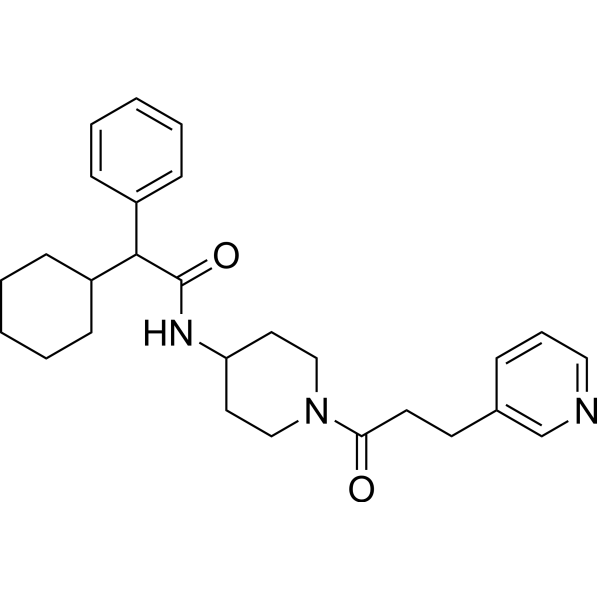
C3a receptor agonist 1 is a potent C3a receptor agonist. C3a receptor agonist 1 has potential for the study of acute inflammation.
For research use only. We do not sell to patients.
- Purity : 98.16%
- CAS No.: 944997-60-8
- Formula: C27H35N3O2
- Molecular Weight:433.59
-
Storage:
4°C, protect from light
* In solvent : -80°C, 6 months; -20°C, 1 month (protect from light)

To place orders, for customer services and technical support, please contact: MedChemExpress USA
Tel: 609-228-6898 E-mail: [email protected] [email protected]


-
 Biological Activity
-
Chemical Information
-
Solvent & Solubility
- Protocols
- Purity & Documentation
- References
-
 Help & FAQs


-
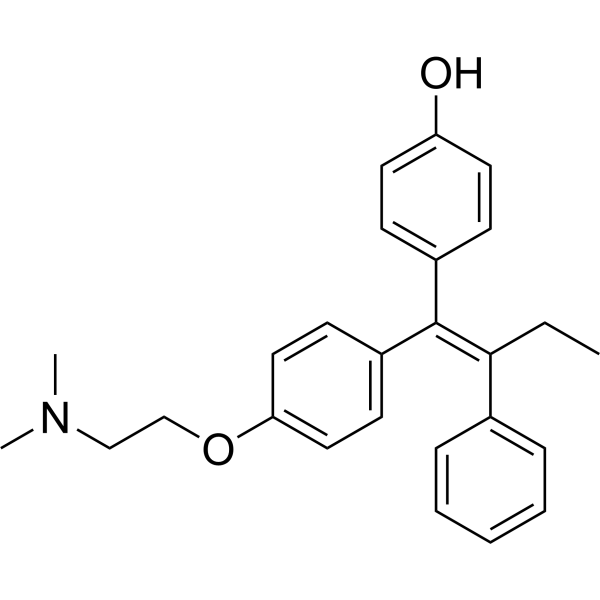
HY-16950
4-HydroxytamoxifenEstrogen Receptor Modulator -

HY-P7862
Complement C3a Protein, Human -
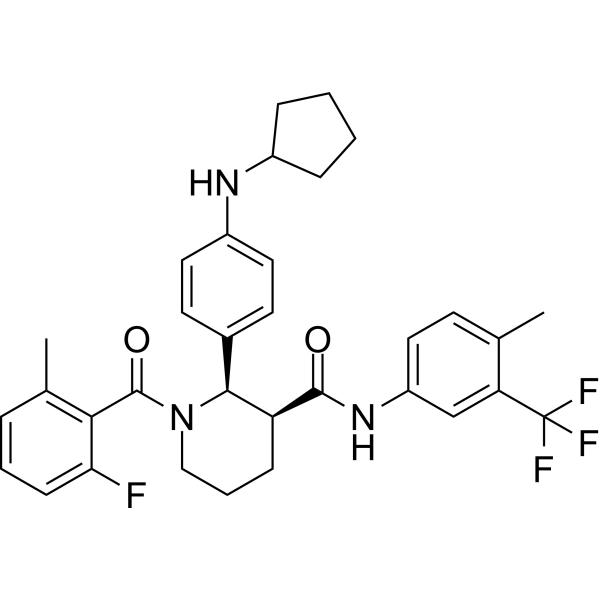
HY-17627
AvacopanC5aR Inhibitor -
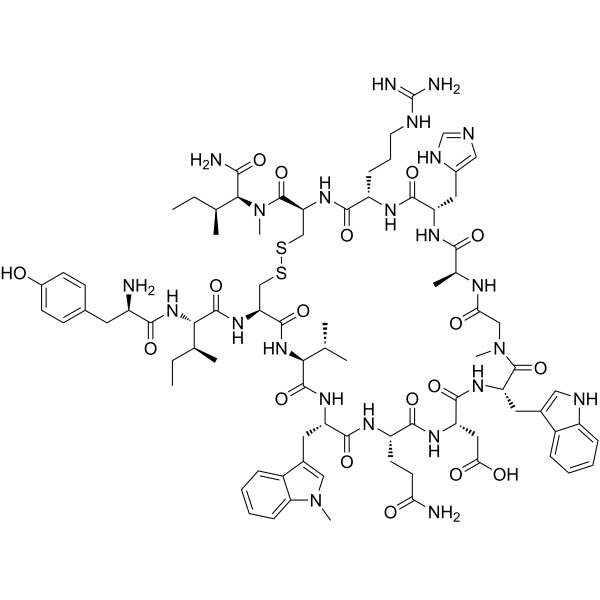
HY-P1717
AMY-101C3 Inhibitor -
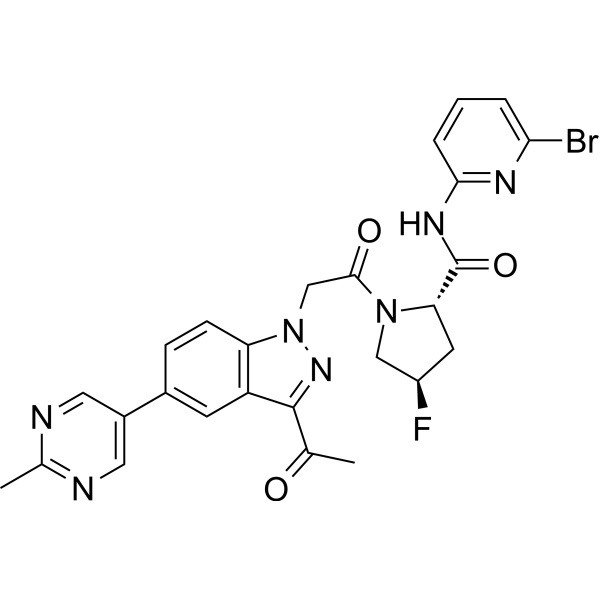
HY-117930
DanicopanFactor D Inhibitor -
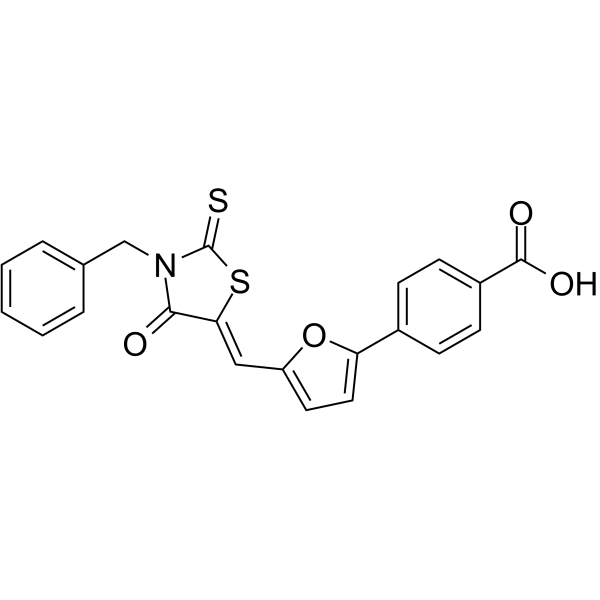
HY-15701
Leukadherin-1CD11b/CD18 Agonist -
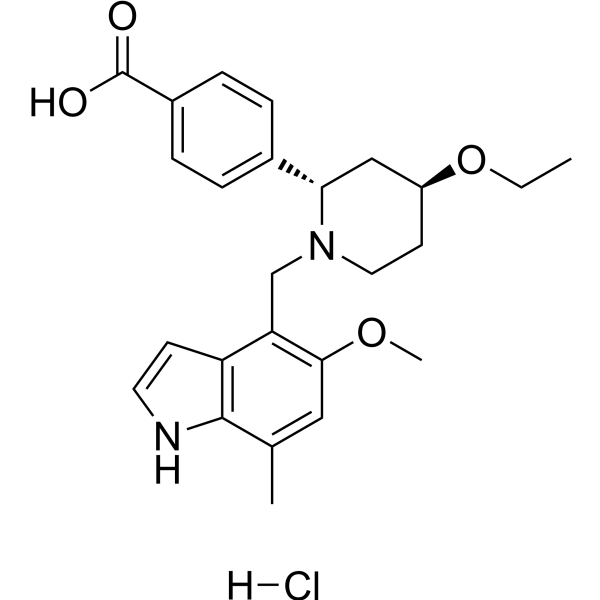
HY-127105A
Iptacopan hydrochlorideFactor B Inhibitor -
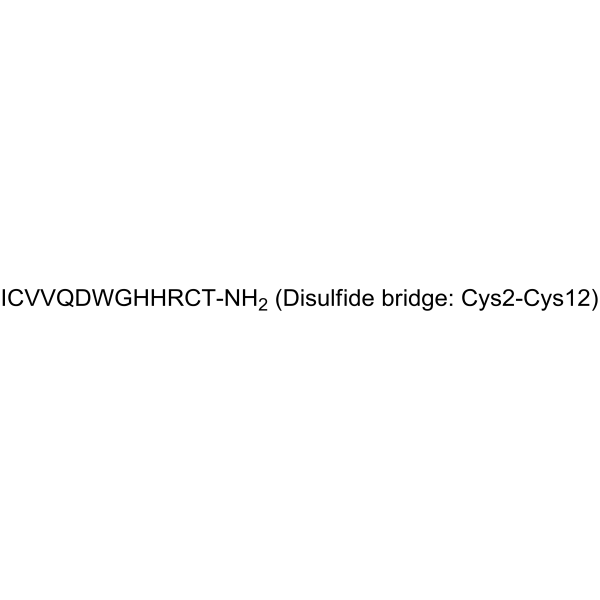
HY-P1036
CompstatinPrimates’ C3 Inhibitor -
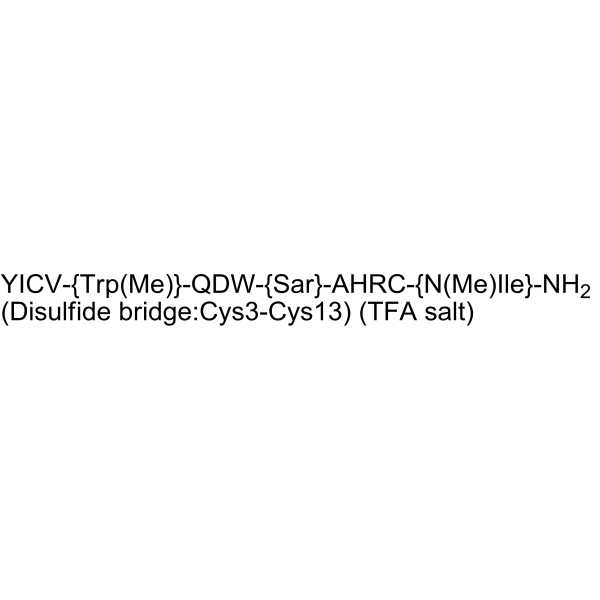
HY-P1717A
AMY-101 TFAC3 Inhibitor -
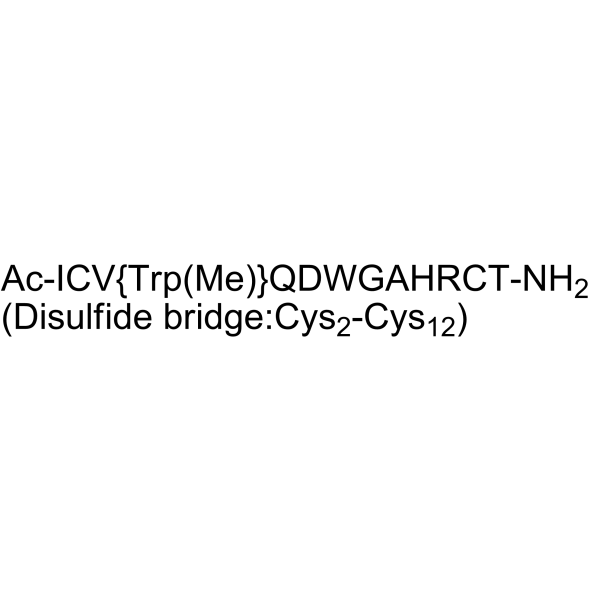
HY-P3204
POT-4C3 Receptor Inhibitor -
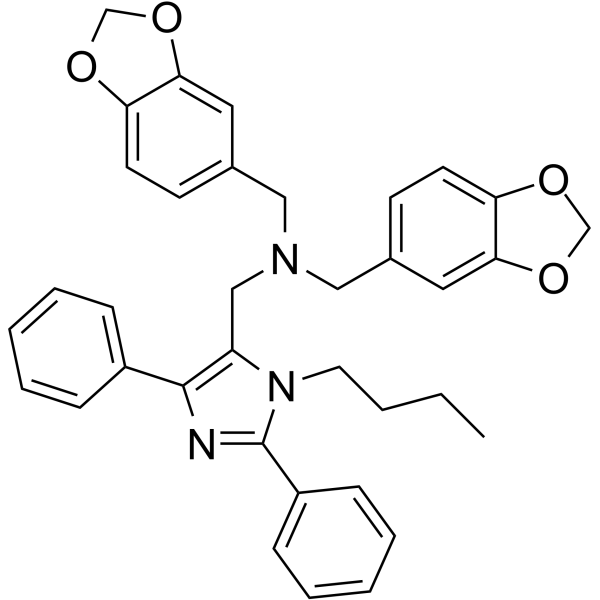
HY-110060
NDT 9513727Human C5aR Inverse agonist -
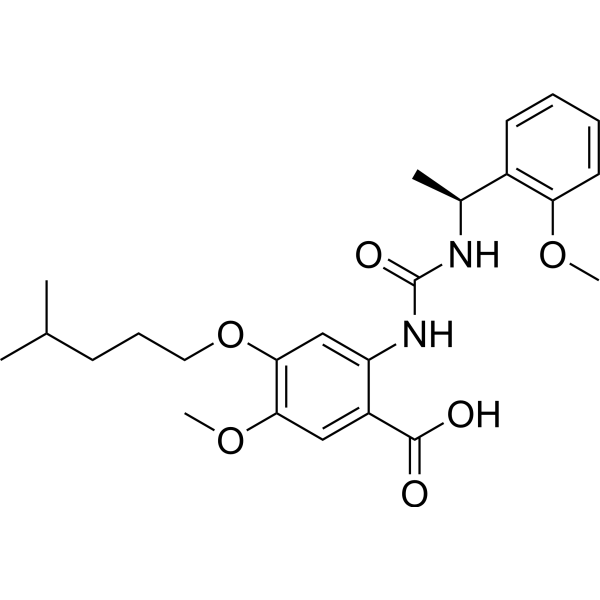
HY-128342
Complement C5-IN-1Complement C5 Inhibitor
Publications Citing Use of MedChemExpress (MCE) C3a receptor agonist 1
More

Biological Activity
Description
In Vitro
C3a receptor agonist 1 is a potent C3a receptor agonist[1].
MedChemExpress (MCE) has not independently confirmed the accuracy of these methods. They are for reference only. Further protocols information, click here.


Chemical Information
-
CAS No. 944997-60-8
-
Appearance Solid
-
Molecular Weight 433.59
-
Formula C27H35N3O2
-
Color White to off-white
-
SMILES
O=C(NC1CCN(C(CCC2=CN=CC=C2)=O)CC1)C(C3CCCCC3)C4=CC=CC=C4
-
Shipping
Room temperature in continental US; may vary elsewhere.
-
Storage
4°C, protect from light
* In solvent : -80°C, 6 months; -20°C, 1 month (protect from light)


Publications (1)
-
Journal Impact Factor
-
Most Recent


Solvent & Solubility
In Vitro:
DMSO : 250 mg/mL (576.58 mM; Need ultrasonic; Hygroscopic DMSO has a significant impact on the solubility of product, please use newly opened DMSO)
Please refer to the solubility information to select the appropriate solvent. Once prepared, please aliquot and store the solution to prevent product inactivation from repeated freeze-thaw cycles.
Storage method and period of stock solution: -80°C, 6 months; -20°C, 1 month (protect from light). When stored at -80°C, please use it within 6 months. When stored at -20°C, please use it within 1 month.
Please refer to the solubility information to select the appropriate solvent. Once prepared, please aliquot and store the solution to prevent product inactivation from repeated freeze-thaw cycles.
Storage method and period of stock solution: -80°C, 6 months; -20°C, 1 month (protect from light). When stored at -80°C, please use it within 6 months. When stored at -20°C, please use it within 1 month.
Concentration (start) × Volume (start) = Concentration (final) × Volume (final)

Protocols
-
Carrageenan-Induced Paw Edema
Carrageenan-induced paw edema is an acute inflammation model in which intraplantar injection of carrageenan induces localized inflammatory swelling characterized by vascular permeability, leukocyte infiltration, and production of inflammatory mediators such as prostaglandins and cytokines, making it widely used to evaluate anti-inflammatory agents in vivo. The resulting paw volume or thickness increase is quantified over time as a direct readout of inflammatory intensity and drug efficacy, typically reflecting cyclooxygenase-mediated prostaglandin-driven edema formation and immune cell recruitment in peripheral tissue[20].
-
Zymosan-Induced Peritonitis
Zymosan-induced peritonitis is a sterile acute-inflammation model produced by intraperitoneal injection of zymosan, a yeast cell-wall particle preparation, followed by quantification of leukocyte recruitment and soluble inflammatory mediators in peritoneal lavage fluid. Low-dose zymosan peritonitis is commonly used as a self-resolving acute inflammation model in which neutrophil recruitment occurs early and monocyte/macrophage accumulation follows later. The assay readouts include total peritoneal leukocyte number, differential neutrophil and monocyte/macrophage counts, peritoneal cytokines and chemokines, plasma or peritoneal exudation, and optional lipidomic or metabolomic changes during inflammation and resolution. Early neutrophil recruitment after zymosan depends strongly on complement and mast-cell C5a receptor signaling, whereas later monocyte recruitment is linked to MCP-1/CCL2 production.
-
Research Protocol for Inflammation-related Diseases
The NLRP3 inflammasome is a cytosolic innate immune signaling platform that integrates priming signals and danger-signal activation to promote caspase-1 activation, maturation of IL-1β and IL-18, and gasdermin D-mediated pyroptotic cell death. The core experimental logic is to determine whether inflammatory disease phenotypes are driven by increased NLRP3 expression, ASC-containing inflammasome assembly, caspase-1 cleavage, GSDMD cleavage, and extracellular release of IL-1β/IL-18 rather than by nonspecific cell injury alone. The pathway is strongly linked to inflammation-related disease phenotypes because monosodium urate crystals activate NALP3/NLRP3 inflammasome signaling in gout-like crystal inflammation, cholesterol crystals activate NLRP3 inflammasomes in atherogenesis models, and DSS-induced intestinal inflammation has been reported to involve NLRP3 inflammasome activity. However, experimental colitis studies also show context-dependent protective effects of NLRP3 inflammasome co


Purity & Documentation
-
Data Sheet (270 KB)
-
SDS (393 KB)
- English - EN (393 KB)
- Français - FR (393 KB)
- Deutsch - DE (393 KB)
- Norwegian - NO (393 KB)
- Español - ES (393 KB)
- Swedish - SV (393 KB)
- Italian - IT (393 KB)
- Korean - KR (393 KB)
- Portuguese - PT (393 KB)
-
Handling Instructions (2659 KB)
References


Complete Stock Solution Preparation Table
Please refer to the solubility information to select the appropriate solvent. Once prepared, please aliquot and store the solution to prevent product inactivation from repeated freeze-thaw cycles.
Storage method and period of stock solution: -80°C, 6 months; -20°C, 1 month (protect from light). When stored at -80°C, please use it within 6 months. When stored at -20°C, please use it within 1 month.
| Optional Solvent | Concentration Solvent Mass | 1 mg | 5 mg | 10 mg | 25 mg |
|---|---|---|---|---|---|
| DMSO | 1 mM | 2.3063 mL | 11.5316 mL | 23.0633 mL | 57.6582 mL |
| 5 mM | 0.4613 mL | 2.3063 mL | 4.6127 mL | 11.5316 mL | |
| 10 mM | 0.2306 mL | 1.1532 mL | 2.3063 mL | 5.7658 mL | |
| 15 mM | 0.1538 mL | 0.7688 mL | 1.5376 mL | 3.8439 mL | |
| 20 mM | 0.1153 mL | 0.5766 mL | 1.1532 mL | 2.8829 mL | |
| 25 mM | 0.0923 mL | 0.4613 mL | 0.9225 mL | 2.3063 mL | |
| 30 mM | 0.0769 mL | 0.3844 mL | 0.7688 mL | 1.9219 mL | |
| 40 mM | 0.0577 mL | 0.2883 mL | 0.5766 mL | 1.4415 mL | |
| 50 mM | 0.0461 mL | 0.2306 mL | 0.4613 mL | 1.1532 mL | |
| 60 mM | 0.0384 mL | 0.1922 mL | 0.3844 mL | 0.9610 mL | |
| 80 mM | 0.0288 mL | 0.1441 mL | 0.2883 mL | 0.7207 mL | |
| 100 mM | 0.0231 mL | 0.1153 mL | 0.2306 mL | 0.5766 mL |


C3a receptor agonist 1 Related Classifications
HY-128132 Related Classifications
 Powered by Bioz