



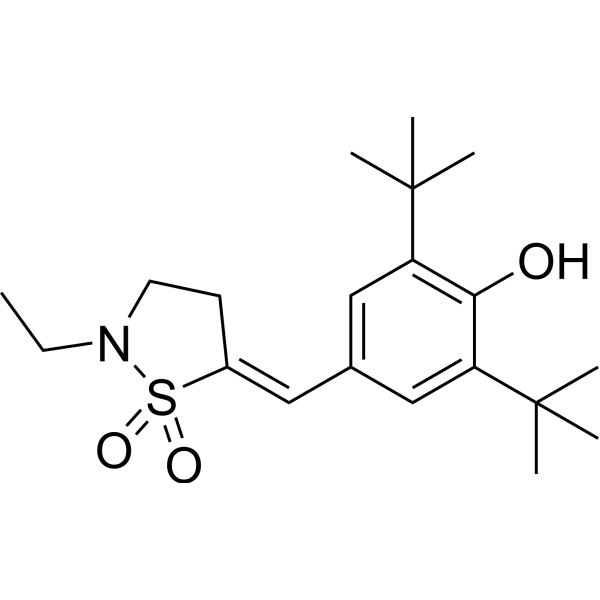
S-2474
S-2474 is an inhibitor of COX-2 and 5-lipoxygenase (5-LO), with IC50s of 11 nM and 27 μM for COX-2 and COX-1 in human intact cells, and used as a nonsteroidal anti-inflammatory agent.
For research use only. We do not sell to patients.
- CAS No.: 158089-95-3
- Formula: C20H31NO3S
- Molecular Weight:365.53
-
Storage:
Please store the product under the recommended conditions in the Certificate of Analysis.

To place orders, for customer services and technical support, please contact: MedChemExpress USA
Tel: 609-228-6898 E-mail: [email protected] [email protected]


-
 Biological Activity
-
Chemical Information
- Protocols
- Purity & Documentation
- References
-
 Help & FAQs


-
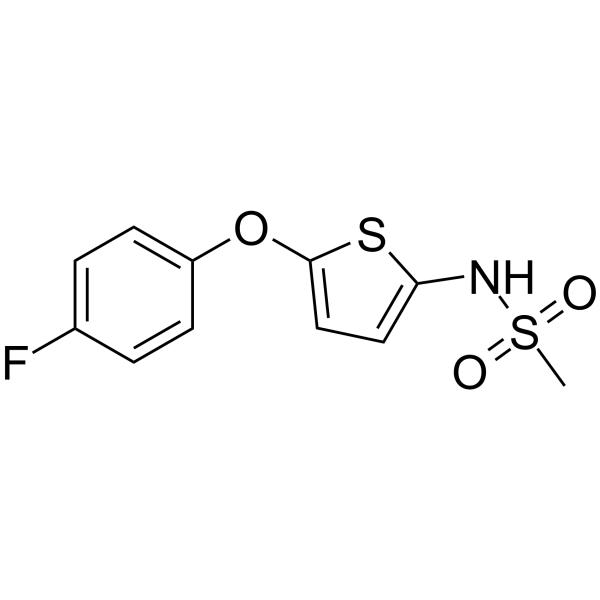
HY-U00022
RWJ 63556 -
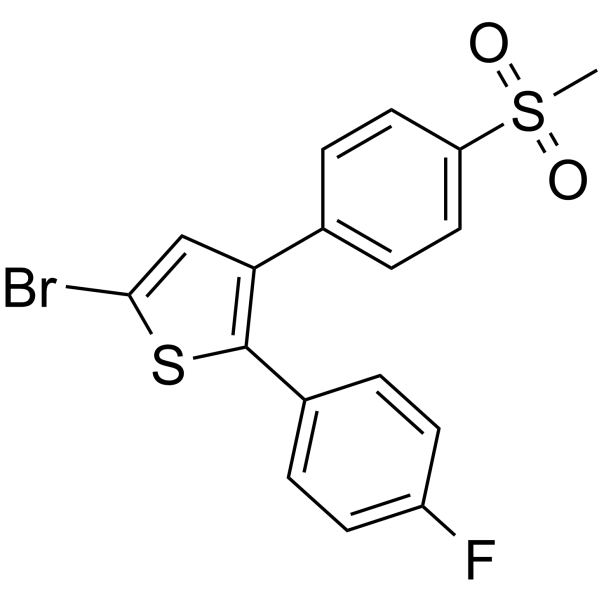
HY-103387
DuP-697COX-2 Inhibitor -
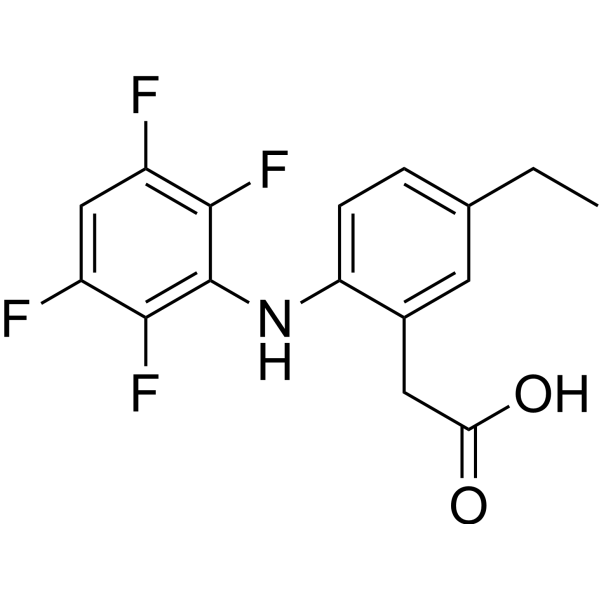
HY-118078
RobenacoxibCOX-2 Inhibitor -
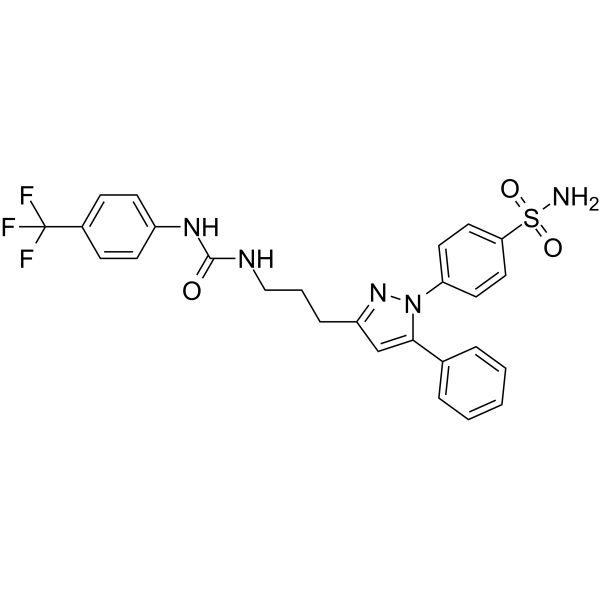
HY-122591
PTUPBsEH/COX-1 Inhibitor -
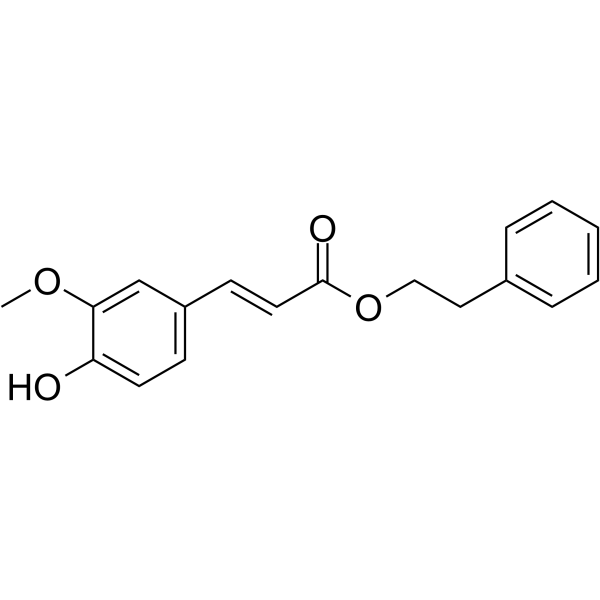
HY-W009248
Phenethyl ferulateCOX/5-LOX Inhibitor -
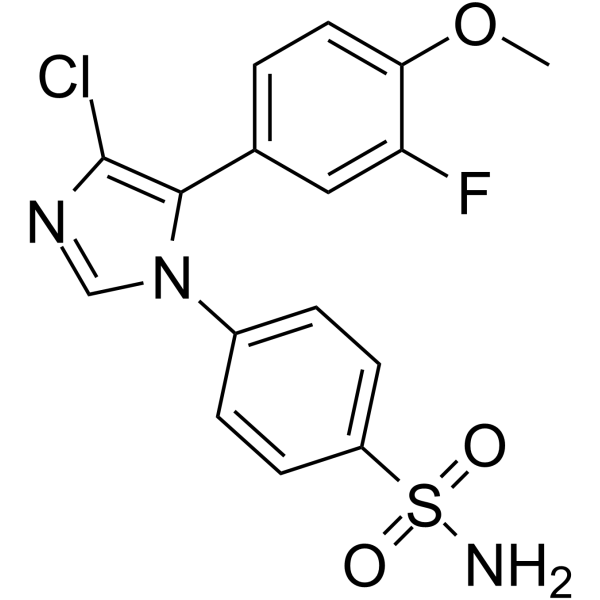
HY-100516
CimicoxibCOX-2 Inhibitor -
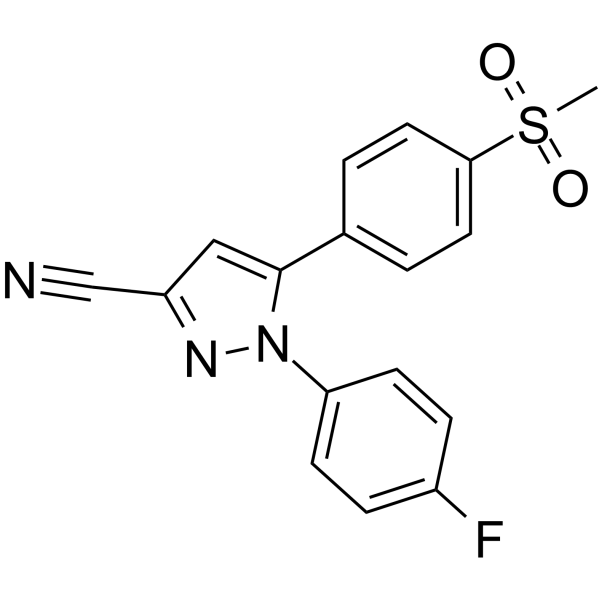
HY-101655
COX-2-IN-2COX2 Inhibitor -
HY-115866
COX-2-IN-6COX Inhibitor -
HY-109158
Rebamipide mofetilRebamipide Prodrug -

HY-118078R
Robenacoxib (Standard)COX-2 Inhibitor -

HY-100516R
Cimicoxib (Standard)COX-2 Inhibitor -
HY-19217
Thioflosulide


Biological Activity
Description
IC50 & Target
[1]|
COX-2 11 nM (IC50) |
COX-1 27 μM (IC50) |
5-LO |
Cellular Effect
|
Cell Line

|
Type | Value | Description | References |
|---|---|---|---|---|
| THP-1 | IC50 |
10 μM
Compound: 10b
|
In vitro effect on production of lipopolysaccharide (LPS) -induced IL1-beta in human THP-1 cells
In vitro effect on production of lipopolysaccharide (LPS) -induced IL1-beta in human THP-1 cells
|
[PMID: 10821716] |
In Vitro
S-2474 is an inhibitor of COX-2 and 5-lipoxygenase, with IC50s of 11 nM and 27 μM for COX-2 and COX-1[1]. S-2474 prevents neurons from Aβ-induced cell death significantly in a concentration-dependent manner (IC50 =26±12 nM). S-2474 (10 μM) completely inhibits Aβ(25-35)-induced neuronal cell death. S-2474 also shows neuroprotective effects in the Aβ(1-40)-induced neuronal cell death. S-2474 inhibits the PGD2 generation in a concentration dependent manner (IC50=69.8±21.9 nM). S-2474 (10 μM) lowers the elevated level of PGD2 significantly and reduces radicals from Aβ(25-35)-treated neurons[2]. S-2474 significantly prevents neurons from undergoing sPLA2-IIA-induced cell death. S-2474 completely ameliorates sPLA2-IIA-induced apoptotic features such as the condensation of chromatin and the fragmentation of DNA. Moreover, S-2474 significantly inhibits the sPLA2-IIA-induced generation of PGD2. S-2474 inhibits sPLA2-IIA-induced neuronal cell death in a concentration-dependent manner (IC50 = 94 nM)[3].
MedChemExpress (MCE) has not independently confirmed the accuracy of these methods. They are for reference only.


Chemical Information
-
CAS No. 158089-95-3
-
Molecular Weight 365.53
-
Formula C20H31NO3S
-
SMILES
OC1=C(C(C)(C)C)C=C(/C=C2CCN(CC)S\2(=O)=O)C=C1C(C)(C)C
-
Shipping
Room temperature in continental US; may vary elsewhere.
-
Storage
Please store the product under the recommended conditions in the Certificate of Analysis.


Purity & Documentation
References
[1]. Yagami T, et al. Effects of S-2474, a novel nonsteroidal anti-inflammatory drug, on amyloid beta protein-induced neuronal cell death. Br J Pharmacol. 2001 Oct;134(3):673-81. [Content Brief]
[2]. Yagami T, et al. S-2474, a novel nonsteroidal anti-inflammatory drug, rescues cortical neurons from human group IIA secretory phospholipase A(2)-induced apoptosis. Neuropharmacology. 2005 Aug;49(2):174-84. Epub 2005 Apr 1. [Content Brief]

Calculators
Concentration (start) × Volume (start) = Concentration (final) × Volume (final)


S-2474 Related Classifications
HY-19212 Related Classifications
 Powered by Bioz