



AKBA
Based on 4 publication(s) in Google Scholar
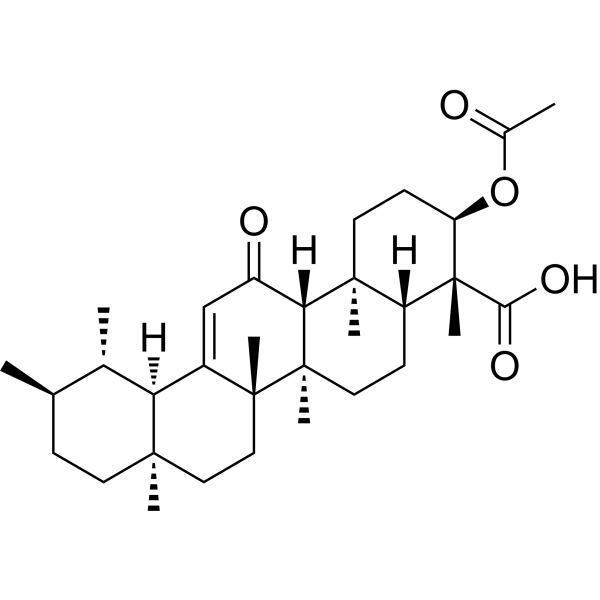
AKBA (Acetyl-11-keto-β-boswellic acid) is an active triterpenoid compound from the extract of Boswellia serrate and a novel Nrf2 activator.
Nos produits utilisent uniquement pour la recherche. Nous ne vendons pas aux patients.
- Pureté : 99.92%
- CAS No.: 67416-61-9
- Formule: C32H48O5
- Masse moléculaire:512.72
-
Stockage:Powder -20°C, 3 years , 4°C, 2 years ; In solvent -80°C, 2 years , -20°C, 1 year

To place orders, for customer services and technical support, please contact: MedChemExpress USA
Tel: 609-228-6898 E-mail: [email protected] [email protected]


-
 Activité biologique
-
Chemical Information
-
Solvant et solubilité
- Pureté et documentation
-
 Help & FAQs


-
HY-N2056
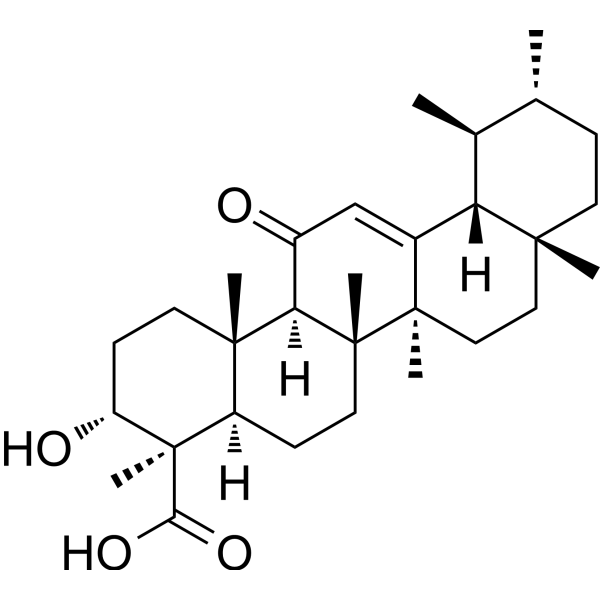
11-Keto-beta-boswellic acidAnti-inflammatory Agent -
HY-12341
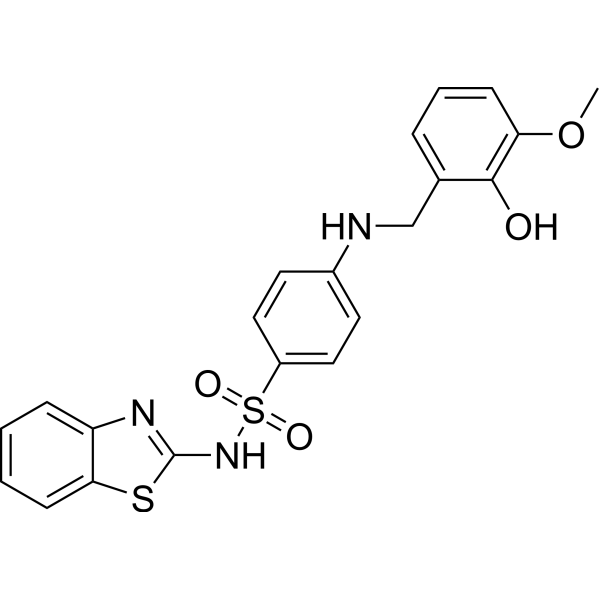
Onvoloxastat12-LOX Inhibitor -
HY-N0140
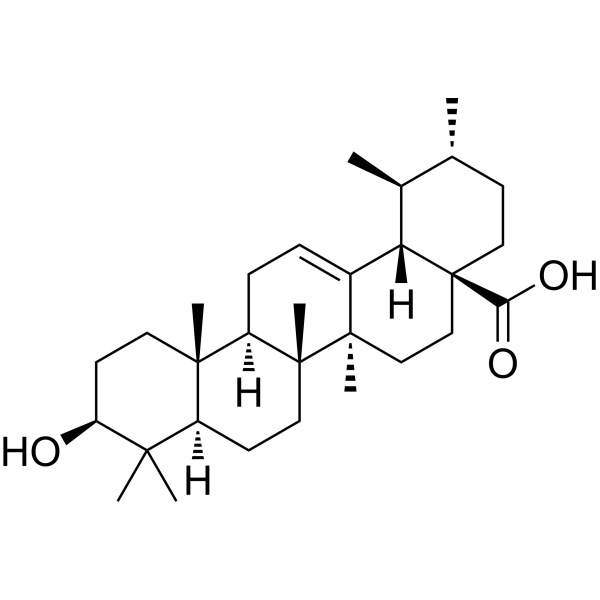
Ursolic acidAutophagy Inducer -
HY-Y0320
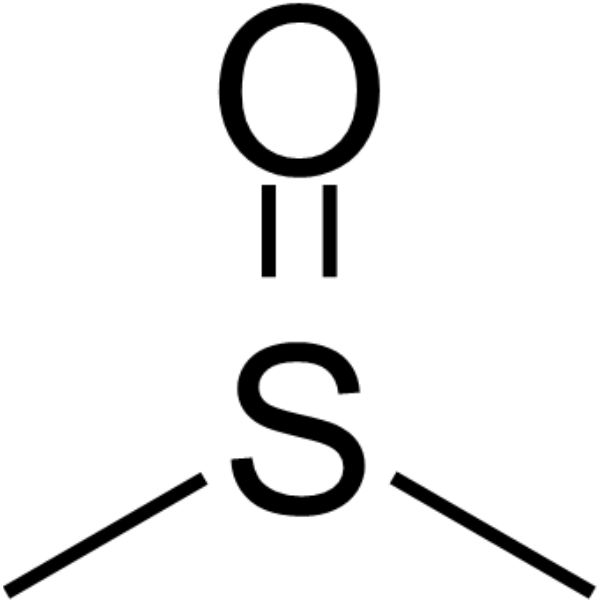
Dimethyl sulfoxide, meets analytical specification of Ch.P.Aprotic Solvent -
HY-12216
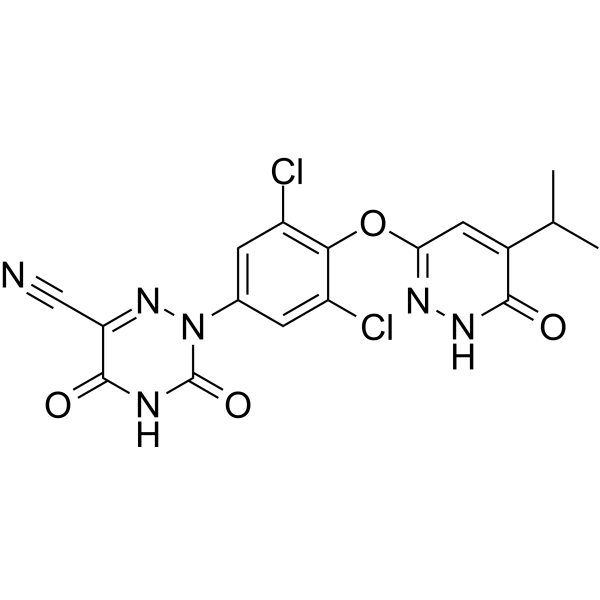
ResmetiromTHR-β Agonist -
HY-N2075
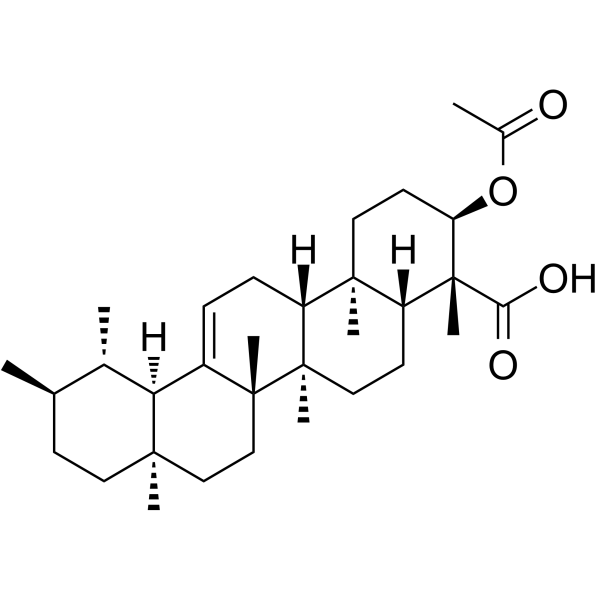
3-Acetyl-beta-boswellic acidNatural Product -
HY-18085
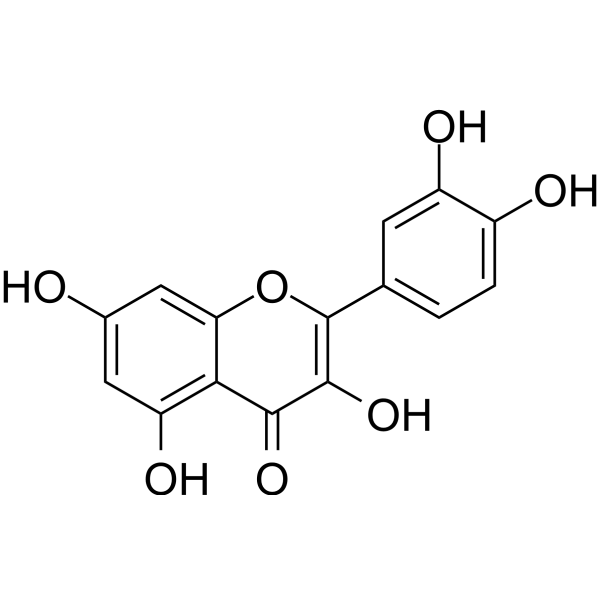
QuercetinFlavonoid Antioxidant -

HY-N0892R
AKBA (Standard)Nrf2 Activator -
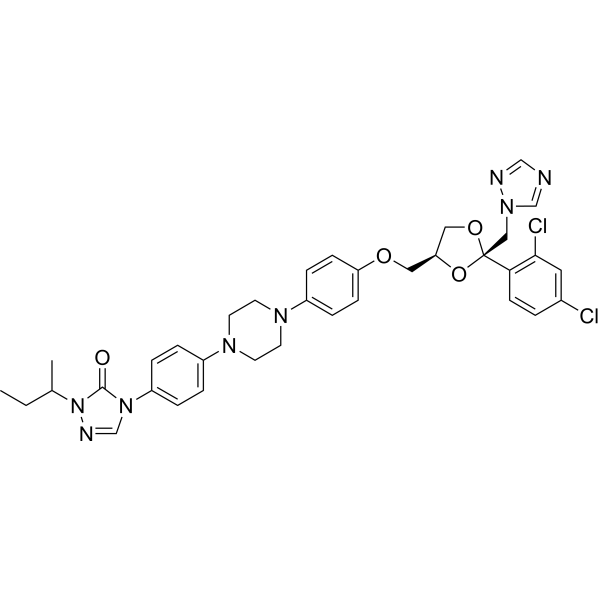
HY-17514
ItraconazoleAntifungal Agent -
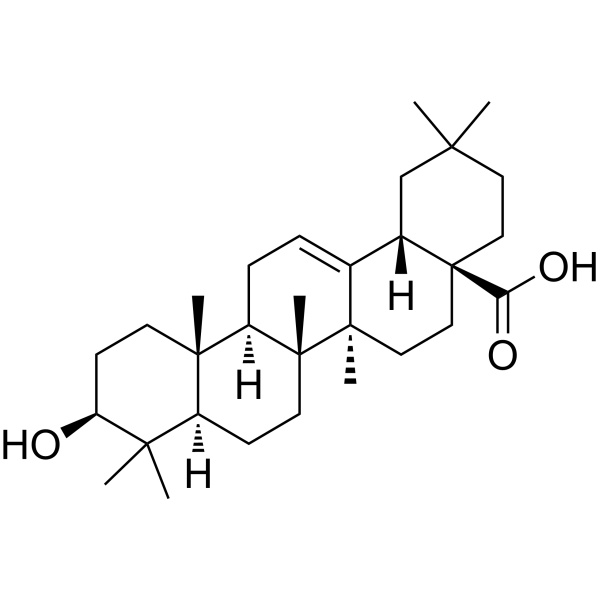
HY-N0156
Oleanolic acidAutophagy Inducer -
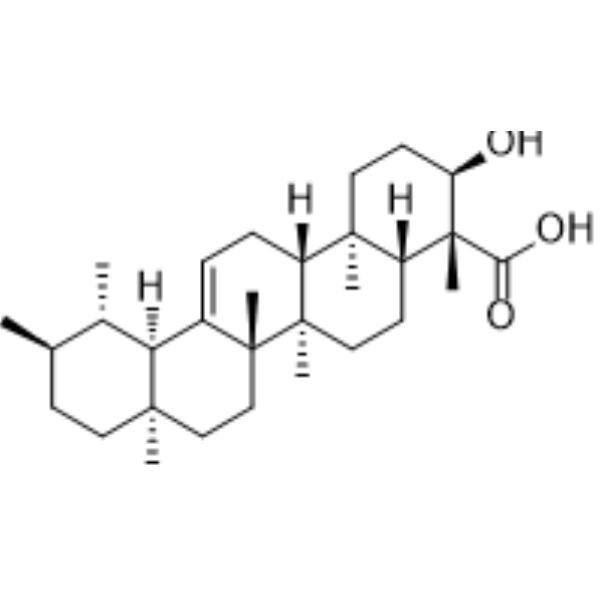
HY-N2513
β-Boswellic acidLipoxygenase Inhibitor -
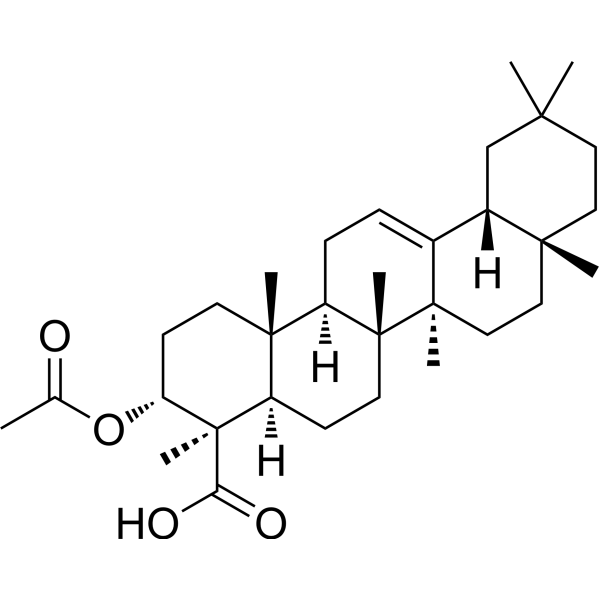
HY-N3037
3-O-Acetyl-α-boswellic acidT cell Function Suppressor
Publications Citing Use of MedChemExpress (MCE) AKBA
More Customer Validation & Images

-
Cell Proliferation/Viability Assay

-
IF

-
WB

-
Cell Proliferation/Viability Assay

-
Cell Imaging/Staining

Voir tous les produits spécifiques à Isoform Endogenous Metabolite
More

Activité biologique
Description
Cellular Effect
|
Cell Line

|
Type | Value | Description | References |
|---|---|---|---|---|
| A253 cell line | IC50 |
16.9 μM
Compound: 4, (beta-AKBA)
|
Cytotoxicity against human A253 cells assessed as cell survival after 96 hrs by SRB assay
Cytotoxicity against human A253 cells assessed as cell survival after 96 hrs by SRB assay
|
[PMID: 25618017] |
| A2780 | IC50 |
14.1 μM
Compound: 4, (beta-AKBA)
|
Cytotoxicity against human A2780 cells assessed as cell survival after 96 hrs by SRB assay
Cytotoxicity against human A2780 cells assessed as cell survival after 96 hrs by SRB assay
|
[PMID: 25618017] |
| A549 | IC50 |
3 μM
Compound: 4
|
Inhibition of microsomal PGES1 isolated from IL-1beta-stimulated human A549 cells preincubated for 15 mins followed by substrate addition measured after 1 min by RP-HPLC analysis
Inhibition of microsomal PGES1 isolated from IL-1beta-stimulated human A549 cells preincubated for 15 mins followed by substrate addition measured after 1 min by RP-HPLC analysis
|
[PMID: 24844534] |
| DLD-1 | IC50 |
20.9 μM
Compound: 4, (beta-AKBA)
|
Cytotoxicity against human DLD1 cells assessed as cell survival after 96 hrs by SRB assay
Cytotoxicity against human DLD1 cells assessed as cell survival after 96 hrs by SRB assay
|
[PMID: 25618017] |
| HCT-8 | IC50 |
17.5 μM
Compound: 4, (beta-AKBA)
|
Cytotoxicity against human HCT8 cells assessed as cell survival after 96 hrs by SRB assay
Cytotoxicity against human HCT8 cells assessed as cell survival after 96 hrs by SRB assay
|
[PMID: 25618017] |
| HeLa | IC50 |
31 μM
Compound: 4, AKBA
|
Cytotoxicity against human HeLa cells after 48 hrs by MTT assay
Cytotoxicity against human HeLa cells after 48 hrs by MTT assay
|
[PMID: 21334793] |
| HL-60 | IC50 |
11 μM
Compound: 4, AKBA
|
Cytotoxicity against human HL60 cells after 48 hrs by MTT assay
Cytotoxicity against human HL60 cells after 48 hrs by MTT assay
|
[PMID: 21334793] |
| HT-29 | IC50 |
19.4 μM
Compound: 4, (beta-AKBA)
|
Cytotoxicity against human HT-29 cells assessed as cell survival after 96 hrs by SRB assay
Cytotoxicity against human HT-29 cells assessed as cell survival after 96 hrs by SRB assay
|
[PMID: 25618017] |
| HUVEC | IC50 |
7.45 μM
Compound: 1, AKBA
|
Antiproliferation activity against HUVEC cells after 48 hrs by CCK-8 assay
Antiproliferation activity against HUVEC cells after 48 hrs by CCK-8 assay
|
[PMID: 25819335] |
| LNCaP | GI50 |
27.43 μM
Compound: AKBA
|
Anti-proliferative activity against human LNCAP cells measured after 96 hrs by MTT assay
Anti-proliferative activity against human LNCAP cells measured after 96 hrs by MTT assay
|
[PMID: 27997878] |
| PC-3 | GI50 |
31.86 μM
Compound: AKBA
|
Anti-proliferative activity against human PC3 cells measured after 96 hrs by MTT assay
Anti-proliferative activity against human PC3 cells measured after 96 hrs by MTT assay
|
[PMID: 27997878] |
| PC-3 | GI50 |
31.9 μM
Compound: 1; AKBA
|
Antiproliferative activity against human PC3 cells after 96 hrs by MTT assay
Antiproliferative activity against human PC3 cells after 96 hrs by MTT assay
|
[PMID: 30153964] |
| RAW264.7 | IC50 |
15.6 μM
Compound: AKBA
|
Antiinflammatory activity in mouse RAW264.7 cells assessed as inhibition of LPS-induced NO production after 24 hrs
Antiinflammatory activity in mouse RAW264.7 cells assessed as inhibition of LPS-induced NO production after 24 hrs
|
[PMID: 23391590] |
| Sf21 | IC50 |
>40 μM
Compound: 29
|
Inhibition of human recombinant COX2 expressed in baculovirus infected sf21 cells assessed as decrease in PGE2 formation using arachidonic acid as substrate preincubated for 10 mins followed by substrate addition measured after 45 mins by LC-MS analysis
Inhibition of human recombinant COX2 expressed in baculovirus infected sf21 cells assessed as decrease in PGE2 formation using arachidonic acid as substrate preincubated for 10 mins followed by substrate addition measured after 45 mins by LC-MS analysis
|
[PMID: 31774676] |
In Vitro
AKBA (Acetyl-11-keto-β-boswellic acid) significantly reduced infarct volumes and apoptotic cells, and also increased neurologic scores by elevating the Nrf2 and HO-1 expression in brain tissues in middle cerebral artery occlusion (MCAO) rats at 48 hours post reperfusion. In primary cultured neurons, AKBA increased the Nrf2 and HO-1 expression, which provided protection against OGD-induced oxidative insult. Additionally, AKBA treatment increased Nrf2 binding activity to antioxidant-response elements (ARE)[1].
AKBA (Acetyl-11-keto-β-boswellic acid) significantly inhibited human colon adenocarcinoma growth, showing arrest of the cell cycle in G1-phase and induction of apoptosis[3].
AKBA (Acetyl-11-keto-β-boswellic acid) triggered significant lipolysis in 3T3-L1 adipocytes as shown by reduced neutral lipids in cytosol and increased free fatty acids in culture medium. Increased lipolysis by AKBA was accompanied by up-regulation of lipolytic enzymes, adipocyte triglyceride lipase (ATGL) and hormone sensitive lipase (HSL), and a decreased expression of lipid droplet stability regulator perilipin. In addition, AKBA (Acetyl-11-keto-β-boswellic acid) treatment reduced phenotypic markers of mature adipocyte aP2, adiponectin and glut-4 in mature adipocytes[5].
MedChemExpress (MCE) has not independently confirmed the accuracy of these methods. They are for reference only.
In Vivo
AKBA (Acetyl-11-keto-β-boswellic acid) administration in mice effectively delayed the growth of HT-29 xenografts without signs of toxicity. The activity of AKBA was more potent than that of aspirin[3].
AKBA (Acetyl-11-keto-β-boswellic acid) exhibited anti-cancer activity in vitro and in vivo. With oral application in mice, AKBA significantly inhibited SGC-7901 and MKN-45 xenografts without toxicity[4].
MedChemExpress (MCE) has not independently confirmed the accuracy of these methods. They are for reference only.


Chemical Information
-
CAS No. 67416-61-9
-
Appearance Solid
-
Masse moléculaire 512.72
-
Formule C32H48O5
-
Color White to off-white
-
SMILES
C[C@@]([C@@](C1=C2)(CC[C@@](C)(CC[C@H]3C)[C@@]1([H])[C@H]3C)C)(CC[C@@]4([H])[C@@]5(C)C(O)=O)[C@@](C2=O)([H])[C@]4(CC[C@H]5OC(C)=O)C
-
Synonyms
Acetyl-11-keto-β-boswellic acid
-
Structure Classification
-
Initial Source
-
Livraison
Room temperature in continental US; may vary elsewhere.
-
Stockage
Powder -20°C 3 years 4°C 2 years In solvent -80°C 2 years -20°C 1 year


Publications (4)
-
Journal Impact Factor
-
Most Recent
-
Phytomedicine
Xihuang Pill ameliorates the immune microenvironment of TNBC by activation of AMPKα-ACC signaling-mediated lipid metabolic reprogramming. [Abstract]2026 Jul 25:157:158311. PMID: 42172981
AKBA purchased from MedChemExpress. Usage Cited in: Phytomedicine. 2026 Jul 25:157:158311. [Abstract]
AKBA (0-40 μM; 48 h) inhibited cell viability in 4T1 cells.
AKBA purchased from MedChemExpress. Usage Cited in: Phytomedicine. 2026 Jul 25:157:158311. [Abstract]
AKBA (30 μM; 48 h) reduced PC content in 4T1 cells.
AKBA purchased from MedChemExpress. Usage Cited in: Phytomedicine. 2026 Jul 25:157:158311. [Abstract]
AKBA (0, 15, 30 μM; 24 h) activated the AMPKα-ACC signaling pathway in 4T1 cells.
-
Int Immunopharmacol
Acetyl-11-keto-β-boswellia acid attenuates Ti particle-induced osteoblastic oxidative stress and osteolysis through the Foxo3 signaling pathway. [Abstract]2024 Nov 6;143(Pt 3):113547. PMID: 39510032
AKBA purchased from MedChemExpress. Usage Cited in: Int Immunopharmacol. 2024 Nov 6;143(Pt 3):113547. [Abstract]
AKBA (0, 0.1, 1, 10, 20, 50 μM; 24 h) showed no significant effect on cell viability in osteoblasts.
AKBA purchased from MedChemExpress. Usage Cited in: Int Immunopharmacol. 2024 Nov 6;143(Pt 3):113547. [Abstract]
AKBA (0, 0.1, 1, 10, 20, 50 μM; 24 h) and 200 μM H2O2 and 0.1 mg/ml Ti particles were added for 24 h, the ROS level was the highest in the simple injury group. With an increasing AKBA concentration, the ROS levels in the cells gradually decreased. At a concentration of 10 μM, the ROS levels significantly decreased.

AKBA purchased from MedChemExpress. Usage Cited in: Int Immunopharmacol. 2024 Nov 6;143(Pt 3):113547. [Abstract]
AKBA (0, 1, 10, 50 μM; 24 h) showed the expression level of NADPH oxidase (Nox4) and cleaved caspase-3 and Caspase3in osteoblasts significantly decreased. The expression level of catalase reductase (Prdx3) first increased but then decreased, peaking at a concentration of 10 μM. The expression level of the apoptosis suppressor protein (Bcl2) was increased, and its expression level was the highest when the AKBA concentration was 10 μM.

AKBA purchased from MedChemExpress. Usage Cited in: Int Immunopharmacol. 2024 Nov 6;143(Pt 3):113547. [Abstract]
AKBA (0, 1, 10, 50 μM; 7 days) promoted the osteogenic differentiation of BMSCs.

AKBA purchased from MedChemExpress. Usage Cited in: Int Immunopharmacol. 2024 Nov 6;143(Pt 3):113547. [Abstract]
AKBA (0, 1, 10, 50 μM; 21 days) alleviated the inhibition of BMSCs mineralization mediated by Ti particles and hydrogen peroxide.
-
Int Immunopharmacol
AKBA alleviates experimental pancreatitis by inhibiting oxidative stress in Macrophages through the Nrf2/HO-1 pathway. [Abstract]2023 Aug:121:110501. PMID: 37364326 -
Sci Rep
Unphosphorylated STAT1 binds to the BST2 transcription promoter, promoting increased AKBA anchoring on HPMECs to alleviate ARDS. [Abstract]2025 Apr 30;15(1):15207. PMID: 40307322


Solvant et solubilité
In Vitro:
DMSO : 100 mg/mL (195.04 mM; ultrasonic and warming and heat to 60°C; Hygroscopic DMSO has a significant impact on the solubility of product, please use newly opened DMSO)
Please refer to the solubility information to select the appropriate solvent. Once prepared, please aliquot and store the solution to prevent product inactivation from repeated freeze-thaw cycles.
Storage method and period of stock solution: -80°C, 2 years; -20°C, 1 year. When stored at -80°C, please use it within 2 years. When stored at -20°C, please use it within 1 year.
Please refer to the solubility information to select the appropriate solvent. Once prepared, please aliquot and store the solution to prevent product inactivation from repeated freeze-thaw cycles.
Storage method and period of stock solution: -80°C, 2 years; -20°C, 1 year. When stored at -80°C, please use it within 2 years. When stored at -20°C, please use it within 1 year.
Concentration (start) × Volume (start) = Concentration (final) × Volume (final)
In Vivo:
Select the appropriate dissolution method based on your experimental animal and administration route.
- For the following dissolution methods, please ensure to first prepare a clear stock solution using an In Vitro approach and then sequentially add co-solvents:
- To ensure reliable experimental results, the clarified stock solution can be appropriately stored based on storage conditions. As for the working solution for In Vivo experiments, it is recommended to prepare freshly and use it on the same day.
- The percentages shown for the solvents indicate their volumetric ratio in the final prepared solution. If precipitation or phase separation occurs during preparation, heat and/or sonication can be used to aid dissolution.
In Vivo Dissolution Calculator
Please enter the basic information of animal experiments:
-
-
-
-
Recommended: Prepare an additional quantity of animals to account for potential losses during experiments.
Please enter your animal formula composition:
-
%DMSO +
Recommended: Keep the proportion of DMSO in working solution below 2% if your animal is weak.
-
%+
-
+%Tween-80 + +
-
%Saline +
The co-solvents required include: DMSO, . All of co-solvents are available by MedChemExpress (MCE). , Tween 80. All of co-solvents are available by MedChemExpress (MCE).
Working solution concentration: 0.22 mg/mL
Method for preparing stock solution: mg drug dissolved in μL DMSO. Stock solution concentration: mg/mL.
1. Take μL DMSO stock solution;
2. Add μL .
μL , mix evenly;
3. Then add μL Tween 80, mix evenly;
4. Then add μL
Please ensure that the stock solution in the first step is dissolved to a clear state, and add co-solvents in sequence. You can use ultrasonic heating (ultrasonic cleaner, recommended frequency 20-40 kHz), vortexing, etc. to assist dissolution.


Pureté et documentation
-
Fiche technique (252 KB)
-
SDS (396 KB)
- English - EN (396 KB)
- Français - FR (396 KB)
- Deutsch - DE (396 KB)
- Norwegian - NO (396 KB)
- Español - ES (396 KB)
- Swedish - SV (396 KB)
- Italian - IT (396 KB)
- Korean - KR (396 KB)
- Portuguese - PT (396 KB)
-
Instruction de manipulation (2659 KB)


Complete Stock Solution Preparation Table
Please refer to the solubility information to select the appropriate solvent. Once prepared, please aliquot and store the solution to prevent product inactivation from repeated freeze-thaw cycles.
Storage method and period of stock solution: -80°C, 2 years; -20°C, 1 year. When stored at -80°C, please use it within 2 years. When stored at -20°C, please use it within 1 year.
| Optional Solvent | Concentration Solvent Mass | 1 mg | 5 mg | 10 mg | 25 mg |
|---|---|---|---|---|---|
| DMSO | 1 mM | 1.9504 mL | 9.7519 mL | 19.5038 mL | 48.7596 mL |
| 5 mM | 0.3901 mL | 1.9504 mL | 3.9008 mL | 9.7519 mL | |
| 10 mM | 0.1950 mL | 0.9752 mL | 1.9504 mL | 4.8760 mL | |
| 15 mM | 0.1300 mL | 0.6501 mL | 1.3003 mL | 3.2506 mL | |
| 20 mM | 0.0975 mL | 0.4876 mL | 0.9752 mL | 2.4380 mL | |
| 25 mM | 0.0780 mL | 0.3901 mL | 0.7802 mL | 1.9504 mL | |
| 30 mM | 0.0650 mL | 0.3251 mL | 0.6501 mL | 1.6253 mL | |
| 40 mM | 0.0488 mL | 0.2438 mL | 0.4876 mL | 1.2190 mL | |
| 50 mM | 0.0390 mL | 0.1950 mL | 0.3901 mL | 0.9752 mL | |
| 60 mM | 0.0325 mL | 0.1625 mL | 0.3251 mL | 0.8127 mL | |
| 80 mM | 0.0244 mL | 0.1219 mL | 0.2438 mL | 0.6095 mL | |
| 100 mM | 0.0195 mL | 0.0975 mL | 0.1950 mL | 0.4876 mL |


AKBA Related Classifications
HY-N0892 Related Classifications
 Powered by Bioz