



LY3295668
Based on 4 publication(s) in Google Scholar
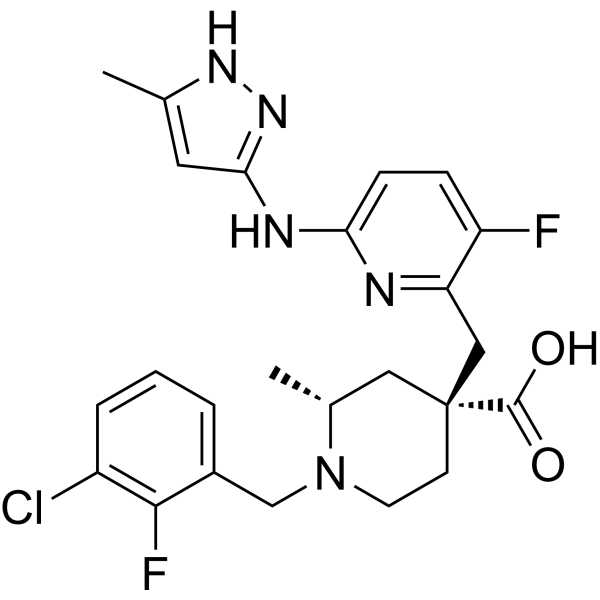
LY3295668 (AK-01) is a highly specific and orally active inhibitor of Aurora-A kinase with a Ki values for AurA and AurB of 0.8 nM and 1038 nM respectively. LY3295668 can effectively inhibit the autophosphorylation of AurA, induce mitotic arrest and apoptosis. LY3295668 avoids the formation of polyploids related to AurB inhibition. LY3295668 can be used for the study of small cell lung cancer.
Nos produits utilisent uniquement pour la recherche. Nous ne vendons pas aux patients.
- Pureté : 99.76%
- CAS No.: 1919888-06-4
- Formule: C24H26ClF2N5O2
- Masse moléculaire:489.95
-
Stockage:
4°C, stored under nitrogen
* In solvent : -80°C, 6 months; -20°C, 1 month (stored under nitrogen)

To place orders, for customer services and technical support, please contact: MedChemExpress USA
Tel: 609-228-6898 E-mail: [email protected] [email protected]


-
 Activité biologique
-
Chemical Information
-
Solvant et solubilité
- Protocole
- Pureté et documentation
- Références
-
 Help & FAQs


-
HY-10971
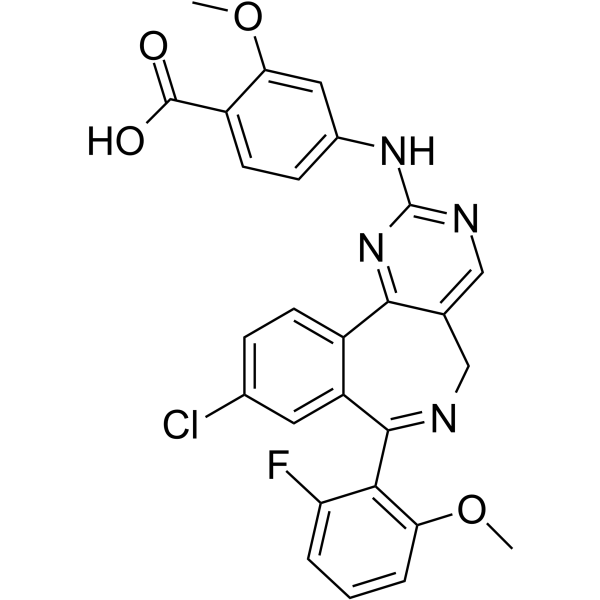
AlisertibAurora A Kinase Inhibitor -
HY-10161
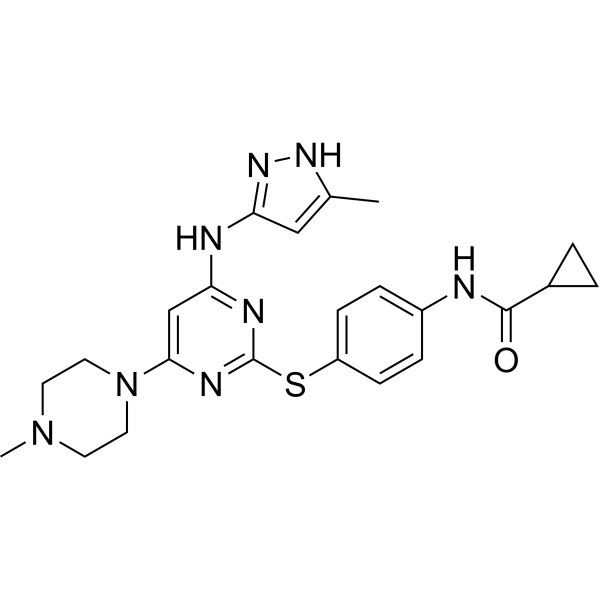
TozasertibAurora A/B/C Inhibitor -
HY-10126
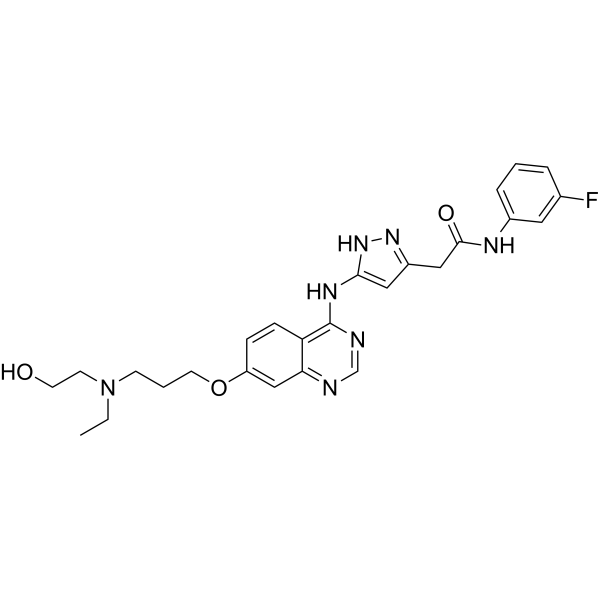
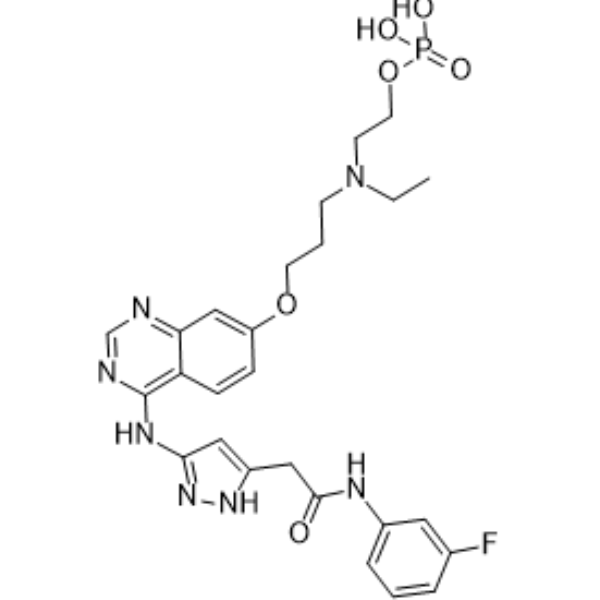
Barasertib-HQPAAurora B Inhibitor -
HY-10127
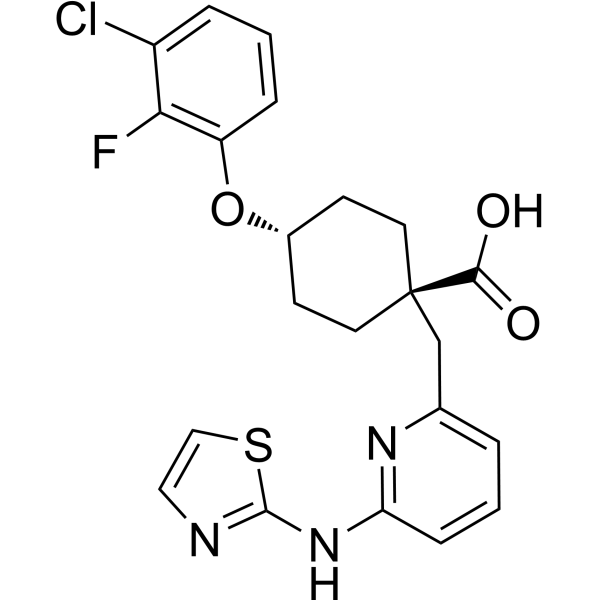
BarasertibAurora B Inhibitor -
HY-13252
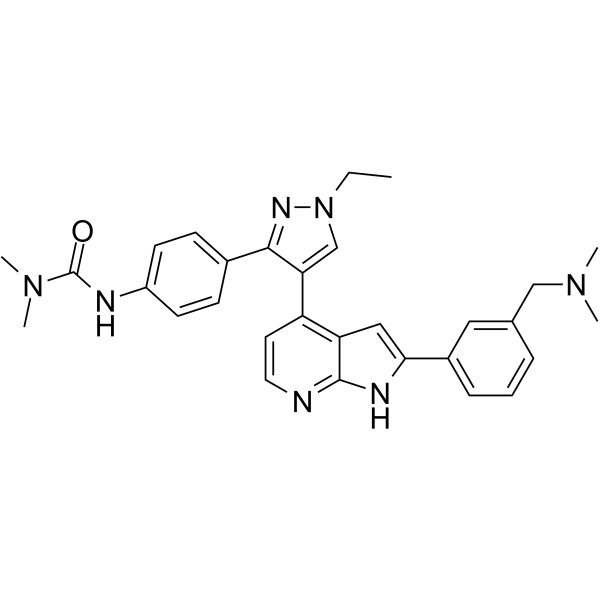
MK-5108Aurora Kinase Inhibitor -
HY-70044
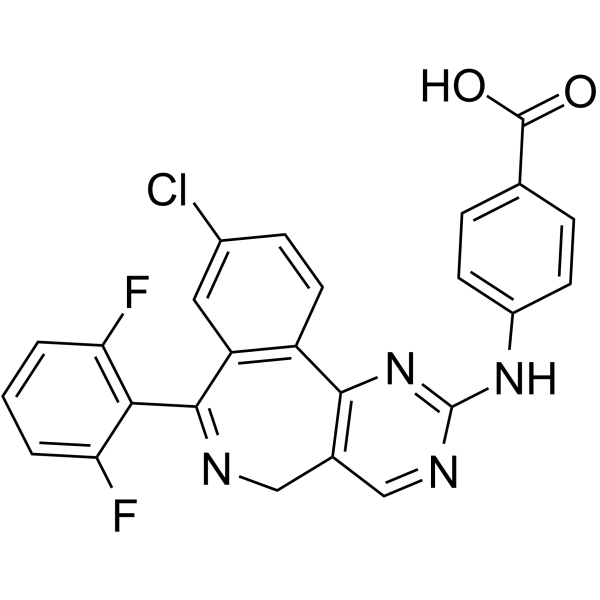
GSK-1070916Aurora B/C Inhibitor -
HY-10180
MLN8054Aurora A Inhibitor -
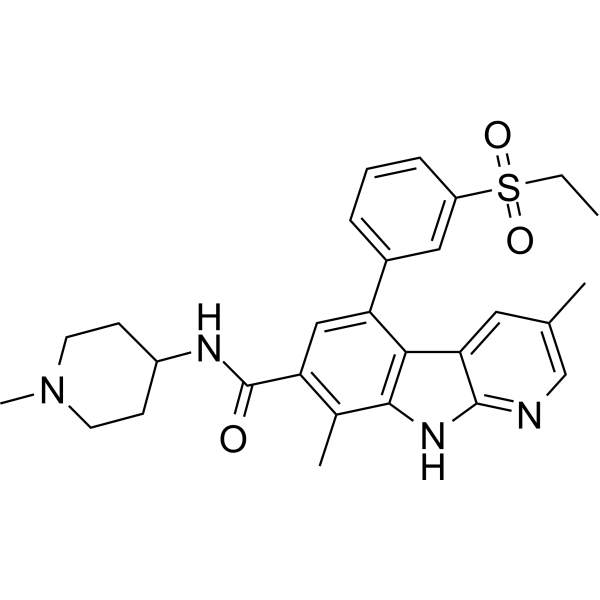
HY-12201
TAK-901 -
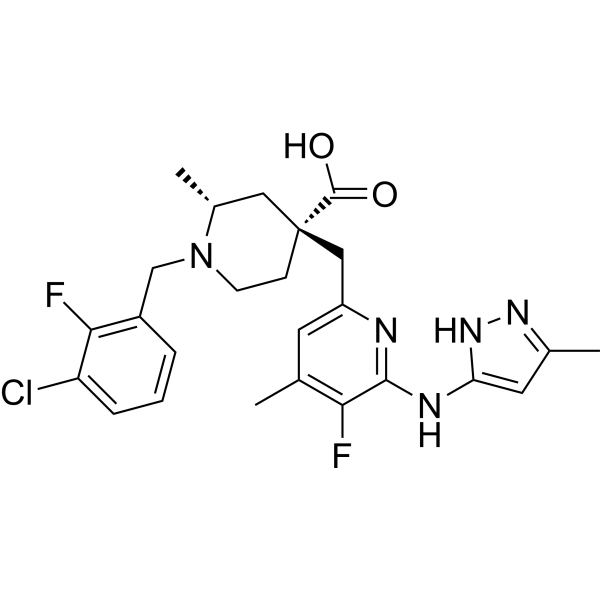
HY-157396
JAB-2485AURKA Inhibitor -
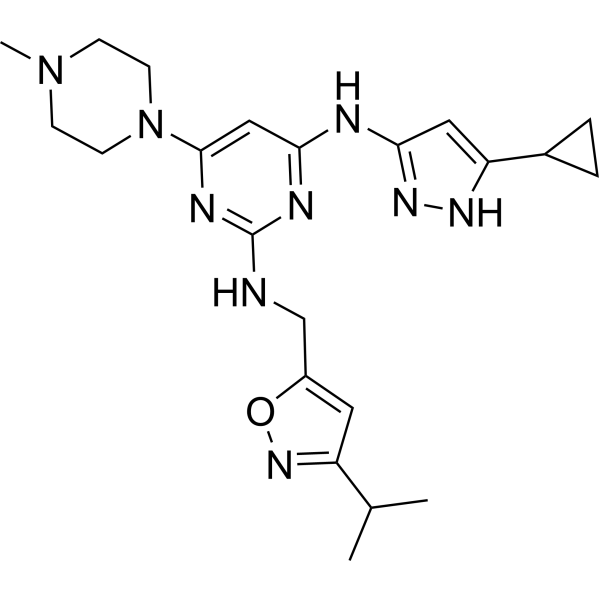
HY-15749
XL228Bcr-Abl Inhibitor -
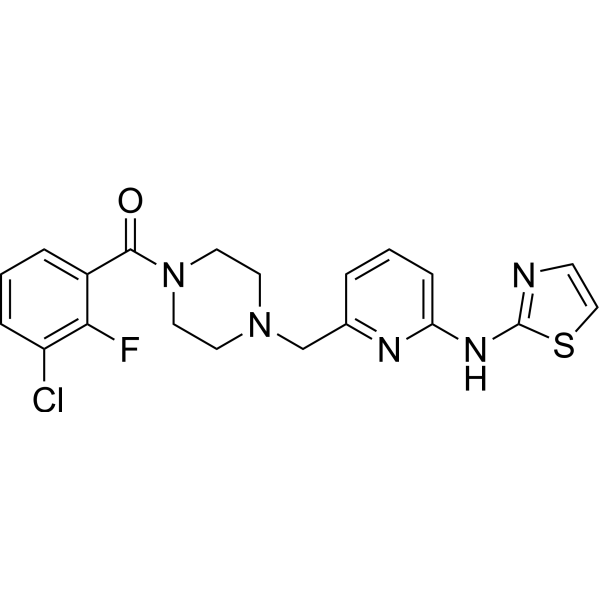
HY-13819
MK-8745Apoptosis Inducer -
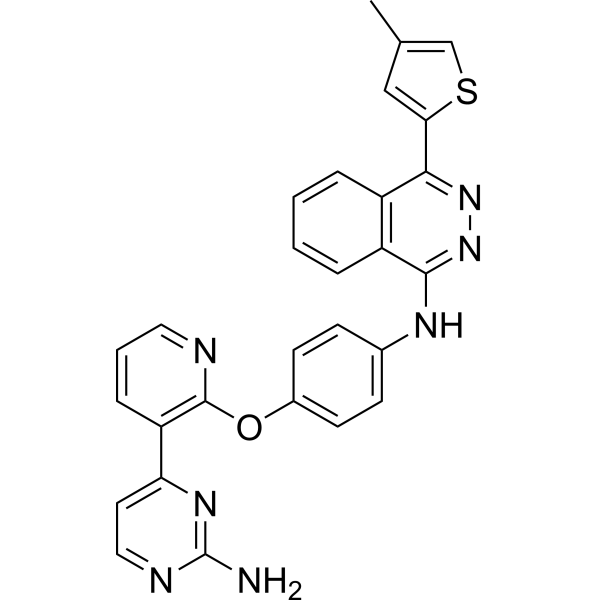
HY-13253
AMG 900Aurora Kinase Inhibitor
Publications Citing Use of MedChemExpress (MCE) LY3295668
MoreVoir tous les produits spécifiques à Isoform Aurora Kinase
More

Activité biologique
Description
IC50 & Target
[1]|
Aurora A 0.8 nM (Ki) |
Aurora B 1038 nM (Ki) |
In Vitro
LY3295668 is a highly specific Aurora-A kinase inhibitor, with Ki values of 0.8 nM and 1038 nM for AurA and AurB, respectively. LY3295668, a highly specific AurA inhibitor, can kill Rb-deficient cancer cells at doses that have minimal effects on normal cells. In a kinome-wide survey, only 5 of 386 kinases are potently inhibited by LY3295668 (<10 nM)[1].
MedChemExpress (MCE) has not independently confirmed the accuracy of these methods. They are for reference only. Further protocols information, click here.
Essai clinique
| NCT Number | Sponsor | Condition | Start Date |
Phase

|
|---|---|---|---|---|
| NCT01329991 | Plexxikon| | 2011-05 | PHASE1 |


Chemical Information
-
CAS No. 1919888-06-4
-
Appearance Solid
-
Masse moléculaire 489.95
-
Formule C24H26ClF2N5O2
-
Color White to light yellow
-
SMILES
O=C([C@@]1(CC2=NC(NC3=NNC(C)=C3)=CC=C2F)C[C@@H](C)N(CC4=CC=CC(Cl)=C4F)CC1)O
-
Synonyms
AK-01
-
Livraison
Room temperature in continental US; may vary elsewhere.
-
Stockage
4°C, stored under nitrogen
* In solvent : -80°C, 6 months; -20°C, 1 month (stored under nitrogen)


Publications (4)
-
Journal Impact Factor
-
Most Recent
-
Cancer Cell
Anti-tumor efficacy of HRS-4642 and its potential combination with proteasome inhibition in KRAS G12D-mutant cancer. [Abstract]2024 Jul 8;42(7):1286-1300.e8. PMID: 38942026 -
J Med Chem
Second-Generation AURKA-Targeting PROTACs: Structural Optimization toward in Vivo Degradation in Neuroblastoma. [Abstract]2025 Nov 27;68(22):23962-23976. PMID: 41252673 -
-
Invest New Drugs
TAS-119, a novel selective Aurora A and TRK inhibitor, exhibits antitumor efficacy in preclinical models with deregulated activation of the Myc, β-Catenin, and TRK pathways. [Abstract]2021 Jun;39(3):724-735. PMID: 33409897


Solvant et solubilité
In Vitro:
DMSO : 80 mg/mL (163.28 mM; ultrasonic and warming and heat to 60°C; Hygroscopic DMSO has a significant impact on the solubility of product, please use newly opened DMSO)
Please refer to the solubility information to select the appropriate solvent. Once prepared, please aliquot and store the solution to prevent product inactivation from repeated freeze-thaw cycles.
Storage method and period of stock solution: -80°C, 6 months; -20°C, 1 month (stored under nitrogen). When stored at -80°C, please use it within 6 months. When stored at -20°C, please use it within 1 month.
Please refer to the solubility information to select the appropriate solvent. Once prepared, please aliquot and store the solution to prevent product inactivation from repeated freeze-thaw cycles.
Storage method and period of stock solution: -80°C, 6 months; -20°C, 1 month (stored under nitrogen). When stored at -80°C, please use it within 6 months. When stored at -20°C, please use it within 1 month.
Concentration (start) × Volume (start) = Concentration (final) × Volume (final)
In Vivo:
Select the appropriate dissolution method based on your experimental animal and administration route.
- For the following dissolution methods, please ensure to first prepare a clear stock solution using an In Vitro approach and then sequentially add co-solvents:
- To ensure reliable experimental results, the clarified stock solution can be appropriately stored based on storage conditions. As for the working solution for In Vivo experiments, it is recommended to prepare freshly and use it on the same day.
- The percentages shown for the solvents indicate their volumetric ratio in the final prepared solution. If precipitation or phase separation occurs during preparation, heat and/or sonication can be used to aid dissolution.
Add each solvent one by one: 10% DMSO 40% PEG300 5% Tween-80 45% Saline
Solubility: ≥ 2.5 mg/mL (5.10 mM); Clear solution
This protocol yields a clear solution of ≥ 2.5 mg/mL (saturation unknown).
Taking 1 mL working solution as an example, add 100 μL DMSO stock solution (25.0 mg/mL) to 400 μL PEG300, and mix evenly; then add 50 μL Tween-80 and mix evenly; then add 450 μL Saline to adjust the volume to 1 mL.
Preparation of Saline: Dissolve 0.9 g sodium chloride in ddH₂O and dilute to 100 mL to obtain a clear Saline solution.
Add each solvent one by one: 10% DMSO 90% (20% SBE-β-CD in Saline)
Solubility: ≥ 2.5 mg/mL (5.10 mM); Clear solution
This protocol yields a clear solution of ≥ 2.5 mg/mL (saturation unknown).
Taking 1 mL working solution as an example, add 100 μL DMSO stock solution (25.0 mg/mL) to 900 μL 20% SBE-β-CD in Saline, and mix evenly.
Preparation of 20% SBE-β-CD in Saline (4°C, storage for one week): 2 g SBE-β-CD powder is dissolved in 10 mL Saline, completely dissolve until clear.
Add each solvent one by one: 1% DMSO 99% Saline
Solubility: ≥ 0.5 mg/mL (1.02 mM); Clear solution
In Vivo Dissolution Calculator
Please enter the basic information of animal experiments:
-
-
-
-
Recommended: Prepare an additional quantity of animals to account for potential losses during experiments.
Please enter your animal formula composition:
-
%DMSO +
Recommended: Keep the proportion of DMSO in working solution below 2% if your animal is weak.
-
%+
-
+%Tween-80 + +
-
%Saline +
The co-solvents required include: DMSO, . All of co-solvents are available by MedChemExpress (MCE). , Tween 80. All of co-solvents are available by MedChemExpress (MCE).
Working solution concentration: 0.22 mg/mL
Method for preparing stock solution: mg drug dissolved in μL DMSO. Stock solution concentration: mg/mL. * In solvent : -80°C, 6 months; -20°C, 1 month (stored under nitrogen)
1. Take μL DMSO stock solution;
2. Add μL .
μL , mix evenly;
3. Then add μL Tween 80, mix evenly;
4. Then add μL
Please ensure that the stock solution in the first step is dissolved to a clear state, and add co-solvents in sequence. You can use ultrasonic heating (ultrasonic cleaner, recommended frequency 20-40 kHz), vortexing, etc. to assist dissolution.

Protocole
-
Apoptosis
Apoptosis, also called programmed cell death, is generally characterized by distinct morphological characteristics.
-
TUNEL staining for apoptotic DNA fragmentation
TUNEL staining detects DNA strand breaks by using terminal deoxynucleotidyl transferase to add labeled nucleotides to exposed 3′-OH DNA termini, generating either microscopic staining in fixed cells or tissue sections, or fluorescence/cytometric signal in cell suspensions. TUNEL positivity reflects DNA fragmentation but should not be interpreted alone as definitive apoptosis, because TUNEL can also label necrotic, autolytic, mechanically damaged, or DNA-repair-associated DNA breaks.
-
Annexin V plus membrane-impermeant dye apoptosis staining
Annexin V-based apoptosis assays rely on the detection of phosphatidylserine (PS) externalization from the inner leaflet of the plasma membrane to the outer leaflet, an early biochemical hallmark of apoptosis. Fluorescently labeled Annexin V binds PS in a calcium-dependent manner, enabling identification of early apoptotic cells by flow cytometry or fluorescence microscopy. When combined with a membrane-impermeant DNA-binding dye (e. g. , propidium iodide), this approach allows discrimination between viable (Annexin V−/dye−), early apoptotic (Annexin V+/dye−), and late apoptotic or necrotic (Annexin V+/dye+) cell populations by assessing membrane integrity and PS exposure.
-
Apoptosis Solutions
Apoptosis is a regulated, generally non-lytic cell-death pathway that removes unwanted, damaged, infected, or abnormal cells through coordinated morphological changes, caspase activation, DNA fragmentation, and membrane remodeling. The intrinsic apoptosis pathway is controlled mainly by mitochondrial outer membrane permeabilization, BCL-2 family proteins, cytochrome c release, apoptosome formation, caspase-9 activation, and downstream executioner caspase-3/7 activation. The extrinsic apoptosis pathway is initiated by death receptors such as Fas, TNFR, and TRAIL receptors, which recruit adaptor proteins and activate caspase-8 before engaging executioner caspases or mitochondrial amplification through BID cleavage. Apoptosis is linked to many phenotypes, including cancer cell killing, tissue homeostasis, immune regulation, neurodegeneration, infection response, and treatment-induced cytotoxicity; unresolved questions include how apoptosis interacts with necroptosis, pyroptosis, ferroptos


Pureté et documentation
Références
[1]. Gong X, et al. Aurora-A kinase inhibition is synthetic lethal with loss of the RB1 tumor suppressor gene. Cancer Discov. 2018 Oct 29. pii: CD-18-0469. [Content Brief]
[2]. Du J, et al. Aurora A-Selective Inhibitor LY3295668 Leads to Dominant Mitotic Arrest, Apoptosis in Cancer Cells, and Shows Potent Preclinical Antitumor Efficacy. Mol Cancer Ther. 2019 Dec;18(12):2207-2219. [Content Brief]


Complete Stock Solution Preparation Table
Please refer to the solubility information to select the appropriate solvent. Once prepared, please aliquot and store the solution to prevent product inactivation from repeated freeze-thaw cycles.
Storage method and period of stock solution: -80°C, 6 months; -20°C, 1 month (stored under nitrogen). When stored at -80°C, please use it within 6 months. When stored at -20°C, please use it within 1 month.
| Optional Solvent | Concentration Solvent Mass | 1 mg | 5 mg | 10 mg | 25 mg |
|---|---|---|---|---|---|
| DMSO | 1 mM | 2.0410 mL | 10.2051 mL | 20.4102 mL | 51.0256 mL |
| 5 mM | 0.4082 mL | 2.0410 mL | 4.0820 mL | 10.2051 mL | |
| 10 mM | 0.2041 mL | 1.0205 mL | 2.0410 mL | 5.1026 mL | |
| 15 mM | 0.1361 mL | 0.6803 mL | 1.3607 mL | 3.4017 mL | |
| 20 mM | 0.1021 mL | 0.5103 mL | 1.0205 mL | 2.5513 mL | |
| 25 mM | 0.0816 mL | 0.4082 mL | 0.8164 mL | 2.0410 mL | |
| 30 mM | 0.0680 mL | 0.3402 mL | 0.6803 mL | 1.7009 mL | |
| 40 mM | 0.0510 mL | 0.2551 mL | 0.5103 mL | 1.2756 mL | |
| 50 mM | 0.0408 mL | 0.2041 mL | 0.4082 mL | 1.0205 mL | |
| 60 mM | 0.0340 mL | 0.1701 mL | 0.3402 mL | 0.8504 mL | |
| 80 mM | 0.0255 mL | 0.1276 mL | 0.2551 mL | 0.6378 mL | |
| 100 mM | 0.0204 mL | 0.1021 mL | 0.2041 mL | 0.5103 mL |


LY3295668 Related Classifications
HY-114258 Related Classifications
 Powered by Bioz