



ML329
Based on 7 publication(s) in Google Scholar
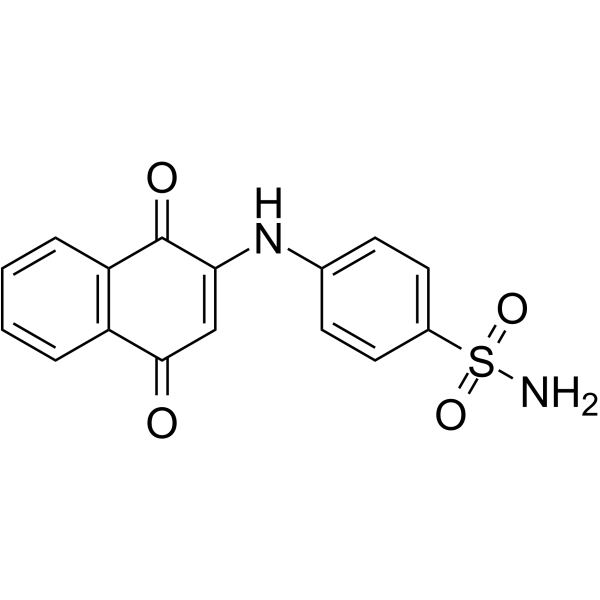
ML329 is a micropthalmia-associated transcription factor (MITF) inhibitor, which inhibits TRPM-1 promoter activity with an IC50 of 1.2 μM.
Nos produits utilisent uniquement pour la recherche. Nous ne vendons pas aux patients.
- Pureté : 98.0%
- CAS No.: 19992-50-8
- Formule: C16H12N2O4S
- Masse moléculaire:328.34
-
Stockage:Powder -20°C, 3 years , 4°C, 2 years ; In solvent -80°C, 2 years , -20°C, 1 year

To place orders, for customer services and technical support, please contact: MedChemExpress USA
Tel: 609-228-6898 E-mail: [email protected] [email protected]


-
 Activité biologique
-
Chemical Information
-
Solvant et solubilité
- Protocole
- Pureté et documentation
- Références
-
 Help & FAQs


-
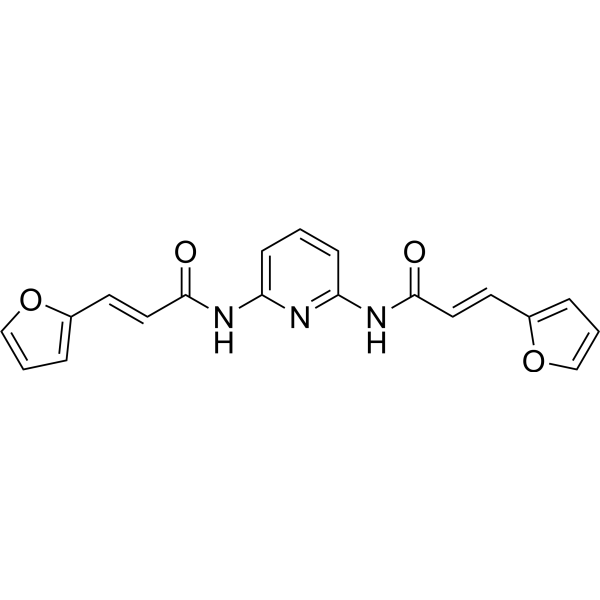
HY-156483
TT-012MITF Inhibitor -
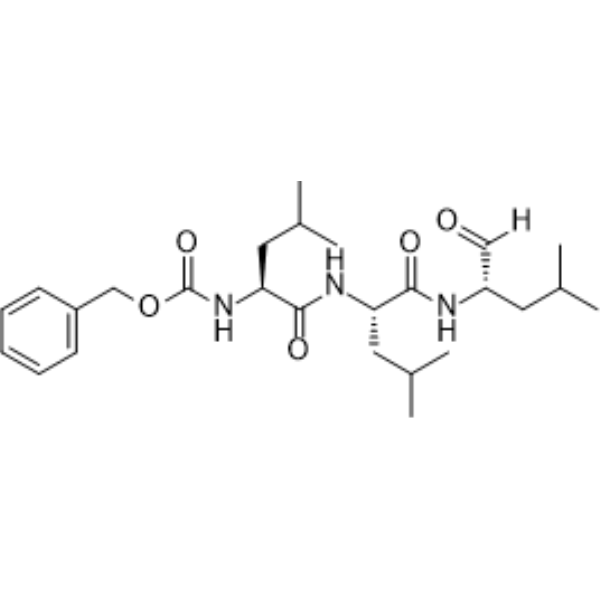
HY-13259
MG-132Proteasome Inhibitor -

HY-13433
ThapsigarginER Stress Inducer -
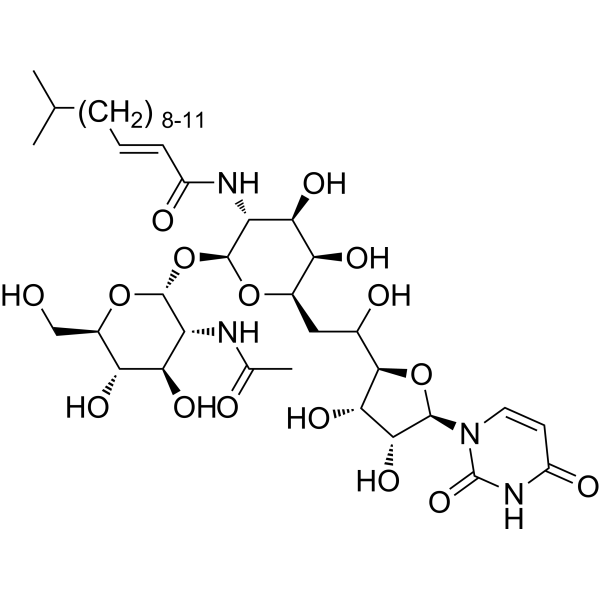
HY-A0098
TunicamycinER Stress Inducer -
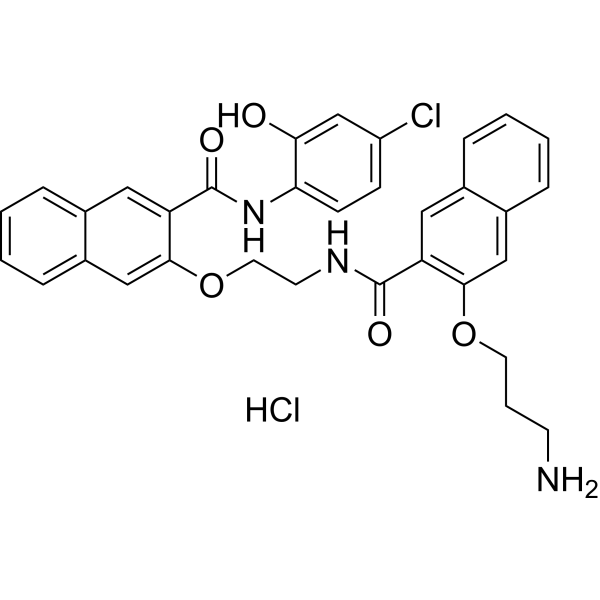
HY-101120
666-15CREB Inhibitor -
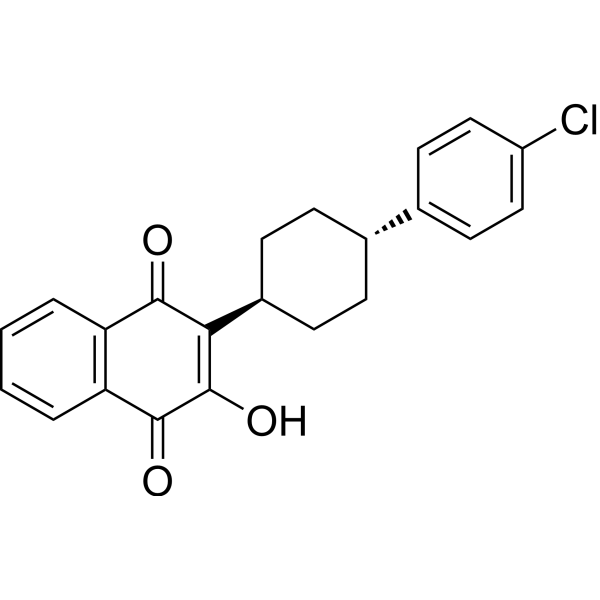
HY-13832
AtovaquoneAntimalarial Agent -
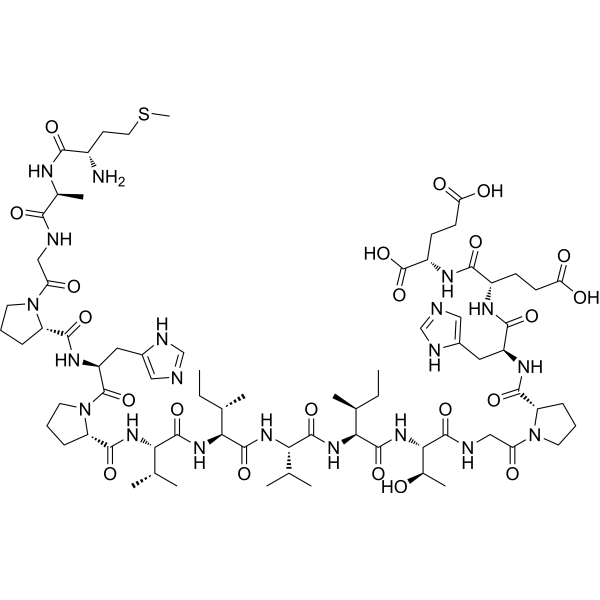
HY-P1026
NFAT Inhibitor-1NFAT Inhibitor -
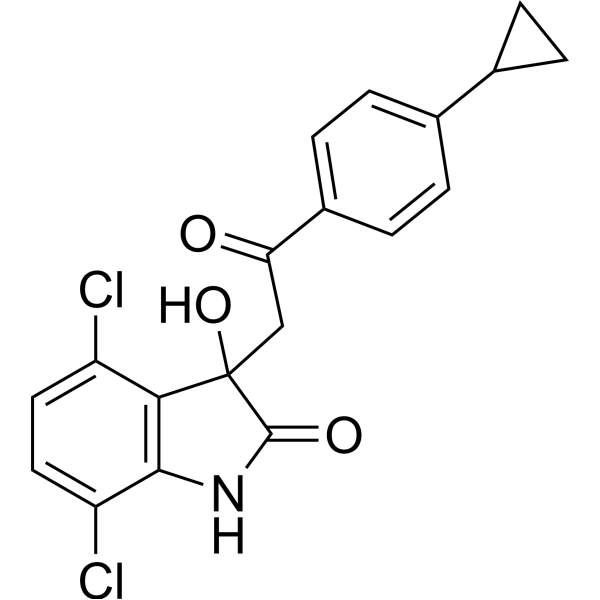
HY-122903
TK216ETS/EWS-FLI1 Inhibitor -

HY-101464R
ML329 (Standard)MITF Inhibitor -
HY-10045
AEE788EGFR/ErbB2 Inhibitor -
HY-100433
PACMA 31Protein Disulfide Isomerase Inhibitor
Publications Citing Use of MedChemExpress (MCE) ML329
More- Nat Commun. 2021 Jan 13;12(1):362. [Abstract]
- Cancer Biol Med. 2019 Aug;16(3):498-513. [Abstract]
- Cell Death Discov. 2024 Oct 26;10(1):453. [Abstract]
- Br J Dermatol. 2021 Aug;185(2):391-404. [Abstract]
- Clin Transl Med. 2022 Jul;12(7):e961. [Abstract]
- Br J Cancer. 2023 May;128(10):1941-1954. [Abstract]
- Icahn School of Medicine at Mount Sinai. 2025.
 Customer Validation & Images

-
Cell Proliferation/Viability Assay
-
WB
-
WB


Activité biologique
Description
IC50 & Target
IC50: 1.2 μM (TRPM-1)[1]
In Vitro
ML329 inhibits the expression of numerous micropthalmia-associated transcription factor (MITF) target genes and blocks the proliferation of numerous cell lines that require MITF for proliferation. ML329 could directly or indirectly interact with MITF or components of the MITF regulatory network. As a transcription factor that regulates cell cycle and pigmentation, interference of MITF with ML329 will be useful in characterizing the specific roles of MITF in melanoma and validate blockade of MITF function as a potential treatment of melanoma. ML329 shows specific activity against the MITF-dependent cells, primary melanocytes but no effect on the viability in A375 cells. ML329 reduces the expression of multiple MITF target genes, including pigment-related genes and the cell cycle regulator CDK2. As a tool compound, ML329 will be useful in elucidating the role of MITF in melanocyte lineage development and in melanoma disease progression[1].
MedChemExpress (MCE) has not independently confirmed the accuracy of these methods. They are for reference only.


Chemical Information
-
CAS No. 19992-50-8
-
Appearance Solid
-
Masse moléculaire 328.34
-
Formule C16H12N2O4S
-
Color Orange to reddish brown
-
SMILES
O=S(C1=CC=C(NC(C2=O)=CC(C3=C2C=CC=C3)=O)C=C1)(N)=O
-
Livraison
Room temperature in continental US; may vary elsewhere.
-
Stockage
Powder -20°C 3 years 4°C 2 years In solvent -80°C 2 years -20°C 1 year


Publications (7)
-
Journal Impact Factor
-
Most Recent
-
Nat Commun
2021 Jan 13;12(1):362. PMID: 33441552 -
Cancer Biol Med
2019 Aug;16(3):498-513. PMID: 31565480 -
Cell Death Discov
CDK4/6 inhibition initiates cell cycle arrest by nuclear translocation of RB and induces a multistep molecular response. [Abstract]2024 Oct 26;10(1):453. PMID: 39461947
ML329 purchased from MedChemExpress. Usage Cited in: Cell Death Discov. 2024 Oct 26;10(1):453. [Abstract]
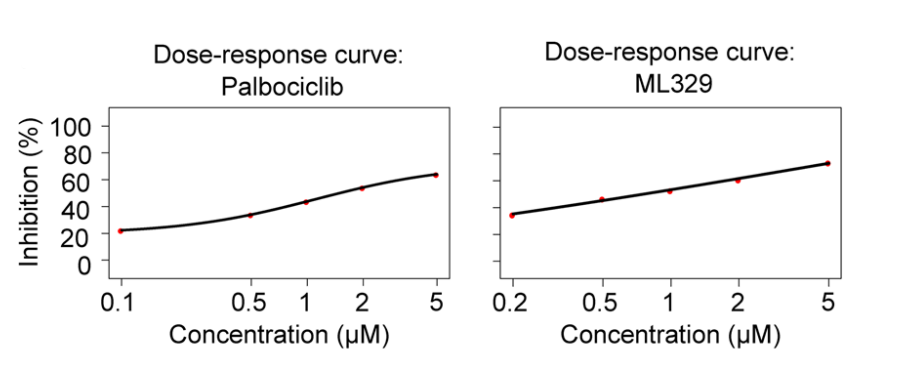
Dose–response curves of palbociclib, eltrombopag and ML329 indicating inhibition of cell growth upon different concentrations of inhibitor.
ML329 purchased from MedChemExpress. Usage Cited in: Cell Death Discov. 2024 Oct 26;10(1):453. [Abstract]
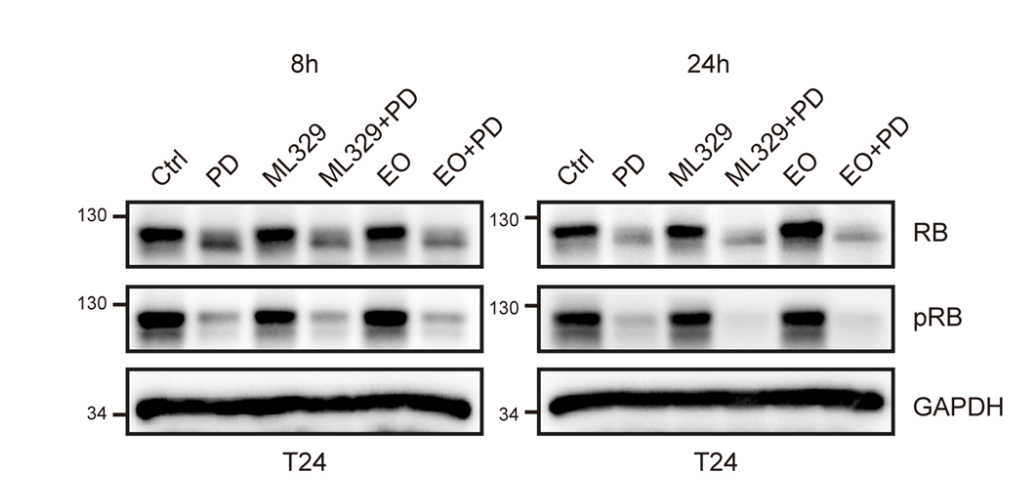
T24 cells were treated with 1µM PD, 5µM ML329, 10µM EO or a combination for 8 and 24h. Protein expression was analyzed by immunoblotting.
-
Br J Dermatol
Opsin 5 is a key regulator of ultraviolet radiation-induced melanogenesis in human epidermal melanocytes. [Abstract]2021 Aug;185(2):391-404. PMID: 33400324
ML329 purchased from MedChemExpress. Usage Cited in: Br J Dermatol. 2021 Aug;185(2):391-404. [Abstract]
After inhibiting expression of microphthalmia‐associated transcription factor (MITF) with ML329, cells were irradiated without or with UVR, and lysed 48 h later to observe the expression of TYR, TRP1 and TRP2 protein levels. p‐, phosphorylated. Beta‐actin was used as a loading control.
-
Clin Transl Med
Functional genomic analysis of epithelioid sarcoma reveals distinct proximal and distal subtype biology. [Abstract]2022 Jul;12(7):e961. PMID: 35839307 -
Br J Cancer
Functional genomics of human clear cell sarcoma: genomic, transcriptomic and chemical biology landscape for clear cell sarcoma. [Abstract]2023 May;128(10):1941-1954. PMID: 36959380 -


Solvant et solubilité
In Vitro:
DMSO : 5 mg/mL (15.23 mM; Need ultrasonic; Hygroscopic DMSO has a significant impact on the solubility of product, please use newly opened DMSO)
DMF : 5 mg/mL (15.23 mM; Need ultrasonic)
Please refer to the solubility information to select the appropriate solvent. Once prepared, please aliquot and store the solution to prevent product inactivation from repeated freeze-thaw cycles.
Storage method and period of stock solution: -80°C, 2 years; -20°C, 1 year. When stored at -80°C, please use it within 2 years. When stored at -20°C, please use it within 1 year.
Please refer to the solubility information to select the appropriate solvent. Once prepared, please aliquot and store the solution to prevent product inactivation from repeated freeze-thaw cycles.
Storage method and period of stock solution: -80°C, 2 years; -20°C, 1 year. When stored at -80°C, please use it within 2 years. When stored at -20°C, please use it within 1 year.
Concentration (start) × Volume (start) = Concentration (final) × Volume (final)
In Vivo:
For the following dissolution methods, please prepare the working solution directly:
It is recommended to prepare fresh solutions and use them promptly within a short period of time.
The percentages shown for the solvents indicate their volumetric ratio in the final prepared solution. If precipitation or phase separation occurs during preparation, heat and/or sonication can be used to aid dissolution.
Add each solvent one by one: 0.5% CMC-Na/saline water
Solubility: 5 mg/mL (15.23 mM); Suspended solution; Need ultrasonic


Pureté et documentation
-
Fiche technique (274 KB)
-
SDS (393 KB)
- English - EN (393 KB)
- Français - FR (393 KB)
- Deutsch - DE (393 KB)
- Norwegian - NO (393 KB)
- Español - ES (393 KB)
- Swedish - SV (393 KB)
- Italian - IT (393 KB)
- Korean - KR (393 KB)
- Portuguese - PT (393 KB)
-
Instruction de manipulation (2659 KB)
Références


Complete Stock Solution Preparation Table
Please refer to the solubility information to select the appropriate solvent. Once prepared, please aliquot and store the solution to prevent product inactivation from repeated freeze-thaw cycles.
Storage method and period of stock solution: -80°C, 2 years; -20°C, 1 year. When stored at -80°C, please use it within 2 years. When stored at -20°C, please use it within 1 year.
| Optional Solvent | Concentration Solvent Mass | 1 mg | 5 mg | 10 mg | 25 mg |
|---|---|---|---|---|---|
| DMSO / DMF | 1 mM | 3.0456 mL | 15.2281 mL | 30.4562 mL | 76.1406 mL |
| 5 mM | 0.6091 mL | 3.0456 mL | 6.0912 mL | 15.2281 mL | |
| 10 mM | 0.3046 mL | 1.5228 mL | 3.0456 mL | 7.6141 mL | |
| 15 mM | 0.2030 mL | 1.0152 mL | 2.0304 mL | 5.0760 mL |


ML329 Related Classifications
HY-101464 Related Classifications
 Powered by Bioz