



885496-53-7
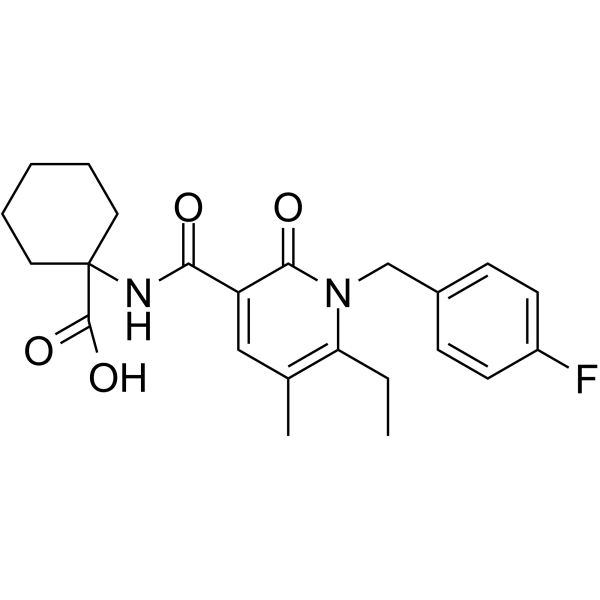
Chemical Structure
S-777469
- CAS No.: 885496-53-7
- Formula:C23H27FN2O4
- Molecular Weight:414.47
IUPAC Name: 1-(6-ethyl-1-(4-fluorobenzyl)-5-methyl-2-oxo-1,2-dihydropyridine-3-carboxamido)cyclohexane-1-carboxylic acid
InChIKey: JIYXOJFSPOFZPY-UHFFFAOYSA-N
SMILES: O=C(C1=CC(C)=C(CC)N(CC2=CC=C(C=C2)F)C1=O)NC3(CCCCC3)C(O)=O
Biological Activity: S-777469 is a selective and orally available cannabinoid type 2 receptor (CB2) agonist with a Ki of 36 nM. S-777469 significantly suppresses compound 48/80-induced scratching behavior in mice in a dose-dependent manner. S-777469 produces its antipruritic effects by inhibiting itch signal transmission through CB2 agonism[1][2].
| Cat. No. | Product Name | Purity | Description | Pricing | |||||||||||||||||||
|---|---|---|---|---|---|---|---|---|---|---|---|---|---|---|---|---|---|---|---|---|---|---|---|
|
|
S-777469 | 98.19% | S-777469 is a selective and orally available cannabinoid type 2 receptor (CB2) agonist with a Ki of 36 nM. S-777469 significantly suppresses compound 48/80-induced scratching behavior in mice in a dose-dependent manner. S-777469 produces its antipruritic effects by inhibiting itch signal transmission through CB2 agonism. | ||||||||||||||||||||
|
loading...
/
|
|||||||||||||||||||||||
-
Similarity Score 0.61
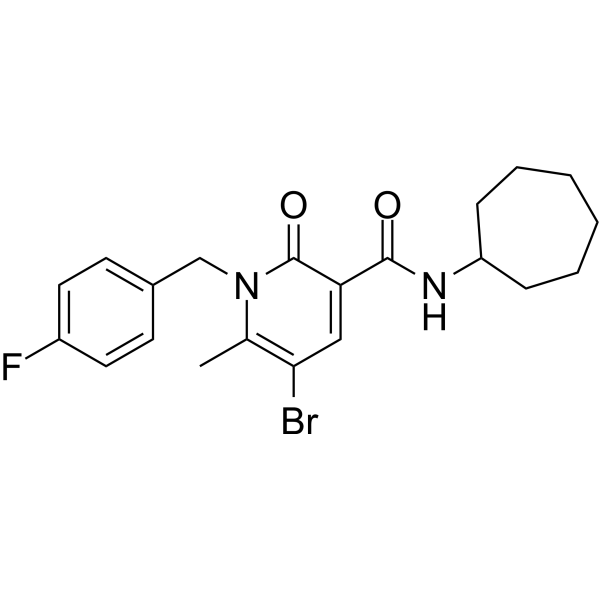 HY-147512CB1/2 agonist 1
-
Similarity Score 0.50
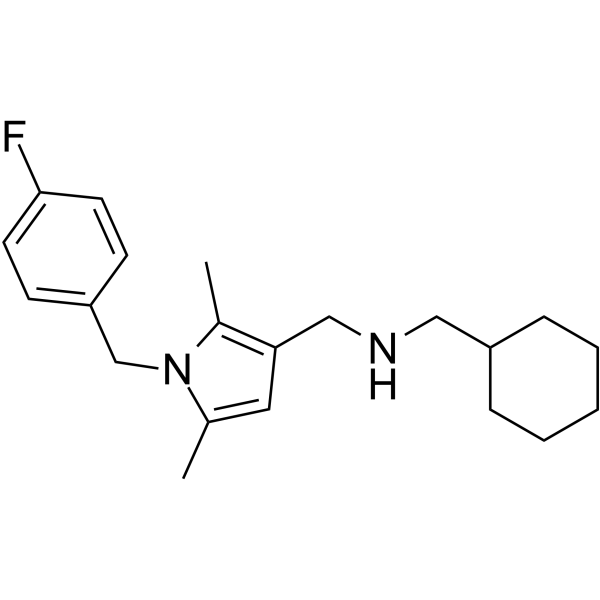 HY-146556Antitubercular agent-15
-
Similarity Score 0.48
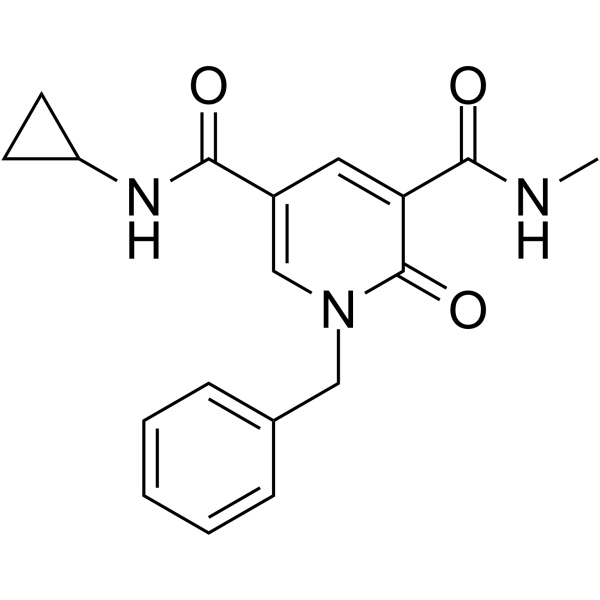 HY-137892GSK620
-
Similarity Score 0.47
 HY-172073MDMB-FUBICA metabolite 3
-
Similarity Score 0.47
 HY-172082MEP-FUBICA
-
Similarity Score 0.46
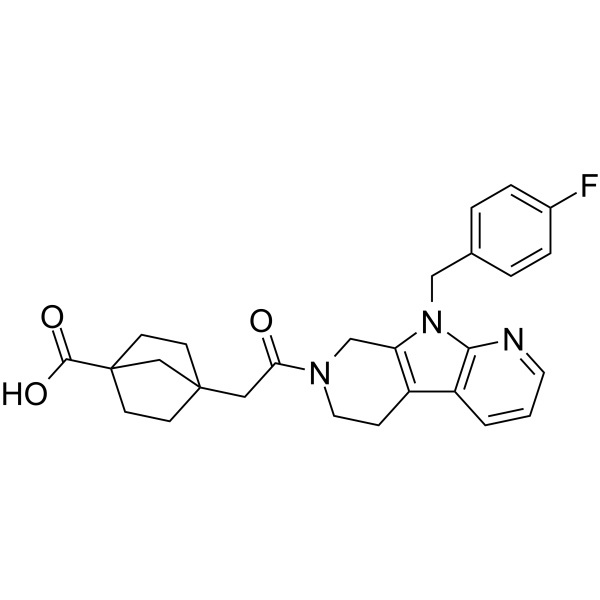 HY-145344ONO-8430506
-
Similarity Score 0.46
 HY-403658IOX2-NH2
-
Similarity Score 0.46
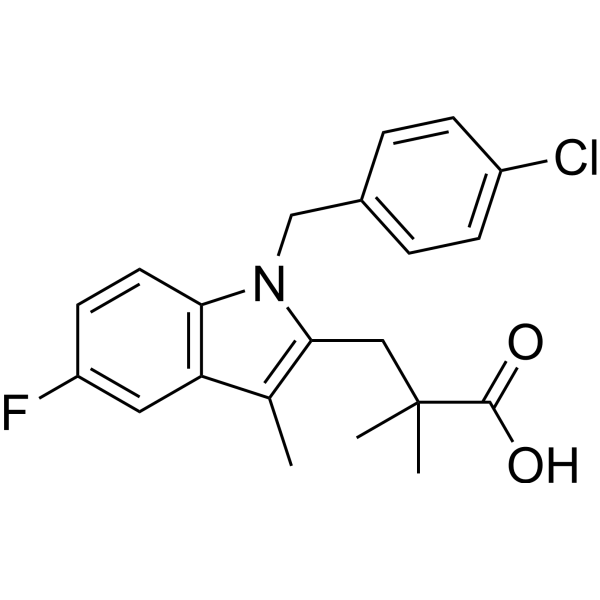 HY-108564L 655240
-
Similarity Score 0.46
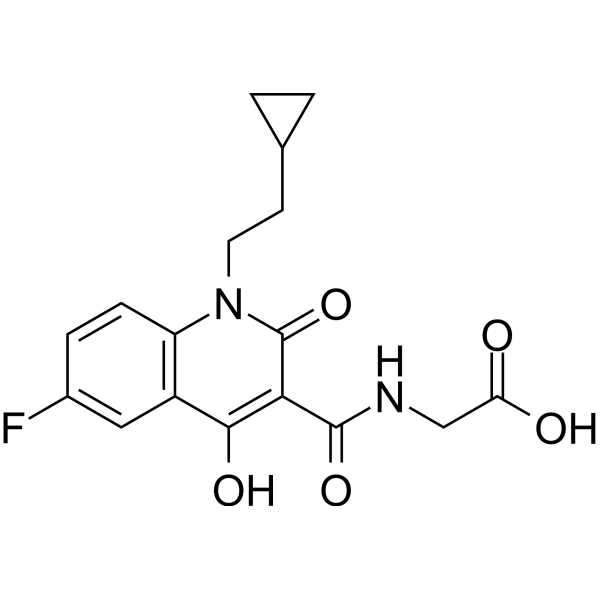 HY-123422GSK360A
-

Explore the MedChemAI to find more analogs


References
- [1]. Odan M, et al. Discovery of S-777469: an orally available CB2 agonist as an antipruritic agent. Bioorg Med Chem Lett. 2012 Apr 15;22(8):2803-6. [Content Brief]
- [2]. Haruna T, et al. S-777469, a novel cannabinoid type 2 receptor agonist, suppresses itch-associated scratching behavior in rodents through inhibition of itch signal transmission. Pharmacology. 2015;95(1-2):95-103. [Content Brief]



