



Pancuronium dibromide

Based on 1 Customer Validation
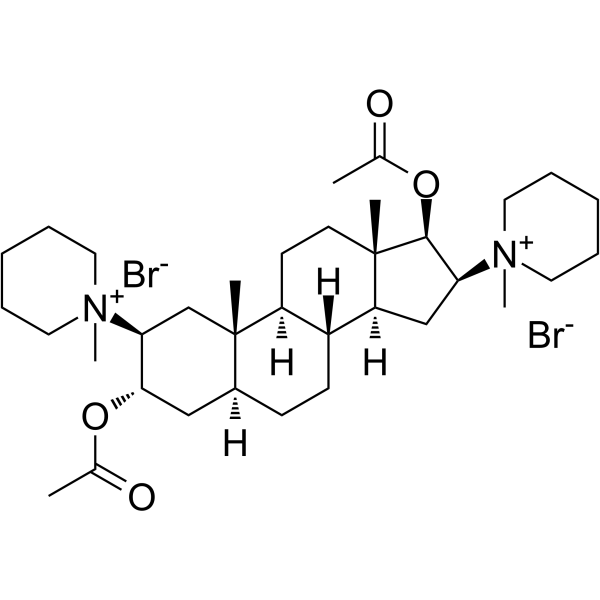
Pancuronium dibromide, a bis-quaternary steroid, is a neuromuscular relaxant. Pancuronium dibromide inhibits neuromuscular transmission by competing with acetylcholine for binding sites on nACh receptors. Pancuronium dibromide also inhibits cardiac muscarinic receptors and has a sympathomimetic action.
For research use only. We do not sell to patients.
- Purity : 98.0%
- CAS No.: 15500-66-0
- Formula: C35H60Br2N2O4
- Molecular Weight:732.67
-
Storage:
4°C, sealed storage, away from moisture
* In solvent : -80°C, 6 months; -20°C, 1 month (sealed storage, away from moisture)

To place orders, for customer services and technical support, please contact: MedChemExpress USA
Tel: 609-228-6898 E-mail: [email protected] [email protected]


-
 Biological Activity
-
Chemical Information
-
Solvent & Solubility
- Purity & Documentation
- References
-
 Help & FAQs


-
HY-B0118A
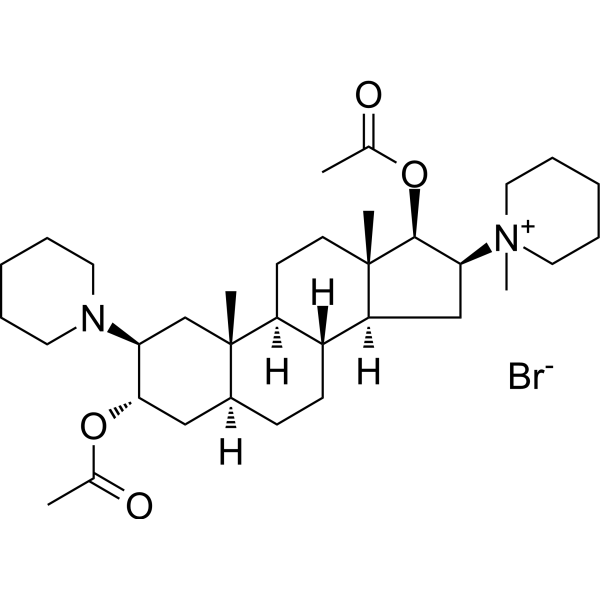
Vecuronium bromideNeuromuscular Blocking Agent -
HY-17440
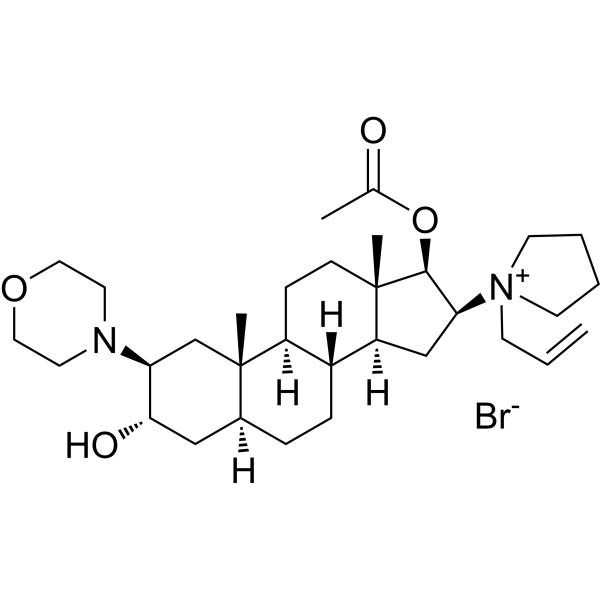
Rocuronium BromideMuscle Relaxant -
HY-B0569
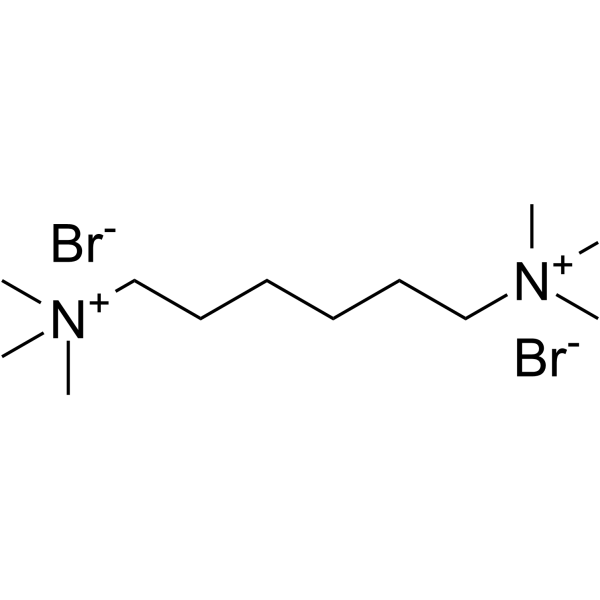
Hexamethonium BromidenAChR Antagonist -
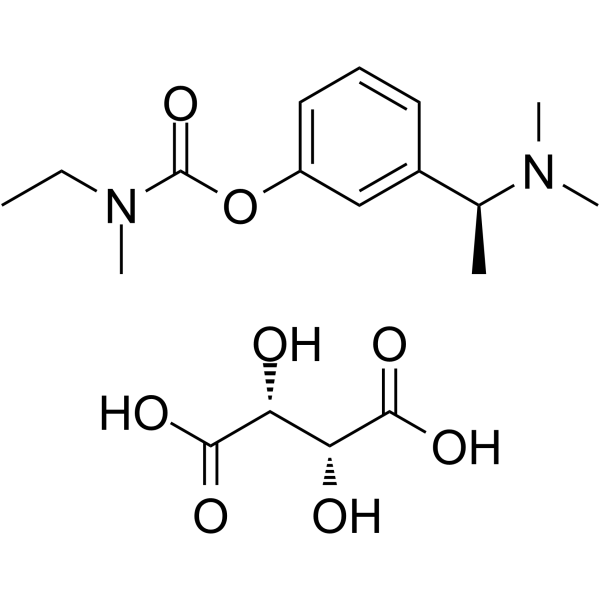
HY-11017
Rivastigmine tartrateCholinesterase Inhibitor -
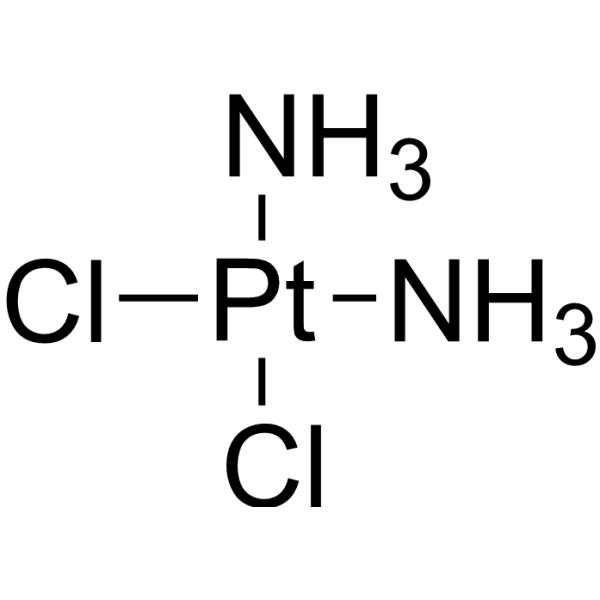
HY-17394
CisplatinDNA Alkylator -
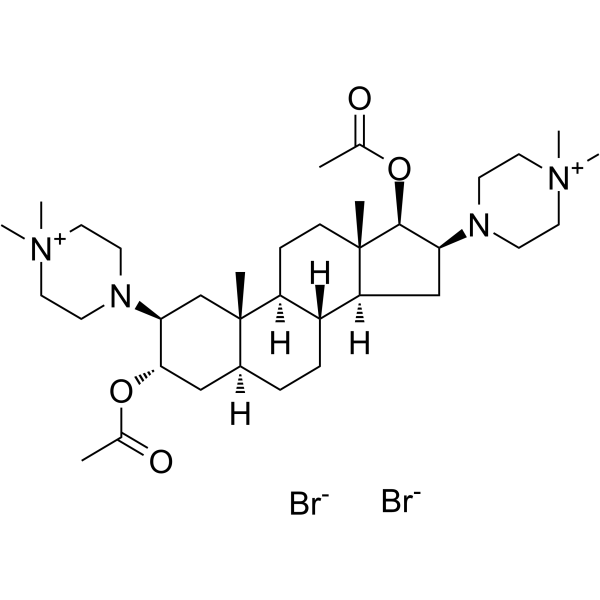
HY-B0743A
Pipecuronium bromideNeuromuscular Blocker -
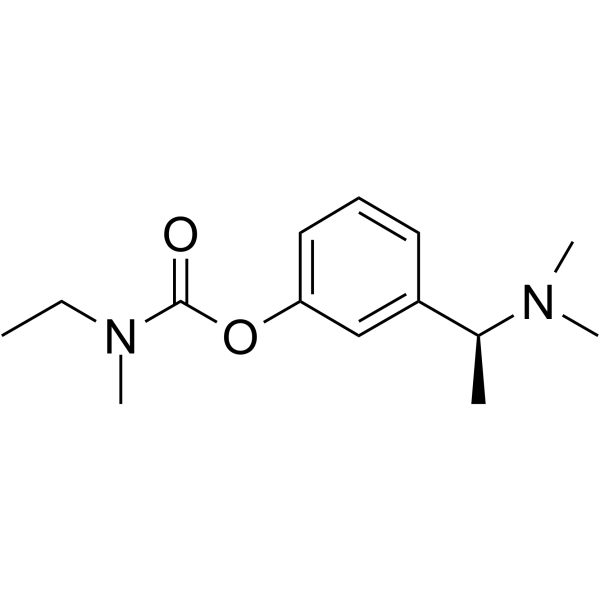
HY-17368
RivastigmineCholinesterase Inhibitor -
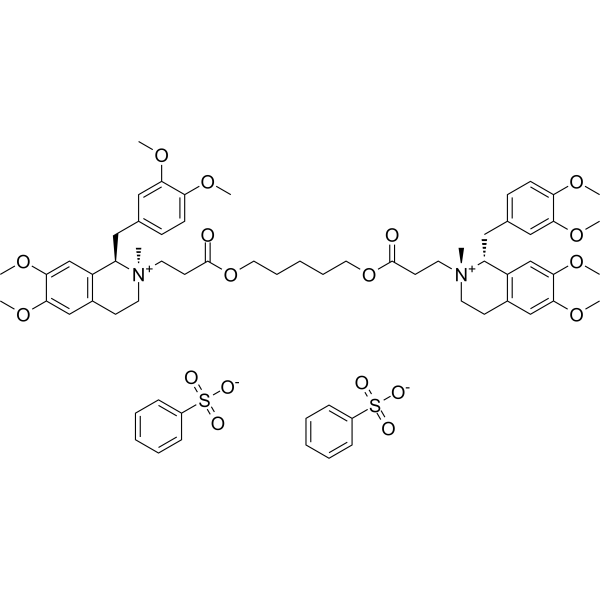
HY-13596
Cisatracurium besylateAutophagy Inducer -
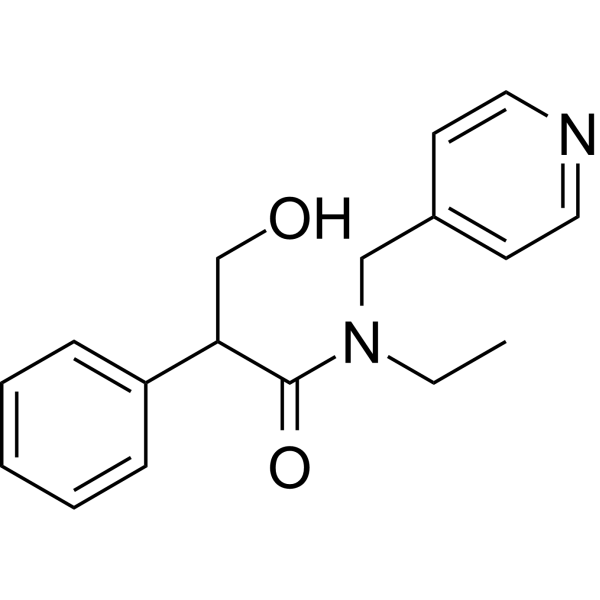
HY-B0321
TropicamidemAChR M4 Antagonist -
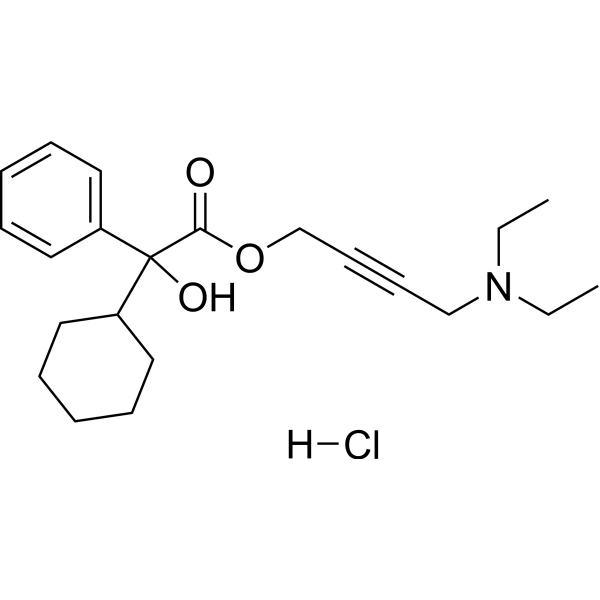
HY-B0267A
Oxybutynin chloridemAChR Antagonist -
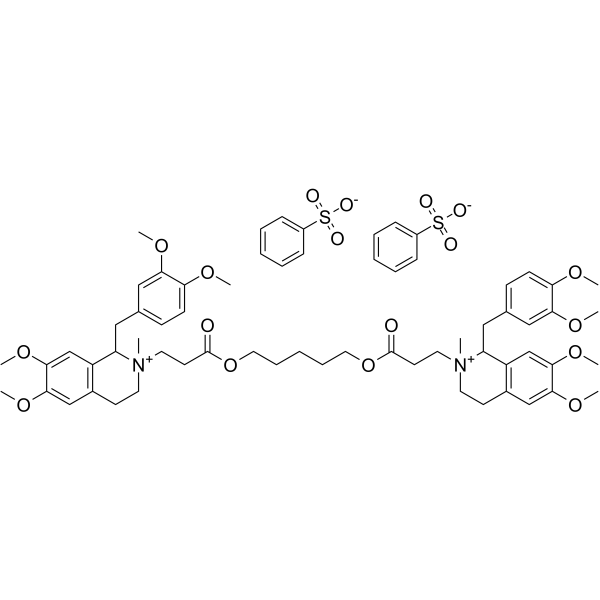
HY-B0292A
Atracurium besylateNeuromuscular Blocking Agent -
HY-B1700A
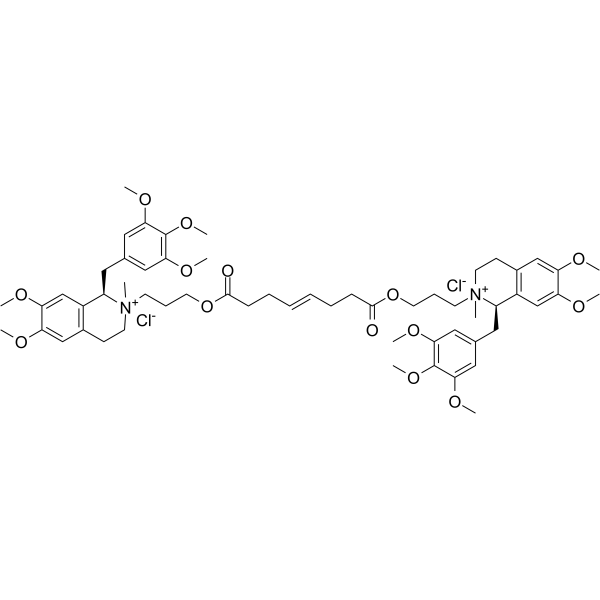
Mivacurium dichlorideNeuromuscular Blocking Agent


Biological Activity
Description
Cellular Effect
|
Cell Line

|
Type | Value | Description | References |
|---|---|---|---|---|
| Sympathetic neuron | IC50 |
6.8 μM
Compound: Pancuranium
|
The SKCa-blocking action was assessed by its ability to inhibit the after hyperpolarization (AHP) in cultured rat sympathetic neurones
The SKCa-blocking action was assessed by its ability to inhibit the after hyperpolarization (AHP) in cultured rat sympathetic neurones
|
[PMID: 7658440] |
In Vitro
The action of Pancuronium on transmembrane sodium conductance is investigated in dorsal root ganglion neurones of chick embryos. Externally perfused Pancuronium (50 μM to 1 mM) reversibly inhibits the current by a fast mechanism of action. Inhibition is concentration-dependent (with a half-effective dose of 170 μM) but not voltage-dependent. Pancuronium may reduce the sodium current by interacting with the sodium channels in both the resting and open states[2].
MedChemExpress (MCE) has not independently confirmed the accuracy of these methods. They are for reference only.
In Vivo
Potentiation by Pancuronium of the effects of adrenergic nerve stimulation, is found in rat anococcygeus and vas deferens[3].
MedChemExpress (MCE) has not independently confirmed the accuracy of these methods. They are for reference only.


Chemical Information
-
CAS No. 15500-66-0
-
Appearance Solid
-
Molecular Weight 732.67
-
Formula C35H60Br2N2O4
-
Color Off-white to pink
-
SMILES
C[N+]1([C@@H]2[C@@H](OC(C)=O)C[C@@](CC[C@]3([H])[C@]4([H])CC[C@@]5(C)[C@@]3([H])C[C@H]([N+]6(C)CCCCC6)[C@@H]5OC(C)=O)([H])[C@]4(C)C2)CCCCC1.[Br-].[Br-]
-
Shipping
Room temperature in continental US; may vary elsewhere.
-
Storage
4°C, sealed storage, away from moisture
* In solvent : -80°C, 6 months; -20°C, 1 month (sealed storage, away from moisture)


Solvent & Solubility
In Vitro:
H2O : 100 mg/mL (136.49 mM; Need ultrasonic)
DMSO : ≥ 100 mg/mL (136.49 mM; Hygroscopic DMSO has a significant impact on the solubility of product, please use newly opened DMSO)
* "≥" means soluble, but saturation unknown.
Please refer to the solubility information to select the appropriate solvent. Once prepared, please aliquot and store the solution to prevent product inactivation from repeated freeze-thaw cycles.
Storage method and period of stock solution: -80°C, 6 months; -20°C, 1 month (sealed storage, away from moisture). When stored at -80°C, please use it within 6 months. When stored at -20°C, please use it within 1 month.
* Note: If you choose water as the stock solution, please dilute it to the working solution, then filter and sterilize it with a 0.22 μm filter before use.
Please refer to the solubility information to select the appropriate solvent. Once prepared, please aliquot and store the solution to prevent product inactivation from repeated freeze-thaw cycles.
Storage method and period of stock solution: -80°C, 6 months; -20°C, 1 month (sealed storage, away from moisture). When stored at -80°C, please use it within 6 months. When stored at -20°C, please use it within 1 month.
* Note: If you choose water as the stock solution, please dilute it to the working solution, then filter and sterilize it with a 0.22 μm filter before use.
Concentration (start) × Volume (start) = Concentration (final) × Volume (final)
In Vivo:
Select the appropriate dissolution method based on your experimental animal and administration route.
- For the following dissolution methods, please ensure to first prepare a clear stock solution using an In Vitro approach and then sequentially add co-solvents:
- To ensure reliable experimental results, the clarified stock solution can be appropriately stored based on storage conditions. As for the working solution for In Vivo experiments, it is recommended to prepare freshly and use it on the same day.
- The percentages shown for the solvents indicate their volumetric ratio in the final prepared solution. If precipitation or phase separation occurs during preparation, heat and/or sonication can be used to aid dissolution.
Add each solvent one by one: 10% DMSO 40% PEG300 5% Tween-80 45% Saline
Solubility: ≥ 2.5 mg/mL (3.41 mM); Clear solution
This protocol yields a clear solution of ≥ 2.5 mg/mL (saturation unknown).
Taking 1 mL working solution as an example, add 100 μL DMSO stock solution (25.0 mg/mL) to 400 μL PEG300, and mix evenly; then add 50 μL Tween-80 and mix evenly; then add 450 μL Saline to adjust the volume to 1 mL.
Preparation of Saline: Dissolve 0.9 g sodium chloride in ddH₂O and dilute to 100 mL to obtain a clear Saline solution.
Add each solvent one by one: 10% DMSO 90% (20% SBE-β-CD in Saline)
Solubility: ≥ 2.5 mg/mL (3.41 mM); Clear solution
This protocol yields a clear solution of ≥ 2.5 mg/mL (saturation unknown).
Taking 1 mL working solution as an example, add 100 μL DMSO stock solution (25.0 mg/mL) to 900 μL 20% SBE-β-CD in Saline, and mix evenly.
Preparation of 20% SBE-β-CD in Saline (4°C, storage for one week): 2 g SBE-β-CD powder is dissolved in 10 mL Saline, completely dissolve until clear.
For the following dissolution methods, please prepare the working solution directly:
It is recommended to prepare fresh solutions and use them promptly within a short period of time.
The percentages shown for the solvents indicate their volumetric ratio in the final prepared solution. If precipitation or phase separation occurs during preparation, heat and/or sonication can be used to aid dissolution.
Add each solvent one by one: PBS
Solubility: 100 mg/mL (136.49 mM); Clear solution; Need ultrasonic
In Vivo Dissolution Calculator
Please enter the basic information of animal experiments:
-
-
-
-
Recommended: Prepare an additional quantity of animals to account for potential losses during experiments.
Working solution concentration: 0.22 mg/mL
This product has good water solubility, please refer to the measured solubility data in water/PBS/Saline for details.


Purity & Documentation
-
Data Sheet (277 KB)
-
SDS (480 KB)
- English - EN (480 KB)
- Français - FR (480 KB)
- Deutsch - DE (480 KB)
- Norwegian - NO (480 KB)
- Español - ES (480 KB)
- Swedish - SV (480 KB)
- Italian - IT (480 KB)
- Korean - KR (480 KB)
- Portuguese - PT (480 KB)
-
Handling Instructions (2659 KB)
References
[1]. A D Fryer, et al. Pancuronium and gallamine are antagonists for pre- and post-junctional muscarinic receptors in the guinea-pig lung. Naunyn Schmiedebergs Arch Pharmacol. 1987 Apr;335(4):367-71. [Content Brief]
[2]. E Maestrone, et al. Extracellular pancuronium affects sodium current in chick embryo sensory neurons. Br J Pharmacol. 1994 Jan;111(1):283-7. [Content Brief]
[3]. J R Docherty, et al. A comparison of the effects of pancuronium bromide and its monoquaternary analogue, ORG NC 45, on autonomic and somatic neurotransmission in the rat. Br J Pharmacol. 1980;71(1):225-33. [Content Brief]


Complete Stock Solution Preparation Table
Please refer to the solubility information to select the appropriate solvent. Once prepared, please aliquot and store the solution to prevent product inactivation from repeated freeze-thaw cycles.
Storage method and period of stock solution: -80°C, 6 months; -20°C, 1 month (sealed storage, away from moisture). When stored at -80°C, please use it within 6 months. When stored at -20°C, please use it within 1 month.
| Optional Solvent | Concentration Solvent Mass | 1 mg | 5 mg | 10 mg | 25 mg |
|---|---|---|---|---|---|
| H2O / DMSO | 1 mM | 1.3649 mL | 6.8244 mL | 13.6487 mL | 34.1218 mL |
| 5 mM | 0.2730 mL | 1.3649 mL | 2.7297 mL | 6.8244 mL | |
| 10 mM | 0.1365 mL | 0.6824 mL | 1.3649 mL | 3.4122 mL | |
| 15 mM | 0.0910 mL | 0.4550 mL | 0.9099 mL | 2.2748 mL | |
| 20 mM | 0.0682 mL | 0.3412 mL | 0.6824 mL | 1.7061 mL | |
| 25 mM | 0.0546 mL | 0.2730 mL | 0.5459 mL | 1.3649 mL | |
| 30 mM | 0.0455 mL | 0.2275 mL | 0.4550 mL | 1.1374 mL | |
| 40 mM | 0.0341 mL | 0.1706 mL | 0.3412 mL | 0.8530 mL | |
| 50 mM | 0.0273 mL | 0.1365 mL | 0.2730 mL | 0.6824 mL | |
| 60 mM | 0.0227 mL | 0.1137 mL | 0.2275 mL | 0.5687 mL | |
| 80 mM | 0.0171 mL | 0.0853 mL | 0.1706 mL | 0.4265 mL | |
| 100 mM | 0.0136 mL | 0.0682 mL | 0.1365 mL | 0.3412 mL |
* Note: If you choose water as the stock solution, please dilute it to the working solution, then filter and sterilize it with a 0.22 μm filter before use.


Pancuronium dibromide Related Classifications
HY-B0429 Related Classifications
 Powered by Bioz