



CUDA
Based on 1 publication(s) in Google Scholar
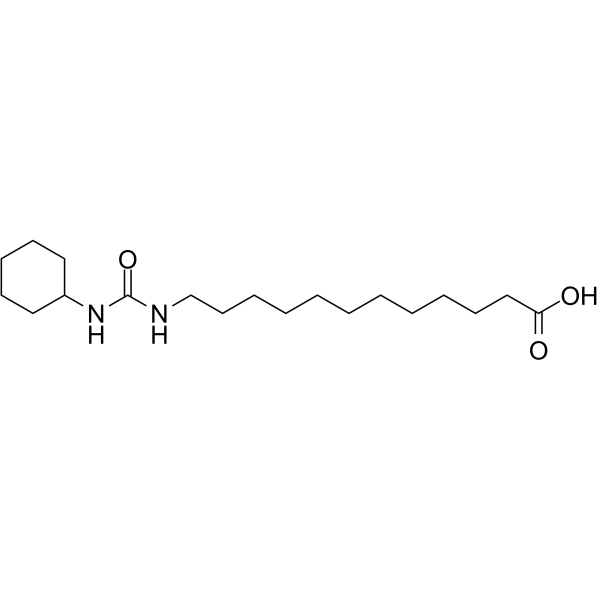
CUDA is a potent inhibitor of soluble epoxide hydrolase (sEH), with IC50s of 11.1 nM and 112 nM for mouse sEH and human sEH, respectively. CUDA selectively increases peroxisome proliferator-activated receptor (PPAR) alpha activity. CUDA may be valuable for the research of cardiovascular disease.
For research use only. We do not sell to patients.
- Purity : 99.83%
- CAS No.: 479413-68-8
- Formula: C19H36N2O3
- Molecular Weight:340.50
-
Storage:Powder -20°C, 3 years ; In solvent -80°C, 6 months , -20°C, 1 month

To place orders, for customer services and technical support, please contact: MedChemExpress USA
Tel: 609-228-6898 E-mail: [email protected] [email protected]


-
 Biological Activity
-
Chemical Information
-
Solvent & Solubility
- Protocols
- Purity & Documentation
- References
-
 Help & FAQs


-
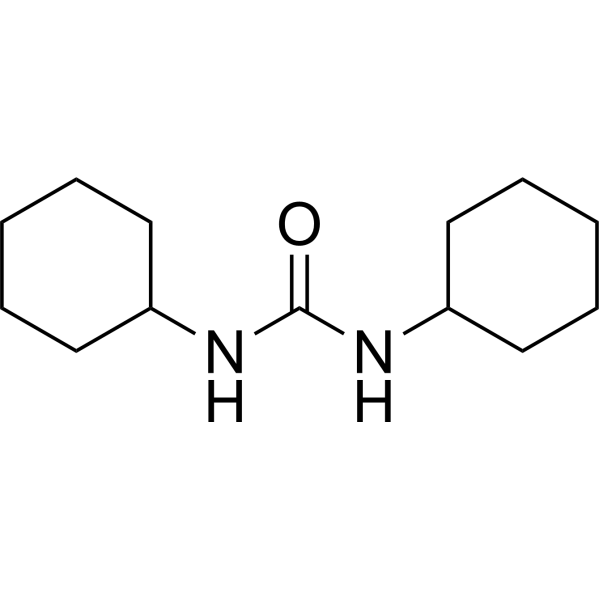
HY-W013989R
1,3-Dicyclohexylurea (Standard)sEH Inhibitor -
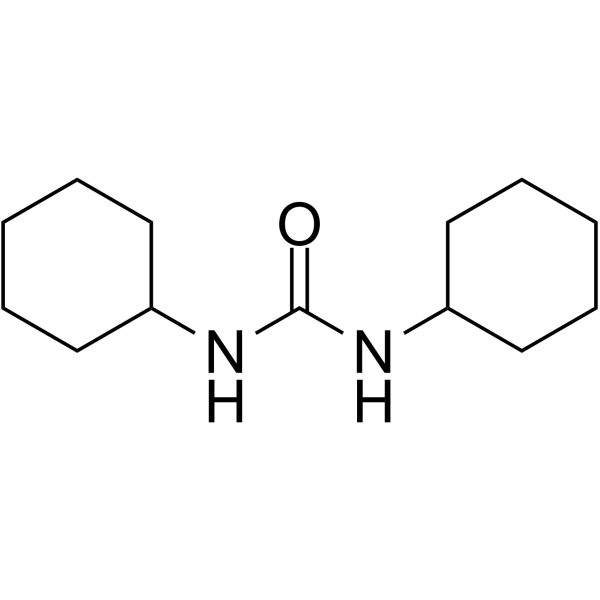
HY-W013989
1,3-DicyclohexylureasEH Inhibitor -
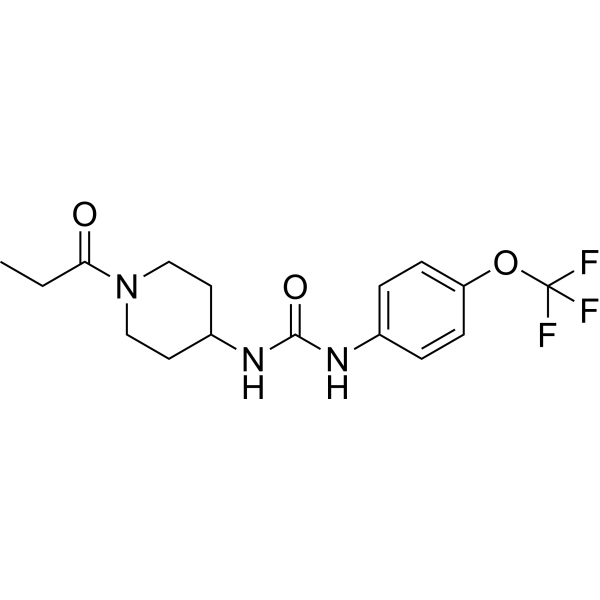
HY-101294
TPPUsEH Inhibitor -
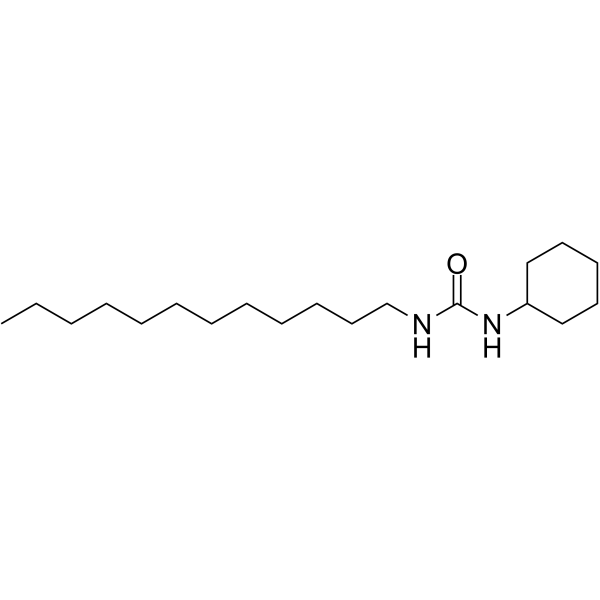
HY-135795
1-Cyclohexyl-3-dodecyl ureasEH Inhibitor -
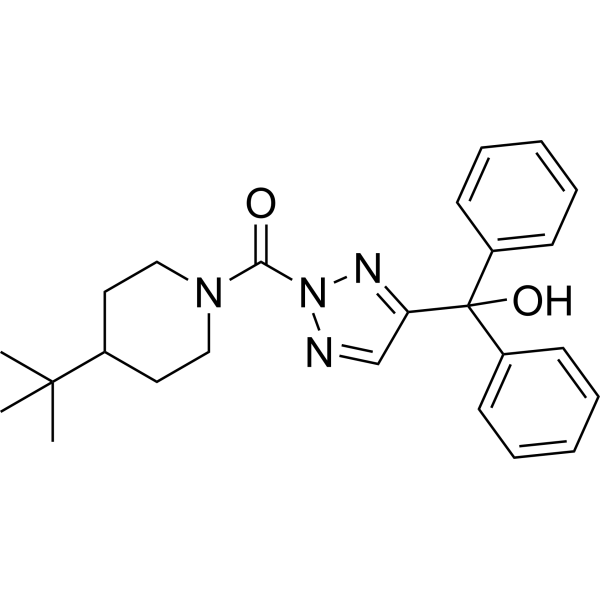
HY-128035
ML-211LYPLA1/LYPLA2 Inhibitor -
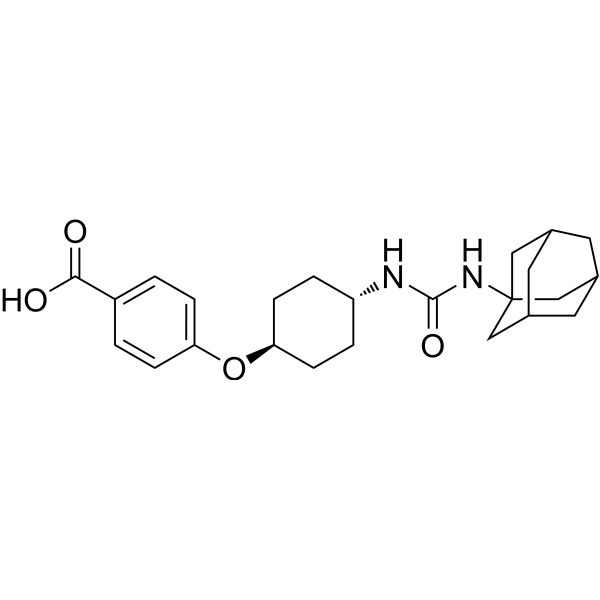
HY-113974
trans-AUCBsEH Inhibitor -

HY-101294R
TPPU (Standard)sEH Inhibitor -
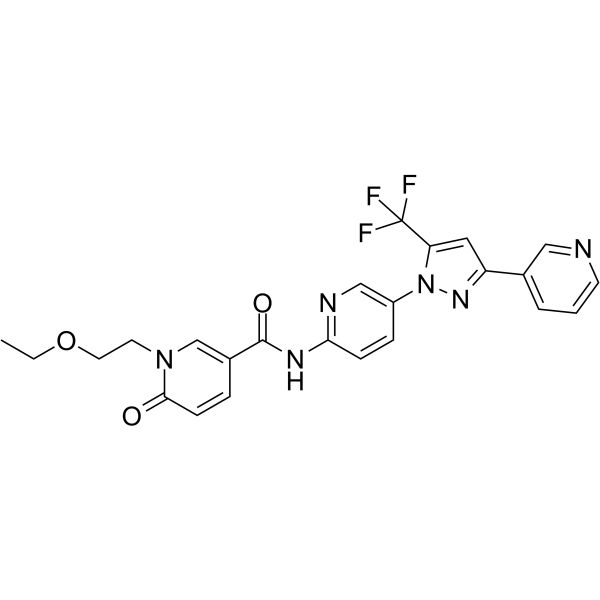
HY-124063
BI-1935sEH Inhibitor -
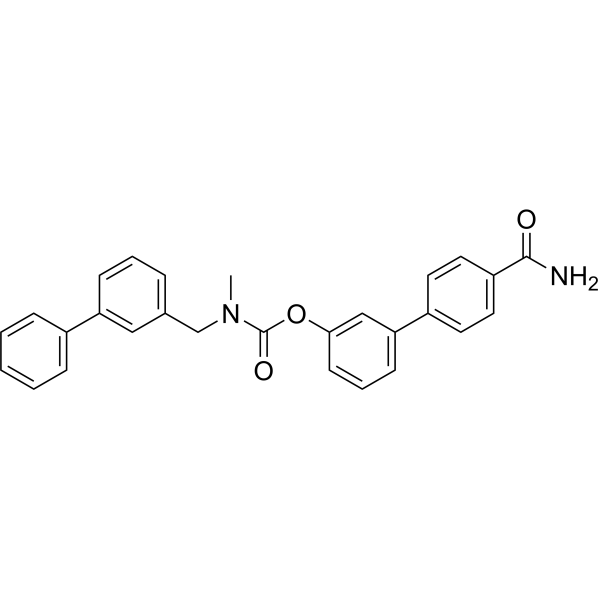
HY-132246
WWL123 analogue-1ABHD6 Inhibitor -
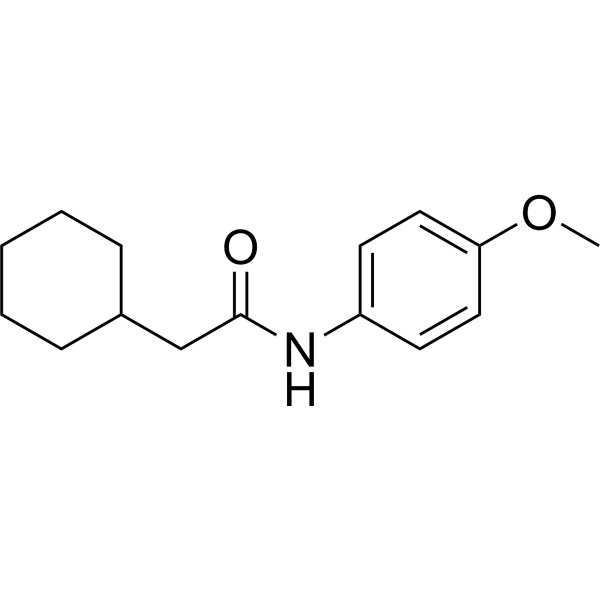
HY-148136
sEH inhibitor-7sEH Inhibitor -
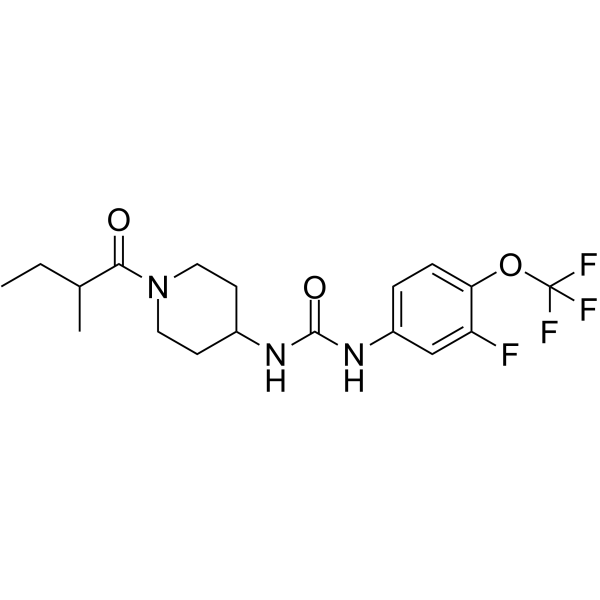
HY-135653A
(Rac)-EC5026sEH Inhibitor
Publications Citing Use of MedChemExpress (MCE) CUDA
More

Biological Activity
Description
|
PPARα |
mouse sEH 11.1 nM (IC50) |
human sEH 112 nM (IC50) |
In Vitro
CUDA (10 μM; 18 hours) produces 6- and 3-fold increases of PPARalpha in COS-7 cells[2].
CUDA does not alter PPARα protein expression, and it competitively inhibits the binding of Wy-14643 (Pirinixic acid) (HY-16995) to the ligand binding domain of PPARα, suggesting that it functions as a PPARα ligand[2].
MedChemExpress (MCE) has not independently confirmed the accuracy of these methods. They are for reference only.
-
Cell Line:COS-7 cells
-
Concentration:10 μM
-
Incubation Time:18 hours
-
Result:Activated PPARα by binding to the ligand binding domain of PPARα.


Chemical Information
-
CAS No. 479413-68-8
-
Appearance Solid
-
Molecular Weight 340.50
-
Formula C19H36N2O3
-
Color White to off-white
-
SMILES
O=C(NC1CCCCC1)NCCCCCCCCCCCC(O)=O
-
Shipping
Room temperature in continental US; may vary elsewhere.
-
Storage
Powder -20°C 3 years In solvent -80°C 6 months -20°C 1 month


Publications (1)
-
Journal Impact Factor
-
Most Recent
-
Microb Pathog
Baicalin inhibits macrophage glycolysis and succinate-driven HIF-1α signaling by targeting PKM2 to alleviate RSV-induced inflammation. [Abstract]2026 Apr:213:108291. PMID: 41544903


Solvent & Solubility
In Vitro:
DMSO : 25 mg/mL (73.42 mM; Need ultrasonic; Hygroscopic DMSO has a significant impact on the solubility of product, please use newly opened DMSO)
Please refer to the solubility information to select the appropriate solvent. Once prepared, please aliquot and store the solution to prevent product inactivation from repeated freeze-thaw cycles.
Storage method and period of stock solution: -80°C, 6 months; -20°C, 1 month. When stored at -80°C, please use it within 6 months. When stored at -20°C, please use it within 1 month.
Please refer to the solubility information to select the appropriate solvent. Once prepared, please aliquot and store the solution to prevent product inactivation from repeated freeze-thaw cycles.
Storage method and period of stock solution: -80°C, 6 months; -20°C, 1 month. When stored at -80°C, please use it within 6 months. When stored at -20°C, please use it within 1 month.
Concentration (start) × Volume (start) = Concentration (final) × Volume (final)
In Vivo:
Select the appropriate dissolution method based on your experimental animal and administration route.
- For the following dissolution methods, please ensure to first prepare a clear stock solution using an In Vitro approach and then sequentially add co-solvents:
- To ensure reliable experimental results, the clarified stock solution can be appropriately stored based on storage conditions. As for the working solution for In Vivo experiments, it is recommended to prepare freshly and use it on the same day.
- The percentages shown for the solvents indicate their volumetric ratio in the final prepared solution. If precipitation or phase separation occurs during preparation, heat and/or sonication can be used to aid dissolution.
In Vivo Dissolution Calculator
Please enter the basic information of animal experiments:
-
-
-
-
Recommended: Prepare an additional quantity of animals to account for potential losses during experiments.
Please enter your animal formula composition:
-
%DMSO +
Recommended: Keep the proportion of DMSO in working solution below 2% if your animal is weak.
-
%+
-
+%Tween-80 + +
-
%Saline +
The co-solvents required include: DMSO, . All of co-solvents are available by MedChemExpress (MCE). , Tween 80. All of co-solvents are available by MedChemExpress (MCE).
Working solution concentration: 0.22 mg/mL
Method for preparing stock solution: mg drug dissolved in μL DMSO. Stock solution concentration: mg/mL.
1. Take μL DMSO stock solution;
2. Add μL .
μL , mix evenly;
3. Then add μL Tween 80, mix evenly;
4. Then add μL
Please ensure that the stock solution in the first step is dissolved to a clear state, and add co-solvents in sequence. You can use ultrasonic heating (ultrasonic cleaner, recommended frequency 20-40 kHz), vortexing, etc. to assist dissolution.


Purity & Documentation
-
Data Sheet (268 KB)
-
SDS (393 KB)
- English - EN (393 KB)
- Français - FR (393 KB)
- Deutsch - DE (393 KB)
- Norwegian - NO (393 KB)
- Español - ES (393 KB)
- Swedish - SV (393 KB)
- Italian - IT (393 KB)
- Korean - KR (393 KB)
- Portuguese - PT (393 KB)
-
Handling Instructions (2659 KB)
References
[1]. Morisseau C, et al. Structural refinement of inhibitors of urea-based soluble epoxide hydrolases. Biochem Pharmacol. 2002 May 1;63(9):1599-608. [Content Brief]
[2]. Fang X, et al. Activation of peroxisome proliferator-activated receptor alpha by substituted urea-derived soluble epoxide hydrolase inhibitors. J Pharmacol Exp Ther. 2005 Jul;314(1):260-70. [Content Brief]


Complete Stock Solution Preparation Table
Please refer to the solubility information to select the appropriate solvent. Once prepared, please aliquot and store the solution to prevent product inactivation from repeated freeze-thaw cycles.
Storage method and period of stock solution: -80°C, 6 months; -20°C, 1 month. When stored at -80°C, please use it within 6 months. When stored at -20°C, please use it within 1 month.
| Optional Solvent | Concentration Solvent Mass | 1 mg | 5 mg | 10 mg | 25 mg |
|---|---|---|---|---|---|
| DMSO | 1 mM | 2.9369 mL | 14.6843 mL | 29.3686 mL | 73.4214 mL |
| 5 mM | 0.5874 mL | 2.9369 mL | 5.8737 mL | 14.6843 mL | |
| 10 mM | 0.2937 mL | 1.4684 mL | 2.9369 mL | 7.3421 mL | |
| 15 mM | 0.1958 mL | 0.9790 mL | 1.9579 mL | 4.8948 mL | |
| 20 mM | 0.1468 mL | 0.7342 mL | 1.4684 mL | 3.6711 mL | |
| 25 mM | 0.1175 mL | 0.5874 mL | 1.1747 mL | 2.9369 mL | |
| 30 mM | 0.0979 mL | 0.4895 mL | 0.9790 mL | 2.4474 mL | |
| 40 mM | 0.0734 mL | 0.3671 mL | 0.7342 mL | 1.8355 mL | |
| 50 mM | 0.0587 mL | 0.2937 mL | 0.5874 mL | 1.4684 mL | |
| 60 mM | 0.0489 mL | 0.2447 mL | 0.4895 mL | 1.2237 mL |


CUDA Related Classifications
HY-121538 Related Classifications
 Powered by Bioz