



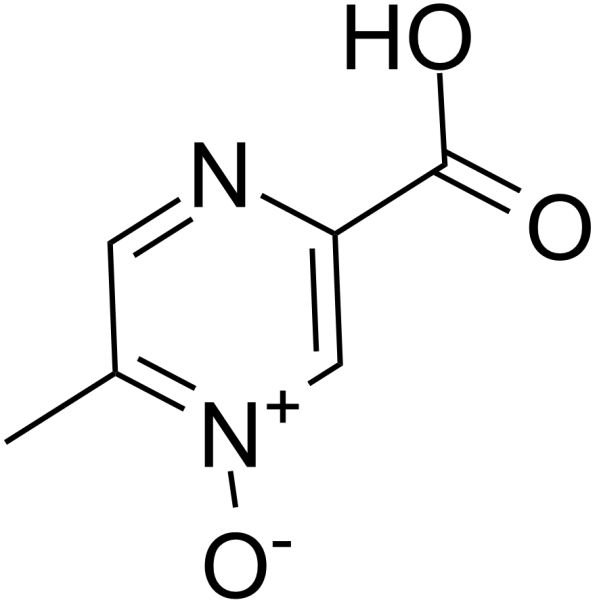
Acipimox
Based on 2 publication(s) in Google Scholar
Acipimox (K-9321), a nicotinic acid analogue, is an antilipolytic compound. Acipimox stimulates leptin releas, inhibits lipolysis and suppresses systemic levels of free fatty acids (FFAs) and improves insulin sensitivity.
Nos produits utilisent uniquement pour la recherche. Nous ne vendons pas aux patients.
- Pureté : 99.58%
- CAS No.: 51037-30-0
- Formule: C6H6N2O3
- Masse moléculaire:154.12
-
Stockage:Powder -20°C, 3 years , 4°C, 2 years ; In solvent -80°C, 2 years , -20°C, 1 year

To place orders, for customer services and technical support, please contact: MedChemExpress USA
Tel: 609-228-6898 E-mail: [email protected] [email protected]


-
 Activité biologique
-
Chemical Information
-
Solvant et solubilité
- Protocole
- Pureté et documentation
- Références
-
 Help & FAQs


-
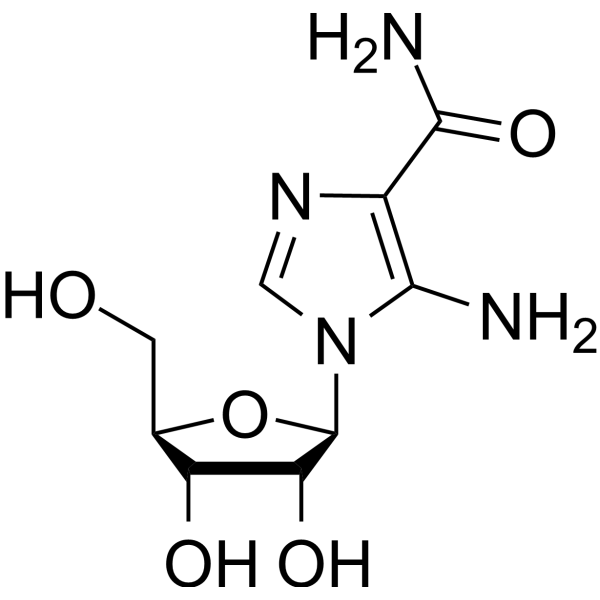
HY-13417
AICARAMPK Activator -
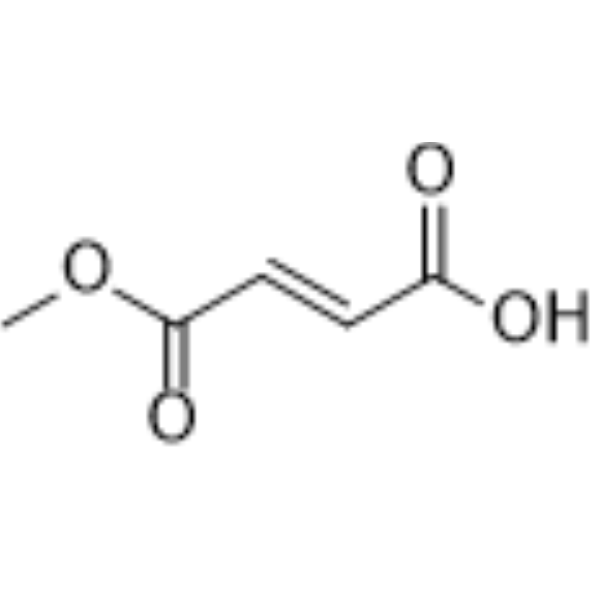
HY-103252
Monomethyl fumarateGPR109A Agonist -
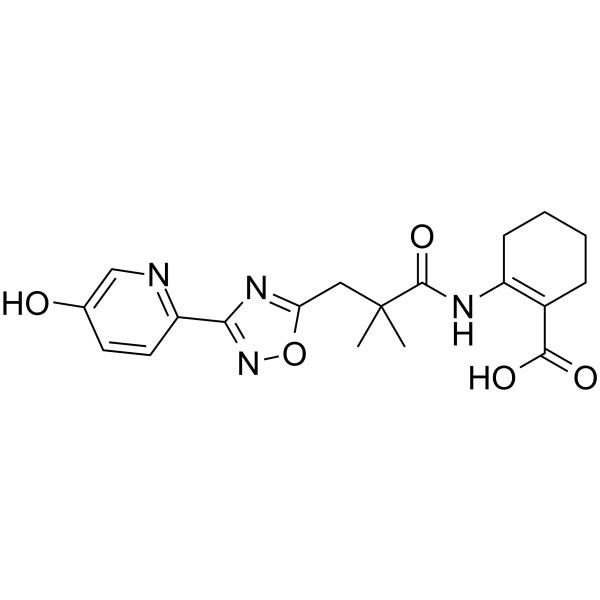
HY-10680
MK-6892GPR109A Agonist -
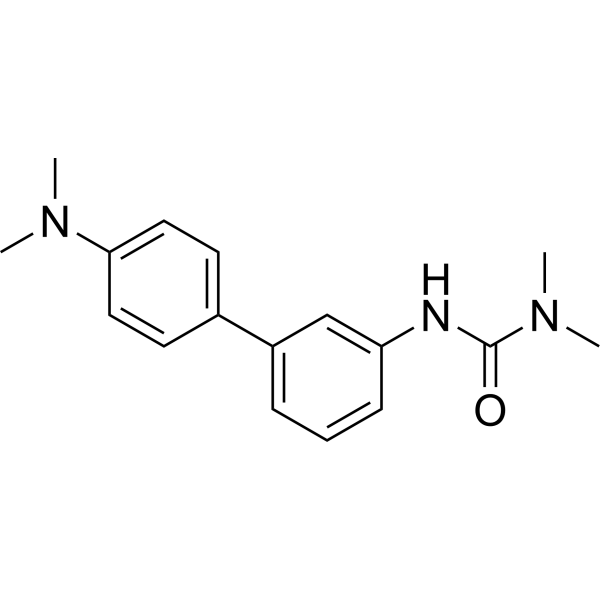
HY-15859
AtglistatinATGL Inhibitor -
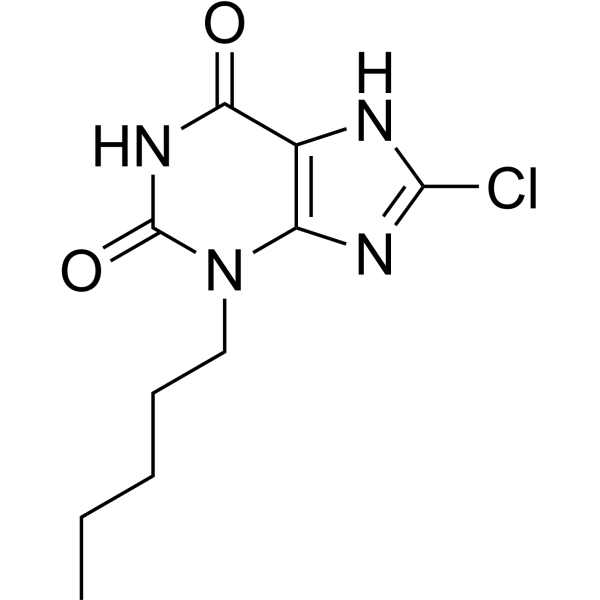
HY-119222
GSK256073GPR109A Agonist -
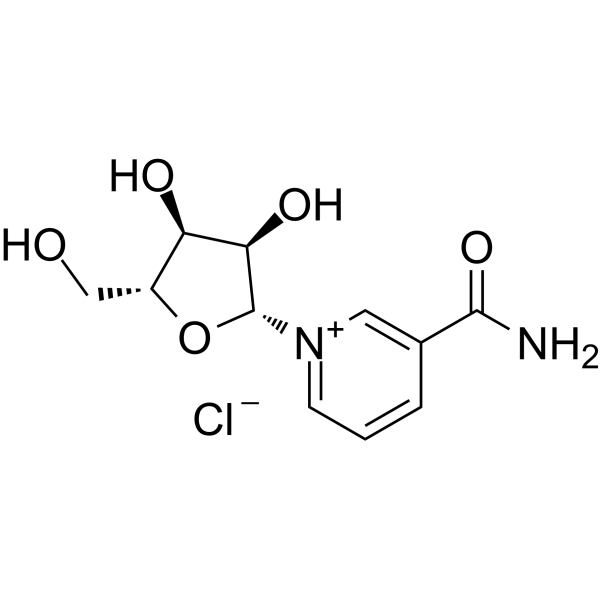
HY-123033A
Nicotinamide riboside chlorideEndogenous Metabolite -
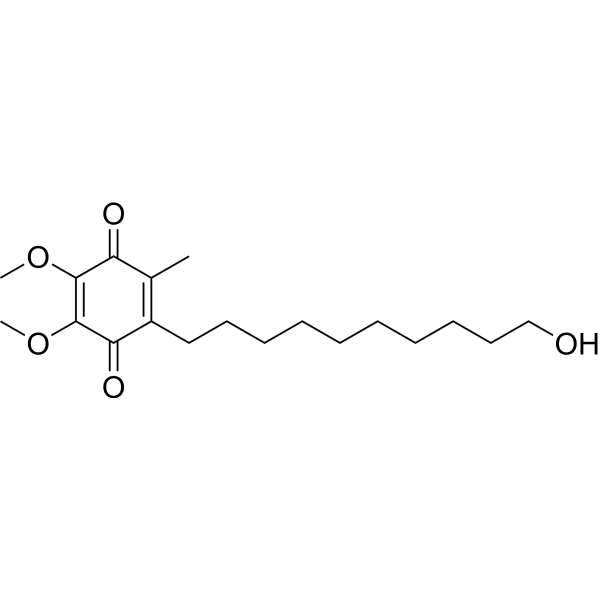
HY-N0303
IdebenoneMitochondrial Protectant/Antioxidant -
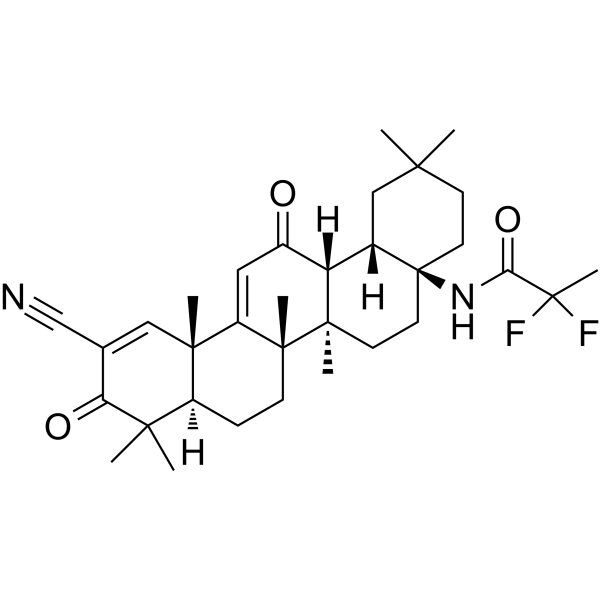
HY-12212
OmaveloxoloneNrf2 Activator -

HY-B0283R
Acipimox (Standard)Antilipolytic Agent -
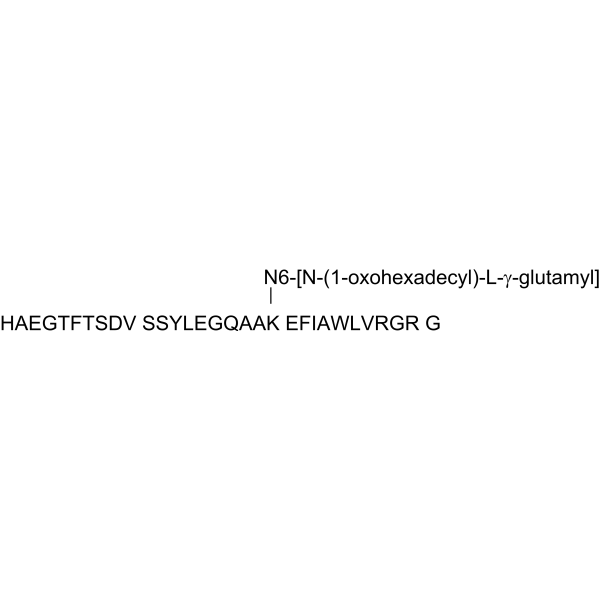
HY-P0014
LiraglutideGLP-1R Agonist -
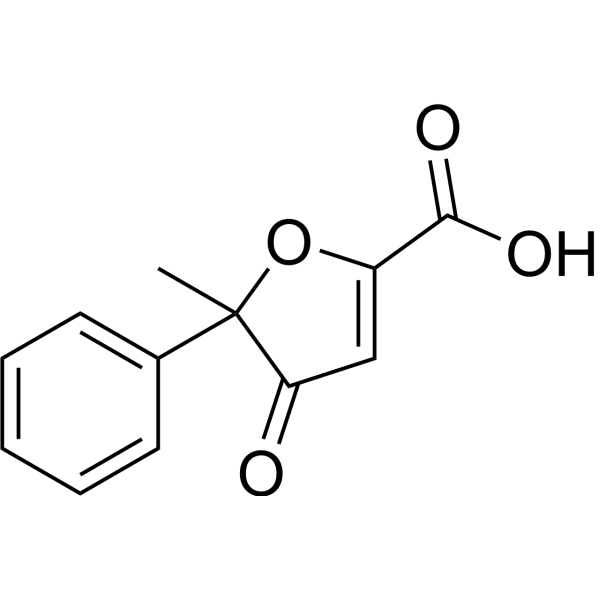
HY-107579
AcifranHypolipidemic Agent -

HY-107579R
Acifran (Standard)Reference Standard
Publications Citing Use of MedChemExpress (MCE) Acipimox
More

Activité biologique
Description
Cellular Effect
|
Cell Line

|
Type | Value | Description | References |
|---|---|---|---|---|
| CHO | EC50 |
5.3 μM
Compound: acipimox
|
Activity at GPR109a in CHO cells assessed as inhibition of forskolin-induced cAMP generation
Activity at GPR109a in CHO cells assessed as inhibition of forskolin-induced cAMP generation
|
[PMID: 17358052] |
In Vitro
Acipimox (0-100 μM; 0-4 hours) enhances leptin release from adipocytes isolated from Sprague-Dawley rats in a time- and dose- dependent manner[2].
Acipimox (10 mM) stimulats leptin release in adipocytes from Streptozotocin (STZ)-treated and Zucker diabetic fat (ZDF) rats[2].
MedChemExpress (MCE) has not independently confirmed the accuracy of these methods. They are for reference only.
In Vivo
MedChemExpress (MCE) has not independently confirmed the accuracy of these methods. They are for reference only.
-
Animal Model:Female C57BL/6J mice[3]
-
Dosage:50 mg/kg
-
Administration:Intraperitoneal injection
-
Result:Reduced circulating levels of FFA and glucose after 3 h.
Essai clinique
| NCT Number | Sponsor | Condition | Start Date |
Phase
|
|---|---|---|---|---|
| NCT01329991 | Plexxikon| | 2011-05 | PHASE1 |


Chemical Information
-
CAS No. 51037-30-0
-
Appearance Solid
-
Masse moléculaire 154.12
-
Formule C6H6N2O3
-
Color White to off-white
-
SMILES
O=C(C1=C[N+]([O-])=C(C)C=N1)O
-
Synonyms
K-9321
-
Livraison
Room temperature in continental US; may vary elsewhere.
-
Stockage
Powder -20°C 3 years 4°C 2 years In solvent -80°C 2 years -20°C 1 year


Publications (2)
-
Journal Impact Factor
-
Most Recent


Solvant et solubilité
In Vitro:
DMSO : ≥ 100 mg/mL (648.82 mM; Hygroscopic DMSO has a significant impact on the solubility of product, please use newly opened DMSO)
H2O : 20 mg/mL (129.76 mM; Need ultrasonic)
* "≥" means soluble, but saturation unknown.
Please refer to the solubility information to select the appropriate solvent. Once prepared, please aliquot and store the solution to prevent product inactivation from repeated freeze-thaw cycles.
Storage method and period of stock solution: -80°C, 2 years; -20°C, 1 year. When stored at -80°C, please use it within 2 years. When stored at -20°C, please use it within 1 year.
* Note: If you choose water as the stock solution, please dilute it to the working solution, then filter and sterilize it with a 0.22 μm filter before use.
Please refer to the solubility information to select the appropriate solvent. Once prepared, please aliquot and store the solution to prevent product inactivation from repeated freeze-thaw cycles.
Storage method and period of stock solution: -80°C, 2 years; -20°C, 1 year. When stored at -80°C, please use it within 2 years. When stored at -20°C, please use it within 1 year.
* Note: If you choose water as the stock solution, please dilute it to the working solution, then filter and sterilize it with a 0.22 μm filter before use.
Concentration (start) × Volume (start) = Concentration (final) × Volume (final)
In Vivo:
Select the appropriate dissolution method based on your experimental animal and administration route.
- For the following dissolution methods, please ensure to first prepare a clear stock solution using an In Vitro approach and then sequentially add co-solvents:
- To ensure reliable experimental results, the clarified stock solution can be appropriately stored based on storage conditions. As for the working solution for In Vivo experiments, it is recommended to prepare freshly and use it on the same day.
- The percentages shown for the solvents indicate their volumetric ratio in the final prepared solution. If precipitation or phase separation occurs during preparation, heat and/or sonication can be used to aid dissolution.
Add each solvent one by one: 10% DMSO 40% PEG300 5% Tween-80 45% Saline
Solubility: ≥ 2.5 mg/mL (16.22 mM); Clear solution
This protocol yields a clear solution of ≥ 2.5 mg/mL (saturation unknown).
Taking 1 mL working solution as an example, add 100 μL DMSO stock solution (25.0 mg/mL) to 400 μL PEG300, and mix evenly; then add 50 μL Tween-80 and mix evenly; then add 450 μL Saline to adjust the volume to 1 mL.
Preparation of Saline: Dissolve 0.9 g sodium chloride in ddH₂O and dilute to 100 mL to obtain a clear Saline solution.
Add each solvent one by one: 10% DMSO 90% (20% SBE-β-CD in Saline)
Solubility: ≥ 2.5 mg/mL (16.22 mM); Clear solution
This protocol yields a clear solution of ≥ 2.5 mg/mL (saturation unknown).
Taking 1 mL working solution as an example, add 100 μL DMSO stock solution (25.0 mg/mL) to 900 μL 20% SBE-β-CD in Saline, and mix evenly.
Preparation of 20% SBE-β-CD in Saline (4°C, storage for one week): 2 g SBE-β-CD powder is dissolved in 10 mL Saline, completely dissolve until clear.
For the following dissolution methods, please prepare the working solution directly:
It is recommended to prepare fresh solutions and use them promptly within a short period of time.
The percentages shown for the solvents indicate their volumetric ratio in the final prepared solution. If precipitation or phase separation occurs during preparation, heat and/or sonication can be used to aid dissolution.
Add each solvent one by one: PBS
Solubility: 46.67 mg/mL (302.81 mM); Clear solution; Need ultrasonic
In Vivo Dissolution Calculator
Please enter the basic information of animal experiments:
-
-
-
-
Recommended: Prepare an additional quantity of animals to account for potential losses during experiments.
Working solution concentration: 0.22 mg/mL
This product has good water solubility, please refer to the measured solubility data in water/PBS/Saline for details.


Pureté et documentation
-
Fiche technique (280 KB)
-
SDS (393 KB)
- English - EN (393 KB)
- Français - FR (393 KB)
- Deutsch - DE (393 KB)
- Norwegian - NO (393 KB)
- Español - ES (393 KB)
- Swedish - SV (393 KB)
- Italian - IT (393 KB)
- Korean - KR (393 KB)
- Portuguese - PT (393 KB)
-
Instruction de manipulation (2659 KB)
Références
[1]. Vestergaard ET, et, al. Short-term acipimox treatment is associated with decreased cardiac parasympathetic modulation. Br J Clin Pharmacol. 2017 Dec;83(12):2671-2677. [Content Brief]
[2]. Wang-Fisher YL, et, al. Acipimox stimulates leptin production from isolated rat adipocytes. J Endocrinol. 2002 Aug;174(2):267-72. [Content Brief]
[3]. Ahrén B. Reducing plasma free fatty acids by acipimox improves glucose tolerance in high-fat fed mice. Acta Physiol Scand. 2001 Feb;171(2):161-7. [Content Brief]


Complete Stock Solution Preparation Table
Please refer to the solubility information to select the appropriate solvent. Once prepared, please aliquot and store the solution to prevent product inactivation from repeated freeze-thaw cycles.
Storage method and period of stock solution: -80°C, 2 years; -20°C, 1 year. When stored at -80°C, please use it within 2 years. When stored at -20°C, please use it within 1 year.
| Optional Solvent | Concentration Solvent Mass | 1 mg | 5 mg | 10 mg | 25 mg |
|---|---|---|---|---|---|
| H2O / DMSO | 1 mM | 6.4882 mL | 32.4412 mL | 64.8824 mL | 162.2060 mL |
| 5 mM | 1.2976 mL | 6.4882 mL | 12.9765 mL | 32.4412 mL | |
| 10 mM | 0.6488 mL | 3.2441 mL | 6.4882 mL | 16.2206 mL | |
| 15 mM | 0.4325 mL | 2.1627 mL | 4.3255 mL | 10.8137 mL | |
| 20 mM | 0.3244 mL | 1.6221 mL | 3.2441 mL | 8.1103 mL | |
| 25 mM | 0.2595 mL | 1.2976 mL | 2.5953 mL | 6.4882 mL | |
| 30 mM | 0.2163 mL | 1.0814 mL | 2.1627 mL | 5.4069 mL | |
| 40 mM | 0.1622 mL | 0.8110 mL | 1.6221 mL | 4.0552 mL | |
| 50 mM | 0.1298 mL | 0.6488 mL | 1.2976 mL | 3.2441 mL | |
| 60 mM | 0.1081 mL | 0.5407 mL | 1.0814 mL | 2.7034 mL | |
| 80 mM | 0.0811 mL | 0.4055 mL | 0.8110 mL | 2.0276 mL | |
| 100 mM | 0.0649 mL | 0.3244 mL | 0.6488 mL | 1.6221 mL |
* Note: If you choose water as the stock solution, please dilute it to the working solution, then filter and sterilize it with a 0.22 μm filter before use.


Acipimox Related Classifications
HY-B0283 Related Classifications
 Powered by Bioz