



Eprotirome

Based on 1 Customer Validation
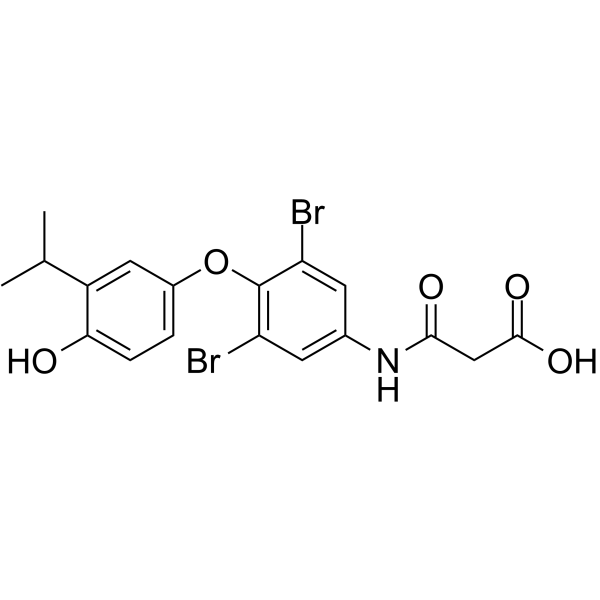
Eprotirome (KB2115) is a liver-selective thyroid hormone receptor (TR) agonist. KB2115 has modestly higher affinity for TRβ than for TRα. Eprotirome reduces low-density lipoprotein (LDL) cholesterol concentrations. Eprotirome can be used for dyslipidemias and obesity research.
Nos produits utilisent uniquement pour la recherche. Nous ne vendons pas aux patients.
- Pureté : 99.71%
- CAS No.: 355129-15-6
- Formule: C18H17Br2NO5
- Masse moléculaire:487.14
-
Stockage:Powder -20°C, 3 years ; In solvent -80°C, 6 months , -20°C, 1 month

To place orders, for customer services and technical support, please contact: MedChemExpress USA
Tel: 609-228-6898 E-mail: [email protected] [email protected]


-
 Activité biologique
-
Chemical Information
-
Solvant et solubilité
- Protocole
- Pureté et documentation
- Références
-
 Help & FAQs


-
HY-12216
ResmetiromTHR-β Agonist -
HY-14823
SobetiromeTRβ Agonist -
HY-10182
LaduviglusibGSK-3 Inhibitor -
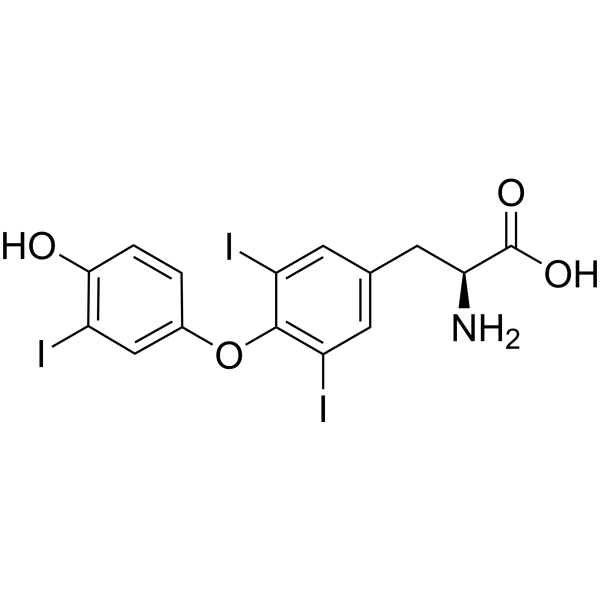
HY-A0070A
LiothyronineTIGIT/PVR Blocker -
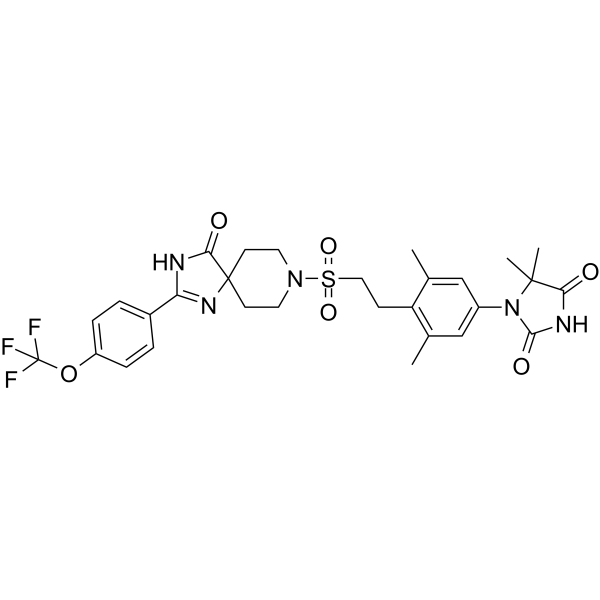
HY-100856
PCO371PTHR1 Agonist -
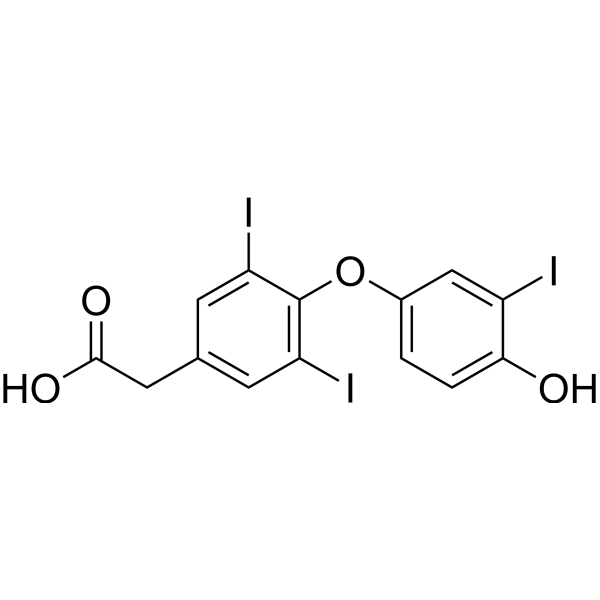
HY-B1201
TiratricolThyroid Hormone Receptor Inhibitor -
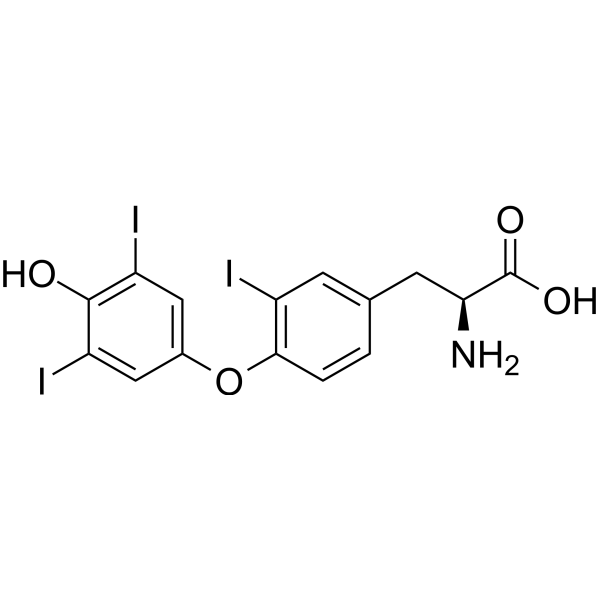
HY-W010696
Reverse T3Thyroid Hormone -
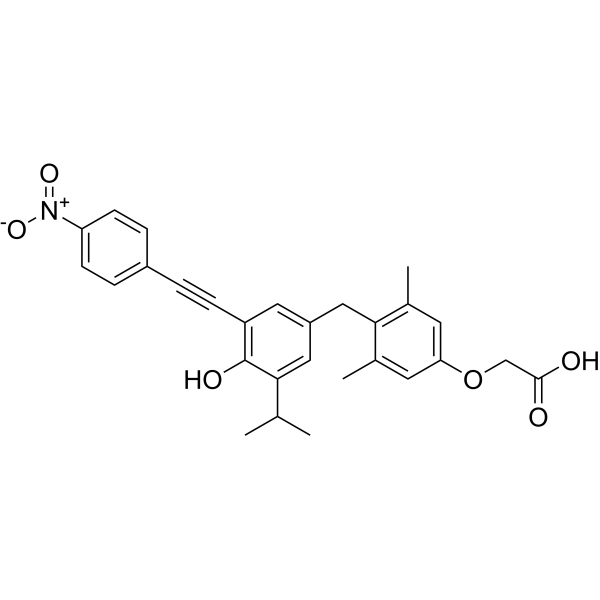
HY-141513
NH-3THR Antagonist -

HY-10473R
Eprotirome (Standard)Reference Standard -
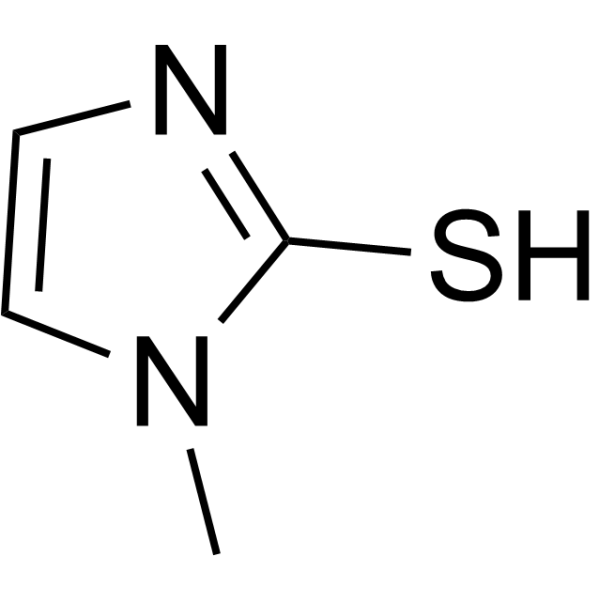
HY-B0208
MethimazoleAnti-thyroid Agent -
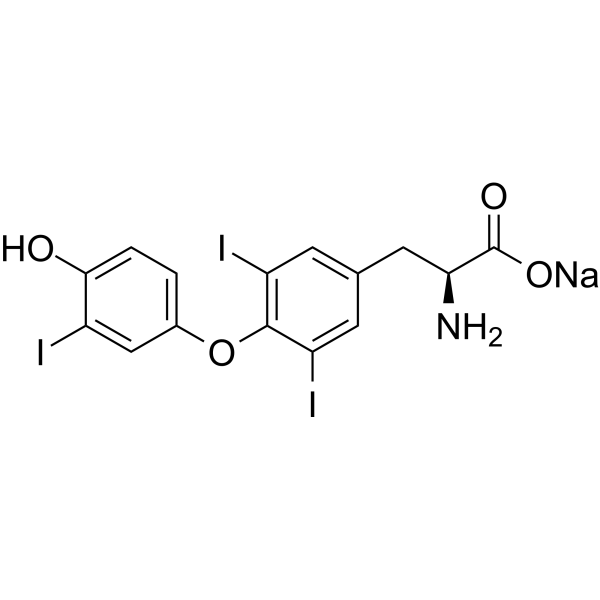
HY-A0070
Liothyronine sodiumTRα/TRβ Agonist -
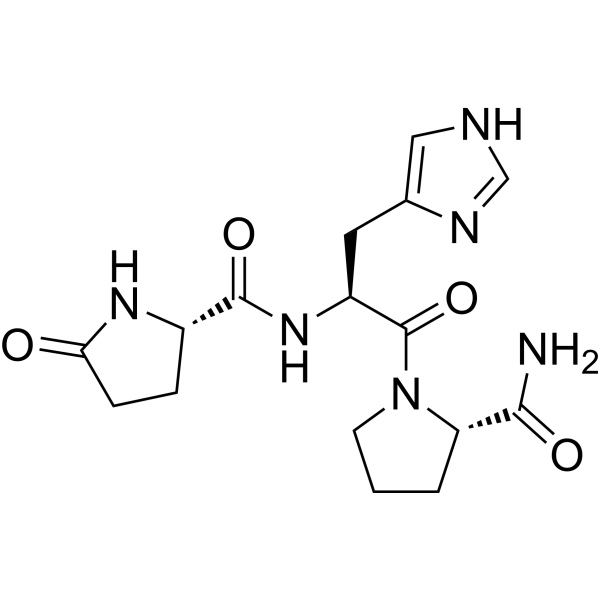
HY-P0002
ProtirelinEndogenous Metabolite


Activité biologique
Description
IC50 & Target
Thyroid hormone receptor[1]
Cellular Effect
|
Cell Line

|
Type | Value | Description | References |
|---|---|---|---|---|
| GH3 | EC50 |
0.43 nM
Compound: 1a; KB2115
|
Agonist activity at thyroid hormone receptor in rat GH3 cells expressing TRE measured after 24 hrs in presence of T3 by luciferase reporter gene assay
Agonist activity at thyroid hormone receptor in rat GH3 cells expressing TRE measured after 24 hrs in presence of T3 by luciferase reporter gene assay
|
[PMID: 27120257] |
In Vivo
MedChemExpress (MCE) has not independently confirmed the accuracy of these methods. They are for reference only.
Essai clinique
| NCT Number | Sponsor | Condition | Start Date |
Phase
|
|---|---|---|---|---|
| NCT01329991 | 2011-05 | PHASE1 |


Chemical Information
-
CAS No. 355129-15-6
-
Appearance Solid
-
Masse moléculaire 487.14
-
Formule C18H17Br2NO5
-
Color White to light yellow
-
SMILES
O=C(O)CC(NC1=CC(Br)=C(OC2=CC=C(O)C(C(C)C)=C2)C(Br)=C1)=O
-
Synonyms
KB2115
-
Livraison
Room temperature in continental US; may vary elsewhere.
-
Stockage
Powder -20°C 3 years In solvent -80°C 6 months -20°C 1 month


Solvant et solubilité
In Vitro:
DMSO : 125 mg/mL (256.60 mM; Need ultrasonic; Hygroscopic DMSO has a significant impact on the solubility of product, please use newly opened DMSO)
Please refer to the solubility information to select the appropriate solvent. Once prepared, please aliquot and store the solution to prevent product inactivation from repeated freeze-thaw cycles.
Storage method and period of stock solution: -80°C, 6 months; -20°C, 1 month. When stored at -80°C, please use it within 6 months. When stored at -20°C, please use it within 1 month.
Please refer to the solubility information to select the appropriate solvent. Once prepared, please aliquot and store the solution to prevent product inactivation from repeated freeze-thaw cycles.
Storage method and period of stock solution: -80°C, 6 months; -20°C, 1 month. When stored at -80°C, please use it within 6 months. When stored at -20°C, please use it within 1 month.
Concentration (start) × Volume (start) = Concentration (final) × Volume (final)
In Vivo:
Select the appropriate dissolution method based on your experimental animal and administration route.
- For the following dissolution methods, please ensure to first prepare a clear stock solution using an In Vitro approach and then sequentially add co-solvents:
- To ensure reliable experimental results, the clarified stock solution can be appropriately stored based on storage conditions. As for the working solution for In Vivo experiments, it is recommended to prepare freshly and use it on the same day.
- The percentages shown for the solvents indicate their volumetric ratio in the final prepared solution. If precipitation or phase separation occurs during preparation, heat and/or sonication can be used to aid dissolution.
Add each solvent one by one: 10% DMSO 40% PEG300 5% Tween-80 45% Saline
Solubility: ≥ 2.08 mg/mL (4.27 mM); Clear solution
This protocol yields a clear solution of ≥ 2.08 mg/mL (saturation unknown).
Taking 1 mL working solution as an example, add 100 μL DMSO stock solution (20.8 mg/mL) to 400 μL PEG300, and mix evenly; then add 50 μL Tween-80 and mix evenly; then add 450 μL Saline to adjust the volume to 1 mL.
Preparation of Saline: Dissolve 0.9 g sodium chloride in ddH₂O and dilute to 100 mL to obtain a clear Saline solution.
Add each solvent one by one: 10% DMSO 90% (20% SBE-β-CD in Saline)
Solubility: ≥ 2.08 mg/mL (4.27 mM); Clear solution
This protocol yields a clear solution of ≥ 2.08 mg/mL (saturation unknown).
Taking 1 mL working solution as an example, add 100 μL DMSO stock solution (20.8 mg/mL) to 900 μL 20% SBE-β-CD in Saline, and mix evenly.
Preparation of 20% SBE-β-CD in Saline (4°C, storage for one week): 2 g SBE-β-CD powder is dissolved in 10 mL Saline, completely dissolve until clear.
In Vivo Dissolution Calculator
Please enter the basic information of animal experiments:
-
-
-
-
Recommended: Prepare an additional quantity of animals to account for potential losses during experiments.
Please enter your animal formula composition:
-
%DMSO +
Recommended: Keep the proportion of DMSO in working solution below 2% if your animal is weak.
-
%+
-
+%Tween-80 + +
-
%Saline +
The co-solvents required include: DMSO, . All of co-solvents are available by MedChemExpress (MCE). , Tween 80. All of co-solvents are available by MedChemExpress (MCE).
Working solution concentration: 0.22 mg/mL
Method for preparing stock solution: mg drug dissolved in μL DMSO. Stock solution concentration: mg/mL.
1. Take μL DMSO stock solution;
2. Add μL .
μL , mix evenly;
3. Then add μL Tween 80, mix evenly;
4. Then add μL
Please ensure that the stock solution in the first step is dissolved to a clear state, and add co-solvents in sequence. You can use ultrasonic heating (ultrasonic cleaner, recommended frequency 20-40 kHz), vortexing, etc. to assist dissolution.


Pureté et documentation
-
Fiche technique (273 KB)
-
SDS (396 KB)
- English - EN (396 KB)
- Français - FR (396 KB)
- Deutsch - DE (396 KB)
- Norwegian - NO (396 KB)
- Español - ES (396 KB)
- Swedish - SV (396 KB)
- Italian - IT (396 KB)
- Korean - KR (396 KB)
- Portuguese - PT (396 KB)
-
Instruction de manipulation (2659 KB)
Références
[1]. Martagón AJ, et al. The amelioration of hepatic steatosis by thyroid hormone receptor agonists is insufficient to restore insulin sensitivity in ob/ob mice. PLoS One. 2015 Apr 7;10(4):e0122987. [Content Brief]
[2]. Rosalba Senese, et al. Thyroid hormone metabolites and analogues. Endocrine. 2019 Oct;66(1):105-114. [Content Brief]


Complete Stock Solution Preparation Table
Please refer to the solubility information to select the appropriate solvent. Once prepared, please aliquot and store the solution to prevent product inactivation from repeated freeze-thaw cycles.
Storage method and period of stock solution: -80°C, 6 months; -20°C, 1 month. When stored at -80°C, please use it within 6 months. When stored at -20°C, please use it within 1 month.
| Optional Solvent | Concentration Solvent Mass | 1 mg | 5 mg | 10 mg | 25 mg |
|---|---|---|---|---|---|
| DMSO | 1 mM | 2.0528 mL | 10.2640 mL | 20.5280 mL | 51.3199 mL |
| 5 mM | 0.4106 mL | 2.0528 mL | 4.1056 mL | 10.2640 mL | |
| 10 mM | 0.2053 mL | 1.0264 mL | 2.0528 mL | 5.1320 mL | |
| 15 mM | 0.1369 mL | 0.6843 mL | 1.3685 mL | 3.4213 mL | |
| 20 mM | 0.1026 mL | 0.5132 mL | 1.0264 mL | 2.5660 mL | |
| 25 mM | 0.0821 mL | 0.4106 mL | 0.8211 mL | 2.0528 mL | |
| 30 mM | 0.0684 mL | 0.3421 mL | 0.6843 mL | 1.7107 mL | |
| 40 mM | 0.0513 mL | 0.2566 mL | 0.5132 mL | 1.2830 mL | |
| 50 mM | 0.0411 mL | 0.2053 mL | 0.4106 mL | 1.0264 mL | |
| 60 mM | 0.0342 mL | 0.1711 mL | 0.3421 mL | 0.8553 mL | |
| 80 mM | 0.0257 mL | 0.1283 mL | 0.2566 mL | 0.6415 mL | |
| 100 mM | 0.0205 mL | 0.1026 mL | 0.2053 mL | 0.5132 mL |


Eprotirome Related Classifications
HY-10473 Related Classifications
 Powered by Bioz