



Chloroethene (polymer)

Based on 1 Customer Validation
Chloroethene polymer (Polyvinyl chloride) is an orally active vinyl chloride polymer. Chloroethene polymer is cytotoxic, reproductively toxic, and an endocrine disruptor. Chloroethene polymer can be used in the research of packaging inner surfaces, food wrapping paper, agricultural crop coverings, and plastic bottles.
For research use only. We do not sell to patients.
- CAS No.: 9002-86-2
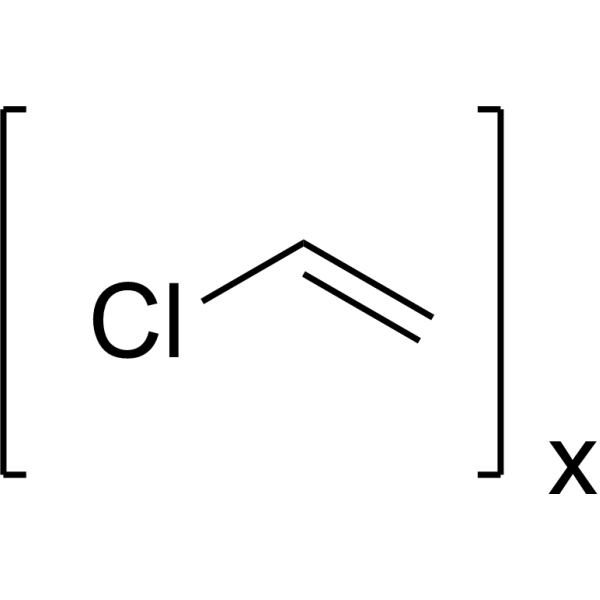
- Formula: (C2H3Cl)x
- Molecular Weight:20000-80000
-
Storage:Powder -20°C, 3 years , 4°C, 2 years ; In solvent -80°C, 6 months , -20°C, 1 month

To place orders, for customer services and technical support, please contact: MedChemExpress USA
Tel: 609-228-6898 E-mail: [email protected] [email protected]


-
 Biological Activity
-
Chemical Information
-
Solvent & Solubility
- Protocols
- Purity & Documentation
- References
-
 Help & FAQs


-
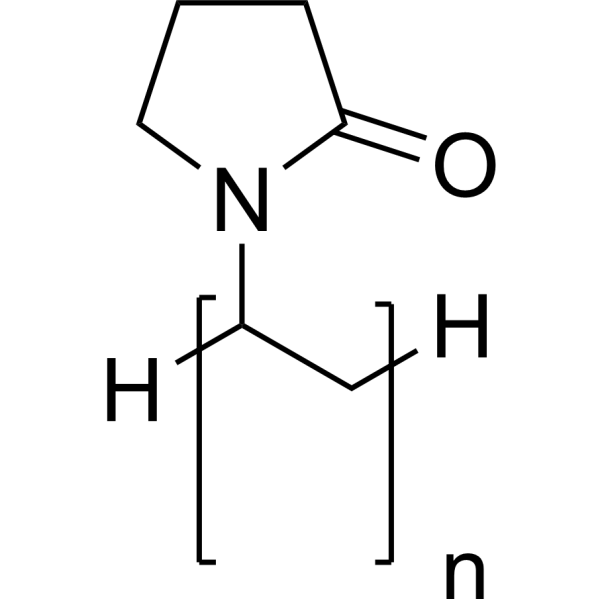
HY-B1620
Polyvinylpyrrolidone K30Disinfectant -

HY-B1620L
Polyvinylpyrrolidone, average Mw~40000Polyvinylpyrrolidone -

HY-B1620J
Polyvinylpyrrolidone, average Mw~10000Polyvinylpyrrolidone -

HY-B1620N
Polyvinylpyrrolidone, average Mw~360000Polyvinylpyrrolidone -

HY-B1620C
Polyvinylpyrrolidone K17Polymer -

HY-B1620B
Polyvinylpyrrolidone K15Polyvinylpyrrolidone -

HY-B1620H
Polyvinylpyrrolidone K90Disinfectant -

HY-B1620D
Polyvinylpyrrolidone K25Polyvinylpyrrolidone -

HY-B1620I
Polyvinylpyrrolidone K120Polyvinylpyrrolidone -
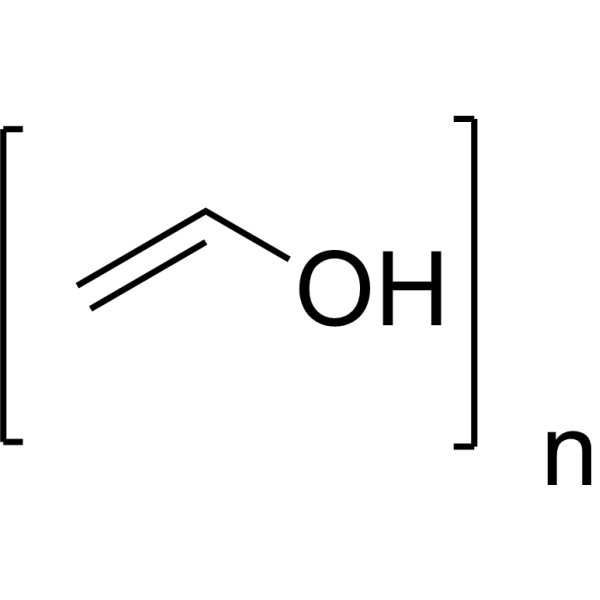
HY-Y0850E
Polyvinyl alcohol (Mw 30000-70000, 87-90% hydrolyzed)Dressing Meterial -
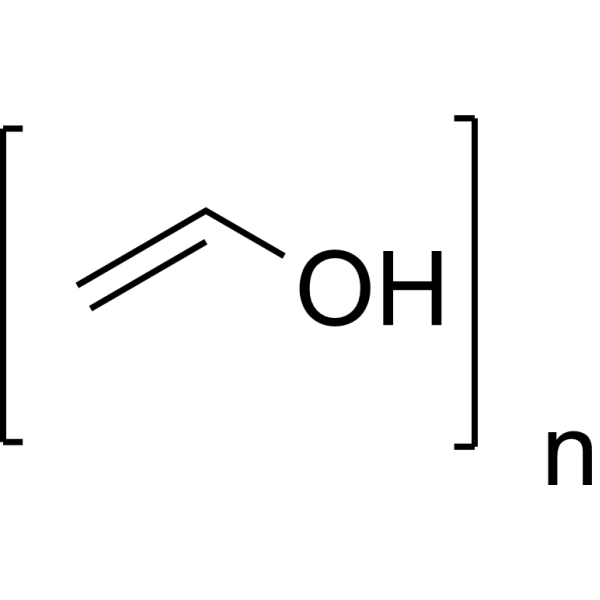
HY-Y0850
Polyvinyl alcohol (Mw 146000-186000, 99+% hydrolyzed)Biochemical reagents -
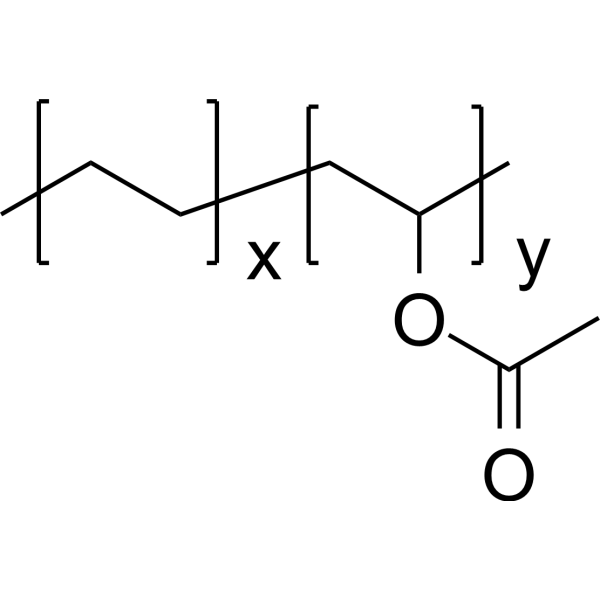
HY-W250126
Ethylene-vinyl acetate copolymerEncapsulant


Biological Activity
Description
In Vitro
Polyvinyl chloride (120-140 nm; 25-200 μg/mL; 24-72 h) NPs induces cytotoxicity in normal human lung fibroblast cells (IMR 90)[1].
MedChemExpress (MCE) has not independently confirmed the accuracy of these methods. They are for reference only. Further protocols information, click here.
In Vivo
Polyvinyl chloride (50-100 mg/kg; p.o.; daily) disrupts activin hormone levels, reducing testes weight and sperm count in male offspring and increasing activin in female offspring of mice[5].
MedChemExpress (MCE) has not independently confirmed the accuracy of these methods. They are for reference only.
Clinical Trial
| NCT Number | Sponsor | Condition | Start Date |
Phase

|
|---|---|---|---|---|
| NCT01329991 | Plexxikon| | 2011-05 | PHASE1 |


Chemical Information
-
CAS No. 9002-86-2
-
Appearance Solid
-
Molecular Weight 20000-80000
-
Formula (C2H3Cl)x
-
Color White to off-white
-
SMILES
ClC=C.[x]
-
Synonyms
Polyvinyl chloride
-
Shipping
Room temperature in continental US; may vary elsewhere.
-
Storage
Powder -20°C 3 years 4°C 2 years In solvent -80°C 6 months -20°C 1 month


Solvent & Solubility
In Vitro:
THF : 20 mg/mL (ultrasonic and warming and heat to 60°C)
DMSO : < 1 mg/mL (insoluble or slightly soluble)

Protocols
-
Cell Viability Determination by MTT Colorimetric Assay
The following protocol uses the MTT colorimetric assay as a classic literature-established method for assessing cell viability/metabolic activity in cultured mammalian cells. MTT[3-(4,5-dimethylthiazol-2-yl)-2,5-diphenyltetrazolium bromide] is reduced by metabolically active cells to a colored formazan product; the amount of formazan is quantified spectrophotometrically and provides an indirect measure of metabolically active viable cells. Importantly, MTT reduction reflects cellular oxidoreductase/metabolic activity rather than an absolute direct count of living cells, so changes in cellular metabolism can alter the signal independently of cell number.


Purity & Documentation
-
Data Sheet (269 KB)
-
SDS (254 KB)
- English - EN (254 KB)
- Français - FR (254 KB)
- Deutsch - DE (254 KB)
- Norwegian - NO (254 KB)
- Español - ES (254 KB)
- Swedish - SV (254 KB)
- Italian - IT (254 KB)
- Korean - KR (254 KB)
- Portuguese - PT (254 KB)
-
Handling Instructions (2659 KB)
References
[2]. Jaakkola JJ, et al. The role of exposure to phthalates from polyvinyl chloride products in the development of asthma and allergies: a systematic review and meta-analysis. Environ Health Perspect. 2008 Jul;116(7):845-53. [Content Brief]
[3]. Mahadevan G, et al. Comparison of Genotoxicity and Cytotoxicity of Polyvinyl Chloride and Poly(methyl methacrylate) Nanoparticles on Normal Human Lung Cell Lines. Chem Res Toxicol. 2021 Jun 21;34(6):1468-1480. [Content Brief]
[4]. Zhao GQ, et al. In vitro model of bacterial biofilm formation on polyvinyl chloride biomaterial. Cell Biochem Biophys. 2011 Nov;61(2):371-6. [Content Brief]
[5]. Zhuang J, et al. Combined exposure to polyvinyl chloride and polystyrene microplastics induces liver injury and perturbs gut microbial and serum metabolic homeostasis in mice. Ecotoxicol Environ Saf. 2023 Nov 15;267:115637. [Content Brief]
[6]. Archana D, et al. Alleviative effect of resveratrol on polyvinyl chloride-induced reproductive toxicity in male Wistar rats. Food Chem Toxicol. 2018 Jun;116(Pt B):173-181. [Content Brief]
[7]. AL-Farhaan M B G. Effect Of Polyvinyl Chloride On Activin Hormone In Mice.

Calculators
Concentration (start) × Volume (start) = Concentration (final) × Volume (final)


Chloroethene (polymer) Related Classifications
HY-W687022A Related Classifications
 Powered by Bioz