



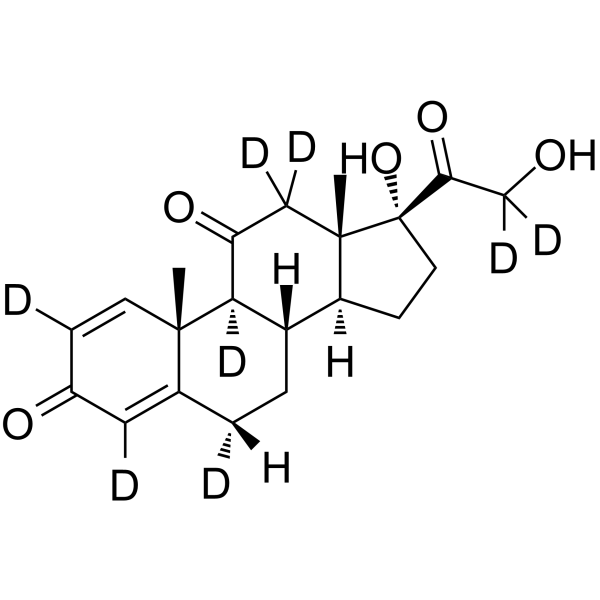
Cortisone-d8
Based on 1 Customer Validation
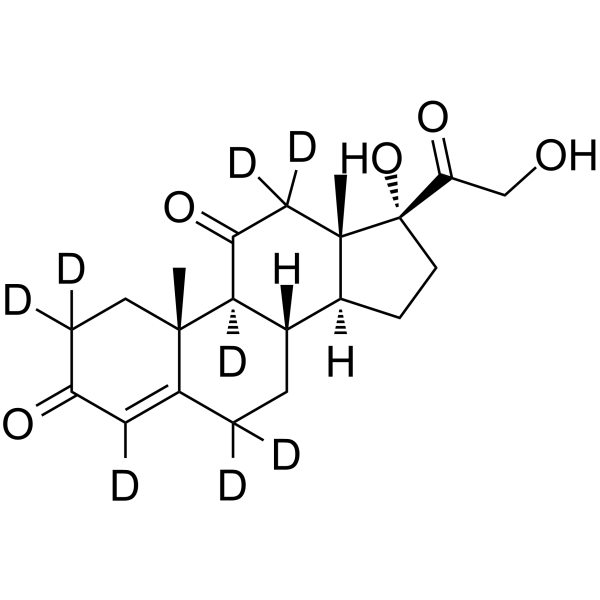
Cortisone-d8 is the deuterium labeled Cortisone. Cortisone (17-Hydroxy-11-dehydrocorticosterone), an oxidized metabolite of Cortisol (a Glucocorticoid). Cortisone acts as an immunosuppressant and anti-inflammatory agent. Cortisone can partially intervene in binding of Glucocorticoid to Glucocorticoid-receptor at high concentrations.
For research use only. We do not sell to patients.
- Purity : 98.17%
- CAS No.: 1257650-98-8
- Formula: C21H20D8O5
- Molecular Weight:368.49
-
Storage:Powder -20°C, 3 years , 4°C, 2 years ; In solvent -80°C, 6 months , -20°C, 1 month

To place orders, for customer services and technical support, please contact: MedChemExpress USA
Tel: 609-228-6898 E-mail: [email protected] [email protected]


-
 Biological Activity
-
Chemical Information
-
Solvent & Solubility
- Protocols
- Purity & Documentation
- References
-
 Help & FAQs


-
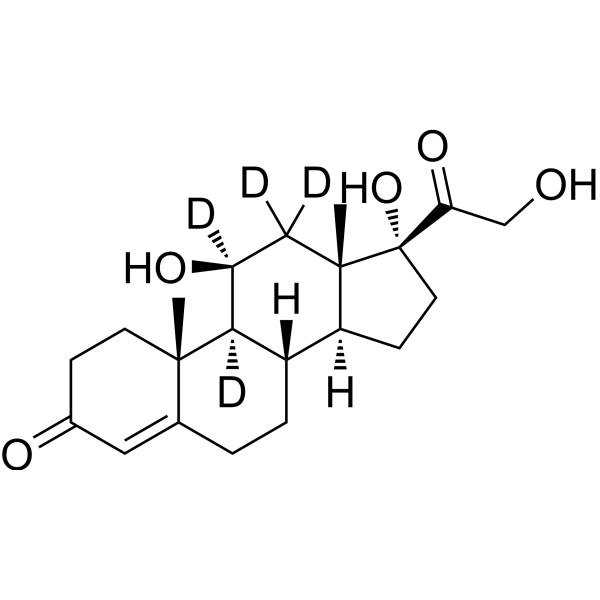
HY-N0583S2
Hydrocortisone-d4Stable Isotope -
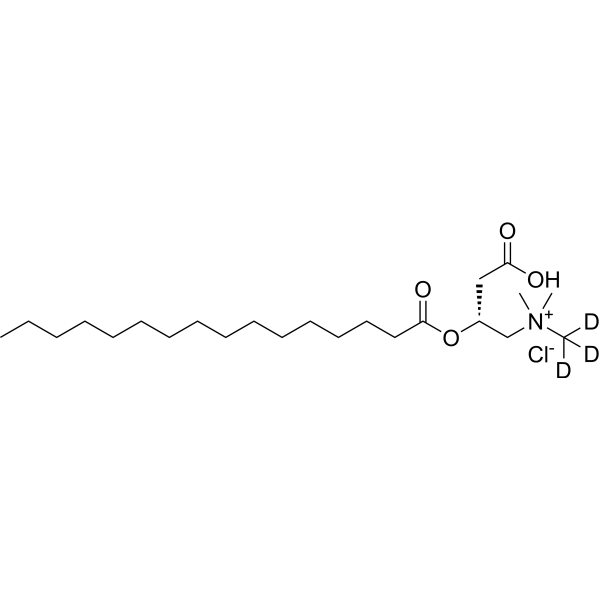
HY-113147AS
L-Palmitoylcarnitine-d3 hydrochlorideStable Isotope -
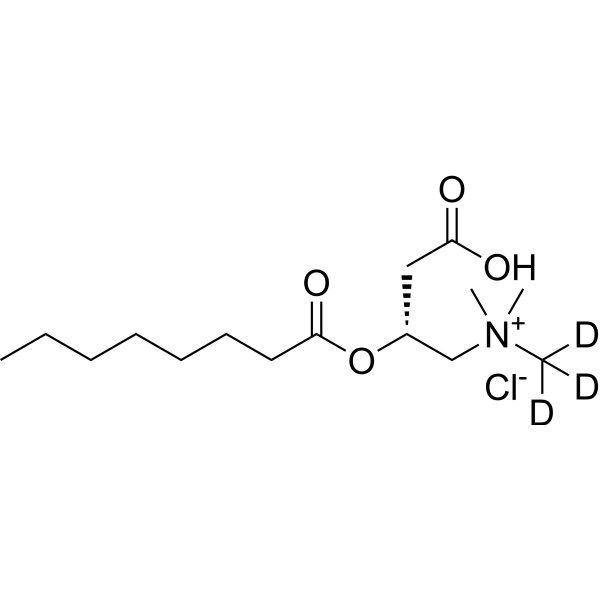
HY-139392S
Octanoyl-L-carnitine-d3 chlorideStable Isotope -
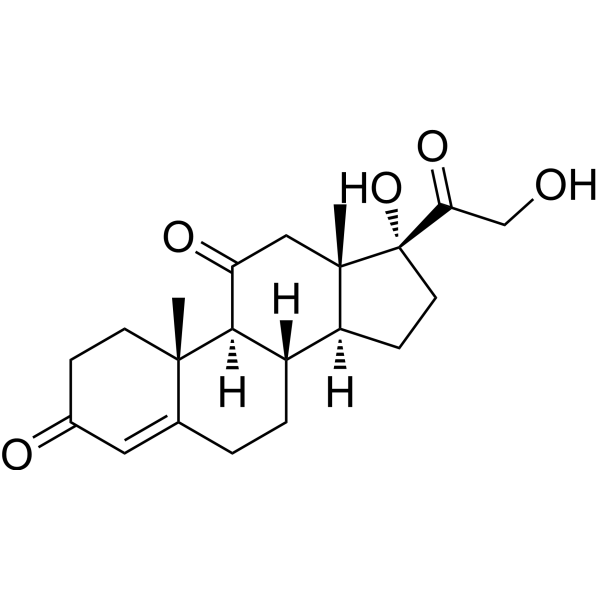
HY-17461
CortisoneGlucocorticoid Receptor Agonist -

HY-165667S
Prednisolone-d7Stable Isotope -
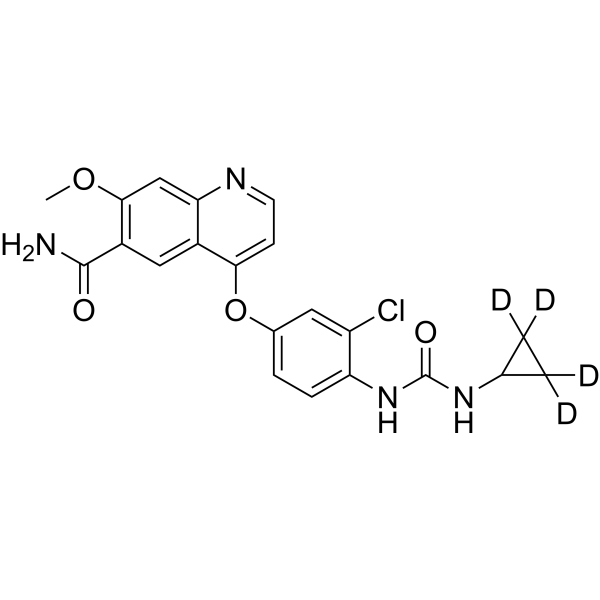
HY-10981S
Lenvatinib-d4Stable Isotope -
HY-B0214S
Prednisone-d8Stable Isotope
All Endogenous Metabolite Isoforms
More

Biological Activity
Description
In Vitro
Stable heavy isotopes of hydrogen, carbon, and other elements have been incorporated into drug molecules, largely as tracers for quantitation during the drug development process. Deuteration has gained attention because of its potential to affect the pharmacokinetic and metabolic profiles of drugs[1].
MedChemExpress (MCE) has not independently confirmed the accuracy of these methods. They are for reference only. Further protocols information, click here.
Clinical Trial
| NCT Number | Sponsor | Condition | Start Date |
Phase

|
|---|---|---|---|---|
| NCT01329991 | Plexxikon| | 2011-05 | PHASE1 |
Application
1. This compound can be used as a tracer
2. This compound can be used as an internal standard for quantitative analysis by NMR, GC-MS, or LC-MS.


Chemical Information
-
CAS No. 1257650-98-8
-
Unlabeled CAS 53-06-5
-
Appearance Solid
-
Molecular Weight 368.49
-
Formula C21H20D8O5
-
Color White to light yellow
-
SMILES
C[C@@]1(C2([2H])[2H])[C@](C(CO)=O)(O)CC[C@@]1([H])[C@]3([H])CC([2H])([2H])C4=C([2H])C(C([2H])([2H])C[C@]4(C)[C@@]3([2H])C2=O)=O
-
Shipping
Room temperature in continental US; may vary elsewhere.
-
Storage
Powder -20°C 3 years 4°C 2 years In solvent -80°C 6 months -20°C 1 month


Solvent & Solubility
In Vitro:
DMSO : 100 mg/mL (271.38 mM; Need ultrasonic; Hygroscopic DMSO has a significant impact on the solubility of product, please use newly opened DMSO)
Please refer to the solubility information to select the appropriate solvent. Once prepared, please aliquot and store the solution to prevent product inactivation from repeated freeze-thaw cycles.
Storage method and period of stock solution: -80°C, 6 months; -20°C, 1 month. When stored at -80°C, please use it within 6 months. When stored at -20°C, please use it within 1 month.
Please refer to the solubility information to select the appropriate solvent. Once prepared, please aliquot and store the solution to prevent product inactivation from repeated freeze-thaw cycles.
Storage method and period of stock solution: -80°C, 6 months; -20°C, 1 month. When stored at -80°C, please use it within 6 months. When stored at -20°C, please use it within 1 month.
Concentration (start) × Volume (start) = Concentration (final) × Volume (final)

Protocols
-
Research Protocol for Endocrine Diseases
Endocrine diseases often arise from disrupted hormone production, hormone signaling, or target-tissue responsiveness; for diabetes-focused endocrine disease models, insulin signaling regulates glucose uptake, hepatic glucose output, lipid metabolism, and β-cell compensation. Type 2 diabetes develops through interacting defects in insulin resistance, β-cell dysfunction, adipose inflammation, hepatic glucose overproduction, altered incretin signaling, and ectopic lipid metabolism. A major unresolved question is whether endocrine dysfunction is driven primarily by target-tissue insulin resistance, intrinsic β-cell failure, immune/inflammatory stress, or combined multi-organ failure that differs by disease stage.
-
Research Protocol for Inflammation-related Diseases
The NLRP3 inflammasome is a cytosolic innate immune signaling platform that integrates priming signals and danger-signal activation to promote caspase-1 activation, maturation of IL-1β and IL-18, and gasdermin D-mediated pyroptotic cell death. The core experimental logic is to determine whether inflammatory disease phenotypes are driven by increased NLRP3 expression, ASC-containing inflammasome assembly, caspase-1 cleavage, GSDMD cleavage, and extracellular release of IL-1β/IL-18 rather than by nonspecific cell injury alone. The pathway is strongly linked to inflammation-related disease phenotypes because monosodium urate crystals activate NALP3/NLRP3 inflammasome signaling in gout-like crystal inflammation, cholesterol crystals activate NLRP3 inflammasomes in atherogenesis models, and DSS-induced intestinal inflammation has been reported to involve NLRP3 inflammasome activity. However, experimental colitis studies also show context-dependent protective effects of NLRP3 inflammasome co


Purity & Documentation
-
Data Sheet (278 KB)
-
SDS (419 KB)
- English - EN (419 KB)
- Français - FR (419 KB)
- Deutsch - DE (419 KB)
- Norwegian - NO (419 KB)
- Español - ES (419 KB)
- Swedish - SV (419 KB)
- Italian - IT (419 KB)
- Korean - KR (419 KB)
- Portuguese - PT (419 KB)
-
Handling Instructions (2659 KB)
References
[1]. Russak EM, et al. Impact of Deuterium Substitution on the Pharmacokinetics of Pharmaceuticals. Ann Pharmacother. 2019;53(2):211-216. [Content Brief]
[2]. Hirano T, et, al. Cortisone counteracts apoptosis-inducing effect of cortisol in human peripheral-blood mononuclear cells. Int Immunopharmacol. 2001 Nov;1(12):2109-15. [Content Brief]
[3]. McCue RE, et, al. The effect of cortisone on the accumulation, activation, and necrosis of macrophages in tuberculous lesions. Inflammation. 1978 Jun;3(2):159-76. [Content Brief]
[4]. Seleem D, et, al. In Vivo Antifungal Activity of Monolaurin against Candida albicans Biofilms. Biol Pharm Bull. 2018;41(8):1299-1302. [Content Brief]
[5]. Rusu VM, et, al. In vivo effects of cortisone on the B cell line in chickens. J Immunol. 1975 Nov;115(5):1370-4. [Content Brief]


Complete Stock Solution Preparation Table
Please refer to the solubility information to select the appropriate solvent. Once prepared, please aliquot and store the solution to prevent product inactivation from repeated freeze-thaw cycles.
Storage method and period of stock solution: -80°C, 6 months; -20°C, 1 month. When stored at -80°C, please use it within 6 months. When stored at -20°C, please use it within 1 month.
| Optional Solvent | Concentration Solvent Mass | 1 mg | 5 mg | 10 mg | 25 mg |
|---|---|---|---|---|---|
| DMSO | 1 mM | 2.7138 mL | 13.5689 mL | 27.1378 mL | 67.8444 mL |
| 5 mM | 0.5428 mL | 2.7138 mL | 5.4276 mL | 13.5689 mL | |
| 10 mM | 0.2714 mL | 1.3569 mL | 2.7138 mL | 6.7844 mL | |
| 15 mM | 0.1809 mL | 0.9046 mL | 1.8092 mL | 4.5230 mL | |
| 20 mM | 0.1357 mL | 0.6784 mL | 1.3569 mL | 3.3922 mL | |
| 25 mM | 0.1086 mL | 0.5428 mL | 1.0855 mL | 2.7138 mL | |
| 30 mM | 0.0905 mL | 0.4523 mL | 0.9046 mL | 2.2615 mL | |
| 40 mM | 0.0678 mL | 0.3392 mL | 0.6784 mL | 1.6961 mL | |
| 50 mM | 0.0543 mL | 0.2714 mL | 0.5428 mL | 1.3569 mL | |
| 60 mM | 0.0452 mL | 0.2261 mL | 0.4523 mL | 1.1307 mL | |
| 80 mM | 0.0339 mL | 0.1696 mL | 0.3392 mL | 0.8481 mL | |
| 100 mM | 0.0271 mL | 0.1357 mL | 0.2714 mL | 0.6784 mL |


Cortisone-d8 Related Classifications
HY-17461S1 Related Classifications
 Powered by Bioz