



CRF(6-33)(human)

Based on 1 Customer Validation
CRF(6-33)(human) is a CRF binding protein (CRF-BP) ligand inhibitor. CRF(6-33)(human) competitively binds the CRF-BP but not the post-synaptic CRF receptors. CRF(6-33)(human) has anti-obesity effect.
For research use only. We do not sell to patients.
- Purity : 99.61%
- CAS No.: 120066-38-8
- Formula: C141H231N41O43S
- Molecular Weight:3220.66
-
Storage:
Sealed storage, away from moisture and light, under nitrogen.
Powder -80°C, 2 years , -20°C, 1 year* In solvent : -80°C, 6 months; -20°C, 1 month (sealed storage, away from moisture and light, under nitrogen)


To place orders, for customer services and technical support, please contact: MedChemExpress USA
Tel: 609-228-6898 E-mail: [email protected] [email protected]


-
 Biological Activity
-
Chemical Information
-
Solvent & Solubility
- Protocols
- Purity & Documentation
- References
-
 Help & FAQs


-

HY-P1295
Urocortin, humanCRF Receptor Agonist -
HY-P0257
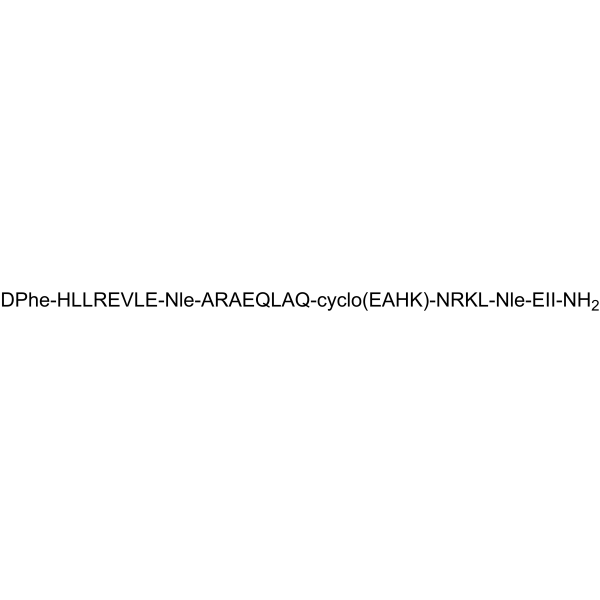
AstressinCRF Antagonist -
HY-P1296
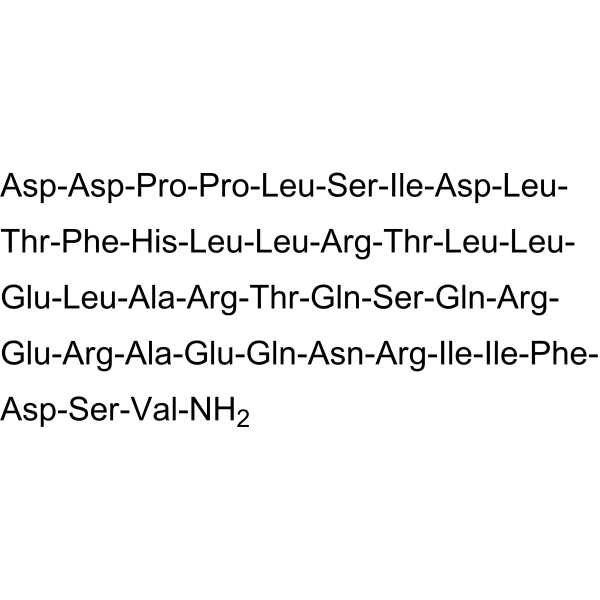
Urocortin, ratCRFR Agonist -

HY-P0086
Corticotropin-releasing factor (human)CRFR Modulator -

HY-P1294
α-Helical CRF(9-41)CRFR Modulator -
HY-P1298
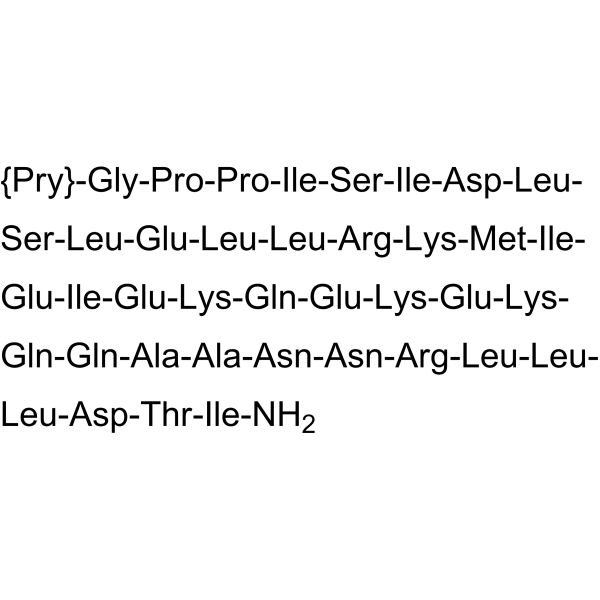
SauvagineCRFR Agonist -
HY-14127
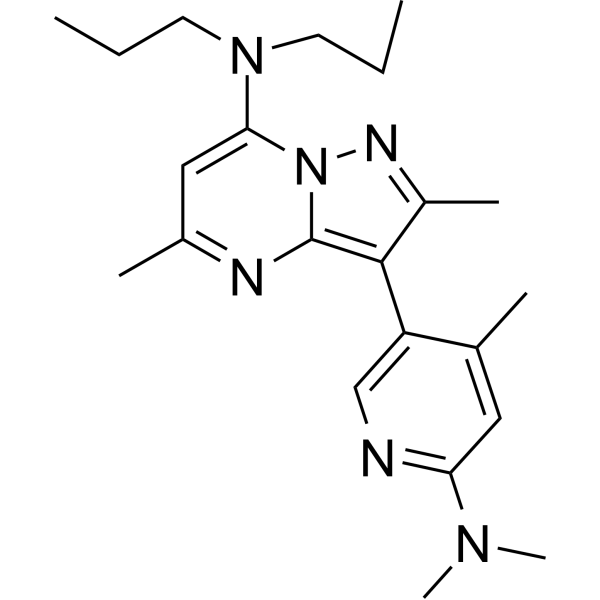
R121919CRF1 Receptor Antagonist -
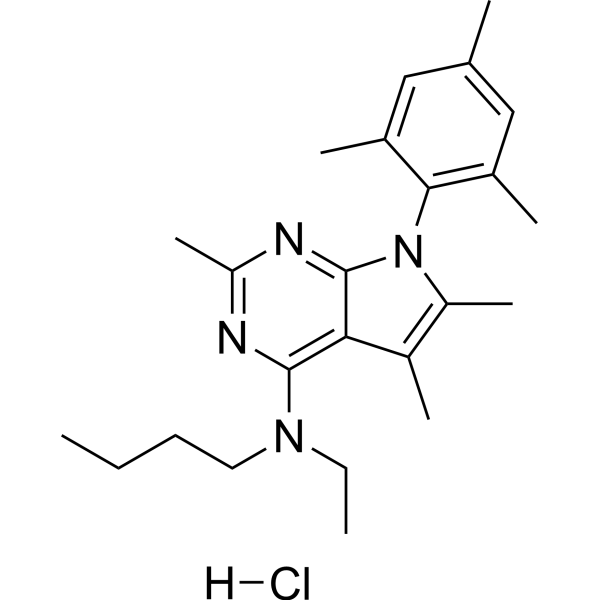
HY-103377
Antalarmin hydrochlorideCRHR1 Antagonist -

HY-12129
CP 154526 hydrochlorideCRF1 Antagonist -
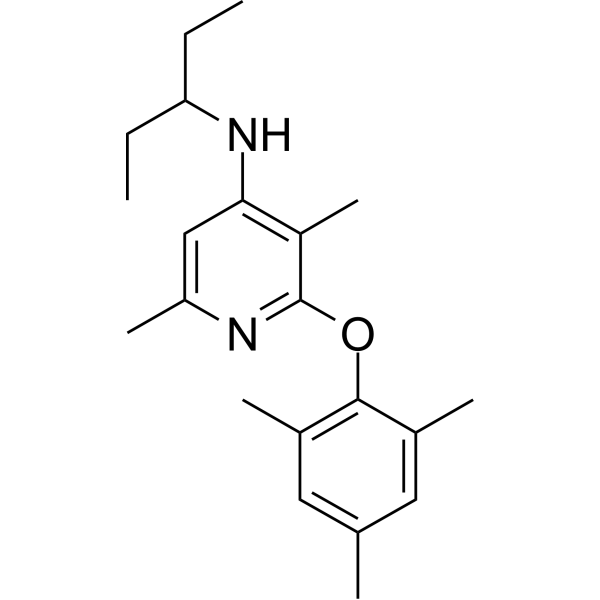
HY-14130
CP 376395CRF1 Receptor Antagonist -
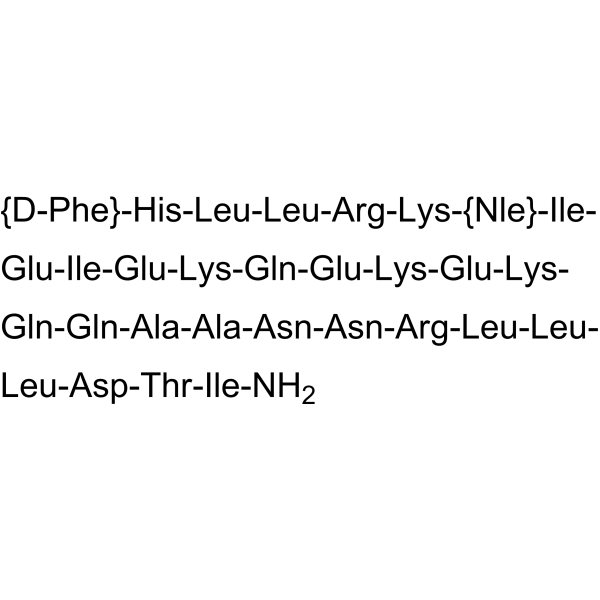
HY-P1106
K41498CRF2 receptor Antagonist -
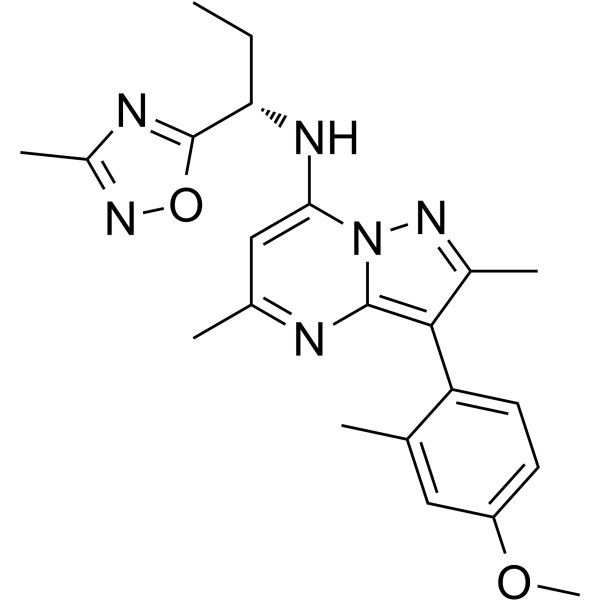
HY-14875
VerucerfontCRFR Antagonist


Biological Activity
Description


Chemical Information
-
CAS No. 120066-38-8
-
Appearance Solid
-
Molecular Weight 3220.66
-
Formula C141H231N41O43S
-
Color White to off-white
-
Sequence Shortening
ISLDLTFHLLREVLEMARAEQLAQQAHS
-
Shipping
Room temperature in continental US; may vary elsewhere.
-
Storage
Sealed storage, away from moisture and light, under nitrogen
Powder -80°C 2 years -20°C 1 year * In solvent : -80°C, 6 months; -20°C, 1 month (sealed storage, away from moisture and light, under nitrogen)


Solvent & Solubility
In Vitro
H2O
Peptide Solubility and Storage Guidelines:
1. Calculate the length of the peptide.
2. Calculate the overall charge of the entire peptide according to the following table:
| Contents | Assign value | |
|---|---|---|
| Acidic amino acid | Asp (D), Glu (E), and the C-terminal -COOH. | -1 |
| Basic amino acid | Arg (R), Lys (K), His (H), and the N-terminal -NH2 | +1 |
| Neutral amino acid | Gly (G), Ala (A), Leu (L), Ile (I), Val (V), Cys (C), Met (M), Thr (T), Ser (S), Phe (F), Tyr (Y), Trp (W), Pro (P), Asn (N), Gln (Q) | 0 |
3. Recommended solution:
| Overall charge of peptide | Details |
|---|---|
| Negative (<0) |
1. Try to dissolve the peptide in water first. 2. If water fails, add NH4OH (<50 μL). 3. If the peptide still does not dissolve, add DMSO (50-100 μL) to solubilize the peptide. |
| Positive (>0) |
1. Try to dissolve the peptide in water first. 2. If water fails, try dissolving the peptide in a 10%-30% acetic acid solution. 3. If the peptide still does not dissolve, try dissolving the peptide in a small amount of DMSO. |
| Zero (=0) |
1. Try to dissolve the peptide in organic solvent (acetonitrile, methanol, etc.) first. 2. For very hydrophobic peptides, try dissolving the peptide in a small amount of DMSO, and then dilute the solution with water to the desired concentration. |

Protocols
-
Research Protocol for Metabolic Diseases
AMP-activated protein kinase, AMPK, is a conserved cellular energy sensor that responds to reduced cellular energy status and coordinates metabolism by increasing ATP-generating catabolic pathways while suppressing ATP-consuming anabolic processes. In metabolic disease research, the AMPK pathway is experimentally relevant because it regulates hepatic lipid synthesis, fatty acid oxidation, glucose production, skeletal-muscle glucose disposal, mTORC1-linked biosynthesis, autophagy, mitochondrial homeostasis, and whole-body energy balance. The central pathway logic is that energy stress, metformin, exercise-like stimulation, or direct AMPK activators increase AMPKα Thr172 phosphorylation and downstream substrate phosphorylation, including ACC and RAPTOR. Phosphorylation of ACC suppresses lipogenesis and supports fatty acid oxidation, whereas phosphorylation of RAPTOR suppresses mTORC1 signaling and links cellular energy status to growth and protein synthesis control. The pathway is linked


Purity & Documentation
-
Data Sheet (257 KB)
-
SDS (252 KB)
- English - EN (252 KB)
- Français - FR (252 KB)
- Deutsch - DE (252 KB)
- Norwegian - NO (252 KB)
- Español - ES (252 KB)
- Swedish - SV (252 KB)
- Italian - IT (252 KB)
- Korean - KR (252 KB)
- Portuguese - PT (252 KB)
-
Handling Instructions (2659 KB)
References
[1]. S C Heinrichs, et al. Dissociation of arousal-like from anxiogenic-like actions of brain corticotropin-releasing factor receptor ligands in rats. Behav Brain Res. 2001 Jul;122(1):43-50. [Content Brief]
[2]. S C Heinrichs, et al. Selective stimulatory actions of corticotropin-releasing factor ligands on correlates of energy balance. Physiol Behav. 2001 Sep 1-15;74(1-2):5-13. [Content Brief]

Calculators
Concentration (start) × Volume (start) = Concentration (final) × Volume (final)


CRF(6-33)(human) Related Classifications
HY-P1297 Related Classifications
 Powered by Bioz