



CRT5

Based on 1 Customer Validation
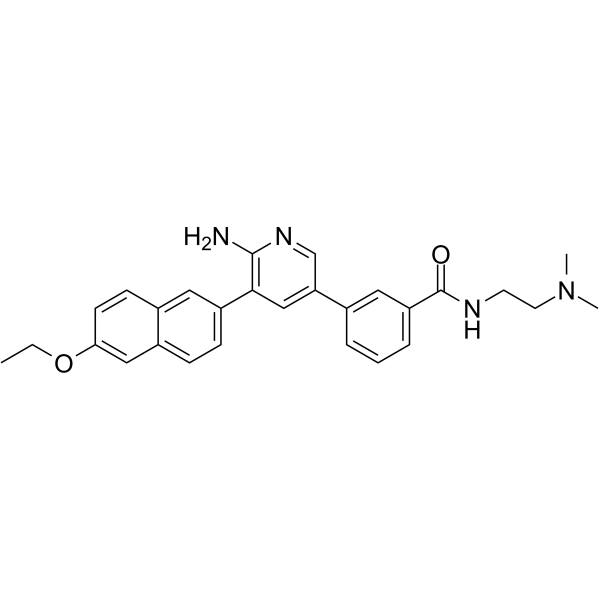
CRT5, a pyrazine benzamide, is a potent and selective inhibitor for all three isoforms of PKD in endothelial cells treated with VEGF (IC50s = 1, 2, and 1.5 nM for PKD1, PKD2, and PKD3, respectively). CRT5 decreases VEGF-induced endothelial migration, proliferation and tubulogenesis.
For research use only. We do not sell to patients.
- Purity : 98.70%
- CAS No.: 1034297-58-9
- Formula: C28H30N4O2
- Molecular Weight:454.56
-
Storage:
-20°C, sealed storage, away from moisture
* In solvent : -80°C, 6 months; -20°C, 1 month (sealed storage, away from moisture)

To place orders, for customer services and technical support, please contact: MedChemExpress USA
Tel: 609-228-6898 E-mail: [email protected] [email protected]


-
 Biological Activity
-
Chemical Information
- Protocols
- Purity & Documentation
- References
-
 Help & FAQs


-
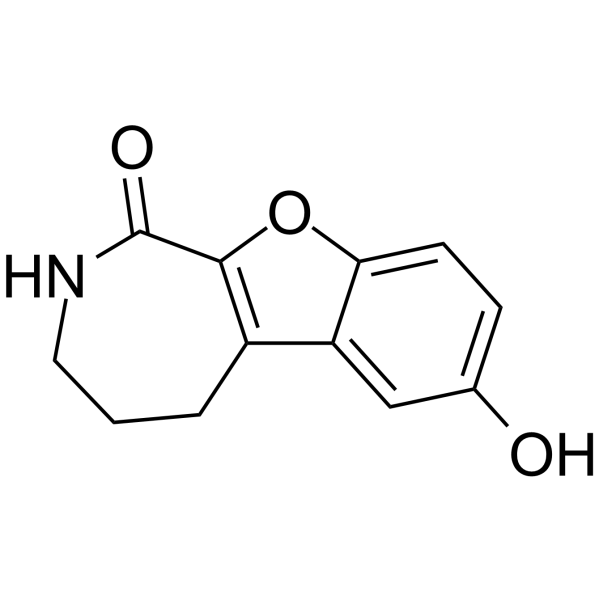
HY-12239
CID755673PKD Inhibitor -
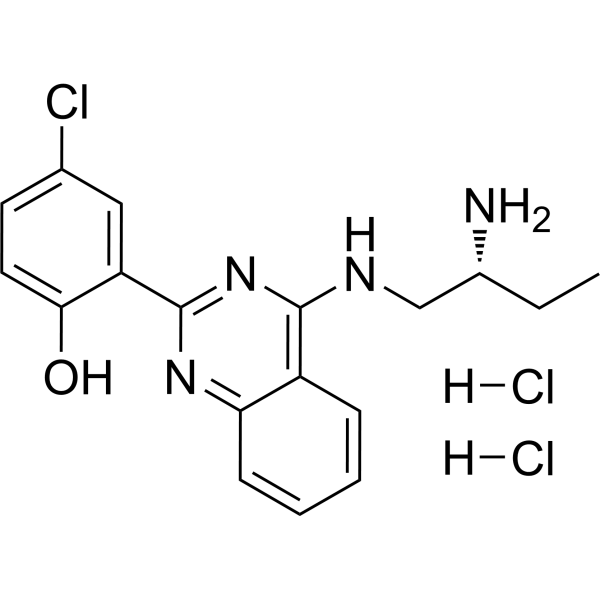
HY-131962A
PKD-IN-1 dihydrochloridePDK-1 Inhibitor -
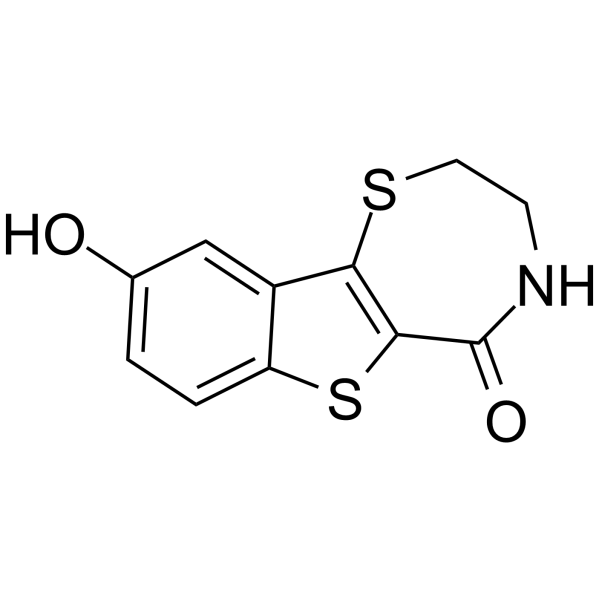
HY-15528
kb NB 142-70PKD Inhibitor -
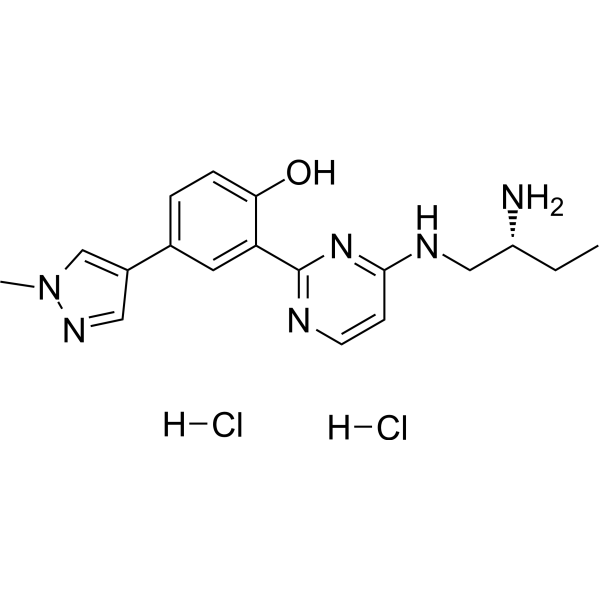
HY-15698A
CRT0066101 dihydrochloridePKD/PIM2 Inhibitor -
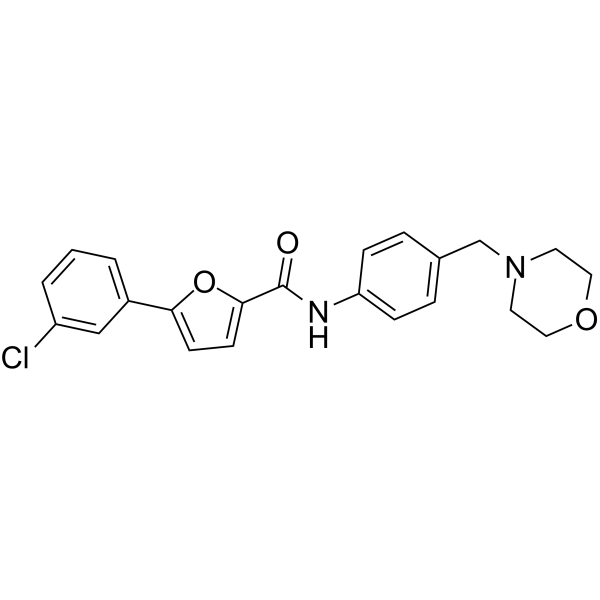
HY-13454
CID 2011756PKD Inhibitor -

HY-15528R
kb NB 142-70 (Standard)PKD Inhibitor -
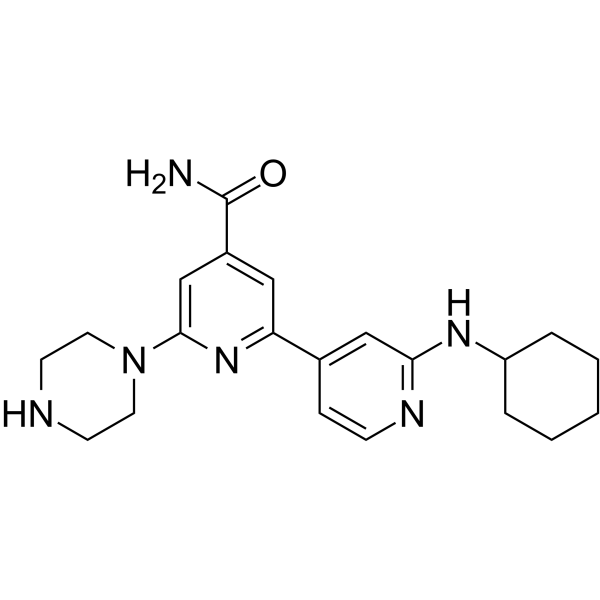
HY-118052
BPKDiPKD Inhibitor -
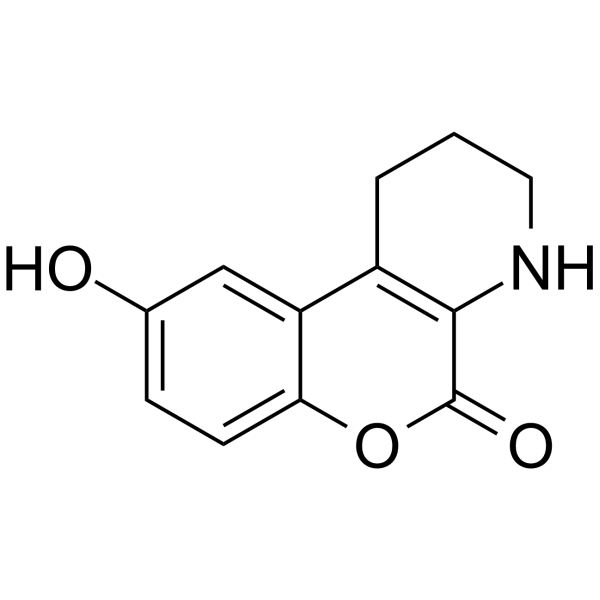
HY-12243
CID-797718Active Compound -
HY-151374
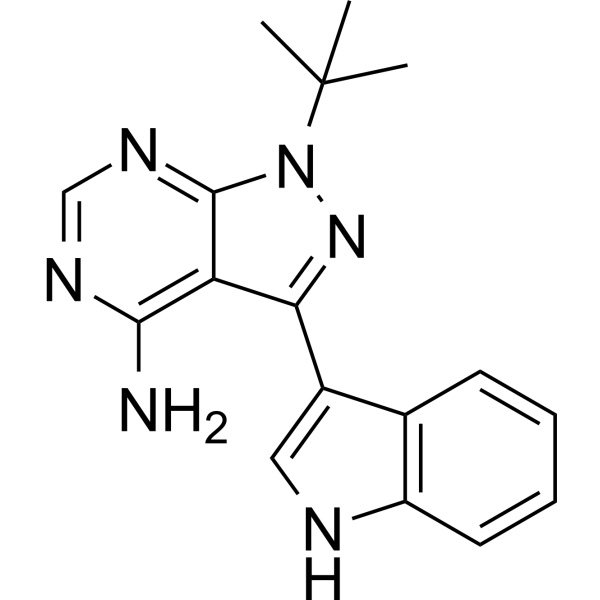
3-IN-PP1PKD Inhibitor -
HY-131962
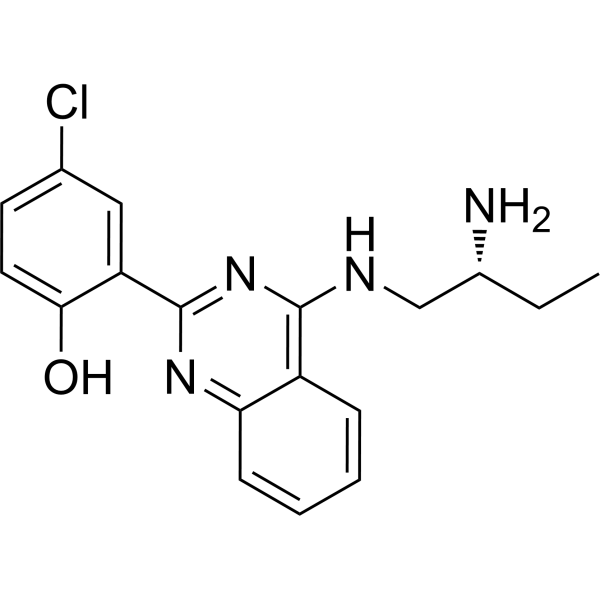
PKD-IN-1PKD Inhibitor


Biological Activity
Description


Chemical Information
-
CAS No. 1034297-58-9
-
Appearance Solid
-
Molecular Weight 454.56
-
Formula C28H30N4O2
-
Color White to off-white
-
SMILES
O=C(NCCN(C)C)C1=CC=CC(C2=CC(C3=CC=C4C=C(OCC)C=CC4=C3)=C(N)N=C2)=C1
-
Synonyms
CRT0066051
-
Shipping
Room temperature in continental US; may vary elsewhere.
-
Storage
-20°C, sealed storage, away from moisture
* In solvent : -80°C, 6 months; -20°C, 1 month (sealed storage, away from moisture)

Protocols
-
Cell migration
Cell migration is a method that plays an important role in wound healing, cell differentiation, embryonic development, etc.
-
Endothelial Tube Formation Assay
Endothelial tube formation assay evaluates the ability of endothelial cells to attach, migrate, align, and organize into capillary-like networks when cultured on gelled basement membrane extract or Matrigel; the readout is the morphology and quantity of tube-like networks, which reflects an in vitro endothelial morphogenesis step related to angiogenesis. Basement membrane extract/Matrigel provides laminin-rich extracellular matrix cues that support endothelial differentiation into capillary-like structures, but it can contain biologically active growth factors, so growth-factor-reduced matrix is preferred when testing defined angiogenic stimulators or inhibitors.
-
Endothelial Cell Migration/Angiogenic Sprouting Assay
Endothelial cell migration and angiogenic sprouting assays are in vitro (and partially ex vivo-adapted) functional models that quantify the ability of endothelial cells to undergo coordinated migration, extracellular matrix invasion, and multicellular organization into capillary-like sprouts in response to pro-angiogenic stimuli such as VEGF, bFGF, or conditioned microenvironments. These assays are used to model early angiogenic events including tip-cell formation, directional migration, and lumen-like sprout extension, which collectively reflect angiogenic activation and vascular morphogenesis processes observed in vivo.
-
Cell Viability Determination by MTT Colorimetric Assay
The following protocol uses the MTT colorimetric assay as a classic literature-established method for assessing cell viability/metabolic activity in cultured mammalian cells. MTT[3-(4,5-dimethylthiazol-2-yl)-2,5-diphenyltetrazolium bromide] is reduced by metabolically active cells to a colored formazan product; the amount of formazan is quantified spectrophotometrically and provides an indirect measure of metabolically active viable cells. Importantly, MTT reduction reflects cellular oxidoreductase/metabolic activity rather than an absolute direct count of living cells, so changes in cellular metabolism can alter the signal independently of cell number.


Purity & Documentation
-
Data Sheet (264 KB)
-
SDS (252 KB)
- English - EN (252 KB)
- Français - FR (252 KB)
- Deutsch - DE (252 KB)
- Norwegian - NO (252 KB)
- Español - ES (252 KB)
- Swedish - SV (252 KB)
- Italian - IT (252 KB)
- Korean - KR (252 KB)
- Portuguese - PT (252 KB)
-
Handling Instructions (2659 KB)
References

Calculators
Concentration (start) × Volume (start) = Concentration (final) × Volume (final)


CRT5 Related Classifications
HY-112547 Related Classifications
 Powered by Bioz