



Epiregulin Protein, Human
Based on 3 publication(s) in Google Scholar
Epiregulin Protein, Human is a growth regulator and a member of the epidermal growth factor (EGF) family. Epiregulin is a tumor growth-inhibitory factor inducing morphological changes in human epidermoid carcinoma HeLa cells.
- Species: Human
- Source: E. coli
-
Storage:Stored at -20°C for 2 years from date of receipt. After reconstitution, it is stable at 4°C for 1 week or -20°C for longer (with carrier protein). It is recommended to freeze aliquots at -20°C or -80°C for extended storage.


To place orders, for customer services and technical support, please contact: MedChemExpress USA
Tel: 609-228-6898 E-mail: [email protected] [email protected]


-
 Biological Activity
-
Technical Parameters
-
Product Properties
- Documentation
- References
- Help & FAQs


-

HY-P7017
HB-EGF Protein, Human -
HY-P7010B
Epigen Protein, Human (E. coli) -
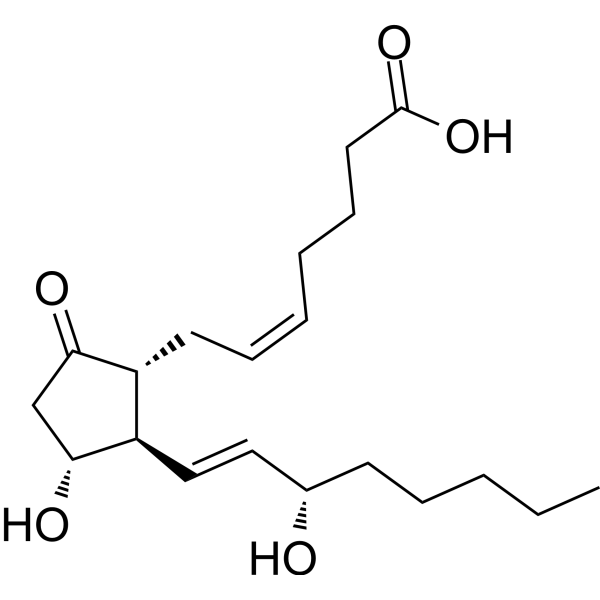
HY-101952
Prostaglandin E2Prostaglandin Receptor Agonist -
HY-P7411
TGF alpha/TGFA Protein, Human -
HY-P7005
Betacellulin Protein, Human -
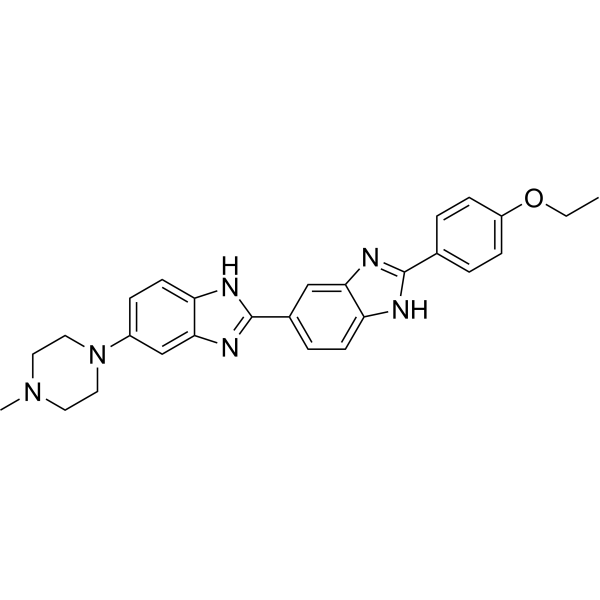
HY-15559
Hoechst 33342DNA Fluorescent Stain -
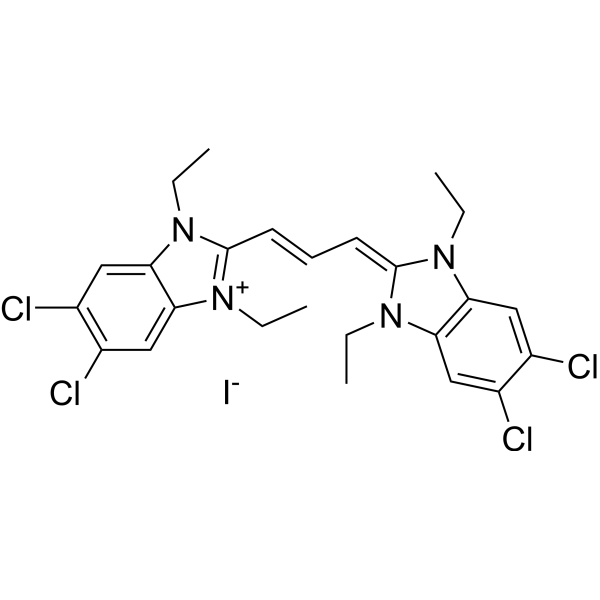
HY-15534
JC-1Mitochondrial Membrane Potential Probe -
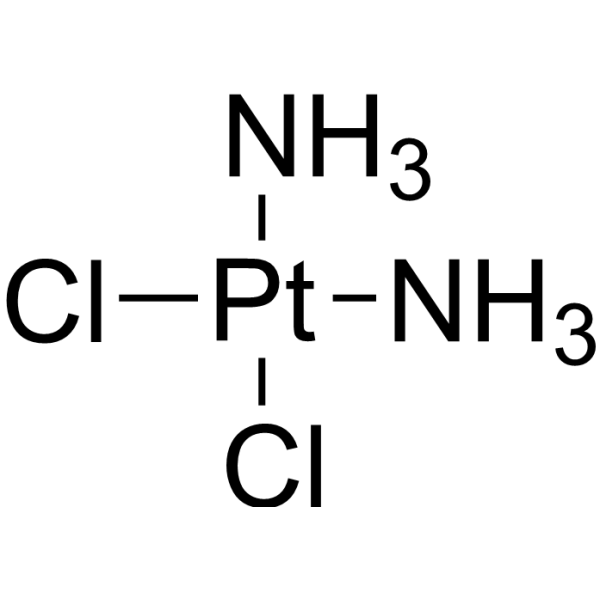
HY-17394
CisplatinDNA Alkylator -
HY-P7058
TNF-alpha/TNFSF2 Protein, Human -
HY-P7109
EGF Protein, Human -
HY-P7002
Amphiregulin Protein, Human (HEK293) -
HY-P77857
TGF alpha/TGFA Protein, Mouse (HEK293, Fc)


Biological Activity
Description
Epiregulin Protein, Human is a growth regulator and a member of the epidermal growth factor (EGF) family. Epiregulin is a tumor growth-inhibitory factor inducing morphological changes in human epidermoid carcinoma HeLa cells.
Background
The human epiregulin gene encoded a 163-residue putative transmembrane precursor containing an EGF-like domain in the internal segment, and the structural organization was similar to that of other members of the EGF family that bind to EGF receptors. Epiregulin has certain characteristics that are different from those of the classical members of the EGF family, EGF and transforming growth factor alpha, including mitogenic responses on several normal cells and binding to EGF receptors on epidermoid carcinoma A431 cells. Northern blot analysis shows the expression of human epiregulin to be mainly on peripheral blood macrophages and the placenta in normal tissues, and is highest on epithelial tumour cell lines in various types of tumour cell lines. Epiregulin is involved in certain physiological processes such as maintenance or development of normal cell growth, and the progression of carcinomas[1].
Verified Bioactivity
1. The ED50 is <2 ng/mL as measured by murine Ballb/c 3T3 cells, corresponding to a specific activity of >5 × 10⁵ units/mg.
2. Measured in a cell proliferation assay using Balb/3T3 mouse embryonic fibroblast cells. The ED50 for this effect is 0.3417 ng/mL, corresponding to a specific activity is 2.927×10^6 units/mg.
MCE Validation Data
-
Purity - SDS-PAGE

Purity - SDS-PAGE


Publications (3)
-
Journal Impact Factor
-
Most Recent
-
Adv Sci (Weinh)
Amphiregulin and Epiregulin Confer Radioresistance in Esophageal Squamous Cell Carcinoma Through Oxidative Phosphorylation. [Abstract]2025 Nov 9:e07524. PMID: 41208199 -
Cell Rep Med
Tumor-associated monocytes promote mesenchymal transformation through EGFR signaling in glioma. [Abstract]2023 Sep 19;4(9):101177. PMID: 37652019 -
Cell Oncol (Dordr)
Inhibition of EREG/ErbB/ERK by Astragaloside IV reversed taxol-resistance of non-small cell lung cancer through attenuation of stemness via TGFβ and Hedgehog signal pathway. [Abstract]2024 Dec;47(6):2201-2215. PMID: 39373858


Technical Parameters
-
Species Human
-
Source E. coli
-
Tag Tag Free
-
Accession
O14944 (V60-L108)
-
Molecular Construction
-
N-term
-
Epiregulin (V60-L108)
Accession # O14944 -
C-term
-
-
Protein Length
Full Length of Epiregulin Chain
-
Synonyms
EREG; Alternative Protein EREG; Epiregulin; EPR; ER; Ep; Proepiregulin
-
AA Sequence
VAQVSITKCSSDMNGYCLHGQCIYLVDMSQNYCRCEVGYTGVRCEHFFL
-
Predicted Molecular Mass
5.6 kDa
-
Molecular Weight
Approximately 7 kDa, based on SDS-PAGE under reducing conditions.
-
Purity
≥ 95%, as determined by reducing SDS-PAGE.


Product Properties
Lyophilized powder.
1.Lyophilized from a 0.22 μm filtered solution of PBS, pH 7.4.
2.Lyophilized from a 0.22 μm filtered solution of 20 mM PB, 150 mM NaCl, pH 7.4.
Please refer to the lot-specific COA for specific buffer information.
<1 EU/μg, determined by LAL method.
It is not recommended to reconstitute to a concentration less than 100 μg/mL in ddH2O. For long term storage it is recommended to add a carrier protein (0.1% BSA, 5% HSA, 10% FBS or 5% Trehalose).
Stored at -20°C for 2 years from date of receipt. After reconstitution, it is stable at 4°C for 1 week or -20°C for longer (with carrier protein). It is recommended to freeze aliquots at -20°C or -80°C for extended storage.
Room temperature in continental US; may vary elsewhere.


Documentation
-
Data Sheet (261 KB)
-
SDS (251 KB)
- English - EN (251 KB)
- Français - FR (251 KB)
- Deutsch - DE (251 KB)
- Norwegian - NO (251 KB)
- Español - ES (251 KB)
- Swedish - SV (251 KB)
- Italian - IT (251 KB)
- Korean - KR (251 KB)
- Portuguese - PT (251 KB)
-
Handling Instructions (2659 KB)


References

Calculators
Concentration (start) × Volume (start) = Concentration (final) × Volume (final)


 Powered by Bioz

