



[D-Trp8]-γ-MSH

Based on 1 Customer Validation
[D-Trp8]-γ-MSH is a potent and selective agonist of melanocortin 3 (MC3) receptor, with IC50s of 6.7 nM, 600 nM and 340 nM for hMC3, hMC4 and hMC5, respectively in CHO cells. [D-Trp8]-γ-MSH could provide protection against multiple inflammatory disorders such as rheumatoid arthritis and colitis.
For research use only. We do not sell to patients.
- Purity : 98.25%
- CAS No.: 321351-81-9
- Formula: C74H99N21O16S
- Molecular Weight:1570.77
-
Storage:
Sealed storage, away from moisture and light, under nitrogen.
Powder -80°C, 2 years , -20°C, 1 year* In solvent : -80°C, 6 months; -20°C, 1 month (sealed storage, away from moisture and light, under nitrogen)
![[D-Trp8]-γ-MSH Chemical Structure](https://file.medchemexpress.com/product_pic/hy-p1217.gif "Click to View [D-Trp8]-γ-MSH Chemical Structure")

To place orders, for customer services and technical support, please contact: MedChemExpress USA
Tel: 609-228-6898 E-mail: [email protected] [email protected]


-
 Biological Activity
-
Chemical Information
-
Solvent & Solubility
- Protocols
- Purity & Documentation
- References
-
 Help & FAQs


-
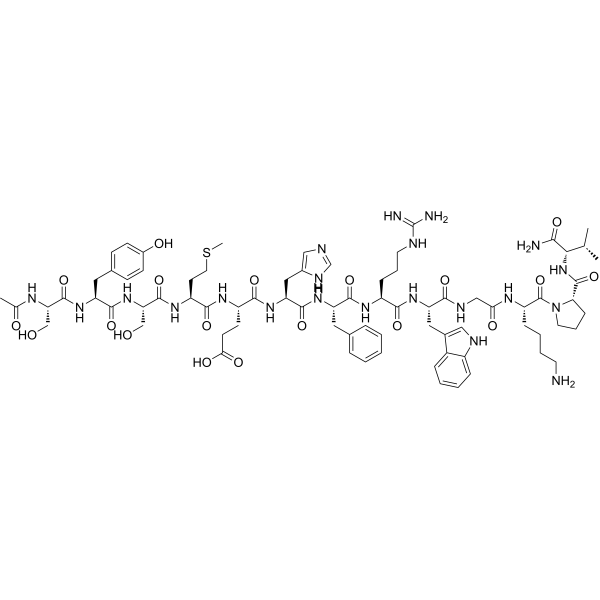
HY-P0252
α-MSHMC4R Agonist -
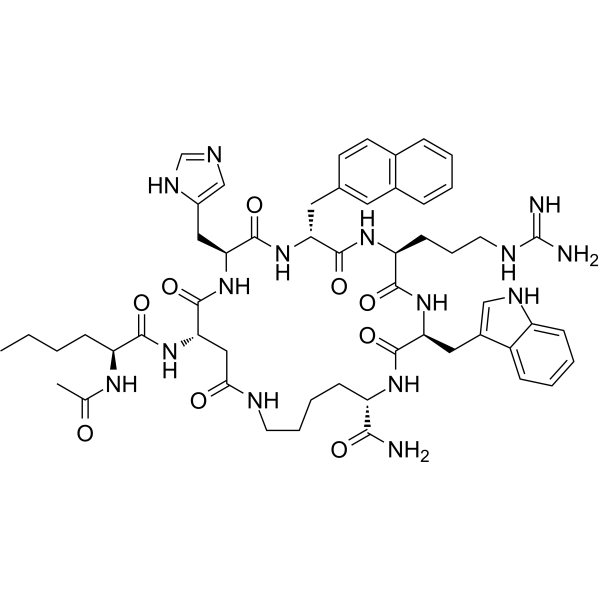
HY-P0227
SHU 9119MC3/4R Antagonist -
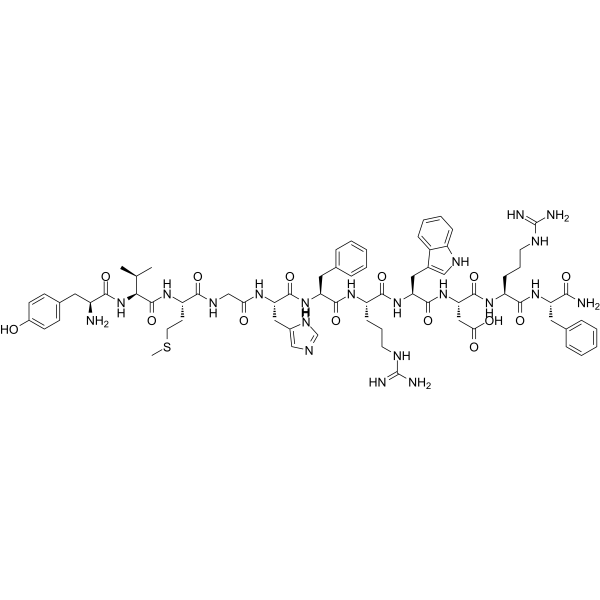
HY-P1214
γ1-MSHMC3 Receptor Agonist -
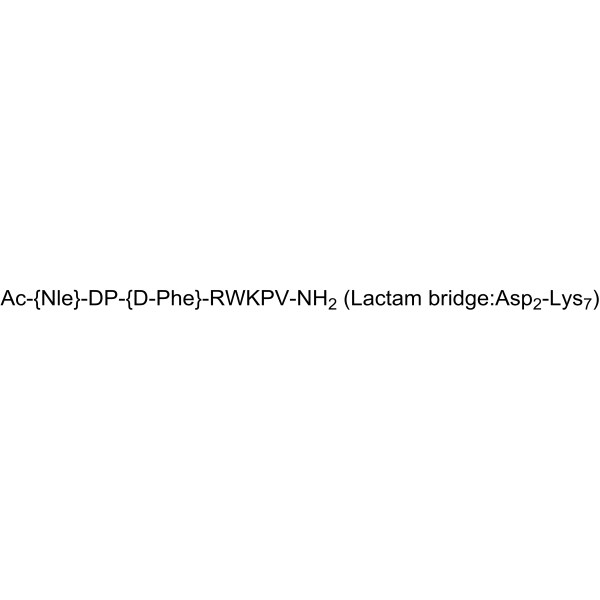
HY-P1208
PG-931Melanocortin 4 Receptor Agonist -
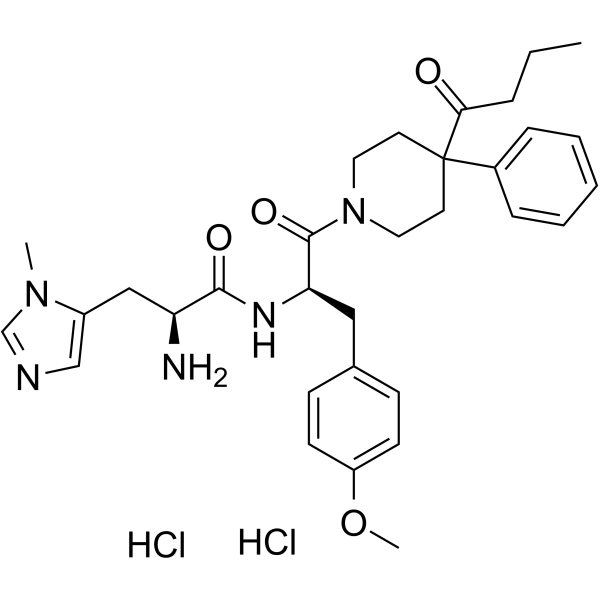
HY-115644
BMS-470539 dihydrochlorideMC-1 Receptor Agonist -
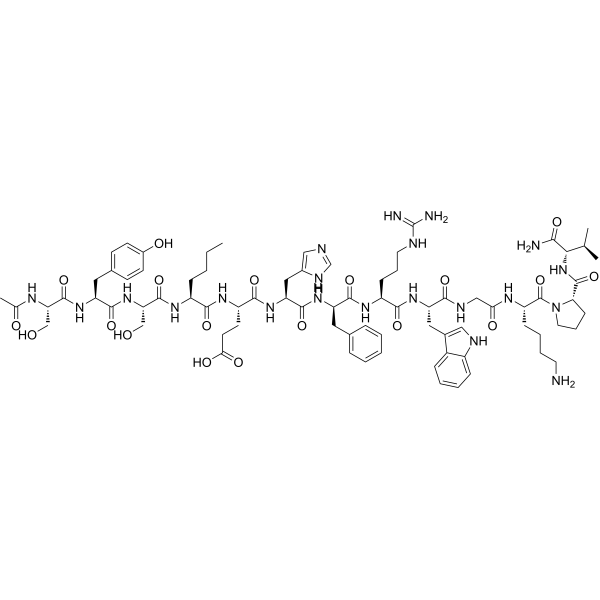
HY-N2466
Melanotan IMelanocortin Receptor Activator -

HY-P1211
Adrenocorticotropic Hormone (ACTH) (1-39), humanMelanocortin Receptor Agonist -

HY-P1531
γ-1-Melanocyte Stimulating Hormone (MSH), amideMelanocortin Receptor Agonist -
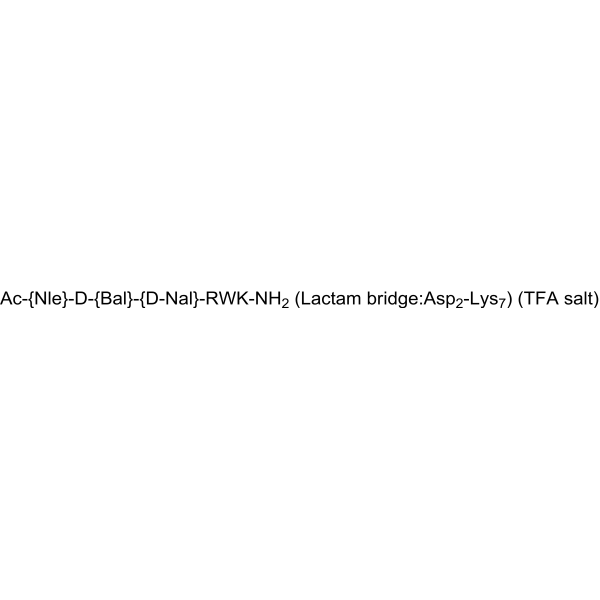
HY-P1209A
PG106 TFAMC3 Receptor Antagonist -
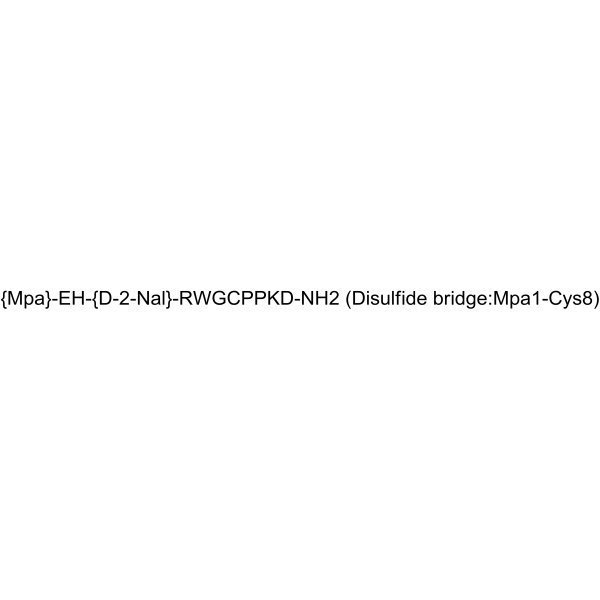
HY-P1213
JKC363MC4 Receptor Antagonist -
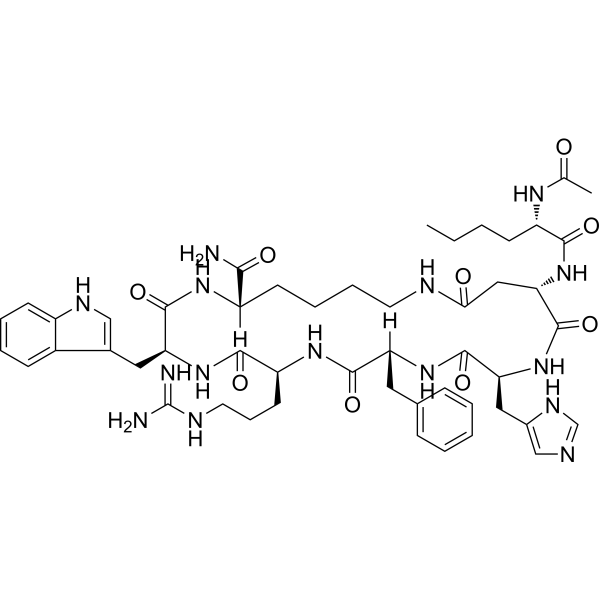
HY-P0267
Melanotan (MT)-IIMelanotropin Receptor Agonist -
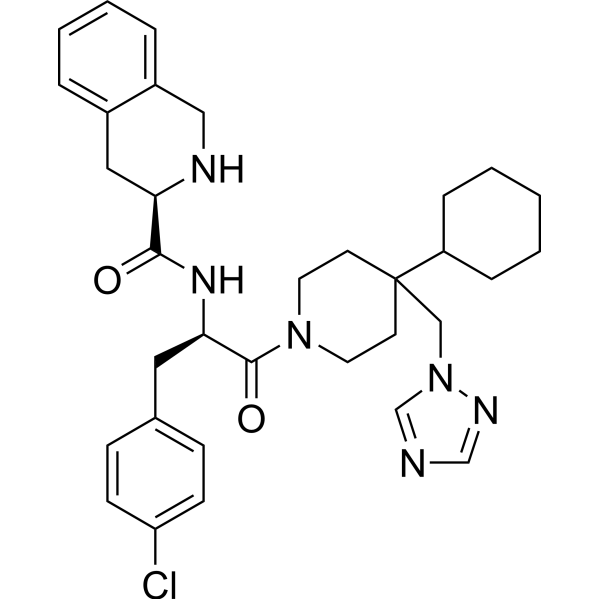
HY-10624
THIQMC4R Agonist


Biological Activity
Description
IC50 & Target
|
MC3R |
Cellular Effect
|
Cell Line

|
Type | Value | Description | References |
|---|---|---|---|---|
| HEK293 | EC50 |
0.33 nM
Compound: 12
|
Effective concentration for intracellular cAMP accumulation in human melanocortin 3 receptor expressing HEK 293 cells; (N = 4)
Effective concentration for intracellular cAMP accumulation in human melanocortin 3 receptor expressing HEK 293 cells; (N = 4)
|
[PMID: 15771429] |
| HEK293 | EC50 |
100 nM
Compound: 12
|
Effective concentration for intracellular cAMP accumulation in human melanocortin 4 receptor expressing HEK 293 cells; (N = 4)
Effective concentration for intracellular cAMP accumulation in human melanocortin 4 receptor expressing HEK 293 cells; (N = 4)
|
[PMID: 15771429] |
| HEK293 | EC50 |
1090 nM
Compound: gamma-MSH
|
Agonist activity at mouse MC1R expressed in HEK293 cells assessed as cAMP accumulation incubated for 2 hrs by alphascreen assay
Agonist activity at mouse MC1R expressed in HEK293 cells assessed as cAMP accumulation incubated for 2 hrs by alphascreen assay
|
[PMID: 26959173] |
| HEK293 | EC50 |
34.6 nM
Compound: gamma-MSH
|
Agonist activity at mouse MC3R expressed in HEK293 cells assessed as cAMP accumulation incubated for 2 hrs by alphascreen assay
Agonist activity at mouse MC3R expressed in HEK293 cells assessed as cAMP accumulation incubated for 2 hrs by alphascreen assay
|
[PMID: 26959173] |
| HEK293 | EC50 |
35.1 nM
Compound: gamma-MSH
|
Agonist activity at mouse MC5R expressed in HEK293 cells assessed as cAMP accumulation incubated for 2 hrs by alphascreen assay
Agonist activity at mouse MC5R expressed in HEK293 cells assessed as cAMP accumulation incubated for 2 hrs by alphascreen assay
|
[PMID: 26959173] |
| HEK293 | EC50 |
82 nM
Compound: 12
|
Effective concentration for intracellular cAMP accumulation in human melanocortin 5 receptor expressing HEK 293 cells; (N = 4)
Effective concentration for intracellular cAMP accumulation in human melanocortin 5 receptor expressing HEK 293 cells; (N = 4)
|
[PMID: 15771429] |
| HEK293 | EC50 |
869 nM
Compound: gamma-MSH
|
Agonist activity at mouse MC4R expressed in HEK293 cells assessed as cAMP accumulation incubated for 2 hrs by alphascreen assay
Agonist activity at mouse MC4R expressed in HEK293 cells assessed as cAMP accumulation incubated for 2 hrs by alphascreen assay
|
[PMID: 26959173] |
| HEK293 | IC50 |
340 nM
Compound: 12
|
Inhibition of [125I]NDP-MSH binding to Melanocortin 5 receptor expressed in HEK293 cells; N = 4
Inhibition of [125I]NDP-MSH binding to Melanocortin 5 receptor expressed in HEK293 cells; N = 4
|
[PMID: 15771429] |
| HEK293 | IC50 |
6.7 nM
Compound: 12
|
Inhibition of [125I]NDP-MSH binding to Melanocortin 3 receptor expressed in HEK293 cells; (N = 4)
Inhibition of [125I]NDP-MSH binding to Melanocortin 3 receptor expressed in HEK293 cells; (N = 4)
|
[PMID: 15771429] |
| HEK293 | IC50 |
600 nM
Compound: 12
|
Inhibition of [125I]NDP-MSH binding to Melanocortin 4 receptor expressed in HEK293 cells; (N = 4)
Inhibition of [125I]NDP-MSH binding to Melanocortin 4 receptor expressed in HEK293 cells; (N = 4)
|
[PMID: 15771429] |


Chemical Information
-
CAS No. 321351-81-9
-
Appearance Solid
-
Molecular Weight 1570.77
-
Formula C74H99N21O16S
-
Color White to off-white
-
Sequence
Tyr-Val-Met-Gly-His-Phe-Arg-{d-Trp}-Asp-Arg-Phe-Gly
-
Sequence Shortening
YVMGHFR-{d-Trp}-DRFG
-
Shipping
Room temperature in continental US; may vary elsewhere.
-
Storage
Sealed storage, away from moisture and light, under nitrogen
Powder -80°C 2 years -20°C 1 year * In solvent : -80°C, 6 months; -20°C, 1 month (sealed storage, away from moisture and light, under nitrogen)


Solvent & Solubility
In Vitro:
H2O : 12.5 mg/mL (7.96 mM; Need ultrasonic)
Please refer to the solubility information to select the appropriate solvent. Once prepared, please aliquot and store the solution to prevent product inactivation from repeated freeze-thaw cycles.
Storage method and period of stock solution: -80°C, 6 months; -20°C, 1 month (sealed storage, away from moisture and light, under nitrogen). When stored at -80°C, please use it within 6 months. When stored at -20°C, please use it within 1 month.
* Note: If you choose water as the stock solution, please dilute it to the working solution, then filter and sterilize it with a 0.22 μm filter before use.
Please refer to the solubility information to select the appropriate solvent. Once prepared, please aliquot and store the solution to prevent product inactivation from repeated freeze-thaw cycles.
Storage method and period of stock solution: -80°C, 6 months; -20°C, 1 month (sealed storage, away from moisture and light, under nitrogen). When stored at -80°C, please use it within 6 months. When stored at -20°C, please use it within 1 month.
* Note: If you choose water as the stock solution, please dilute it to the working solution, then filter and sterilize it with a 0.22 μm filter before use.
Concentration (start) × Volume (start) = Concentration (final) × Volume (final)

Protocols
-
Collagen-Induced Arthritis
Collagen-induced arthritis (CIA) is an autoimmune murine model of rheumatoid arthritis in which immunization with type II collagen (CII) emulsified in an adjuvant induces a T cell- and autoantibody-driven inflammatory arthritis characterized by synovial hyperplasia, immune cell infiltration, and joint destruction. The model typically relies on genetically susceptible mouse strains (e. g. , DBA/1) and reproduces key features of human rheumatoid arthritis, including anti-collagen immune responses and progressive joint inflammation. Disease onset generally occurs within ~3-4 weeks after immunization, depending on antigen/adjuvant combinations and protocol variation. The immunopathology is driven by adaptive immune activation against CII, leading to systemic and local joint inflammation mediated by pro-inflammatory cytokines and effector immune cells, making CIA a standard preclinical platform for evaluating immunomodulatory and anti-arthritic interventions.
-
DSS-Induced Colitis
Dextran sulfate sodium (DSS)-induced colitis is generated by administering DSS in mouse drinking water, producing epithelial injury, barrier disruption, weight loss, diarrhea, fecal blood, colon shortening, histologic mucosal damage, and inflammatory mediator changes; the model is mainly used to study acute or chronic intestinal inflammation resembling selected features of ulcerative colitis. DSS injury is interpreted through clinical and tissue readouts rather than a single molecular endpoint: daily body weight, stool consistency, and bleeding are combined into a disease activity index, while colon length, histology, cytokines, myeloperoxidase activity, intestinal permeability, and tight-junction markers provide complementary measures of inflammation and barrier damage.
-
TNBS-Induced Colitis
TNBS-induced colitis is produced by intrarectal delivery of 2,4,6-trinitrobenzene sulfonic acid in ethanol, where ethanol disrupts the mucosal barrier and TNBS haptenates colonic proteins, generating immune-mediated colonic inflammation with weight loss, diarrhea, ulceration, transmural injury, inflammatory-cell infiltration, and cytokine responses. The model is used as an experimental intestinal inflammation model with Crohn’s disease–like features, especially when Th1-type responses, IL-12–dependent inflammation, chronic relapsing inflammation, or fibrosis-related endpoints are studied.


Purity & Documentation
-
Data Sheet (273 KB)
-
SDS (252 KB)
- English - EN (252 KB)
- Français - FR (252 KB)
- Deutsch - DE (252 KB)
- Norwegian - NO (252 KB)
- Español - ES (252 KB)
- Swedish - SV (252 KB)
- Italian - IT (252 KB)
- Korean - KR (252 KB)
- Portuguese - PT (252 KB)
-
Handling Instructions (2659 KB)
References
[1]. Grieco P, et, al. D-Amino acid scan of gamma-melanocyte-stimulating hormone: importance of Trp(8) on human MC3 receptor selectivity. J Med Chem. 2000 Dec 28; 43(26): 4998-5002. [Content Brief]
[2]. Kadiri JJ, et, al. Melanocortin 3 receptor activation with [D-Trp8]-γ-MSH suppresses inflammation in apolipoprotein E deficient mice. Eur J Pharmacol. 2020 Aug 5; 880:173186. [Content Brief]


Complete Stock Solution Preparation Table
Please refer to the solubility information to select the appropriate solvent. Once prepared, please aliquot and store the solution to prevent product inactivation from repeated freeze-thaw cycles.
Storage method and period of stock solution: -80°C, 6 months; -20°C, 1 month (sealed storage, away from moisture and light, under nitrogen). When stored at -80°C, please use it within 6 months. When stored at -20°C, please use it within 1 month.
| Optional Solvent | Concentration Solvent Mass | 1 mg | 5 mg | 10 mg | 25 mg |
|---|---|---|---|---|---|
| H2O | 1 mM | 0.6366 mL | 3.1832 mL | 6.3663 mL | 15.9158 mL |
| 5 mM | 0.1273 mL | 0.6366 mL | 1.2733 mL | 3.1832 mL |
* Note: If you choose water as the stock solution, please dilute it to the working solution, then filter and sterilize it with a 0.22 μm filter before use.


[D-Trp8]-γ-MSH Related Classifications
HY-P1217 Related Classifications
 Powered by Bioz