



Dihydrorhodamine 123 (solution)

Based on 1 Customer Validation
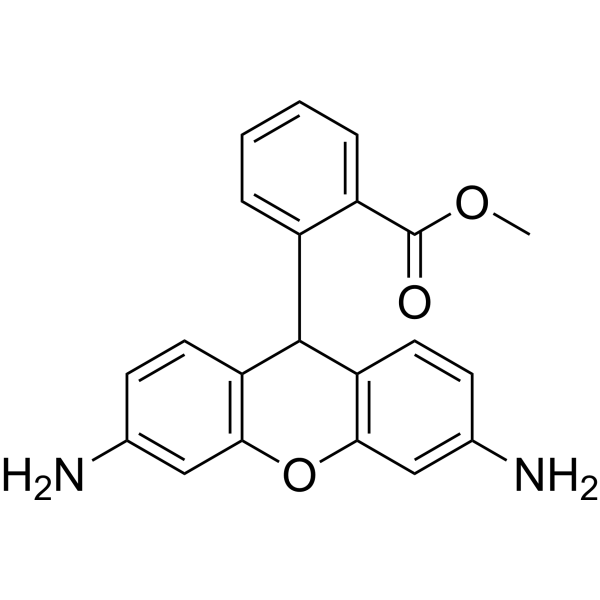
Dihydrorhodamine 123 (DHR 123) (solution) is a non-fluorescent reactive oxygen species (ROS) indicator. Dihydrorhodamine 123 is oxidized to fluorescent Rhodamine 123 (HY-D0816) within cells in the presence of reactive oxygen species and it localizes in mitochondria (Ex/Em = 515/536 nm).
Solvent and concentration: DMSO: 10 mM
For research use only. We do not sell to patients.
- CAS No.: 109244-58-8
- Formula: C21H18N2O3
- Molecular Weight:346.39
-
Storage:
Please store the product under the recommended conditions in the Certificate of Analysis.


To place orders, for customer services and technical support, please contact: MedChemExpress USA
Tel: 609-228-6898 E-mail: [email protected] [email protected]


-
 Biological Activity
-
Chemical Information
- Protocols
- Purity & Documentation
- References
-
 Help & FAQs


-
HY-101894
Dihydrorhodamine 123ROS Indicator -
HY-D0079
DihydroethidiumFluorescent -
HY-D0032
DAF-2DAFluorescent Probe -

HY-101894R
Dihydrorhodamine 123 (Standard)Reference Standard -

HY-DY1015
Dihydroethidium (solution)Fluorescent -
HY-D0815
Propidium IodideFluorochrome -
HY-D0940
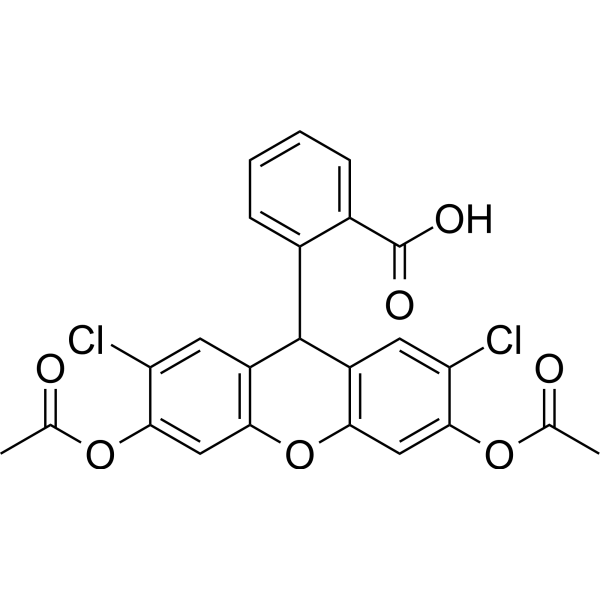
H2DCFDAROS-Sensitive Probe -
HY-100041
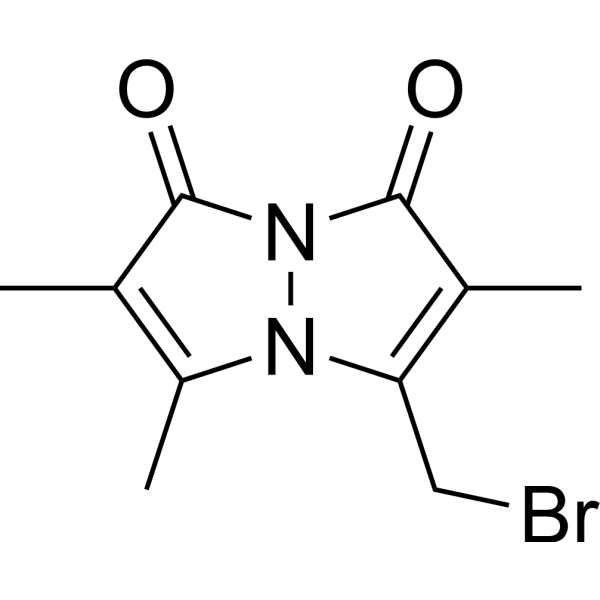
BromobimaneDye Reagent -
HY-117695
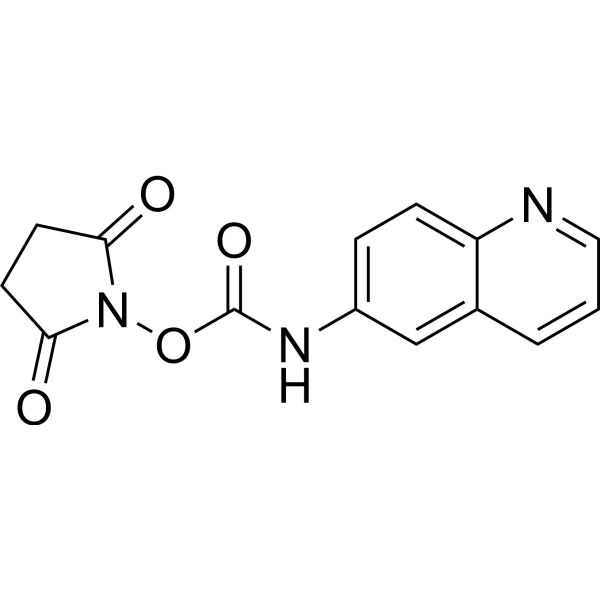
AQCAmino Acid Sequence Detection Reagent -
HY-15558A
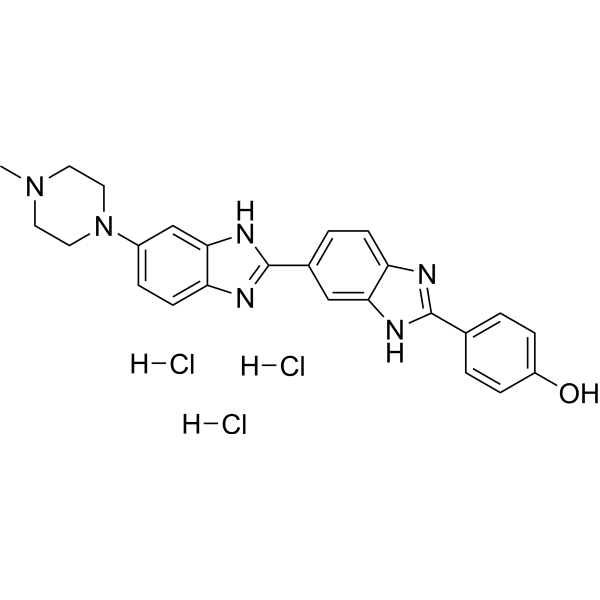
Hoechst 33258 trihydrochlorideDNA Staining -

HY-DY1006
Propidium Iodide (solution)Fluorochrome -
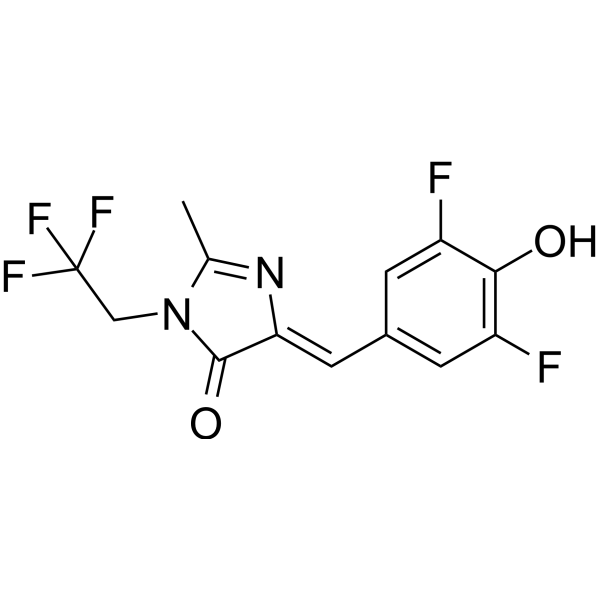
HY-110251
DFHBI-1TRNA Aptamers Probe


Biological Activity
Description
Solvent and concentration: DMSO: 10 mM
In Vitro
Guide (The following is our recommended solution. This solution is merely a guideline and should be modified according to your specific needs.)
1. Solution Preparation
1. Work Solution Preparation
Dilute the cell culture medium to 1-10 μM (based on experimental optimization).
Note: The working solution should be prepared and used immediately, and stored in a dark place.
2. Cell Staining
2.1 Treat the cells with reactive oxygen inducers or inhibitors.
Note: If cells are treated with an oxidizing agent, rinse the cells three times with buffer solution or culture medium before staining to remove the compound and prevent the dye from being directly oxidized by the compound.
2.2 Dilute the Dihydrorhodamine 123 dye solution in serum-free medium to a final concentration of 5 μM.
2.3 Remove the cell culture medium and replace it with a medium containing the dye.
2.4 Incubate at 37°C for 30 minutes.
2.5 Detection can be performed using fluorescence microscopy or flow cytometry. No washing is required, but washing can be carried out to reduce the background in the microscopic examination.
When 10 μM Dihydrorhodamine 123 is present, by adding 50 nM phorbol 12-myristate 13-acetat (PMA) to stimulate the NADPH oxidase of neutrophils, the rate of rhodamine production can be increased. In the presence of 10 μM Dihydrorhodamine 123, the fluorescence intensity of the cells increases over time after adding 50 nM PMA. In the presence of 10 μM Dihydrorhodamine 123, the fluorescence of HL60 cells induced by adding 50 nM PMA continues to increase [1].
MedChemExpress (MCE) has not independently confirmed the accuracy of these methods. They are for reference only. Further protocols information, click here.


Chemical Information
-
CAS No. 109244-58-8
-
Appearance Liquid (Density: 1.313±0.06 g/cm3)
-
Molecular Weight 346.39
-
Formula C21H18N2O3
-
Color Off-white to pink
-
SMILES
O=C(OC)C1=CC=CC=C1C2C3=C(OC4=C2C=CC(N)=C4)C=C(N)C=C3
-
Shipping
Room temperature in continental US; may vary elsewhere.
-
Storage
Please store the product under the recommended conditions in the Certificate of Analysis.

Protocols
-
ROS/oxidative-stress fluorescent staining
ROS/oxidative-stress fluorescent staining uses cell-permeant fluorogenic probes that become fluorescent after oxidation inside cells or tissues; commonly used examples include DCFH-DA/DCFDA for broad cellular oxidant detection, DHE for superoxide-related signal detection, MitoSOX for mitochondrial superoxide-related signal detection, and CellROX probes for oxidative-stress-associated fluorescence readouts. The assay detects probe oxidation rather than a single ROS species unless the probe and analysis method have been chemically validated for that species. DCFH-DA enters cells, is deacetylated by intracellular esterases to DCFH, and produces fluorescent DCF after oxidation, so the readout is used as an operational measure of total cellular oxidative stress rather than a species-specific ROS measurement. DHE and MitoSOX can report superoxide-related oxidation, but red fluorescence alone can include non-specific ethidium-like oxidation products; HPLC or optimized spectral approaches are


Purity & Documentation
-
Data Sheet (272 KB)
-
SDS (252 KB)
- English - EN (252 KB)
- Français - FR (252 KB)
- Deutsch - DE (252 KB)
- Norwegian - NO (252 KB)
- Español - ES (252 KB)
- Swedish - SV (252 KB)
- Italian - IT (252 KB)
- Korean - KR (252 KB)
- Portuguese - PT (252 KB)
-
Handling Instructions (2659 KB)
References

Calculators
Concentration (start) × Volume (start) = Concentration (final) × Volume (final)


Dihydrorhodamine 123 (solution) Related Classifications
HY-DY1037 Related Classifications
 Powered by Bioz