



L-779450
Based on 1 publication(s) in Google Scholar
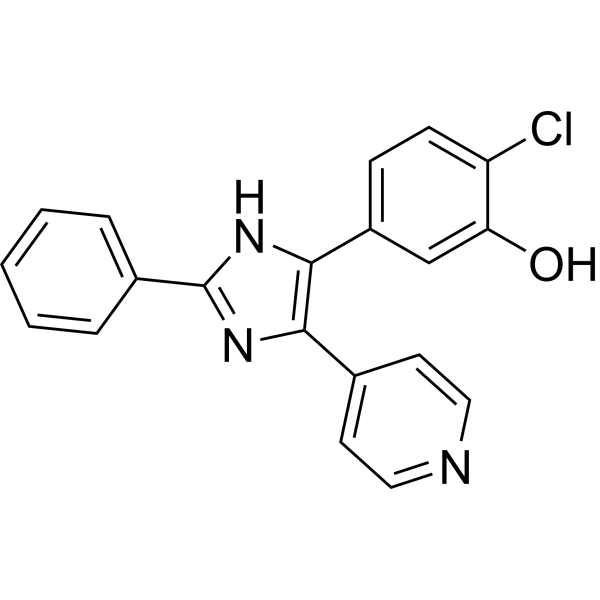
L-779450 is a potent and selective B-Raf kinase inhibitor with a Kd of 2.4 nM.
For research use only. We do not sell to patients.
- Purity : 98.24%
- CAS No.: 303727-31-3
- Formula: C20H14ClN3O
- Molecular Weight:347.80
-
Storage:Powder -20°C, 3 years , 4°C, 2 years ; In solvent -80°C, 2 years , -20°C, 1 year

To place orders, for customer services and technical support, please contact: MedChemExpress USA
Tel: 609-228-6898 E-mail: [email protected] [email protected]


-
 Biological Activity
-
Chemical Information
-
Solvent & Solubility
- Protocol
- Purity & Documentation
- References
-
 Help & FAQs


-
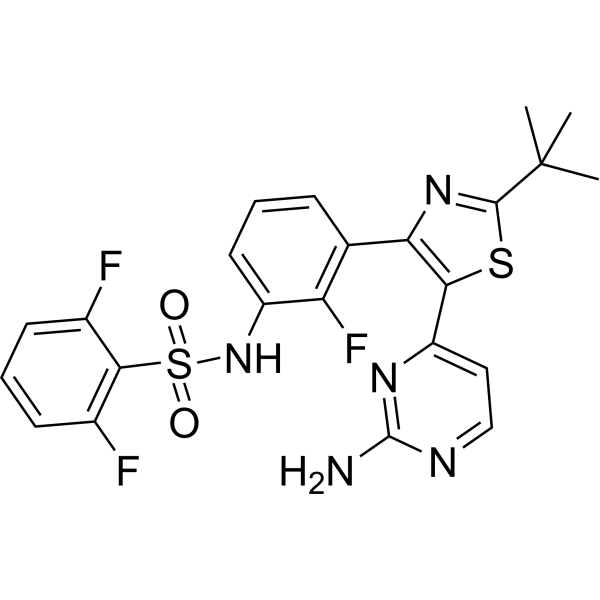
HY-14660
DabrafenibBRAF Inhibitor -
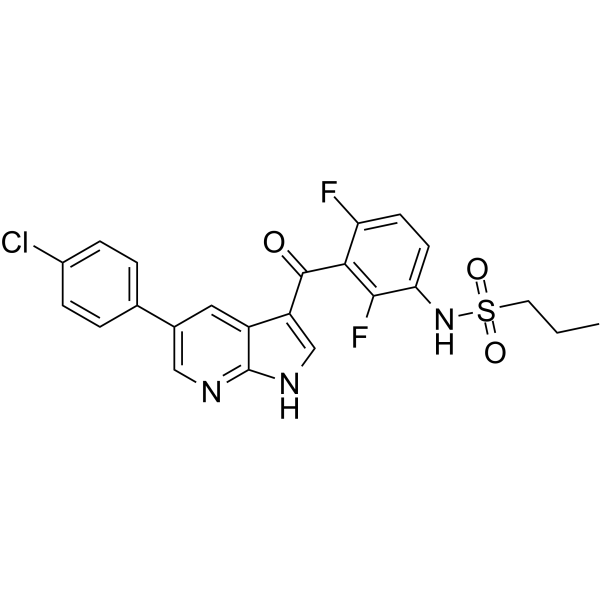
HY-12057
VemurafenibB-Raf Inhibitor -
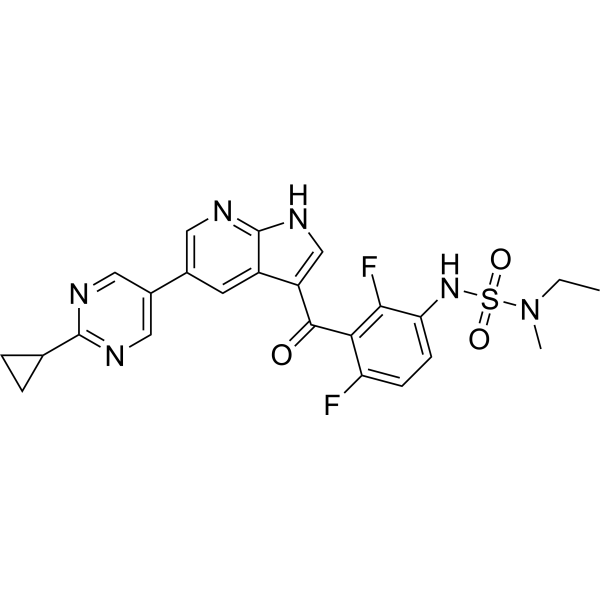
HY-18997
PLX7904BRAF Inhibitor -
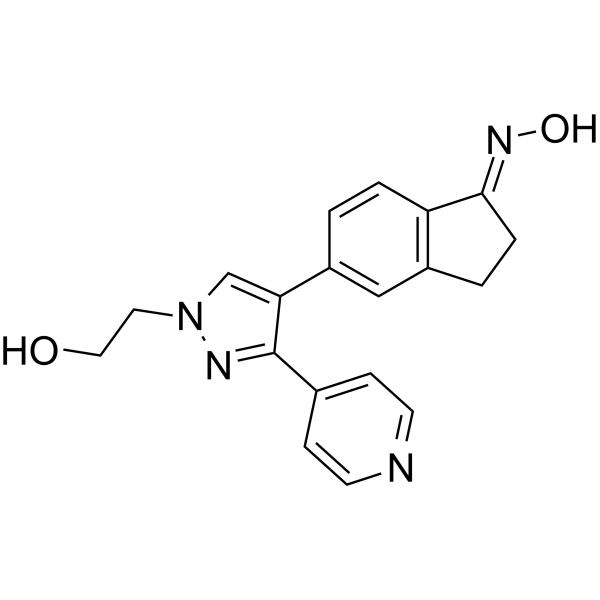
HY-50864
GDC-0879B-Raf Inhibitor -
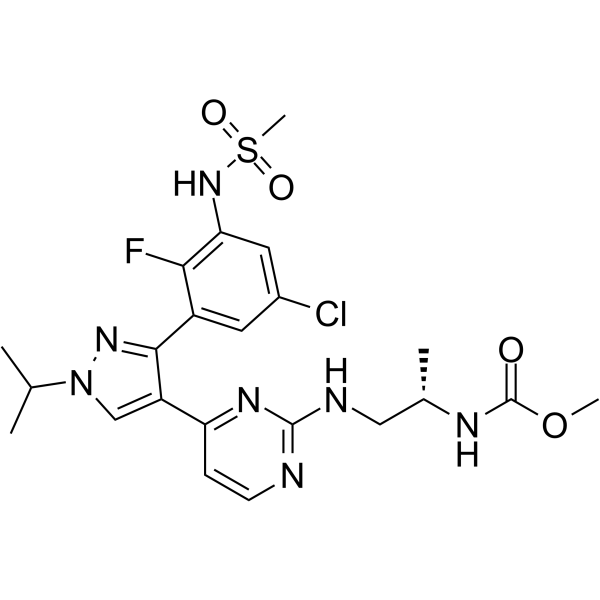
HY-15605
EncorafenibBRAF Inhibitor -
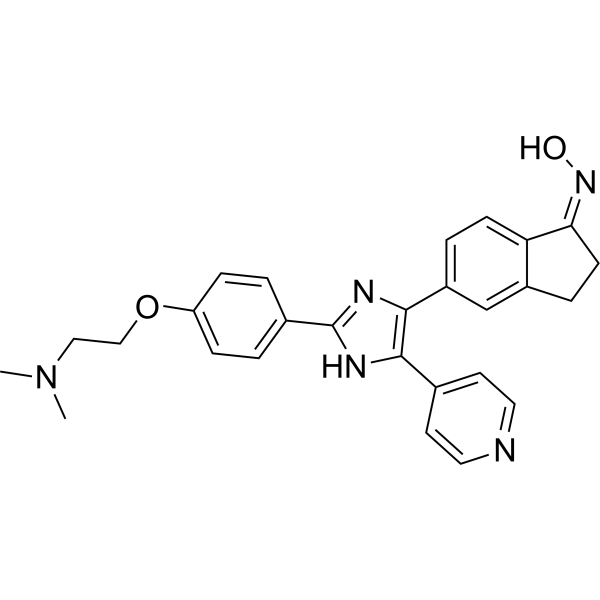
HY-10966
SB-590885BRAF/c-Raf Inhibitor -
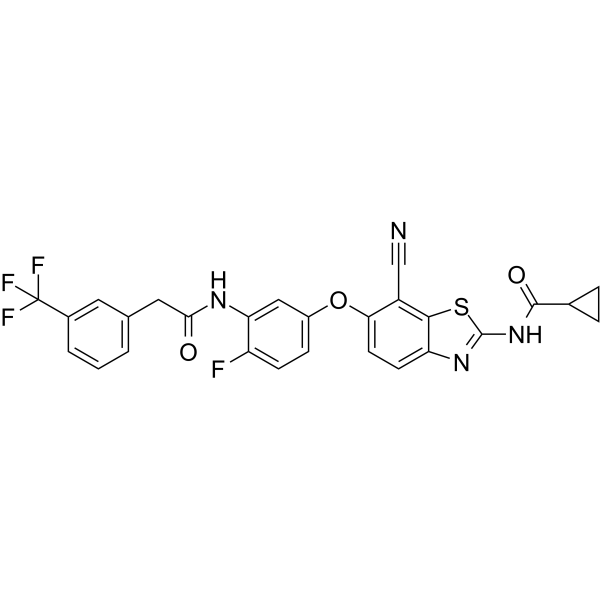
HY-15767
TAK-632RAF Inhibitor -
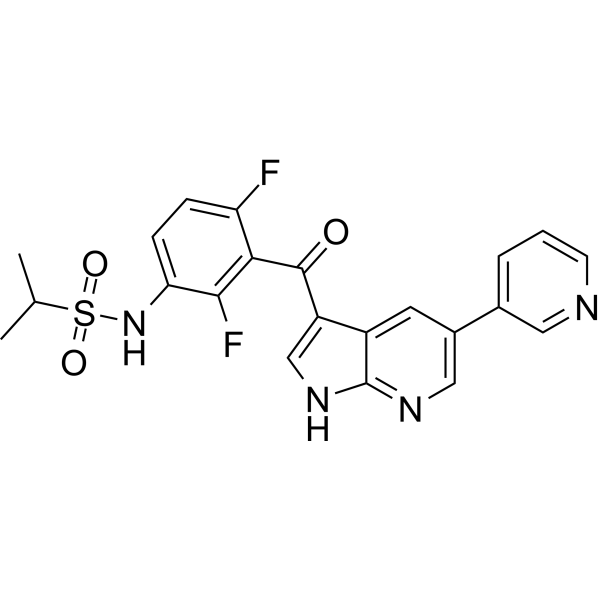
HY-10247
BRAF inhibitorB-Raf Inhibitor -
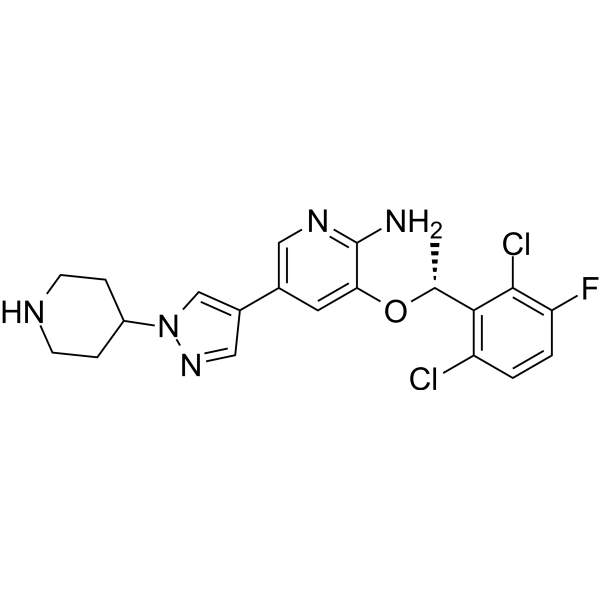
HY-50878
CrizotinibALK/c-Met/ROS1 Inhibitor -
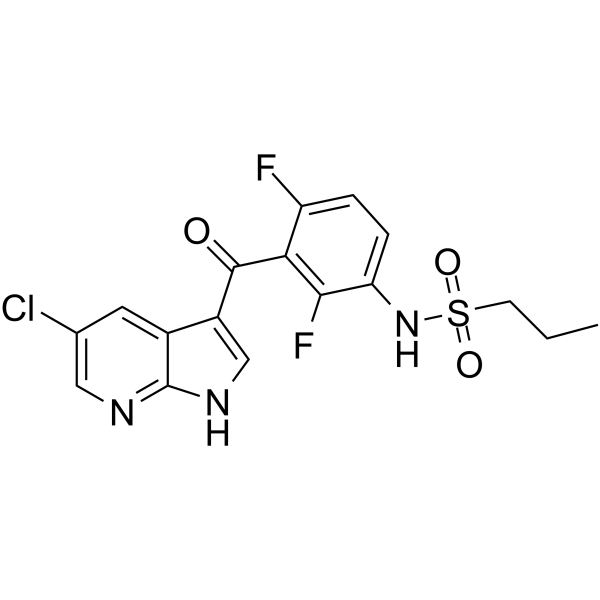
HY-51424
PLX-4720B-Raf Inhibitor -
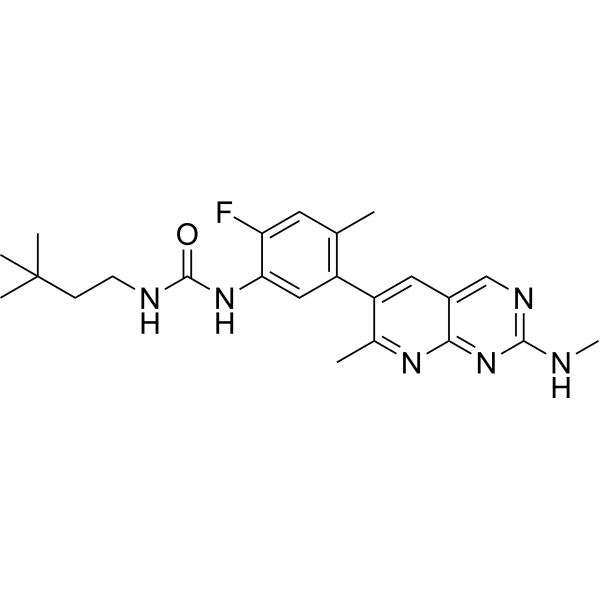
HY-12558
LY3009120Pan RAF Inhibitor -
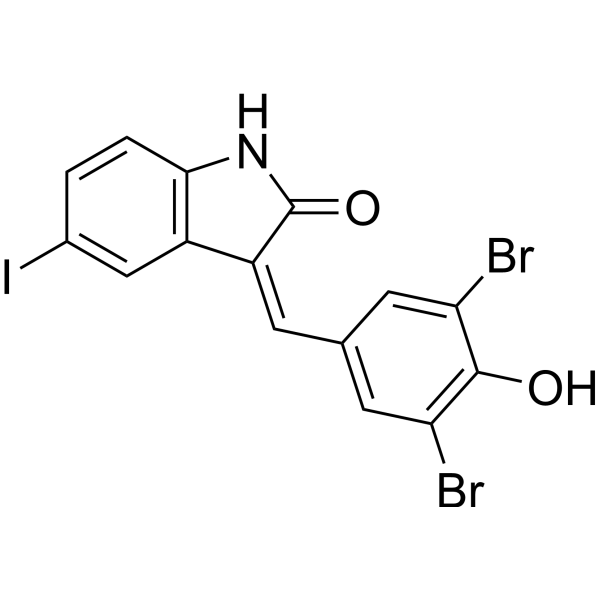
HY-10542
GW 5074Raf-1 Inhibitor
Publications Citing Use of MedChemExpress (MCE) L-779450
More

Biological Activity
Description
IC50 & Target
[1]|
B-Raf 2.4 nM (Kd) |
In Vitro
L-779450 (L-779,450) shows a high degree of specificity towards Raf. The only other tested kinase inhibited is p38MAPK, which has a kinase domain structurally related to Raf. L-779450 inhibits anchorage-independent growth of human tumor lines at doses ranging from 0.3 to 2?μM[2]. The effects of L-779450 (L-779,450) on TRAIL sensitivity are investigated here in melanoma cell lines with high TRAIL sensitivity (A-375 and SK-Mel-147), moderate sensitivity (Mel-HO, SK-Mel-13, and SK-Mel-28), and permanent resistance (MeWo, Mel-2a, and SK-Mel-103), as well as in TRAIL-selected cell lines with acquired resistance (A-375-TS and Mel-HO-TS). Despite only moderate direct effects of L-779450 on apoptosis, it strongly enhances TRAIL-induced apoptosis in sensitive melanoma cells and overrules TRAIL resistance in Mel-2a, SK-Mel-103, A-375-TS, and Mel-HO-TS. At 24?hours, 16-35% apoptosis induction is obtained[3].
MedChemExpress (MCE) has not independently confirmed the accuracy of these methods. They are for reference only.


Chemical Information
-
CAS No. 303727-31-3
-
Appearance Solid
-
Molecular Weight 347.80
-
Formula C20H14ClN3O
-
Color Light yellow to yellow
-
SMILES
OC1=CC(C2=C(C3=CC=NC=C3)N=C(C4=CC=CC=C4)N2)=CC=C1Cl
-
Shipping
Room temperature in continental US; may vary elsewhere.
-
Storage
Powder -20°C 3 years 4°C 2 years In solvent -80°C 2 years -20°C 1 year


Publications (1)
-
Journal Impact Factor
-
Most Recent
-
Cell Death Discov
Dual role of PID1 in regulating apoptosis induced by distinct anticancer-agents through AKT/Raf-1-dependent pathway in hepatocellular carcinoma. [Abstract]2023 Apr 28;9(1):139. PMID: 37117198


Solvent & Solubility
In Vitro:
DMSO : 100 mg/mL (287.52 mM; Need ultrasonic; Hygroscopic DMSO has a significant impact on the solubility of product, please use newly opened DMSO)
Please refer to the solubility information to select the appropriate solvent. Once prepared, please aliquot and store the solution to prevent product inactivation from repeated freeze-thaw cycles.
Storage method and period of stock solution: -80°C, 2 years; -20°C, 1 year. When stored at -80°C, please use it within 2 years. When stored at -20°C, please use it within 1 year.
Please refer to the solubility information to select the appropriate solvent. Once prepared, please aliquot and store the solution to prevent product inactivation from repeated freeze-thaw cycles.
Storage method and period of stock solution: -80°C, 2 years; -20°C, 1 year. When stored at -80°C, please use it within 2 years. When stored at -20°C, please use it within 1 year.
Concentration (start) × Volume (start) = Concentration (final) × Volume (final)
In Vivo:
Select the appropriate dissolution method based on your experimental animal and administration route.
- For the following dissolution methods, please ensure to first prepare a clear stock solution using an In Vitro approach and then sequentially add co-solvents:
- To ensure reliable experimental results, the clarified stock solution can be appropriately stored based on storage conditions. As for the working solution for In Vivo experiments, it is recommended to prepare freshly and use it on the same day.
- The percentages shown for the solvents indicate their volumetric ratio in the final prepared solution. If precipitation or phase separation occurs during preparation, heat and/or sonication can be used to aid dissolution.
Add each solvent one by one: 10% DMSO 40% PEG300 5% Tween-80 45% Saline
Solubility: ≥ 2.5 mg/mL (7.19 mM); Clear solution
This protocol yields a clear solution of ≥ 2.5 mg/mL (saturation unknown).
Taking 1 mL working solution as an example, add 100 μL DMSO stock solution (25.0 mg/mL) to 400 μL PEG300, and mix evenly; then add 50 μL Tween-80 and mix evenly; then add 450 μL Saline to adjust the volume to 1 mL.
Preparation of Saline: Dissolve 0.9 g sodium chloride in ddH₂O and dilute to 100 mL to obtain a clear Saline solution.
Add each solvent one by one: 10% DMSO 90% (20% SBE-β-CD in Saline)
Solubility: ≥ 2.5 mg/mL (7.19 mM); Clear solution
This protocol yields a clear solution of ≥ 2.5 mg/mL (saturation unknown).
Taking 1 mL working solution as an example, add 100 μL DMSO stock solution (25.0 mg/mL) to 900 μL 20% SBE-β-CD in Saline, and mix evenly.
Preparation of 20% SBE-β-CD in Saline (4°C, storage for one week): 2 g SBE-β-CD powder is dissolved in 10 mL Saline, completely dissolve until clear.
In Vivo Dissolution Calculator
Please enter the basic information of animal experiments:
-
-
-
-
Recommended: Prepare an additional quantity of animals to account for potential losses during experiments.
Please enter your animal formula composition:
-
%DMSO +
Recommended: Keep the proportion of DMSO in working solution below 2% if your animal is weak.
-
%+
-
+%Tween-80 + +
-
%Saline +
The co-solvents required include: DMSO, . All of co-solvents are available by MedChemExpress (MCE). , Tween 80. All of co-solvents are available by MedChemExpress (MCE).
Working solution concentration: 0.22 mg/mL
Method for preparing stock solution: mg drug dissolved in μL DMSO. Stock solution concentration: mg/mL.
1. Take μL DMSO stock solution;
2. Add μL .
μL , mix evenly;
3. Then add μL Tween 80, mix evenly;
4. Then add μL
Please ensure that the stock solution in the first step is dissolved to a clear state, and add co-solvents in sequence. You can use ultrasonic heating (ultrasonic cleaner, recommended frequency 20-40 kHz), vortexing, etc. to assist dissolution.

Protocol
Cell Assay[3]
For induction of apoptosis, TRAIL (20 ng/mL), the pan-RAF inhibitor L-779450 (0.1-50 μM), the MEK inhibitor U0126 (20 μM), and the selective BRAF(V600E) inhibitor Vemurafenib/PLX4032 are used. For continuous monitoring cell growth, the xCELLigence system is applied. Relative cell indices correspond to attached cell numbers. Cell cycle analyses are performed for quantification of apoptosis and cell cycle arrest. Cells harvested by trypsinization are stained for 1 hour with propidium iodide (200 mg/mL), and sub-G1 fractions, corresponding to cells with fragmented DNA, are quantified by flow cytometry[3].
MedChemExpress (MCE) has not independently confirmed the accuracy of these methods. They are for reference only.


Purity & Documentation
-
Data Sheet (280 KB)
-
SDS (480 KB)
- English - EN (480 KB)
- Français - FR (480 KB)
- Deutsch - DE (480 KB)
- Norwegian - NO (480 KB)
- Español - ES (480 KB)
- Swedish - SV (480 KB)
- Italian - IT (480 KB)
- Korean - KR (480 KB)
- Portuguese - PT (480 KB)
-
Handling Instructions (2659 KB)
References
[1]. Takle AK, et al. The identification of potent, selective and CNS penetrant furan-based inhibitors of B-Raf kinase. Bioorg Med Chem Lett. 2008 Aug 1;18(15):4373-6. [Content Brief]
[2]. Shelton JG, et al. Differential effects of kinase cascade inhibitors on neoplastic and cytokine-mediated cell proliferation. Leukemia. 2003 Sep;17(9):1765-82. [Content Brief]
[3]. Berger A, et al. RAF inhibition overcomes resistance to TRAIL-induced apoptosis in melanoma cells. J Invest Dermatol. 2014 Feb;134(2):430-440. [Content Brief]


Complete Stock Solution Preparation Table
Please refer to the solubility information to select the appropriate solvent. Once prepared, please aliquot and store the solution to prevent product inactivation from repeated freeze-thaw cycles.
Storage method and period of stock solution: -80°C, 2 years; -20°C, 1 year. When stored at -80°C, please use it within 2 years. When stored at -20°C, please use it within 1 year.
| Optional Solvent | Concentration Solvent Mass | 1 mg | 5 mg | 10 mg | 25 mg |
|---|---|---|---|---|---|
| DMSO | 1 mM | 2.8752 mL | 14.3761 mL | 28.7522 mL | 71.8804 mL |
| 5 mM | 0.5750 mL | 2.8752 mL | 5.7504 mL | 14.3761 mL | |
| 10 mM | 0.2875 mL | 1.4376 mL | 2.8752 mL | 7.1880 mL | |
| 15 mM | 0.1917 mL | 0.9584 mL | 1.9168 mL | 4.7920 mL | |
| 20 mM | 0.1438 mL | 0.7188 mL | 1.4376 mL | 3.5940 mL | |
| 25 mM | 0.1150 mL | 0.5750 mL | 1.1501 mL | 2.8752 mL | |
| 30 mM | 0.0958 mL | 0.4792 mL | 0.9584 mL | 2.3960 mL | |
| 40 mM | 0.0719 mL | 0.3594 mL | 0.7188 mL | 1.7970 mL | |
| 50 mM | 0.0575 mL | 0.2875 mL | 0.5750 mL | 1.4376 mL | |
| 60 mM | 0.0479 mL | 0.2396 mL | 0.4792 mL | 1.1980 mL | |
| 80 mM | 0.0359 mL | 0.1797 mL | 0.3594 mL | 0.8985 mL | |
| 100 mM | 0.0288 mL | 0.1438 mL | 0.2875 mL | 0.7188 mL |


L-779450 Related Classifications
HY-12787 Related Classifications
 Powered by Bioz