



G140
Based on 8 publication(s) in Google Scholar
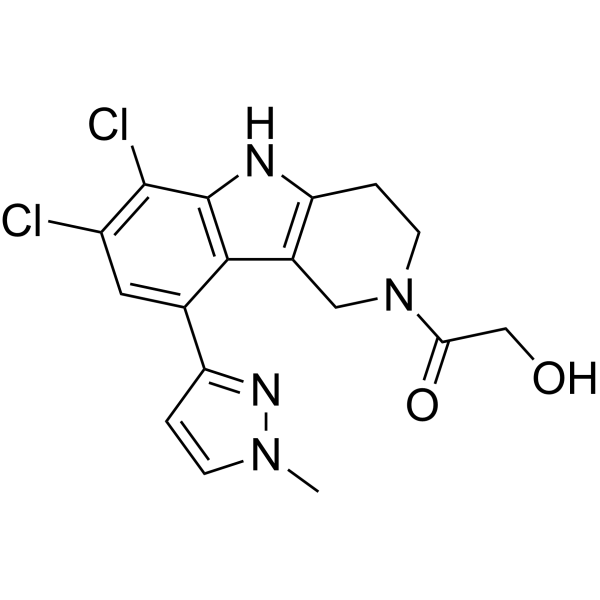
G140 is a potent and selective inhibitor of cyclic GMP-AMP synthase (cGAS), with IC50s of 14.0 nM and 442 nM for h-cGAS and m-cGAS, respectively. G140 has anti-inflammatory activity.
For research use only. We do not sell to patients.
- Purity : 99.17%
- CAS No.: 2369751-07-3
- Formula: C17H16Cl2N4O2
- Molecular Weight:379.24
-
Storage:Powder -20°C, 3 years , 4°C, 2 years ; In solvent -80°C, 6 months , -20°C, 1 month

To place orders, for customer services and technical support, please contact: MedChemExpress USA
Tel: 609-228-6898 E-mail: [email protected] [email protected]


-
 Biological Activity
-
Chemical Information
-
Solvent & Solubility
- Protocols
- Purity & Documentation
- References
-
 Help & FAQs


-
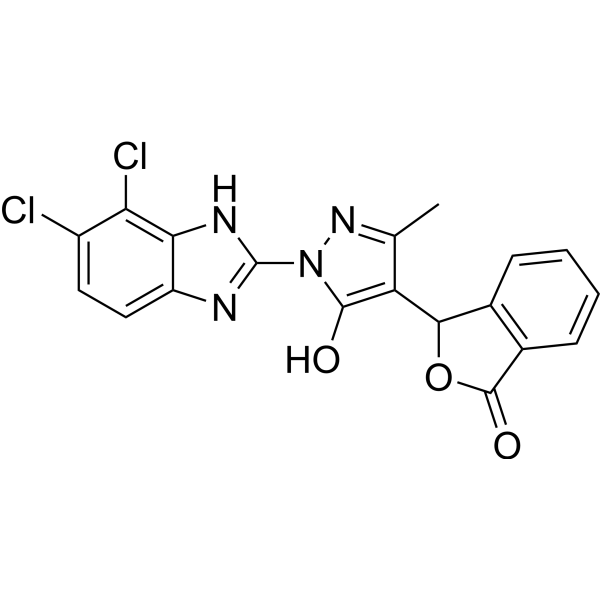
HY-114180
RU.521cGAS Inhibitor -
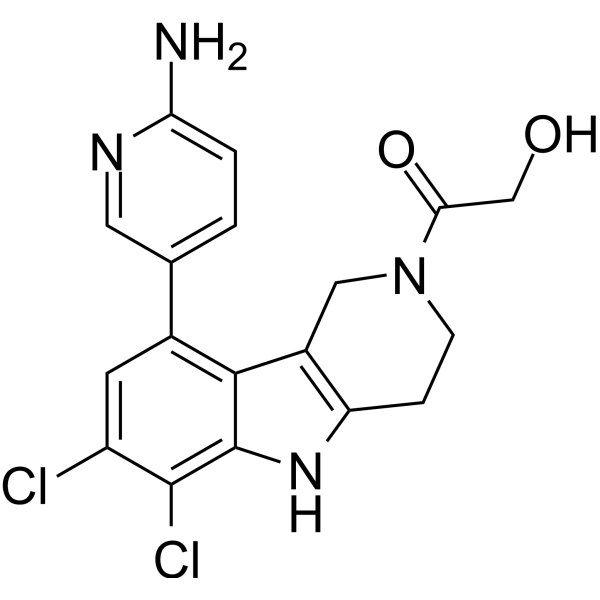
HY-128583
G150cGAS Inhibitor -
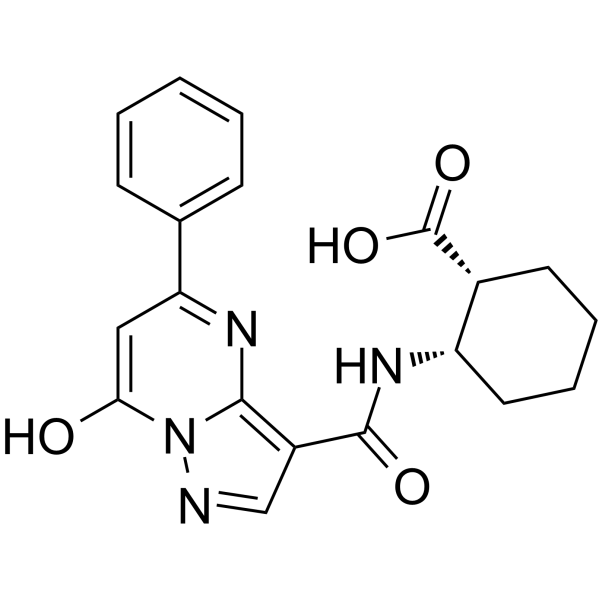
HY-114182
PF-06928215cGAS Inhibitor -
HY-112693
H-151STING Antagonist -
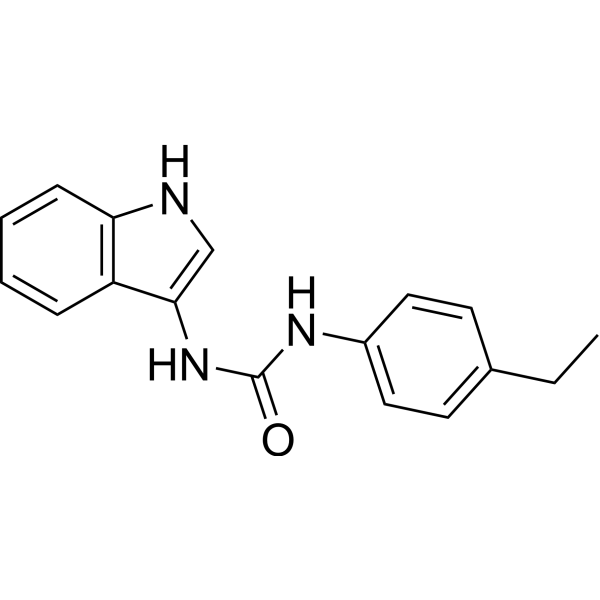
HY-114181
IRAK4-IN-4IRAK4 Inhibitor -
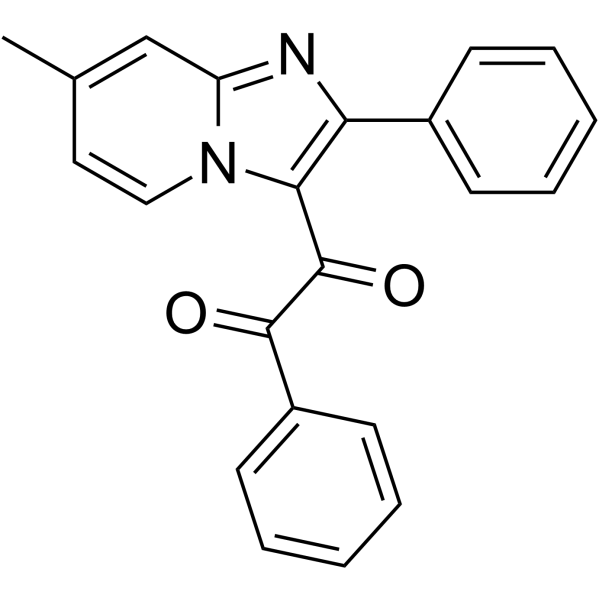
HY-160546
cGAS-IN-2cGAS Inhibitor -
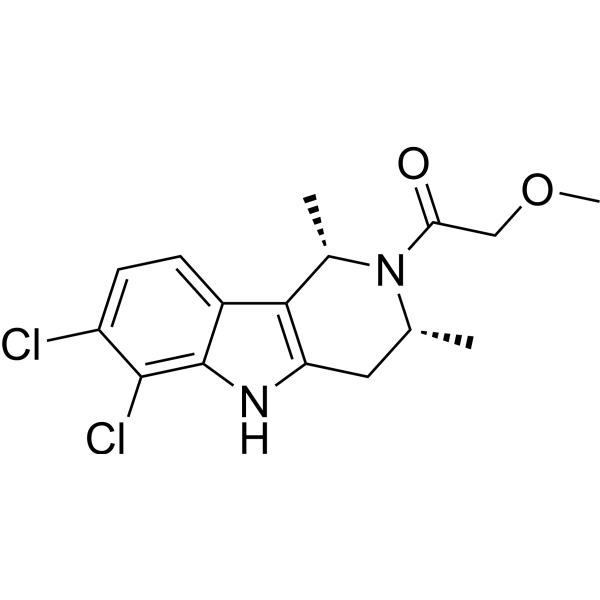
HY-B0879A
Suramin sodium saltPTPases Inhibitor -
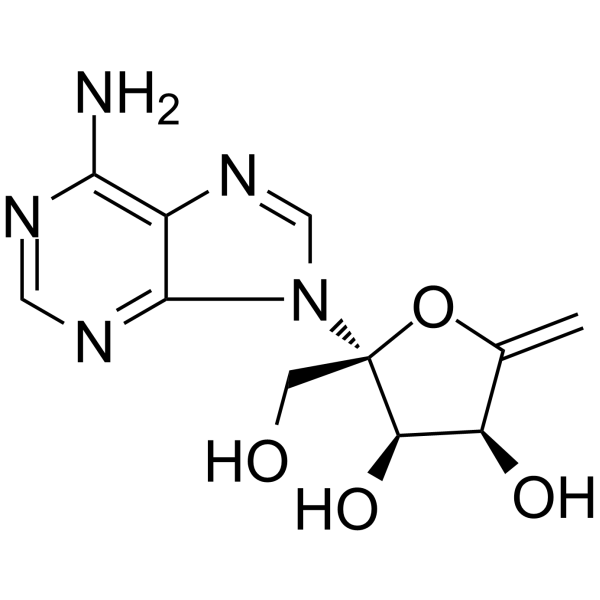
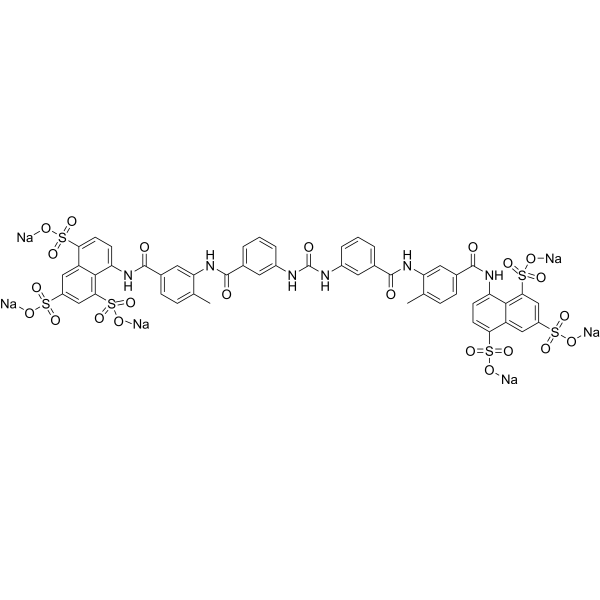
HY-101835
DecoyinineGMP Synthetase Inhibitor -
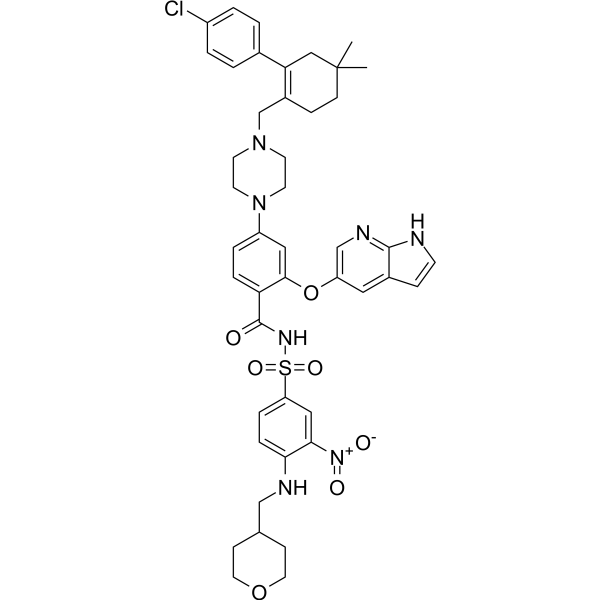
HY-15531
VenetoclaxBCL-2 Inhibitor -
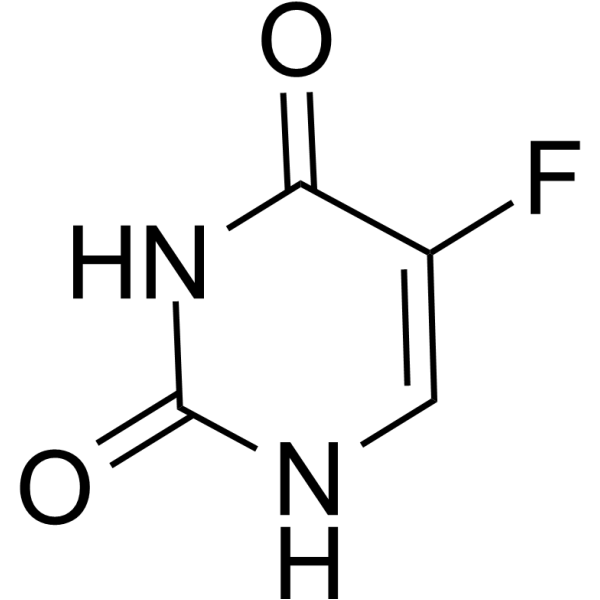
HY-90006
5-FluorouracilThymidylate Synthase Inhibitor -
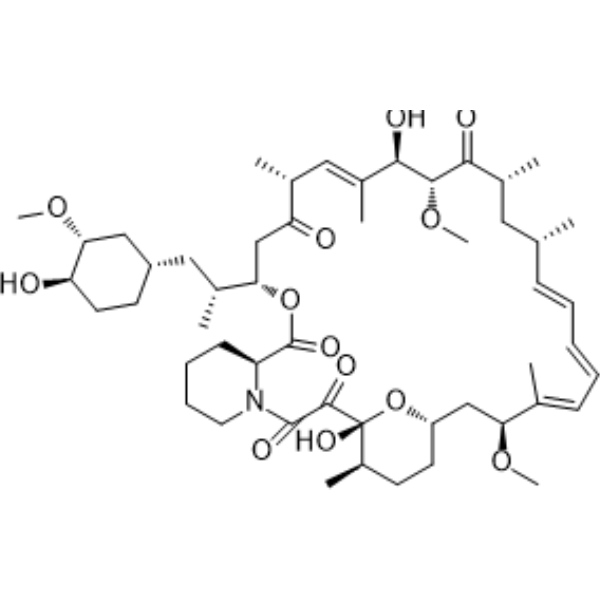
HY-10219
RapamycinmTOR Inhibitor -
HY-145010
SN-011STING Inhibitor
Publications Citing Use of MedChemExpress (MCE) G140
More- Nature. 2025 May;641(8061):202-210. [Abstract]
- Nat Commun. 2023 May 26;14(1):3050. [Abstract]
- J Biomed Sci. 2026 Aug 11;33(1):81.
- Adv Sci (Weinh). 2025 Sep 8:e02223. [Abstract]
- Cell Rep. 2024 Dec 21;44(1):115094. [Abstract]
- Pharmacol Rep. 2025 Aug 14. [Abstract]
- bioRxiv. 2026 Apr 25:2026.04.23.719926. [Abstract]
- bioRxiv. 2025 Feb 5:2025.01.31.635709. [Abstract]
 Customer Validation & Images

-
WB
-
RT-PCR
-
WB
-
RT-PCR


Biological Activity
Description
IC50 & Target
|
cGAS |
Cellular Effect
|
Cell Line

|
Type | Value | Description | References |
|---|---|---|---|---|
| H69AR | IC50 |
2.69 μM
Compound: 5; G140
|
Inhibition of human cGAS expressed in THP1-Dual cells transfected with HT-DNA assessed as suppression of lipofectamine 2000:ds-DNA complex induced activation of cGAS incubated for 1 hr by Quanti-luc reagent based assay
Inhibition of human cGAS expressed in THP1-Dual cells transfected with HT-DNA assessed as suppression of lipofectamine 2000:ds-DNA complex induced activation of cGAS incubated for 1 hr by Quanti-luc reagent based assay
|
[PMID: 34044539] |
| THP-1 | IC50 |
1.7 μM
Compound: 5; G140
|
Cytotoxicity against human THP-1 cells assessed as cell growth inhibition
Cytotoxicity against human THP-1 cells assessed as cell growth inhibition
|
[PMID: 34044539] |
| THP1-Dual | CC50 |
>50 μM
Compound: 5; G140
|
Cytotoxicity against human THP1-Dual cells assessed as reduction in cell viability incubated for 24 hrs by CCK-8 assay
Cytotoxicity against human THP1-Dual cells assessed as reduction in cell viability incubated for 24 hrs by CCK-8 assay
|
[PMID: 34044539] |
In Vitro
G140 (0.1-100 μM; 4 h) inhibits h-cGAS in a dose-dependent manner with IC50s of 1.70 and 0.86 μM in human THP1 and primary macrophages, respectively[1].
G140 (0.1-100 μM; 24 h) inhibits cells viability with a LD50 of >100 μM in THP1 cells[1].
MedChemExpress (MCE) has not independently confirmed the accuracy of these methods. They are for reference only.


Chemical Information
-
CAS No. 2369751-07-3
-
Appearance Solid
-
Molecular Weight 379.24
-
Formula C17H16Cl2N4O2
-
Color White to off-white
-
SMILES
OCC(N(C1)CCC(N2)=C1C3=C2C(Cl)=C(Cl)C=C3C4=NN(C)C=C4)=O
-
Shipping
Room temperature in continental US; may vary elsewhere.
-
Storage
Powder -20°C 3 years 4°C 2 years In solvent -80°C 6 months -20°C 1 month


Publications (8)
-
Journal Impact Factor
-
Most Recent
-
Nature
2025 May;641(8061):202-210. PMID: 40140567 -
Nat Commun
TRABID inhibition activates cGAS/STING-mediated anti-tumor immunity through mitosis and autophagy dysregulation. [Abstract]2023 May 26;14(1):3050. PMID: 37237031 -
-
Adv Sci (Weinh)
PVC Nanoplastics Exposure Exacerbates Asthma through R-Loop Accumulation and Subsequent STING Activation in Macrophages. [Abstract]2025 Sep 8:e02223. PMID: 40919700
G140 purchased from MedChemExpress. Usage Cited in: Adv Sci (Weinh). 2025 Sep 8:e02223. [Abstract]
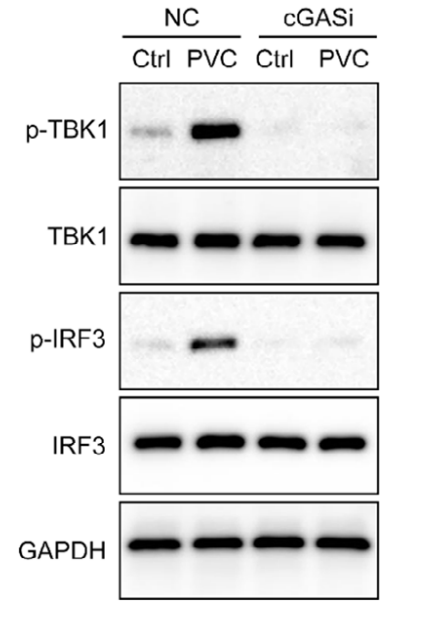
Effects of pharmacological inhibition or gene knockout of the cGAS-STING pathway on PVC NPs-induced phosphorylation of TBK1 and IRF3 cGAS inhibitor (G140, 2 µM).
G140 purchased from MedChemExpress. Usage Cited in: Adv Sci (Weinh). 2025 Sep 8:e02223. [Abstract]
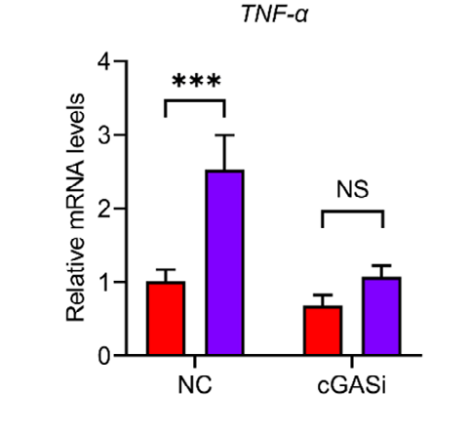
The relative mRNA expression levels of pro-inflammatory cytokines (TNF-α) in STING KO cells treated with the cGAS inhibitor (G140, 2 µM).
-
Cell Rep
The N-degron pathway mediates the autophagic degradation of cytosolic mitochondrial DNA during sterile innate immune responses. [Abstract]2024 Dec 21;44(1):115094. PMID: 39709605
G140 purchased from MedChemExpress. Usage Cited in: Cell Rep. 2024 Dec 21;44(1):115094. [Abstract]
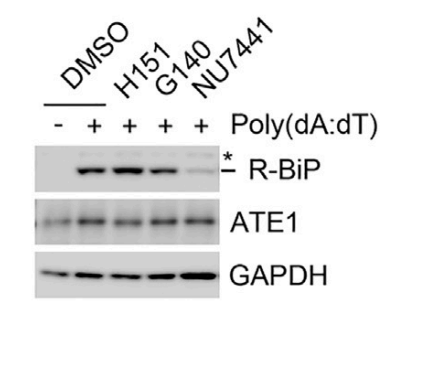
Immunoblotting analysis of HeLa cells treated with 10 μM G140, 10 μM H151, or 10 μM NU7441 for 18 h in the presence of 1 μg/mL poly(dA:dT).
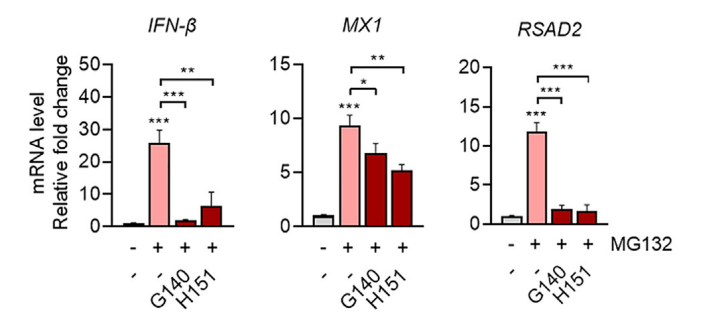
G140 purchased from MedChemExpress. Usage Cited in: Cell Rep. 2024 Dec 21;44(1):115094. [Abstract]
The mRNA expression relative to GAPDH was measured by RT-qPCR. RNAs were isolated from HeLa cells treated with MG132 or co-treated with MG132 and G140 or H151 for 12 h.
-
Pharmacol Rep
Pretreatment with alendronate augments lipid A-induced IFN-β production via upregulation of cGAS expression. [Abstract]2025 Aug 14. PMID: 40810765 -
bioRxiv
It's Not Rewarding for Mitochondria: Dopamine-Induced Mitochondrial Dysfunction Activates cGAS-STING to Drive IL-6 Secretion in Macrophages. [Abstract]2026 Apr 25:2026.04.23.719926. PMID: 42079251 -
bioRxiv
Heterochromatin fidelity is a therapeutic vulnerability in lymphoma and other human cancers. [Abstract]2025 Feb 5:2025.01.31.635709. PMID: 39975048


Solvent & Solubility
In Vitro:
DMSO : 250 mg/mL (659.21 mM; Need ultrasonic; Hygroscopic DMSO has a significant impact on the solubility of product, please use newly opened DMSO)
Please refer to the solubility information to select the appropriate solvent. Once prepared, please aliquot and store the solution to prevent product inactivation from repeated freeze-thaw cycles.
Storage method and period of stock solution: -80°C, 6 months; -20°C, 1 month. When stored at -80°C, please use it within 6 months. When stored at -20°C, please use it within 1 month.
Please refer to the solubility information to select the appropriate solvent. Once prepared, please aliquot and store the solution to prevent product inactivation from repeated freeze-thaw cycles.
Storage method and period of stock solution: -80°C, 6 months; -20°C, 1 month. When stored at -80°C, please use it within 6 months. When stored at -20°C, please use it within 1 month.
Concentration (start) × Volume (start) = Concentration (final) × Volume (final)
In Vivo:
Select the appropriate dissolution method based on your experimental animal and administration route.
- For the following dissolution methods, please ensure to first prepare a clear stock solution using an In Vitro approach and then sequentially add co-solvents:
- To ensure reliable experimental results, the clarified stock solution can be appropriately stored based on storage conditions. As for the working solution for In Vivo experiments, it is recommended to prepare freshly and use it on the same day.
- The percentages shown for the solvents indicate their volumetric ratio in the final prepared solution. If precipitation or phase separation occurs during preparation, heat and/or sonication can be used to aid dissolution.
Add each solvent one by one: 10% DMSO 40% PEG300 5% Tween-80 45% Saline
Solubility: ≥ 2.08 mg/mL (5.48 mM); Clear solution
This protocol yields a clear solution of ≥ 2.08 mg/mL (saturation unknown).
Taking 1 mL working solution as an example, add 100 μL DMSO stock solution (20.8 mg/mL) to 400 μL PEG300, and mix evenly; then add 50 μL Tween-80 and mix evenly; then add 450 μL Saline to adjust the volume to 1 mL.
Preparation of Saline: Dissolve 0.9 g sodium chloride in ddH₂O and dilute to 100 mL to obtain a clear Saline solution.
Add each solvent one by one: 10% DMSO 90% (20% SBE-β-CD in Saline)
Solubility: ≥ 2.08 mg/mL (5.48 mM); Clear solution
This protocol yields a clear solution of ≥ 2.08 mg/mL (saturation unknown).
Taking 1 mL working solution as an example, add 100 μL DMSO stock solution (20.8 mg/mL) to 900 μL 20% SBE-β-CD in Saline, and mix evenly.
Preparation of 20% SBE-β-CD in Saline (4°C, storage for one week): 2 g SBE-β-CD powder is dissolved in 10 mL Saline, completely dissolve until clear.
In Vivo Dissolution Calculator
Please enter the basic information of animal experiments:
-
-
-
-
Recommended: Prepare an additional quantity of animals to account for potential losses during experiments.
Please enter your animal formula composition:
-
%DMSO +
Recommended: Keep the proportion of DMSO in working solution below 2% if your animal is weak.
-
%+
-
+%Tween-80 + +
-
%Saline +
The co-solvents required include: DMSO, . All of co-solvents are available by MedChemExpress (MCE). , Tween 80. All of co-solvents are available by MedChemExpress (MCE).
Working solution concentration: 0.22 mg/mL
Method for preparing stock solution: mg drug dissolved in μL DMSO. Stock solution concentration: mg/mL.
1. Take μL DMSO stock solution;
2. Add μL .
μL , mix evenly;
3. Then add μL Tween 80, mix evenly;
4. Then add μL
Please ensure that the stock solution in the first step is dissolved to a clear state, and add co-solvents in sequence. You can use ultrasonic heating (ultrasonic cleaner, recommended frequency 20-40 kHz), vortexing, etc. to assist dissolution.


Purity & Documentation
-
Data Sheet (277 KB)
-
SDS (251 KB)
- English - EN (251 KB)
- Français - FR (251 KB)
- Deutsch - DE (251 KB)
- Norwegian - NO (251 KB)
- Español - ES (251 KB)
- Swedish - SV (251 KB)
- Italian - IT (251 KB)
- Korean - KR (251 KB)
- Portuguese - PT (251 KB)
-
Handling Instructions (2659 KB)
References


Complete Stock Solution Preparation Table
Please refer to the solubility information to select the appropriate solvent. Once prepared, please aliquot and store the solution to prevent product inactivation from repeated freeze-thaw cycles.
Storage method and period of stock solution: -80°C, 6 months; -20°C, 1 month. When stored at -80°C, please use it within 6 months. When stored at -20°C, please use it within 1 month.
| Optional Solvent | Concentration Solvent Mass | 1 mg | 5 mg | 10 mg | 25 mg |
|---|---|---|---|---|---|
| DMSO | 1 mM | 2.6369 mL | 13.1843 mL | 26.3685 mL | 65.9213 mL |
| 5 mM | 0.5274 mL | 2.6369 mL | 5.2737 mL | 13.1843 mL | |
| 10 mM | 0.2637 mL | 1.3184 mL | 2.6369 mL | 6.5921 mL | |
| 15 mM | 0.1758 mL | 0.8790 mL | 1.7579 mL | 4.3948 mL | |
| 20 mM | 0.1318 mL | 0.6592 mL | 1.3184 mL | 3.2961 mL | |
| 25 mM | 0.1055 mL | 0.5274 mL | 1.0547 mL | 2.6369 mL | |
| 30 mM | 0.0879 mL | 0.4395 mL | 0.8790 mL | 2.1974 mL | |
| 40 mM | 0.0659 mL | 0.3296 mL | 0.6592 mL | 1.6480 mL | |
| 50 mM | 0.0527 mL | 0.2637 mL | 0.5274 mL | 1.3184 mL | |
| 60 mM | 0.0439 mL | 0.2197 mL | 0.4395 mL | 1.0987 mL | |
| 80 mM | 0.0330 mL | 0.1648 mL | 0.3296 mL | 0.8240 mL | |
| 100 mM | 0.0264 mL | 0.1318 mL | 0.2637 mL | 0.6592 mL |


G140 Related Classifications
HY-133916 Related Classifications
 Powered by Bioz