



Streptavidin
Based on 6 publication(s) in Google Scholar
Streptavidin is a ~60 kDa homotetramer. Streptavidin binds four molecules of biotin with the highest affinity. The binding affinity of biotin to streptavidin is one of the highest reported for a non-covalent interaction to date, with a KD ~0.01 pM. Streptavidin has an immunosuppressive role.
This product is a Streptavidin protein recombinantly expressed in an E. coli expression system.
For research use only. We do not sell to patients.
- Purity : 98.5%
- CAS No.: 9013-20-1
-
Storage:
Please store the product under the recommended conditions in the Certificate of Analysis.

To place orders, for customer services and technical support, please contact: MedChemExpress USA
Tel: 609-228-6898 E-mail: [email protected] [email protected]


-
 Biological Activity
-
Chemical Information
- Protocols
- Purity & Documentation
- References
-
 Help & FAQs


-
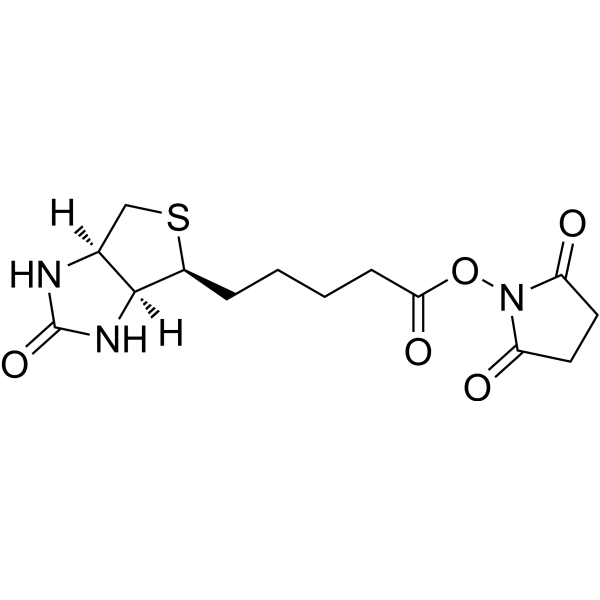
HY-D0802
Biotin NHSBiotin Reagent -
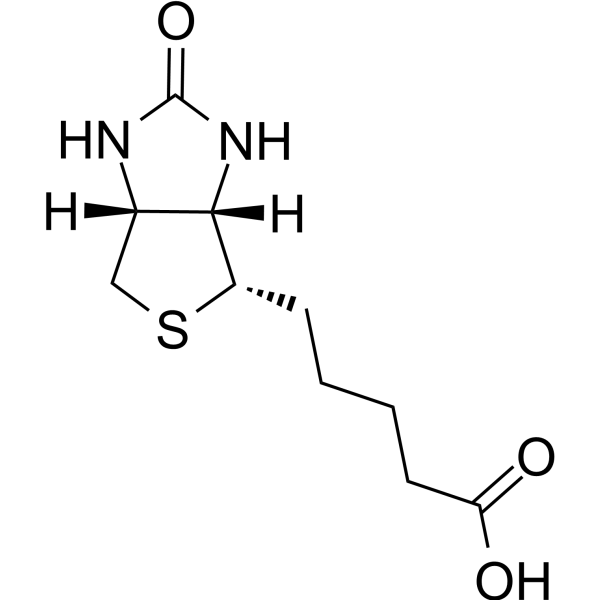
HY-B0511
BiotinVitamin B7 -
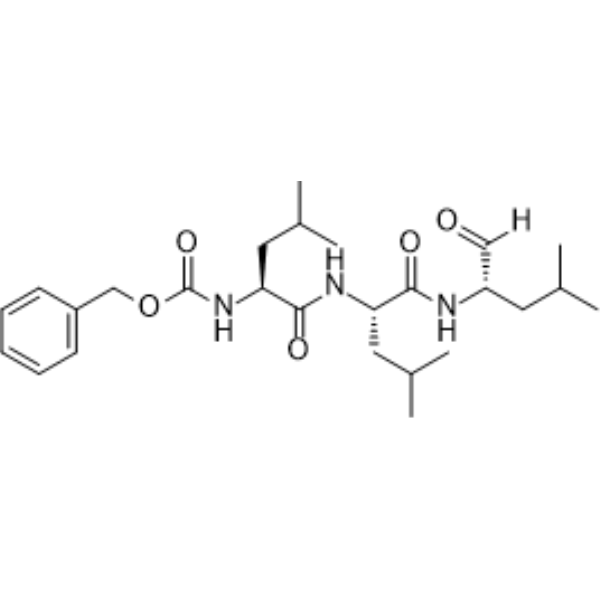
HY-13259
MG-132Proteasome Inhibitor -
HY-10583
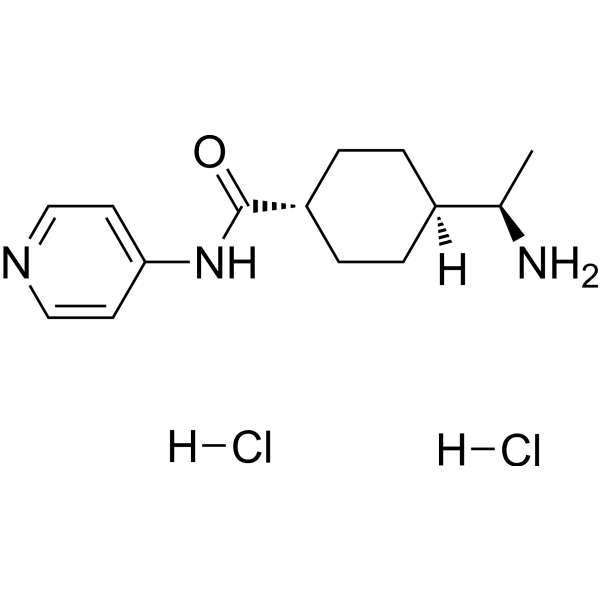
Y-27632 dihydrochlorideROCK Inhibitor -
HY-K0010
Protease Inhibitor Cocktail (EDTA-Free, 100× in DMSO) -
HY-10071
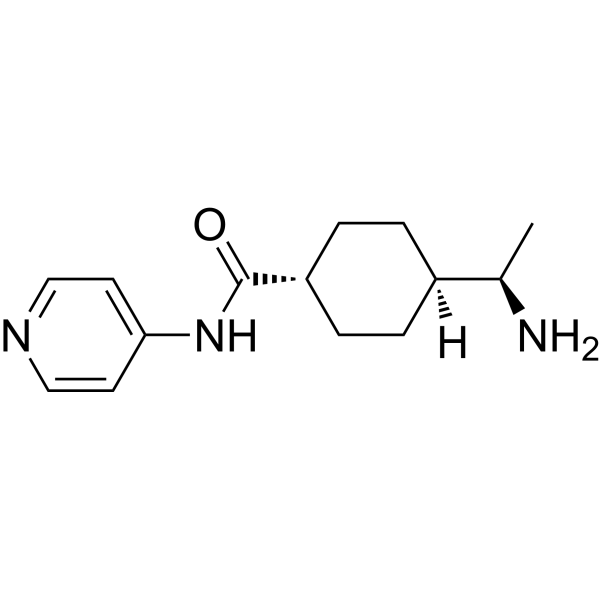
Y-27632ROCK Inhibitor -
HY-116285
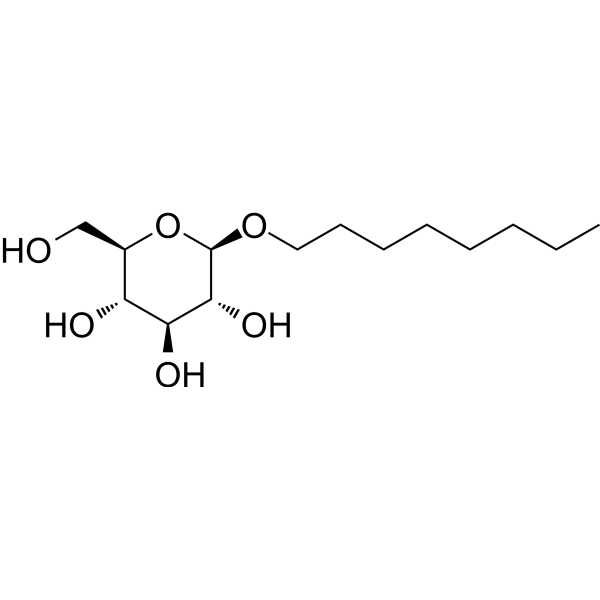
n-Octyl β-D-glucopyranosideNon-Ionic Detergent -
HY-B0627
MetforminAntihyperglycemic Agent -
HY-18739
Phorbol 12-myristate 13-acetatePKC Activator -
HY-10182
LaduviglusibGSK-3 Inhibitor -
HY-N0322
Cholesterol (from animal)ERRα Agonist -
HY-17371
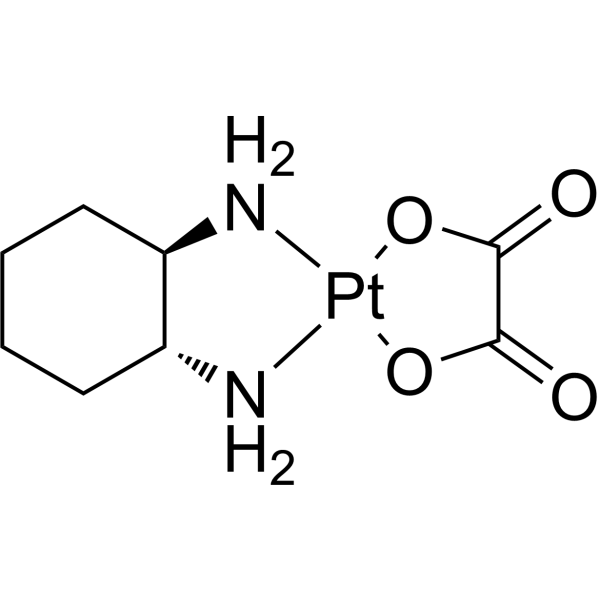
OxaliplatinDNA Synthesis Inhibitor
Publications Citing Use of MedChemExpress (MCE) Streptavidin
More

Biological Activity
Description
This product is a Streptavidin protein recombinantly expressed in an E. coli expression system.
In Vitro
Streptavidin (2-200 μg/mL) significantly suppresses the proliferation of Lewis T cells to WF by 76%-83% compared with untreated responders[1].
MedChemExpress (MCE) has not independently confirmed the accuracy of these methods. They are for reference only.
-
Cell Line:Lewis T cells
-
Concentration:2-200 μg/mL
-
Incubation Time:
-
Result:Inhibited the proliferation of Lewis T cells to WF stimulators by 76%-83% compared with untreated responders, lower concentrations of 0.1 and 0.2 μg/mL did not significantly inhibit T-cell proliferation.
In Vivo
MedChemExpress (MCE) has not independently confirmed the accuracy of these methods. They are for reference only.
-
Animal Model:Lewis rats[2]
-
Dosage:8, 12, 20, 40, 60, or 80 mg/kg
-
Administration:Administered IP for 5 consecutive days after transplantation was combined with a single dose of 0.5 mL antilymphocyte serum (ALS) on day 0
-
Result:Prolonged cardiac allograft survival from MST of 7.3±0.5 and 8.4±0.5 days in naive and ALS-treated controls, respectively, to 15±1, 20±3, 16±3, 17±3, and 23±2 days, respectively.


Chemical Information
-
CAS No. 9013-20-1
-
Appearance Solid
-
Color White to off-white
-
SMILES
[Streptavidin]
-
Shipping
Room temperature in continental US; may vary elsewhere.
-
Storage
Please store the product under the recommended conditions in the Certificate of Analysis.


Publications (6)
-
Journal Impact Factor
-
Most Recent
-
Ann Rheum Dis
Generation of cytotoxic aptamers specifically targeting fibroblast-like synoviocytes by CSCT-SELEX for treatment of rheumatoid arthritis. [Abstract]2024 Sep 4:ard-2024-225565. PMID: 39237134 -
ACS Nano
Nanoparticle Size Influences the Self-Assembly of Gold Nanorods Using Flexible Streptavidin-Biotin Linkages. [Abstract]2023 Dec 12;17(23):24090-24103. PMID: 38010073 -
-
Alzheimers Res Ther
Novel fully human high-affinity anti-TREM2 antibody shows efficacy in clinically relevant Alzheimer´s mouse model. [Abstract]2025 May 22;17(1):114. PMID: 40405265 -
Br J Cancer
SLC7A11-AS1 contributes to prolonged activation of activin A/Smad signaling by suppressing PPM1A myristoylation in pancreatic cancer. [Abstract]2025 Sep 9. PMID: 40926062 -
Anal Chim Acta
A highly sensitive magnetic separation-assisted electrochemical sensor for detection of m6A-microRNA-17-5p based on rolling circle amplification and N3-kethoxal labeling strategy at LIG electrodes. [Abstract]2025 Dec 1:1377:344655. PMID: 41093520


Purity & Documentation
-
Data Sheet (271 KB)
-
SDS (393 KB)
- English - EN (393 KB)
- Français - FR (393 KB)
- Deutsch - DE (393 KB)
- Norwegian - NO (393 KB)
- Español - ES (393 KB)
- Swedish - SV (393 KB)
- Italian - IT (393 KB)
- Korean - KR (393 KB)
- Portuguese - PT (393 KB)
-
Handling Instructions (2659 KB)
References

Calculators
Concentration (start) × Volume (start) = Concentration (final) × Volume (final)


Streptavidin Related Classifications
HY-P3152 Related Classifications
 Powered by Bioz