



Casticin
Based on 7 publication(s) in Google Scholar
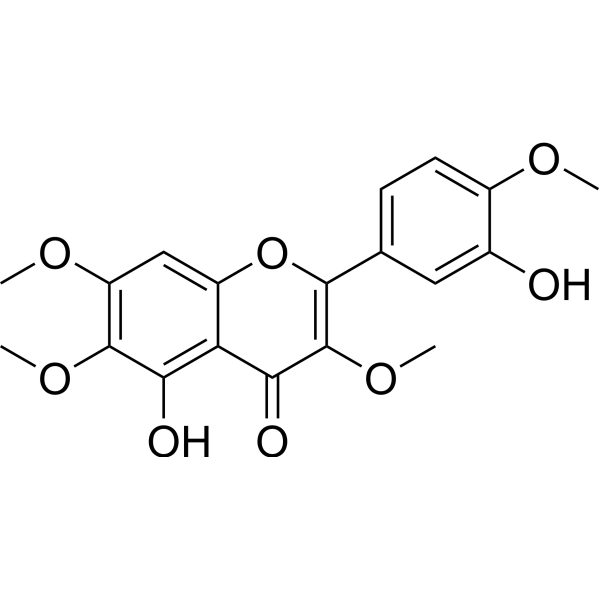
Casticin is a methyoxylated flavonol isolated from Vitex rotundifolia, with antimitotic and anti-inflammatory effect. Casticin inhibits the activation of STAT3.
Para uso exclusivo en investigación. No vendemos a pacientes.
- Pureza : 99.68%
- No. CAS: 479-91-4
- Fòrmula: C19H18O8
- Peso molecular:374.34
-
Almacenamiento:
4°C, protect from light
* In solvent : -80°C, 6 months; -20°C, 1 month (protect from light)

To place orders, for customer services and technical support, please contact: MedChemExpress USA
Tel: 609-228-6898 E-mail: [email protected] [email protected]


-
 Actividad biológica
-
Chemical Information
-
Solvente y solubilidad
- Protocolo
- Pureza y Documentación
- Referencias
-
 Help & FAQs


-
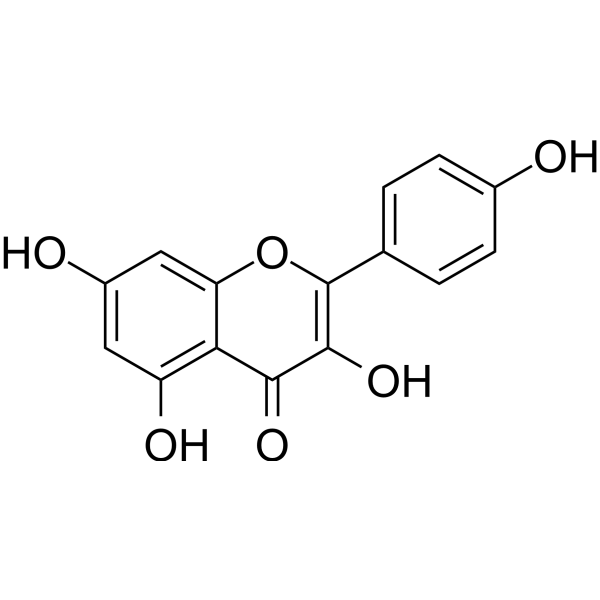
HY-14590
KaempferolEstrogen Receptor α Inhibitor -
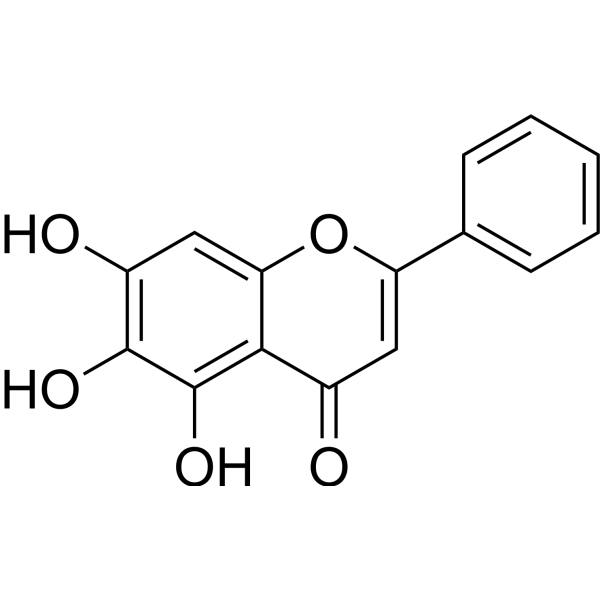
HY-N0196
BaicaleinXanthine Oxidase Inhibitor -
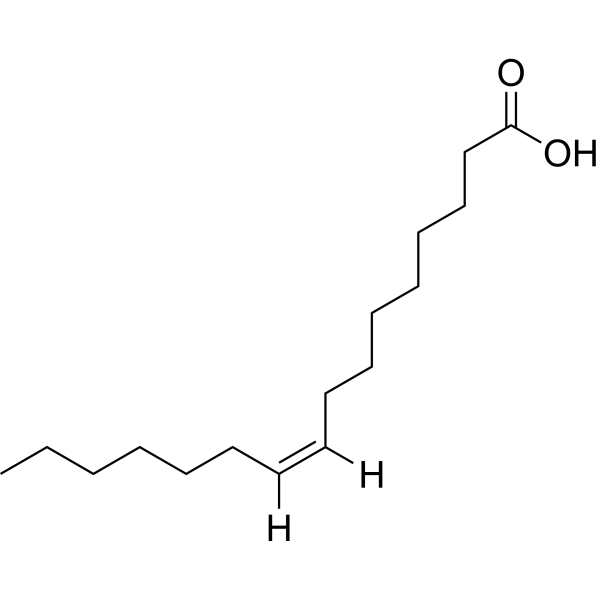
HY-W011873
Palmitoleic acid -
HY-14393
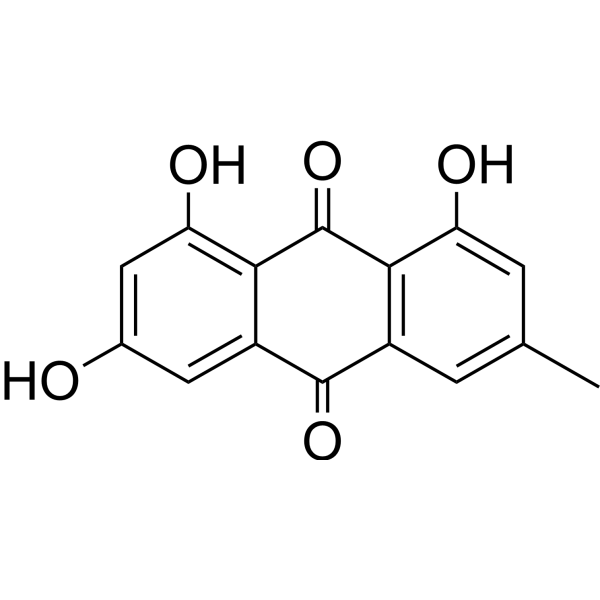
EmodinNatural Anthraquinone -
HY-Y0873
PEG300Neutral Polymer -
HY-N0182
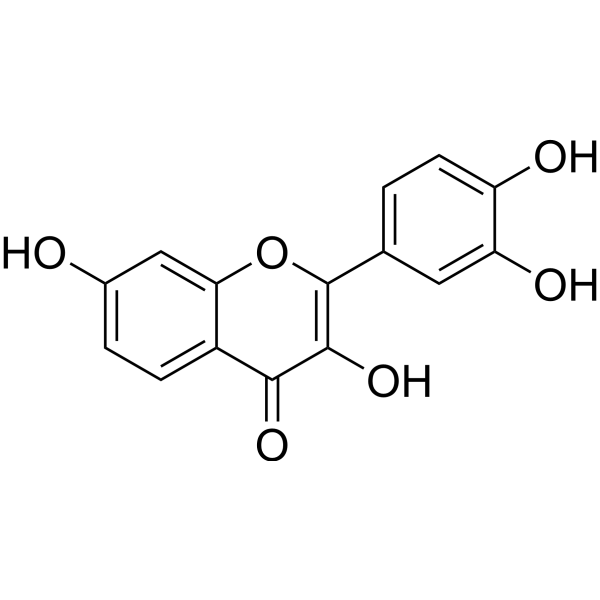
FisetinTNF Receptor Inhibitor -
HY-N0405
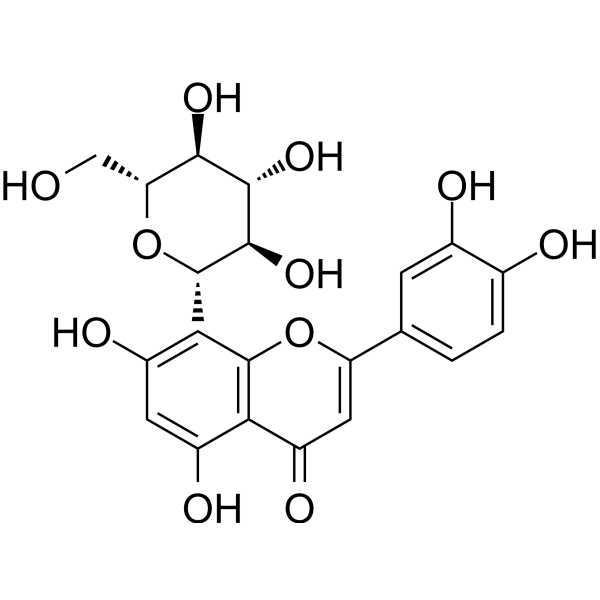
OrientinNeuroprotective Agent -
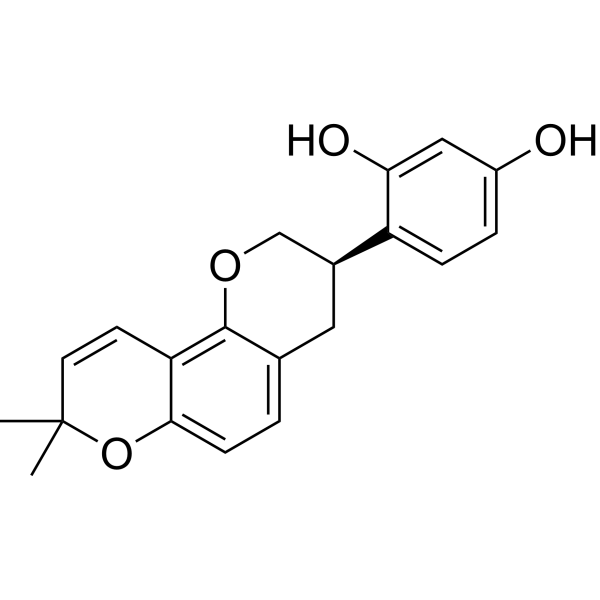
HY-N0393
GlabridinPPARγ Activator -
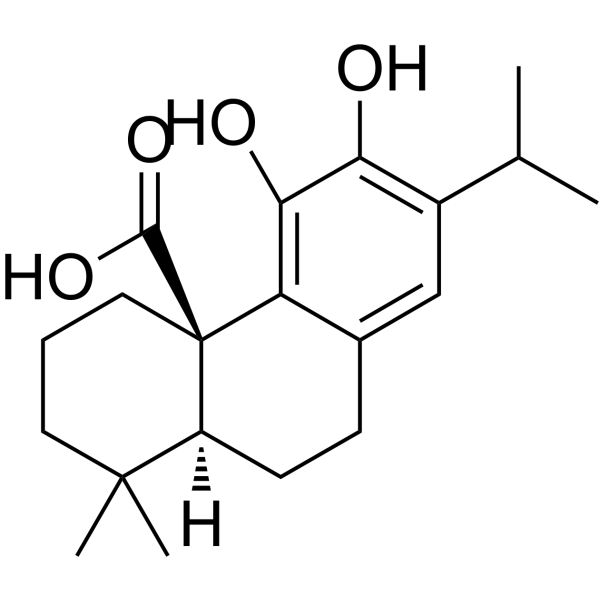
HY-N0644
Carnosic acidLipid Absorption Inhibitor -
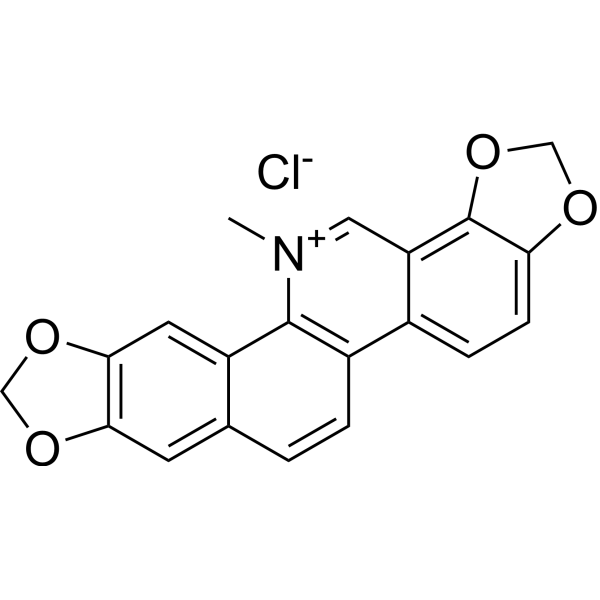
HY-N0052A
Sanguinarine chlorideApoptosis Inducer -
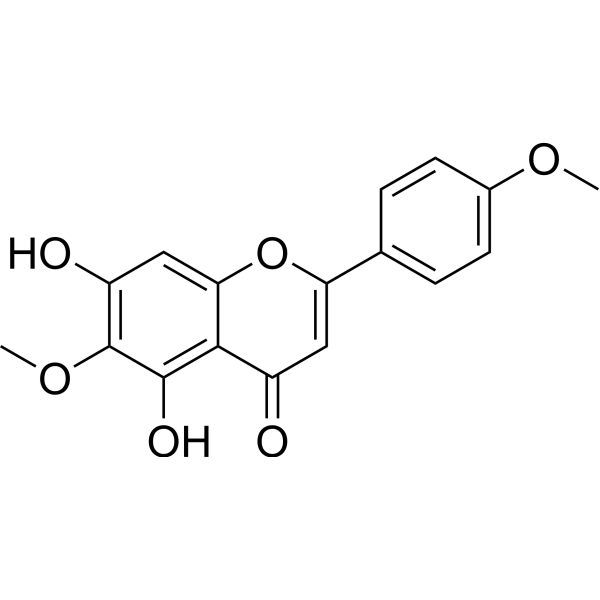
HY-N0493
PectolinarigeninCOX-2/5-LOX Inhibitor -
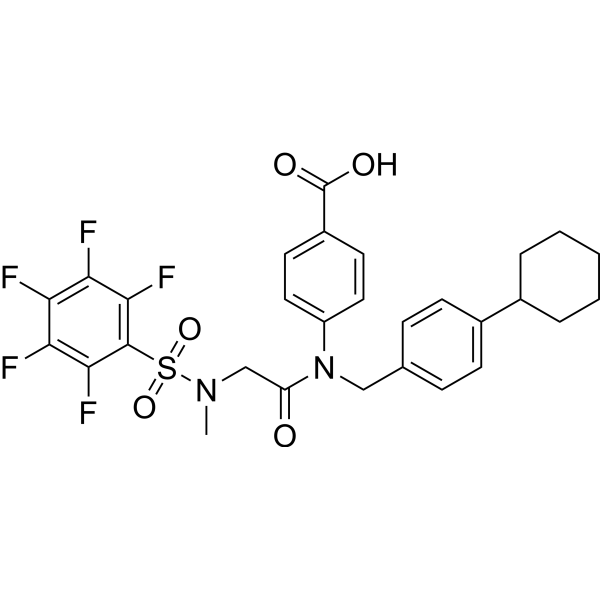
HY-16975
SH-4-54STAT3/5 Inhibitor
Publications Citing Use of MedChemExpress (MCE) Casticin
More- Phytomedicine. 2024 Sep:132:155833. [Abstract]
- J Ethnopharmacol. 2025 Jun 12:349:119964. [Abstract]
- Biochem Pharmacol. 2026 Jan;243(Pt 2):117562. [Abstract]
- Int Immunopharmacol. 2026 Oct 15:187:117249.
- Rheumatology (Oxford). 2025 Aug 13:keaf437. [Abstract]
- Genes (Basel). 2022 May 3;13(5):815. [Abstract]
- Vet Microbiol. 2026 May:316:110992. [Abstract]
 Customer Validation & Images

-
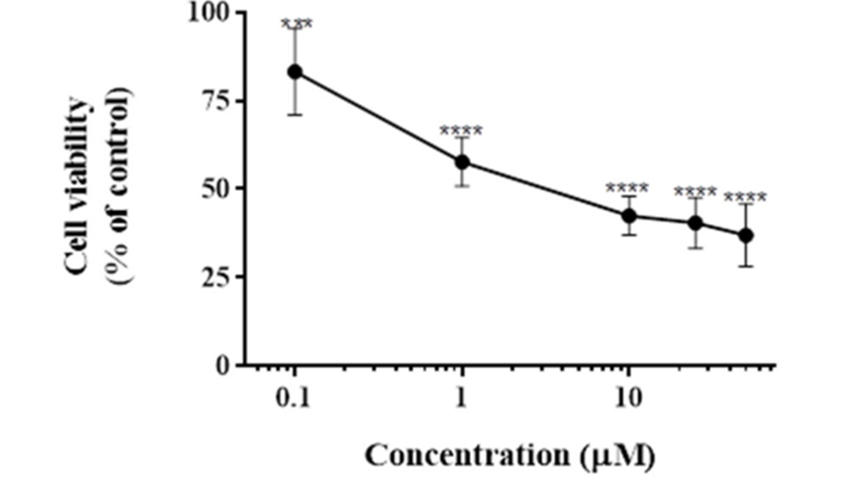
Cell Proliferation/Viability Assay
-
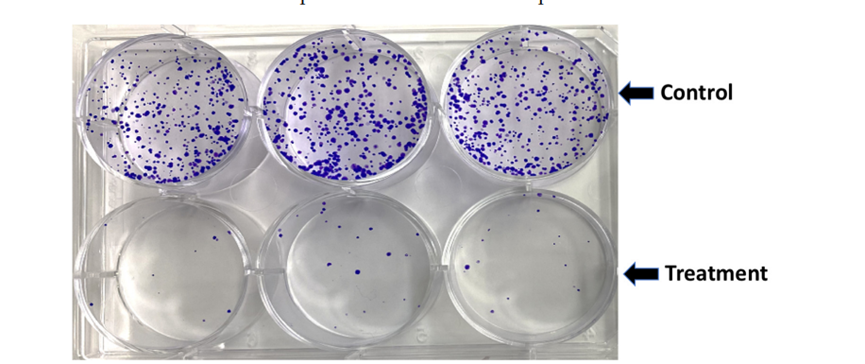
Cell Imaging/Staining
-
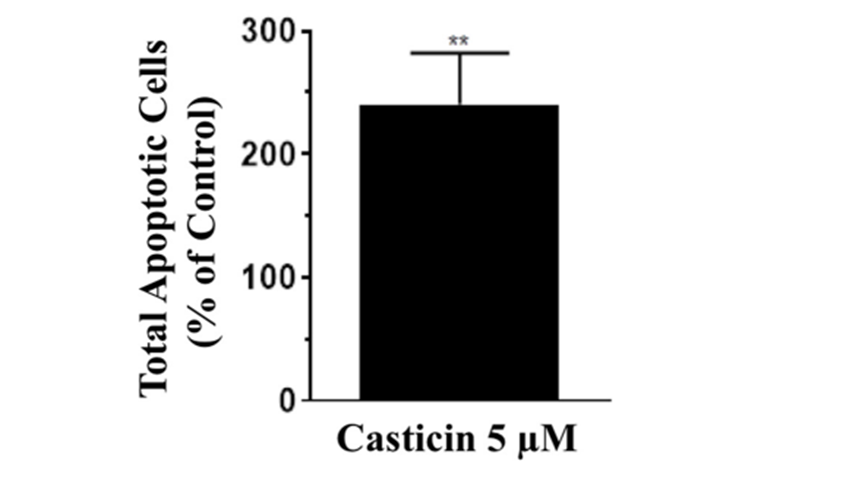
Apoptosis Analysis


Actividad biológica
Descripciòn
IC50 & Target
STAT3[3]
Cellular Effect
|
Cell Line

|
Type | Value | Description | References |
|---|---|---|---|---|
| Col2 | ED50 |
12.7 μg/mL
Compound: 1
|
Cytotoxicity against human Col2 cells
Cytotoxicity against human Col2 cells
|
[PMID: 12828478] |
| HCT-116 | GI50 |
119 ng/mL
Compound: 9
|
Cytotoxicity against human HCT116 cells assessed as growth inhibition after 72 hrs by MTT assay
Cytotoxicity against human HCT116 cells assessed as growth inhibition after 72 hrs by MTT assay
|
[PMID: 11975496] |
| HUVEC | ED50 |
0.6 μg/mL
Compound: 1
|
Cytotoxicity against HUVEC
Cytotoxicity against HUVEC
|
[PMID: 12828478] |
| KB | ED50 |
0.2 μg/mL
Compound: 1
|
Cytotoxicity against human KB cells
Cytotoxicity against human KB cells
|
[PMID: 12828478] |
| KB | IC50 |
97 nM
Compound: 10, casticin, vitexicarpin
|
Cytotoxicity against human KB cells after 72 hrs by MTS assay
Cytotoxicity against human KB cells after 72 hrs by MTS assay
|
[PMID: 20356063] |
| LNCaP | ED50 |
0.5 μg/mL
Compound: 1
|
Cytotoxicity against human LNCAP cells
Cytotoxicity against human LNCAP cells
|
[PMID: 12828478] |
| Lu1 | ED50 |
0.8 μg/mL
Compound: 1
|
Cytotoxicity against human Lu1 cells
Cytotoxicity against human Lu1 cells
|
[PMID: 12828478] |
| PC-12 | GI50 |
114 ng/mL
Compound: 9
|
Cytotoxicity against rat PC12 cells assessed as growth inhibition after 72 hrs by MTT assay
Cytotoxicity against rat PC12 cells assessed as growth inhibition after 72 hrs by MTT assay
|
[PMID: 11975496] |
| RAW264.7 | IC50 |
21.4 μM
Compound: 24
|
Antiinflammatory activity against mouse RAW264.7 cells assessed as inhibition of LPS-induced NO production after 24 hrs by Griess method
Antiinflammatory activity against mouse RAW264.7 cells assessed as inhibition of LPS-induced NO production after 24 hrs by Griess method
|
[PMID: 24035341] |
| TERT-RPE1 | ED50 |
0.2 μg/mL
Compound: 1
|
Cytotoxicity against human telomerase reverse transcriptase expressing RPE1 cells
Cytotoxicity against human telomerase reverse transcriptase expressing RPE1 cells
|
[PMID: 12828478] |
In Vitro
Casticin (0.2-1.0 μM) dose-dependently inhibits the proliferation of KB cells, with an IC50 of 0.23 μM on day 3, while shows no significant inhibition on 3T3 Swiss Albino and TIG-103 cells. Casticin (0.6 μM) alters spindle morphology with partial mitotic spindle breakdown or with disordered spindles[1]. Casticin (0-40 μM) dose-dependently inhibits the proliferation of LX2 cells. Casticin (40 μM) suppresses L02 cells proliferation and induces apoptosis. Casticin inhibits fibrotic effects of TGF-β1 on ECM deposition in LX2 cells by evaluating the mRNA levels of TGF-β, collagen α1(I), MMP-2, MMP-9, TIMP-1 and TIMP-2[2]. Casticin (0-8 μM) reduces the viability of 786-O, YD-8, and HN-9 cells, but shows no significant effect on that of the normal HEL 299 cells. Casticin (5 μM) increases cleavage caspase-3 and PPAR, diminishes the levels of B-cell lymphoma-extra large (Bcl-xl), Bcl-2, IAP-1/-2, vascular endothelial growth factor (VEGF), matrix metallopeptidase 9 (MMP-9), and cyclooxygenase 2 (COX-2) proteins in 786-O, YD-8, and HN-9 cells. Casticin (5 μM) also promotes apoptotic cell death, inhibits constitutively active STAT3 in tumor cells, modulates STAT3 activation by altering the activity of upstream STAT3 regulators, and abrogates IL-6-induced STAT3 activation. In addition, Casticin (2.5 μM) enhances the effect of ionizing radiation in 786-O cells and potentiates the therapeutic effect of radiotherapy[3].
MedChemExpress (MCE) has not independently confirmed the accuracy of these methods. They are for reference only.
In Vivo
MedChemExpress (MCE) has not independently confirmed the accuracy of these methods. They are for reference only.


Chemical Information
-
No. CAS 479-91-4
-
Appearance Solid
-
Peso molecular 374.34
-
Fòrmula C19H18O8
-
Color Light yellow to yellow
-
SMILES
O=C1C(OC)=C(C2=CC=C(OC)C(O)=C2)OC3=CC(OC)=C(OC)C(O)=C13
-
Synonyms
Vitexicarpin
-
Structure Classification
-
Initial Source
-
Envío
Room temperature in continental US; may vary elsewhere.
-
Almacenamiento
4°C, protect from light
* In solvent : -80°C, 6 months; -20°C, 1 month (protect from light)


Publications (7)
-
Journal Impact Factor
-
Most Recent
-
Phytomedicine
Vitexicarpin suppresses malignant progression of colorectal cancer through affecting c-Myc ubiquitination by targeting IMPDH2. [Abstract]2024 Sep:132:155833. PMID: 39008915 -
J Ethnopharmacol
Integrating bioinformatic analysis, network pharmacology, molecular docking and experimental validation to explore the mechanism of Tian Long Cha against influenza virus. [Abstract]2025 Jun 12:349:119964. PMID: 40368255 -
Biochem Pharmacol
Lysine methylation-mediated SMYD2 degradation by casticin sensitizes non-small-cell lung cancer cells to osimertinib therapy. [Abstract]2026 Jan;243(Pt 2):117562. PMID: 41314435 -
-
Rheumatology (Oxford)
Autophagy inhibitors block pathogenic NET release in immune-mediated inflammatory disease without impairing host defence. [Abstract]2025 Aug 13:keaf437. PMID: 40802538 -
Genes (Basel)
Casticin Impacts Key Signaling Pathways in Colorectal Cancer Cells Leading to Cell Death with Therapeutic Implications. [Abstract]2022 May 3;13(5):815. PMID: 35627200
Casticin purchased from MedChemExpress. Usage Cited in: Genes (Basel). 2022 May 3;13(5):815. [Abstract]
Cytotoxicity of Casticin on HCT116 cell line; for concentrations beginning 1 µM onwards when compared to control.
Casticin purchased from MedChemExpress. Usage Cited in: Genes (Basel). 2022 May 3;13(5):815. [Abstract]
Representative image of the control cultures and cultures from Casticin (5 µM) treatment for 48 h.
Casticin purchased from MedChemExpress. Usage Cited in: Genes (Basel). 2022 May 3;13(5):815. [Abstract]
Total number of apoptotic cells increased significantly in Casticin (5 μM)-treated group.
-
Vet Microbiol
The Chinese medicine monomer Schisandrin C inhibits PRRSV infection by regulating the OGT-PI3K/AKT/mTOR signaling pathway. [Abstract]2026 May:316:110992. PMID: 41865607


Solvente y solubilidad
In Vitro:
DMSO : 100 mg/mL (267.14 mM; Need ultrasonic; Hygroscopic DMSO has a significant impact on the solubility of product, please use newly opened DMSO)
Please refer to the solubility information to select the appropriate solvent. Once prepared, please aliquot and store the solution to prevent product inactivation from repeated freeze-thaw cycles.
Storage method and period of stock solution: -80°C, 6 months; -20°C, 1 month (protect from light). When stored at -80°C, please use it within 6 months. When stored at -20°C, please use it within 1 month.
Please refer to the solubility information to select the appropriate solvent. Once prepared, please aliquot and store the solution to prevent product inactivation from repeated freeze-thaw cycles.
Storage method and period of stock solution: -80°C, 6 months; -20°C, 1 month (protect from light). When stored at -80°C, please use it within 6 months. When stored at -20°C, please use it within 1 month.
Concentration (start) × Volume (start) = Concentration (final) × Volume (final)
In Vivo:
Select the appropriate dissolution method based on your experimental animal and administration route.
- For the following dissolution methods, please ensure to first prepare a clear stock solution using an In Vitro approach and then sequentially add co-solvents:
- To ensure reliable experimental results, the clarified stock solution can be appropriately stored based on storage conditions. As for the working solution for In Vivo experiments, it is recommended to prepare freshly and use it on the same day.
- The percentages shown for the solvents indicate their volumetric ratio in the final prepared solution. If precipitation or phase separation occurs during preparation, heat and/or sonication can be used to aid dissolution.
Add each solvent one by one: 10% DMSO 90% (20% SBE-β-CD in Saline)
Solubility: ≥ 6.25 mg/mL (16.70 mM); Clear solution
This protocol yields a clear solution of ≥ 6.25 mg/mL (saturation unknown).
Taking 1 mL working solution as an example, add 100 μL DMSO stock solution (62.5 mg/mL) to 900 μL 20% SBE-β-CD in Saline, and mix evenly.
Preparation of 20% SBE-β-CD in Saline (4°C, storage for one week): 2 g SBE-β-CD powder is dissolved in 10 mL Saline, completely dissolve until clear.
In Vivo Dissolution Calculator
Please enter the basic information of animal experiments:
-
-
-
-
Recommended: Prepare an additional quantity of animals to account for potential losses during experiments.
Please enter your animal formula composition:
-
%DMSO +
Recommended: Keep the proportion of DMSO in working solution below 2% if your animal is weak.
-
%+
-
+%Tween-80 + +
-
%Saline +
The co-solvents required include: DMSO, . All of co-solvents are available by MedChemExpress (MCE). , Tween 80. All of co-solvents are available by MedChemExpress (MCE).
Working solution concentration: 0.22 mg/mL
Method for preparing stock solution: mg drug dissolved in μL DMSO. Stock solution concentration: mg/mL. * In solvent : -80°C, 6 months; -20°C, 1 month (protect from light)
1. Take μL DMSO stock solution;
2. Add μL .
μL , mix evenly;
3. Then add μL Tween 80, mix evenly;
4. Then add μL
Please ensure that the stock solution in the first step is dissolved to a clear state, and add co-solvents in sequence. You can use ultrasonic heating (ultrasonic cleaner, recommended frequency 20-40 kHz), vortexing, etc. to assist dissolution.


Pureza y Documentación
-
Ficha de datos (282 KB)
-
SDS (393 KB)
- English - EN (393 KB)
- Français - FR (393 KB)
- Deutsch - DE (393 KB)
- Norwegian - NO (393 KB)
- Español - ES (393 KB)
- Swedish - SV (393 KB)
- Italian - IT (393 KB)
- Korean - KR (393 KB)
- Portuguese - PT (393 KB)
-
Instrucciones de manejo (2659 KB)
Referencias
[1]. Kobayakawa J, et al. G2-M arrest and antimitotic activity mediated by casticin, a flavonoid isolated from Viticis Fructus (Vitex rotundifolia Linne fil.). Cancer Lett. 2004 May 10;208(1):59-64. [Content Brief]
[2]. Zhou L, et al. Casticin attenuates liver fibrosis and hepatic stellate cell activation by blocking TGF-β/Smad signaling pathway. Oncotarget. 2017 Apr 27;8(34):56267-56280. [Content Brief]
[3]. Lee JH, et al. Casticin inhibits growth and enhances ionizing radiation-induced apoptosis through the suppression of STAT3 signaling cascade. J Cell Biochem. 2018 Dec 5. [Content Brief]


Complete Stock Solution Preparation Table
Please refer to the solubility information to select the appropriate solvent. Once prepared, please aliquot and store the solution to prevent product inactivation from repeated freeze-thaw cycles.
Storage method and period of stock solution: -80°C, 6 months; -20°C, 1 month (protect from light). When stored at -80°C, please use it within 6 months. When stored at -20°C, please use it within 1 month.
| Optional Solvent | Concentration Solvent Mass | 1 mg | 5 mg | 10 mg | 25 mg |
|---|---|---|---|---|---|
| DMSO | 1 mM | 2.6714 mL | 13.3568 mL | 26.7137 mL | 66.7842 mL |
| 5 mM | 0.5343 mL | 2.6714 mL | 5.3427 mL | 13.3568 mL | |
| 10 mM | 0.2671 mL | 1.3357 mL | 2.6714 mL | 6.6784 mL | |
| 15 mM | 0.1781 mL | 0.8905 mL | 1.7809 mL | 4.4523 mL | |
| 20 mM | 0.1336 mL | 0.6678 mL | 1.3357 mL | 3.3392 mL | |
| 25 mM | 0.1069 mL | 0.5343 mL | 1.0685 mL | 2.6714 mL | |
| 30 mM | 0.0890 mL | 0.4452 mL | 0.8905 mL | 2.2261 mL | |
| 40 mM | 0.0668 mL | 0.3339 mL | 0.6678 mL | 1.6696 mL | |
| 50 mM | 0.0534 mL | 0.2671 mL | 0.5343 mL | 1.3357 mL | |
| 60 mM | 0.0445 mL | 0.2226 mL | 0.4452 mL | 1.1131 mL | |
| 80 mM | 0.0334 mL | 0.1670 mL | 0.3339 mL | 0.8348 mL | |
| 100 mM | 0.0267 mL | 0.1336 mL | 0.2671 mL | 0.6678 mL |


Casticin Related Classifications
HY-N0516 Related Classifications
 Powered by Bioz