



Edicotinib
Based on 3 publication(s) in Google Scholar
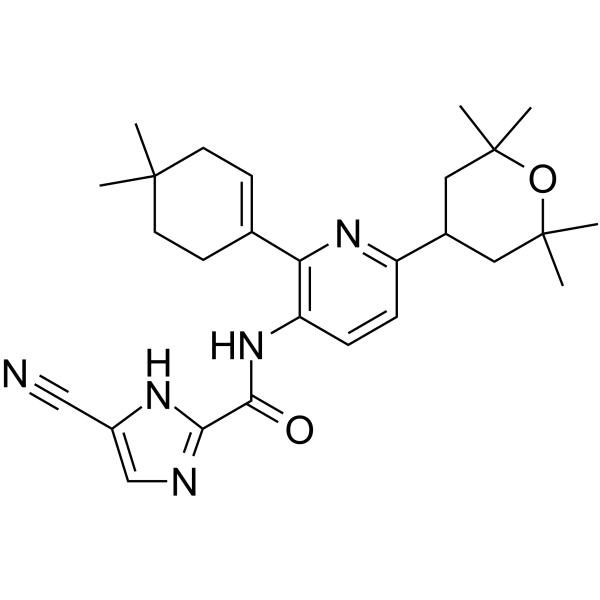
Edicotinib (JNJ-40346527) is a potent, selective, brain penetrant and orally active colony-stimulating factor-1 receptor (CSF-1R) inhibitor with an IC50 of 3.2 nM. Edicotinib exhibits less inhibitory effects on KIT and FLT3 with IC50 values of 20 nM and 190 nM, respectively. Edicotinib limits microglial expansion and attenuates microglial proliferation and neurodegeneration in mice. Edicotinib has the potential for Alzheimer’s disease and rheumatoid arthritis research.
Para uso exclusivo en investigación. No vendemos a pacientes.
- Pureza : 99.68%
- No. CAS: 1142363-52-7
- Fòrmula: C27H35N5O2
- Peso molecular:461.60
-
Almacenamiento:Powder -20°C, 3 years , 4°C, 2 years ; In solvent -80°C, 2 years , -20°C, 1 year

To place orders, for customer services and technical support, please contact: MedChemExpress USA
Tel: 609-228-6898 E-mail: [email protected] [email protected]


-
 Actividad biológica
-
Chemical Information
-
Solvente y solubilidad
- Protocolo
- Pureza y Documentación
- Referencias
-
 Help & FAQs


-
HY-12768
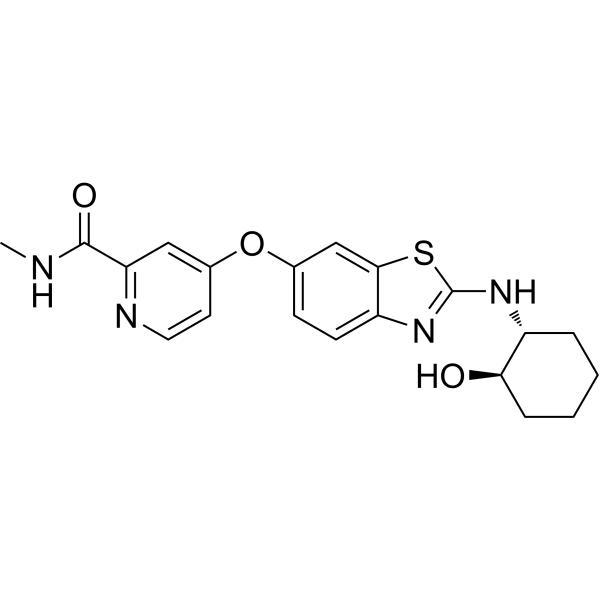
SotuletinibCSF-1R Inhibitor -
HY-136256
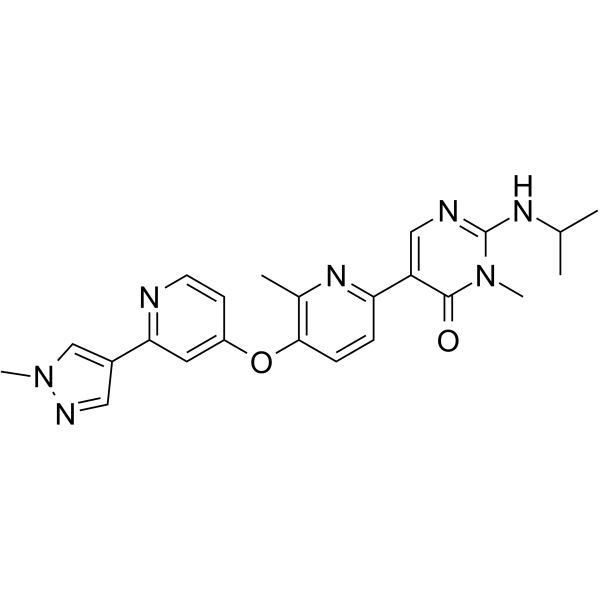
Vimseltinibc-FMS(CSF-IR)/c-Kitdual Inhibitor -
HY-114153
PLX5622CSF1R Inhibitor -
HY-10917
GW2580c-Fms Inhibitor -
HY-136362
ARRY-382 -
HY-16749
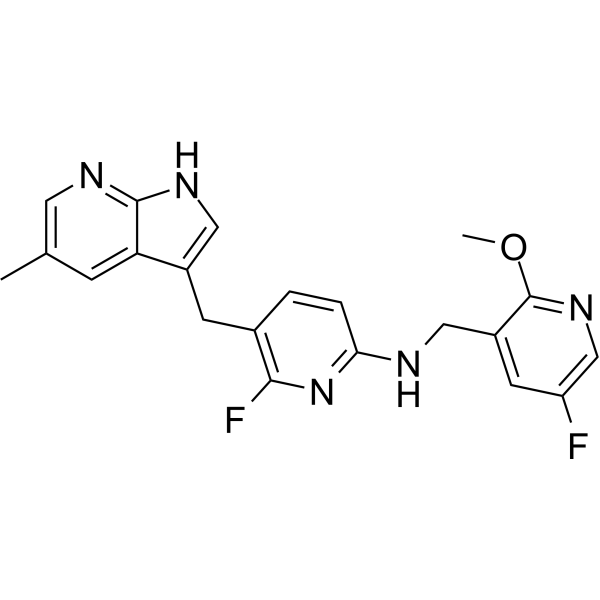
PexidartinibCSF1R/c-Kit Inhibitor -
HY-153920
PimicotinibCSF1R Inhibitor -
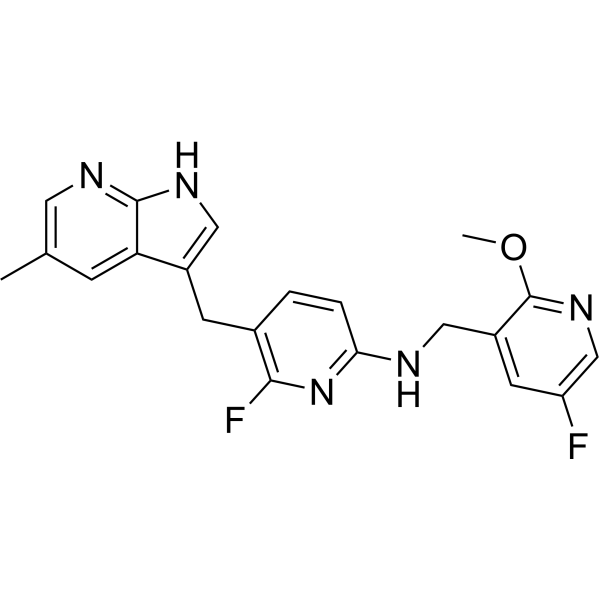
HY-114153C
PLX5622 in AIN-76A Diet (1200 ppm)PLX5622 Microglia Clearance Diet -
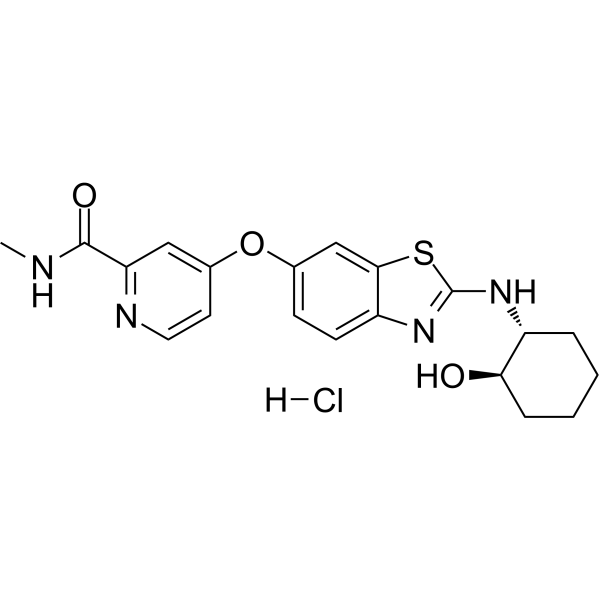
HY-12768A
Sotuletinib hydrochlorideCSF-1R Inhibitor -
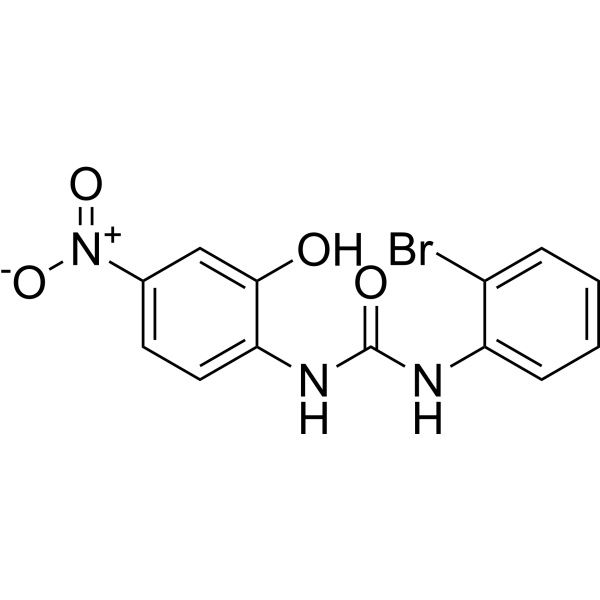
HY-16711
SB225002CXCR2 Antagonist -
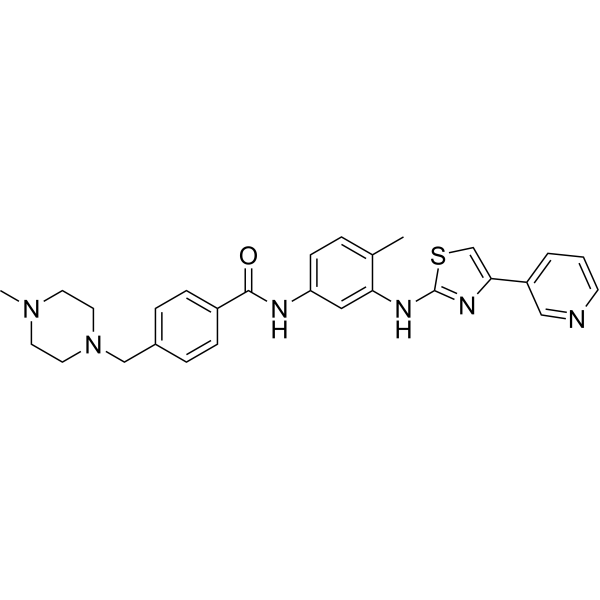
HY-10209
Masitinibc-Kit Inhibitor -
HY-Y0873
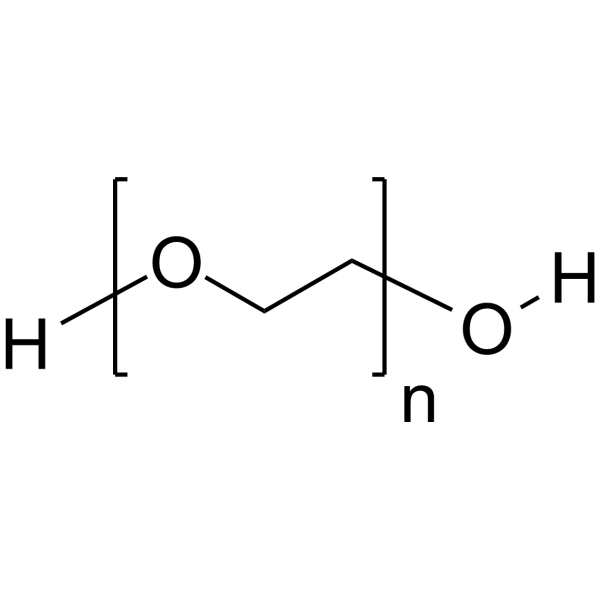
PEG300Neutral Polymer
Publications Citing Use of MedChemExpress (MCE) Edicotinib
More

Actividad biológica
Descripciòn
IC50 & Target
In Vitro
Edicotinib (0.1 nM-1μM; 24 hours) Leads to a dose-dependent decrease of CSF1R activation and a concurrent reduction of ERK1 and ERK2 phosphorylation. The dose response curve shows the effect of JNJ-527 on CSF1R and ERK1/2, and the IC50 values are 18.6 nM and 22.5 nM for CSF1R and ERK1/2, respectively[1].
MedChemExpress (MCE) has not independently confirmed the accuracy of these methods. They are for reference only.
-
Cell Line:N13 microglial cells
-
Concentration:0.1 nM, 1 nM, 10 nM, 100 nM, 1000 nM
-
Incubation Time:24 hours
-
Result:Prevented CSF1R and ERK1/2 phosphorylation in N13 microglial cells
In Vivo
MedChemExpress (MCE) has not independently confirmed the accuracy of these methods. They are for reference only.
-
Animal Model:C57BL/6 J (Harlan) mice[1]
-
Dosage:3, 10, 30 and 100 mg/kg; 5 days
-
Administration:Oral gavage
-
Result:Did not affect microglial numbers when administered under 100 mg/kg.
-
Animal Model:C57BL/6 J (Harlan) mice[1]
-
Dosage:30 mg/kg; 33 days
-
Administration:Oral gavage
-
Result:Limited microglial expansion and attenuated behavioural deficits in ME7-prion mice.
Ensayo clínico
| NCT Number | Sponsor | Condition | Start Date |
Phase

|
|---|---|---|---|---|
| NCT01329991 | 2011-05 | PHASE1 |


Chemical Information
-
No. CAS 1142363-52-7
-
Appearance Solid
-
Peso molecular 461.60
-
Fòrmula C27H35N5O2
-
Color White to off-white
-
SMILES
O=C(C1=NC=C(C#N)N1)NC2=C(C3=CCC(C)(C)CC3)N=C(C(CC(C)(C)O4)CC4(C)C)C=C2
-
Synonyms
JNJ-40346527; JNJ-527
-
Envío
Room temperature in continental US; may vary elsewhere.
-
Almacenamiento
Powder -20°C 3 years 4°C 2 years In solvent -80°C 2 years -20°C 1 year


Publications (3)
-
Journal Impact Factor
-
Most Recent
-
J Exp Med
2023 Mar 6;220(3):e20220857. PMID: 36584406 -
Mol Syst Biol
Illuminating phenotypic drug responses of sarcoma cells to kinase inhibitors by phosphoproteomics. [Abstract]2024 Jan;20(1):28-55. PMID: 38177929 -
PLoS One
A novel small molecule screening assay using normal human chondrocytes toward osteoarthritis drug discovery. [Abstract]2024 Nov 1;19(11):e0308647. PMID: 39485774


Solvente y solubilidad
In Vitro:
DMSO : 16.67 mg/mL (36.11 mM; Need ultrasonic; Hygroscopic DMSO has a significant impact on the solubility of product, please use newly opened DMSO)
Please refer to the solubility information to select the appropriate solvent. Once prepared, please aliquot and store the solution to prevent product inactivation from repeated freeze-thaw cycles.
Storage method and period of stock solution: -80°C, 2 years; -20°C, 1 year. When stored at -80°C, please use it within 2 years. When stored at -20°C, please use it within 1 year.
Please refer to the solubility information to select the appropriate solvent. Once prepared, please aliquot and store the solution to prevent product inactivation from repeated freeze-thaw cycles.
Storage method and period of stock solution: -80°C, 2 years; -20°C, 1 year. When stored at -80°C, please use it within 2 years. When stored at -20°C, please use it within 1 year.
Concentration (start) × Volume (start) = Concentration (final) × Volume (final)
In Vivo:
Select the appropriate dissolution method based on your experimental animal and administration route.
- For the following dissolution methods, please ensure to first prepare a clear stock solution using an In Vitro approach and then sequentially add co-solvents:
- To ensure reliable experimental results, the clarified stock solution can be appropriately stored based on storage conditions. As for the working solution for In Vivo experiments, it is recommended to prepare freshly and use it on the same day.
- The percentages shown for the solvents indicate their volumetric ratio in the final prepared solution. If precipitation or phase separation occurs during preparation, heat and/or sonication can be used to aid dissolution.
Add each solvent one by one: 10% DMSO 40% PEG300 5% Tween-80 45% Saline
Solubility: ≥ 1.67 mg/mL (3.62 mM); Clear solution
This protocol yields a clear solution of ≥ 1.67 mg/mL (saturation unknown).
Taking 1 mL working solution as an example, add 100 μL DMSO stock solution (16.7 mg/mL) to 400 μL PEG300, and mix evenly; then add 50 μL Tween-80 and mix evenly; then add 450 μL Saline to adjust the volume to 1 mL.
Preparation of Saline: Dissolve 0.9 g sodium chloride in ddH₂O and dilute to 100 mL to obtain a clear Saline solution.
For the following dissolution methods, please prepare the working solution directly:
It is recommended to prepare fresh solutions and use them promptly within a short period of time.
The percentages shown for the solvents indicate their volumetric ratio in the final prepared solution. If precipitation or phase separation occurs during preparation, heat and/or sonication can be used to aid dissolution.
Add each solvent one by one: 17% Solutol HS-15 in Saline
Solubility: 10 mg/mL (21.66 mM); Suspended solution; Need ultrasonic
In Vivo Dissolution Calculator
Please enter the basic information of animal experiments:
-
-
-
-
Recommended: Prepare an additional quantity of animals to account for potential losses during experiments.
Please enter your animal formula composition:
-
%DMSO +
Recommended: Keep the proportion of DMSO in working solution below 2% if your animal is weak.
-
%+
-
+%Tween-80 + +
-
%Saline +
The co-solvents required include: DMSO, . All of co-solvents are available by MedChemExpress (MCE). , Tween 80. All of co-solvents are available by MedChemExpress (MCE).
Working solution concentration: 0.22 mg/mL
Method for preparing stock solution: mg drug dissolved in μL DMSO. Stock solution concentration: mg/mL.
1. Take μL DMSO stock solution;
2. Add μL .
μL , mix evenly;
3. Then add μL Tween 80, mix evenly;
4. Then add μL
Please ensure that the stock solution in the first step is dissolved to a clear state, and add co-solvents in sequence. You can use ultrasonic heating (ultrasonic cleaner, recommended frequency 20-40 kHz), vortexing, etc. to assist dissolution.


Pureza y Documentación
-
Ficha de datos (280 KB)
-
SDS (393 KB)
- English - EN (393 KB)
- Français - FR (393 KB)
- Deutsch - DE (393 KB)
- Norwegian - NO (393 KB)
- Español - ES (393 KB)
- Swedish - SV (393 KB)
- Italian - IT (393 KB)
- Korean - KR (393 KB)
- Portuguese - PT (393 KB)
-
Instrucciones de manejo (2659 KB)
Referencias
[1]. Mancuso R, et al. CSF1R inhibitor JNJ-40346527 attenuates microglial proliferation and neurodegeneration in P301S mice.Brain. 2019 Oct 1;142(10):3243-3264. [Content Brief]
[2]. Genovese MC, et al. Results from a Phase IIA Parallel Group Study of JNJ-40346527, an Oral CSF-1R Inhibitor, in Patients with Active Rheumatoid Arthritis despite Disease-modifying Antirheumatic Drug Therapy.J Rheumatol. 2015 Oct;42(10):1752-60. [Content Brief]


Complete Stock Solution Preparation Table
Please refer to the solubility information to select the appropriate solvent. Once prepared, please aliquot and store the solution to prevent product inactivation from repeated freeze-thaw cycles.
Storage method and period of stock solution: -80°C, 2 years; -20°C, 1 year. When stored at -80°C, please use it within 2 years. When stored at -20°C, please use it within 1 year.
| Optional Solvent | Concentration Solvent Mass | 1 mg | 5 mg | 10 mg | 25 mg |
|---|---|---|---|---|---|
| DMSO | 1 mM | 2.1664 mL | 10.8319 mL | 21.6638 mL | 54.1594 mL |
| 5 mM | 0.4333 mL | 2.1664 mL | 4.3328 mL | 10.8319 mL | |
| 10 mM | 0.2166 mL | 1.0832 mL | 2.1664 mL | 5.4159 mL | |
| 15 mM | 0.1444 mL | 0.7221 mL | 1.4443 mL | 3.6106 mL | |
| 20 mM | 0.1083 mL | 0.5416 mL | 1.0832 mL | 2.7080 mL | |
| 25 mM | 0.0867 mL | 0.4333 mL | 0.8666 mL | 2.1664 mL | |
| 30 mM | 0.0722 mL | 0.3611 mL | 0.7221 mL | 1.8053 mL |


Edicotinib Related Classifications
HY-109086 Related Classifications
 Powered by Bioz